
Review · KYOTO
Kyoto Ninenzaka: Tea Ceremony in Old Townhouse with Chairs
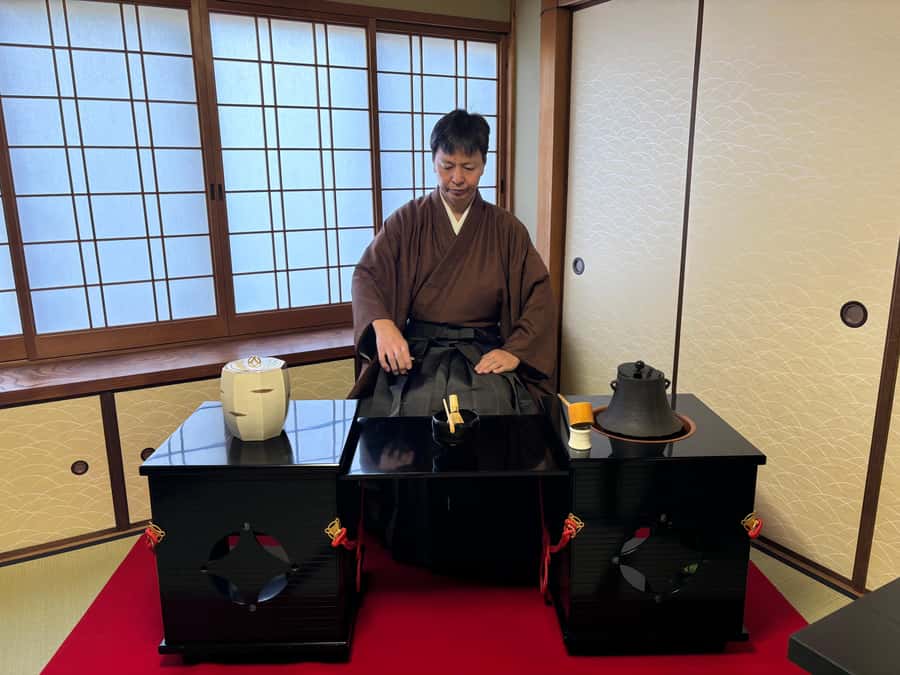
Slow tea, careful movements, real meaning. This 50-minute experience near Kiyomizu Temple offers a thoughtful introduction to Japanese tea culture in a 150-year-old townhouse. I like the standing tea ceremony format with tables and chairs, which makes the ritual easier if sitting on the floor is difficult. I also like the use of Uji matcha and wagashi from long-established Kyoto makers.
The main thing to consider is that this is not a quick photo stop. The mood is quiet and serious, and recording is not allowed. If you want a lively costume activity with constant pictures, this may feel restrictive. If you care about Japanese aesthetics, etiquette, and the ideas behind the ceremony, the calm pace is part of the value.
Key Points Before You Book
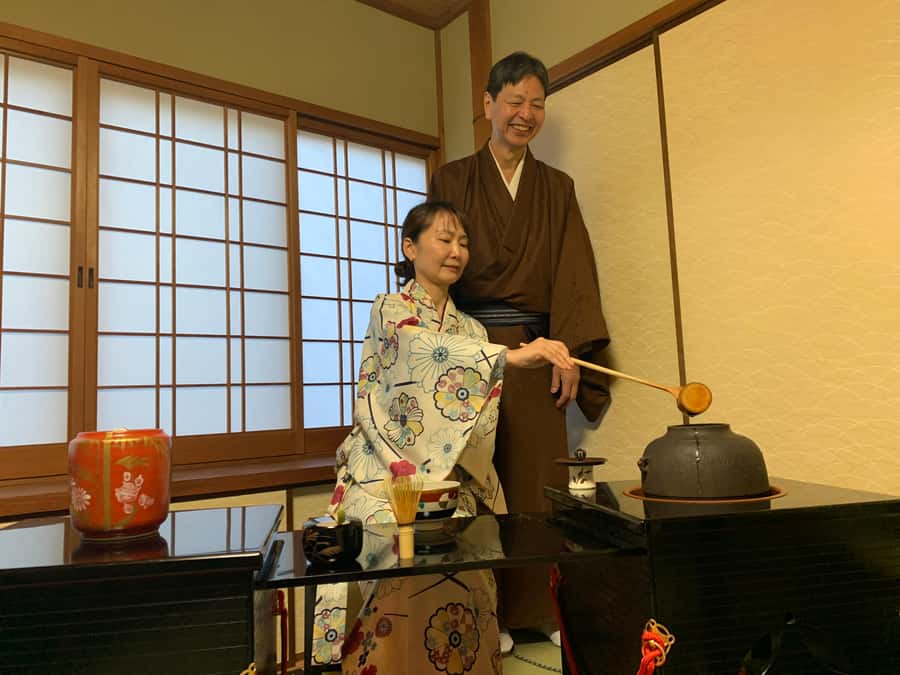
- A traditional setting near Ninenzaka: The ceremony takes place in a roughly 150-year-old Kyoto townhouse close to Kiyomizu Temple.
- Chairs instead of floor sitting: The standing tea ceremony style suits people with sore knees or limited comfort on tatami.
- Premium Uji matcha: The tea comes directly from a family farm with roots reaching back to the Bunsei era, from 1818 to 1831.
- Two cups and seasonal wagashi: You prepare and taste matcha, with handcrafted Japanese sweets from a long-established Kyoto confectioner.
- Small, instruction-focused groups: Recent sessions described groups of four to six, though the venue can accommodate up to 20.
- A quiet, no-recording experience: Phones, cameras, drinks, large bags, strong fragrances, and bare feet are not allowed.
A Tea House Near Kiyomizu Temple
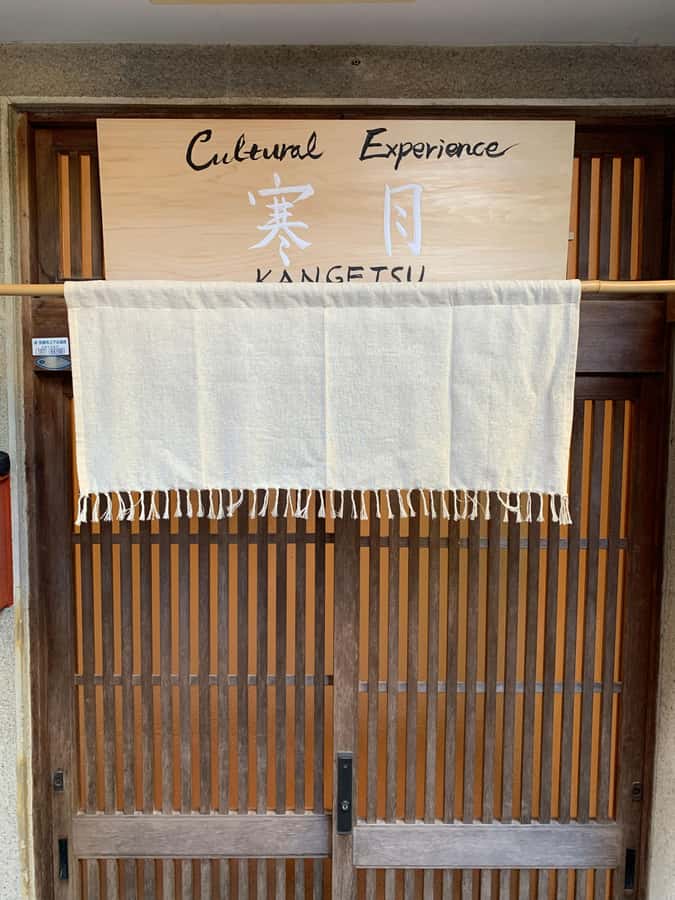
The meeting point is near the end of the alley beside the Starbucks on Ninenzaka, close to Kiyomizu Temple. This is one of Kyoto’s most visited areas, so allow time to find the precise entrance. The location information can be confusing, and one attendee found that the map pin led to another cultural activity provider.
Use the written directions carefully rather than relying only on the map marker. The entrance is in a narrow old-town setting, and you may arrive through one of Ninenzaka’s busy lanes before stepping into a quieter interior.
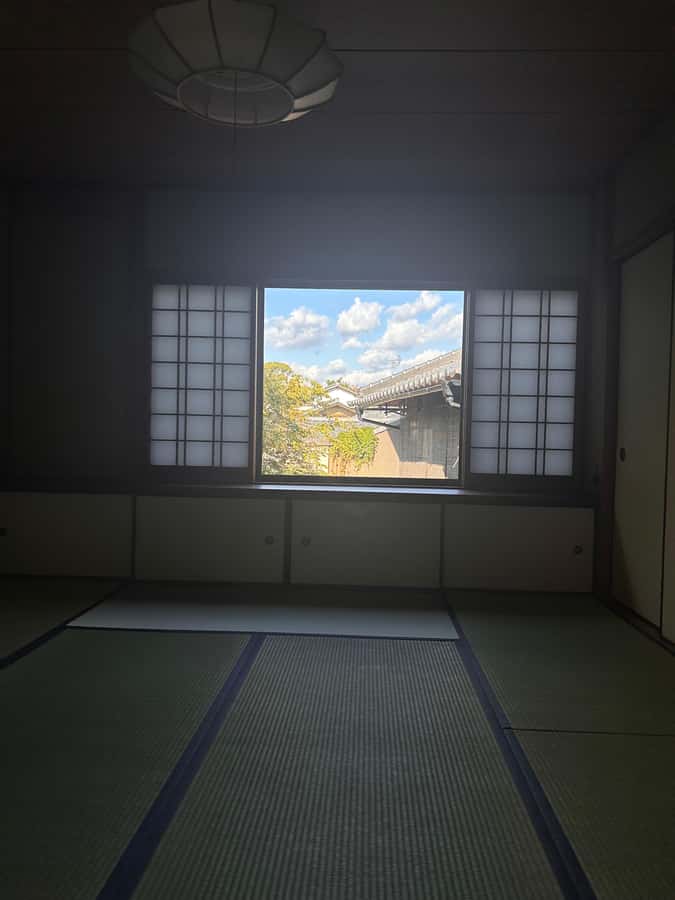
The townhouse is about 150 years old. Its rooms have been renovated, but the original character remains. You can expect low ceilings, tatami, and a more compact layout than you would find in a modern classroom. The stairs are narrow and steep, so this is not a good choice for wheelchair users or anyone who has trouble climbing stairs.
The room has been arranged to feel brighter and more open than a formal tea room. You still get the sense of an old Japanese home, but without the especially dark, cramped conditions that can accompany some traditional tea spaces.
More Tea Ceremonies in Kyoto
- Kyoto: Tea Ceremony in a Traditional Tea House in Kiyomizu
★ 4.9 · 3,519 reviews - Kyoto: Tea Ceremony Ju-An at Jotokuji Temple
★ 4.9 · 3,207 reviews - Kyoto: 45-Minute Tea Ceremony Lesson Experience
★ 4.3 · 2,378 reviews
Why Chairs Change the Experience
Many visitors picture a tea ceremony on their knees. Formal tea practice often uses seiza, a kneeling position that can become uncomfortable quickly, especially during a lesson with explanations.
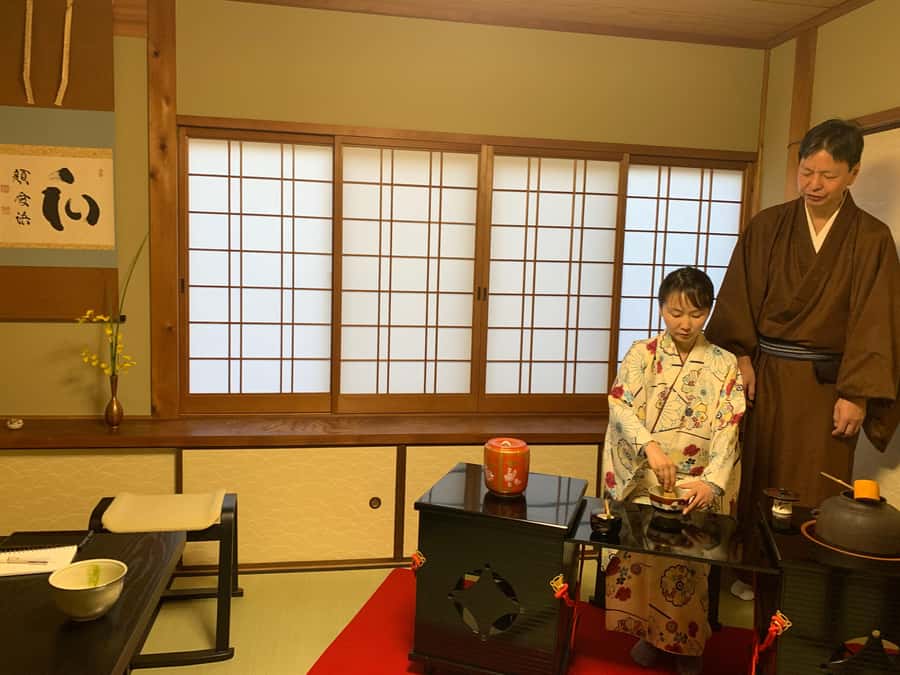
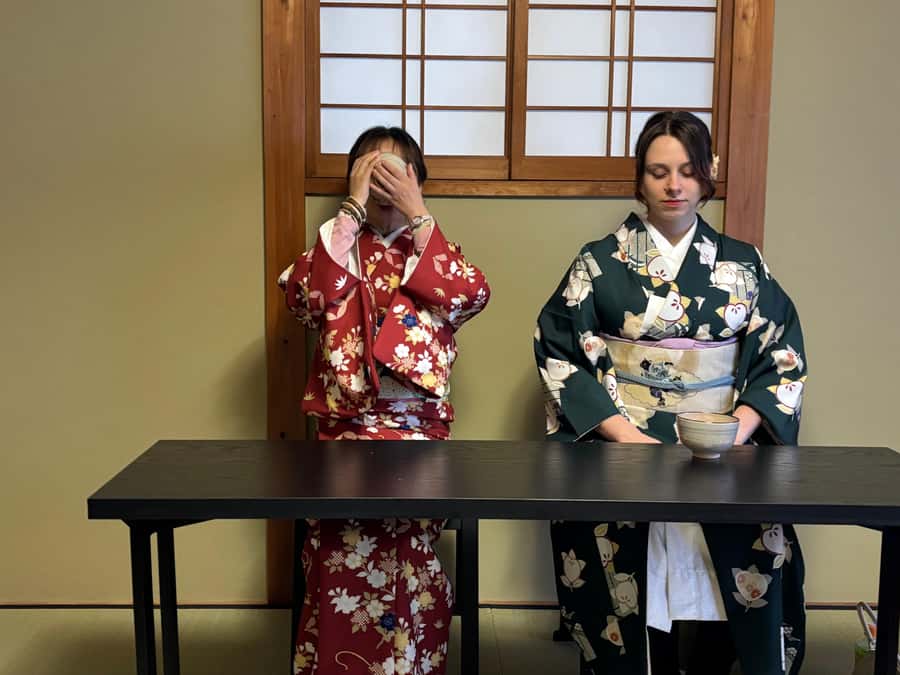
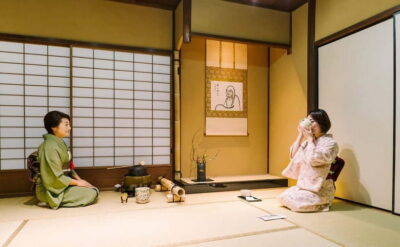
Here, the ceremony is conducted in a standing style with a stand, tables, and chairs. That does not remove the ritual. You still learn how the utensils are handled, how the tea is prepared, and how the host’s movements express care and seasonal hospitality.
I consider this one of the strongest practical features. A sore knee should not prevent you from learning about one of Japan’s most important traditional arts. One attendee specifically appreciated finding a ceremony with chairs because of bad knees, while another praised the comfortable arrangement of tables and chairs on tatami.
The format is also useful for first-time visitors. You can pay attention to the tea bowl, whisk, scoop, and host without constantly wondering how to position your legs.
What Happens During the 50 Minutes
The session is short, but the teaching is substantial. You begin with an explanation of the tea ceremony’s place in Japanese culture and its connection to Zen practice. The emphasis is not simply on drinking powdered tea. You learn why quietness, harmony, respect, and attention to small details matter.
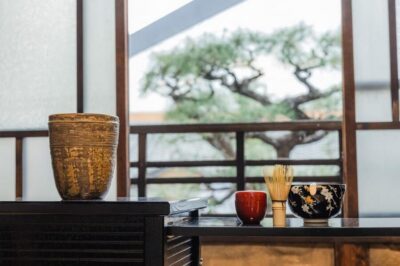
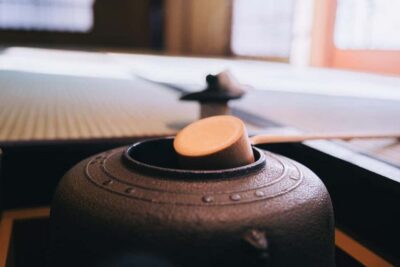
The instructor then introduces the utensils. You may learn what each item is used for, how it is cared for, and why the bowl, scoop, whisk, and other tools are treated with such respect. The variety of tea bowls is one detail that particularly appealed to an attendee who enjoyed seeing the different designs.
Next comes a demonstration. Watch the deliberate movements as the tea master cleans and handles the utensils, measures the matcha, adds water, and whisks the tea. The pace is slow enough for you to follow, but the session remains practical rather than becoming a long lecture.
You then prepare matcha yourself. Detailed guidance is provided, so you do not need previous experience. This hands-on step matters because it changes the tea from something you simply receive into something you have made with your own hands.
The experience includes two cups of matcha. The information does not specify every difference between the two servings, but the pair gives you more than a single taste and lets you become more comfortable with the preparation.
There is also time for questions. Several sessions were praised for giving people room to ask about ceremony, symbolism, history, and daily tea practice. English instruction is available, and the tea master is supported by an English-speaking assistant or translator when needed.
Uji Matcha and Kyoto Wagashi
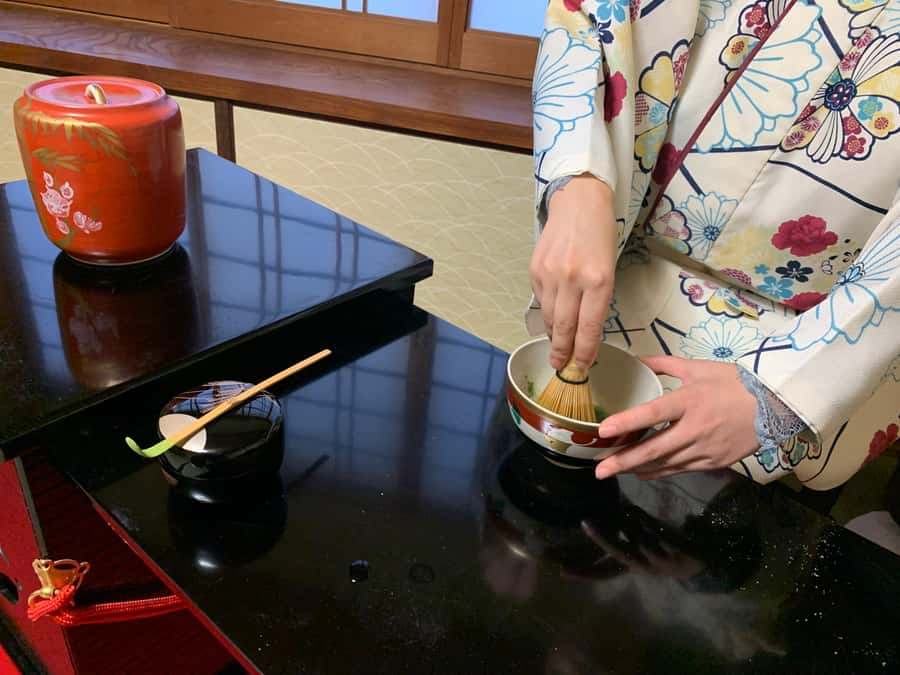
The tea is Uji matcha, associated with the Kyoto area and valued for its careful cultivation and distinctive flavor. This matcha is sourced directly from a tea farmer whose family has grown tea since the Bunsei era, a period from 1818 to 1831.
That detail gives the tasting a useful sense of place. You are not simply handed an anonymous green powder. You are introduced to tea connected to a long farming tradition in the region.
Matcha can surprise first-time drinkers. It is concentrated, grassy, and sometimes bitter, especially if you are used to sweetened tea drinks. The activity is aimed at people who can appreciate the taste of real matcha rather than expecting a dessert-like beverage.
The sweets are seasonal wagashi ordered from a long-established Kyoto confectionery shop that belongs to the Kyoto Prefectural Confectionery Association. Wagashi are made to balance the tea, often with delicate shapes, colors, and textures that reflect the season.
The sweet is not just a snack placed beside the cup. It helps prepare your palate for matcha and shows how Japanese food traditions connect taste with appearance, time of year, and hospitality.
Same place, a different pot:
- Kyoto: Table-Style Tea Ceremony at a Kyo-Machiya
★ 4.9 · 1,211 reviews - Kimono Tea Ceremony at Kyoto Maikoya, NISHIKI
★ 5.0 · 911 reviews - Kyoto: Arashiyama Bamboo Forest, Monkeys, Matcha & Temple Tour
★ 5.0 · 759 reviews - Kyoto: Kimono Tea Ceremony at Orizuruya Gion
★ 4.9 · 618 reviews
The Zen Connection, Explained Clearly
The tea ceremony’s connection to Zen is one of the most valuable parts of the lesson. The point is not that every tea gathering is a religious service. Instead, the practice gives structure to attention.
You are asked to notice the bowl, the sound of the whisk, the movement of the host, and the person sharing the room with you. The quiet setting removes the usual Kyoto distractions and gives you time to focus on one simple sequence.
This is why the no-recording rule makes sense, even if it may disappoint you. Phones and cameras can turn a reflective activity into a hunt for the right image. Here, you are expected to put away electronic devices and be present.
You also need to remove large jewelry, including long necklaces, large rings, and bracelets. These can damage valuable tea bowls. Tie back long hair so it does not fall into your tea, and leave perfume or strongly scented products at the hotel. Incense, matcha, sumi ink, and the old room all have subtle scents that strong fragrance would cover.
Authenticity Without Pretending You Are a Tea Master
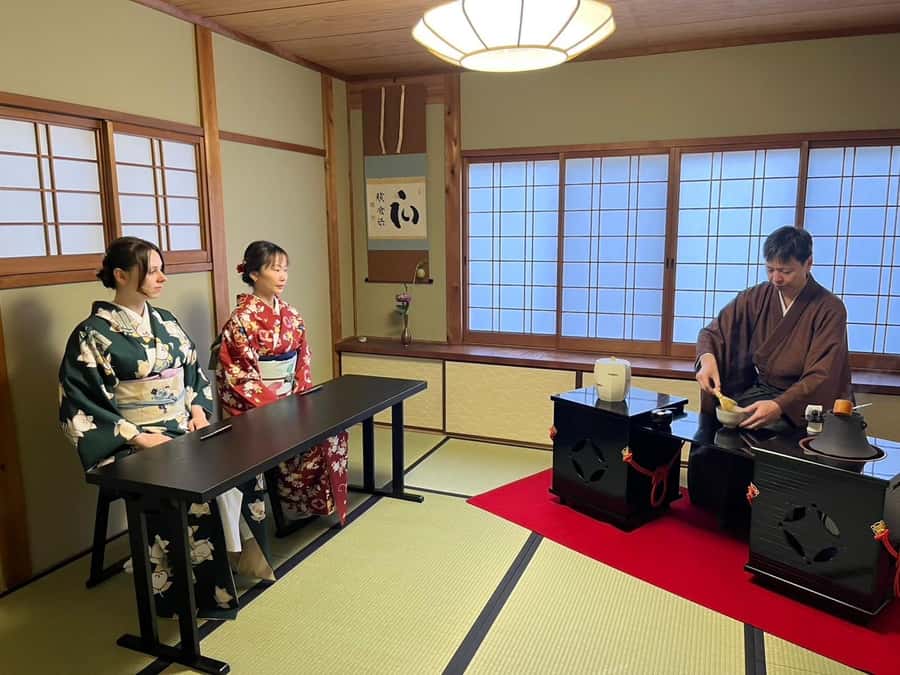
This is a carefully explained cultural introduction, not a full professional tea-school apprenticeship. That distinction is important.
The tea master performs the formal movements and gives you a taste of the discipline behind them. You also take part by making your own matcha, learning basic etiquette, and asking questions. The format is accessible, but it does not claim to turn you into an expert in 50 minutes.
One attendee felt the session was as close to a real ceremony as possible, praising the small group and full explanation. Another enjoyed the serious, historic atmosphere. At the same time, one person found it less authentic than expected, despite appreciating the clear instruction.
Both reactions are fair. The room, tea master, utensils, and customs offer a serious encounter with the tradition. The use of chairs, English explanation, a short schedule, and a group setting also make it a visitor-friendly lesson.
You should book it if you want to understand what you are seeing. You should look elsewhere if you want to sit silently through a highly formal ceremony with little explanation or participation.
The Value of a $21 Experience
At $21 per person, this is modestly priced for Kyoto. The fee includes an experienced instructor, the seated or standing tea setup, guidance, an original booklet, two cups of matcha, and seasonal wagashi.
The value comes from the combination. You are not paying only for a cup of tea. You receive a lesson in etiquette, utensil care, Zen ideas, preparation, and seasonal hospitality, all in an old townhouse near one of Kyoto’s major sights.
The location can also help you use your sightseeing time well. You can pair the activity with Kiyomizu Temple and the Ninenzaka area, though you should remember that this neighborhood can be crowded and the tea room itself is meant to be quiet.
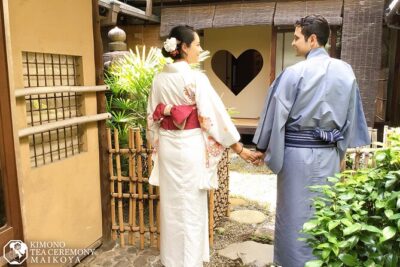
Kimono rental is available separately at the venue. It can make the occasion feel more special and adds a visual connection to the setting, but it is an extra cost and not part of the $21 price.
You receive a booklet as well, which is useful if you want to remember the names and purposes of the utensils after leaving. The venue may also offer matcha and tea ceremony items for purchase afterward.
Group Size and Atmosphere
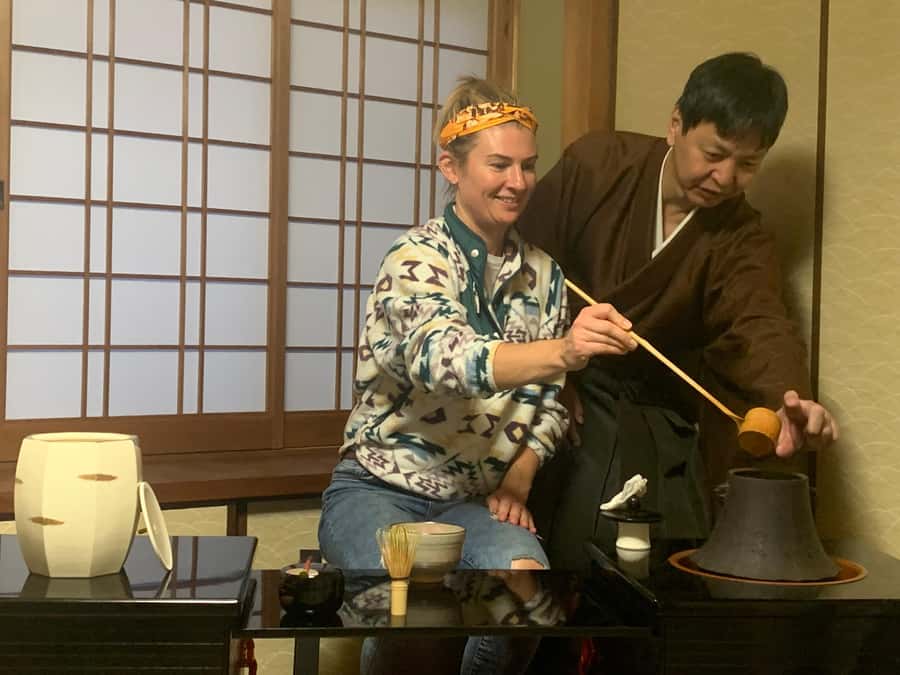
The venue can hold up to 20 people, but several recent sessions were described as much smaller, with four or six participants. Small groups make a real difference here.
With fewer people, you can see the tea master’s hands more clearly, ask questions without competing for time, and feel less like you are watching a stage performance. The quiet setting also works better when the group respects the no-noise rule.
Group size can change by booking date, so you should not assume every session will be limited to four people. Still, the format is designed around instruction rather than a large crowd moving through quickly.
The atmosphere is peaceful, formal, and welcoming. The hosts are described as patient and friendly, with English support that is generally clear. A small number of comments noted that some translations could be imperfect, especially for fine points of ceremony. For ordinary instructions and cultural context, English support should be sufficient.
Practical Details That Matter
Wear socks. Bare feet are not allowed, and socks can be purchased for 500 yen if you forget. Shoes come off indoors, so choose footwear that is easy to remove.
Do not bring large luggage, oversized bags, professional cameras, drinks, alcohol, gum, or smoking materials. Video and audio recording are not permitted, and flash photography is prohibited. Hats, large accessories, see-through clothing, and strong fragrance are also discouraged or not allowed.
Children under 10 cannot join because the organizers want to preserve the quiet atmosphere. The experience is not suitable for wheelchair users, people with a cold, or anyone who cannot manage the steep interior stairs.
Same-day and day-before reservations may not always receive the full preferred language arrangement. In those cases, the class may be conducted in English. The host or greeter language is English.
Cancellation is flexible if your plans change. You can cancel up to 24 hours in advance for a full refund, and you can reserve now while paying later.
Who Will Enjoy This Most
I would choose this for you if you care about Japanese culture beyond costumes and photographs. It suits visitors who want to understand why tea preparation is so deliberate and how a simple drink can carry ideas about respect, season, and attention.
It is also a strong choice if you have knee trouble or dislike kneeling. The chairs remove one of the biggest physical barriers to a formal tea experience.
You may enjoy it less if you want a casual tasting, a loud social activity, or a quick photo opportunity. The no-recording rule is firm, and the ceremony asks you to put devices away.
I would also be cautious if you are sensitive to bitter flavors. Real matcha is not the same as a sweet green tea latte. The wagashi provides balance, but the tea itself remains the focus.
Should You Book the Ninenzaka Tea Ceremony?
Book it if you want a calm, well-explained introduction to tea practice in an old Kyoto home. The strongest reasons are the chair-based format, the premium Uji matcha, the seasonal wagashi, and the chance to ask real questions in a small setting.
Do not book it expecting a staged show or a free-flowing photography session. This is a quiet lesson with rules, steep stairs, and a serious respect for the objects involved.
At $21, the experience offers good value, especially for first-time visitors who want context rather than another sightseeing stop. Wear socks, arrive with the directions in hand, leave your large accessories and camera gear behind, and give the ceremony your full attention. That is when the 50 minutes are most likely to stay with you.
FAQ
How long does the tea ceremony last?
The experience lasts 50 minutes.
How much does the experience cost?
The price is $21 per person.
Where does the tea ceremony take place?
It takes place near Kiyomizu Temple, at the end of the alley beside the Starbucks on Ninenzaka. The venue is a traditional Japanese townhouse.
Is the ceremony suitable for people who cannot sit on the floor?
Yes. The activity uses a standing tea ceremony style with tables, chairs, and a stand, making it suitable for people who find floor sitting difficult.
How many cups of matcha are included?
Two cups of matcha are included.
What kind of tea is served?
The experience uses premium Uji matcha sourced directly from a tea farmer whose family has cultivated tea since the Bunsei era.
Are Japanese sweets included?
Yes. Seasonal Japanese wagashi are included. They come from a long-established Kyoto confectionery shop.
Do I need to wear socks?
Yes. Bare feet are not allowed. Socks are available to purchase for 500 yen if necessary.
Can I take photographs or record the ceremony?
Flash photography, video recording, audio recording, and electronic devices are not allowed during the experience.
Can children join the activity?
Children under 10 years old are not accepted.
Is kimono rental included?
No. Kimono rental is available for an additional payment but is not included in the listed price.
Is the experience offered in English?
Yes. English is available from the host or greeter, and English guidance or translation is provided during the activity.
Just added around Kyoto
- Uji Walking Tour – Byodo-in temple and Tea Ceremony from Kyoto★ 3.5 · 3 reviews
- Tea ceremony at Kyoto’s Zen Temple Teahouse★ 5.0 · 2 reviews
- Kyoto: Authentic Tea Ceremony in a Small Group★ 5.0 · 7 reviews
- Tea Ceremony in 150 Years Old Townhouse with Tables and Chairs★ 5.0 · 22 reviews
- Tea Ceremony Experience in Traditional Kyoto Townhouse★ 5.0 · 19 reviews
- Traditional Tea Ceremony in Kyoto★ 4.5 · 3 reviews
- Silent Beauty of Kyoto Zen Walk and Tea Experience★ 5.0 · 2 reviews
- Kyoto Private Tea Ceremony at a Japanese Inns★ 5.0 · 12 reviews
Tea Ceremonies in Kyoto, compared.
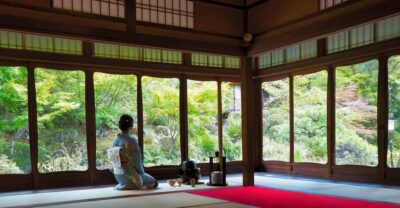
Tea Ceremony in a Traditional Tea House in Kiyomizu
Read our review →
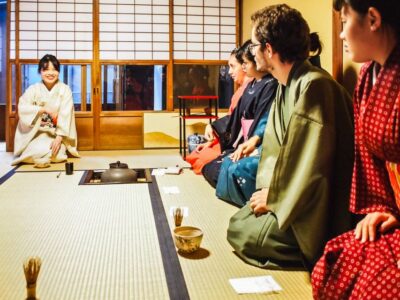
Tea Ceremony in 100-year-old Kyo-Machiya Townhouse
Read our review →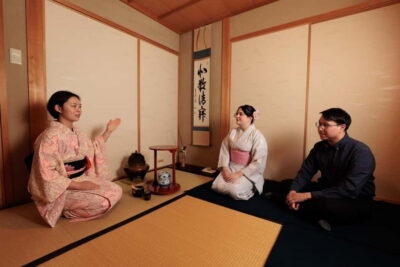
Browse the lists this tour appears in