
Review · KYOTO
Experience a tea ceremony in an authentic tearoom, in Kyoto!
Kyoto gets quiet around a bowl of matcha. In a 130-year-old townhouse, this 45-minute tea ceremony offers a calm introduction to one of Japan’s most carefully observed traditions. I like the small group size, capped at 10, and the hands-on lesson where you prepare your own matcha rather than simply watching a demonstration. The use of dried sweets from Kyoto’s long-established Shioyoshi-ken confectionery shop adds a thoughtful local touch.
The setting feels personal, and host Kaori is praised for her clear English, patience, and warm manner. The main consideration is value: at $39.63 per person, this is a short experience, and a few people may find it expensive for less than an hour, especially since a kimono is not listed as part of the activity.
Key points at a glance
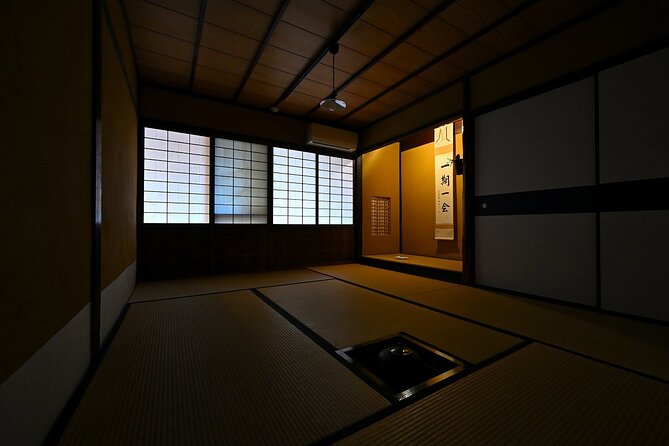
- Enter through the garden: The ceremony takes place in an authentic tearoom inside a 130-year-old Kyoto townhouse.
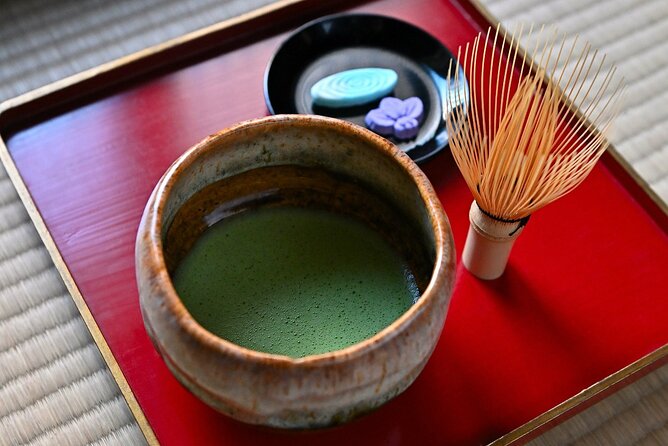
- Make your own matcha: You watch the preparation, then whisk tea yourself with step-by-step help.
- Taste Kyoto sweets: The dried sweets come from Shioyoshi-ken, a long-established Japanese confectionery shop.
- Keep the group small: The activity accepts no more than 10 people, with some sessions feeling almost private.
- Learn useful home techniques: The instruction includes ways to enjoy matcha even without formal tea utensils.
- Plan for floor seating: A stool can be provided if sitting in the traditional way is difficult, though the room may still be challenging for bad knees.
Entering a 130-year-old Kyoto townhouse
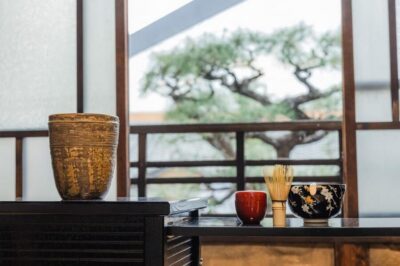
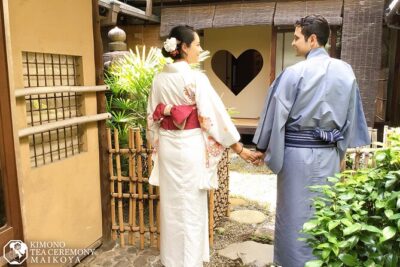
The meeting point is at 22-26 Nishinokyo Ikenouchicho in Nakagyo Ward, near public transportation. This is not a large cultural center or a staged attraction. You arrive at a traditional townhouse and enter the tearoom from the garden, which gives the first few minutes a sense of discovery.
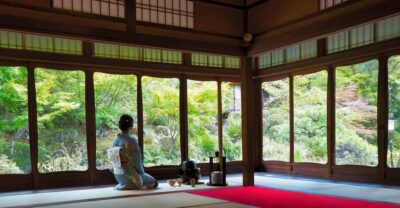
That approach matters. A tea ceremony makes more sense when it is connected to a real Japanese home and not separated from its surroundings by a modern tour facility. The townhouse is 130 years old, and the setting provides the quiet contrast promised by the activity. You are still in Kyoto, but away from the noise of the city’s busiest sightseeing spots.
The end point is the same as the meeting point, so you do not need to arrange a second pickup location. The activity lasts about 45 minutes, though some descriptions characterize it as closer to an hour. Either way, plan for a compact introduction rather than a long formal tea-school lesson.
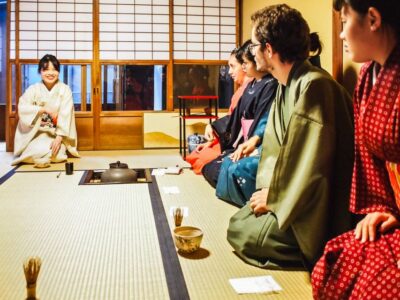
The group limit is 10 people. That is small enough for questions and personal guidance, but your actual session may be smaller. Several people have described attending with only three or four others, which can make the ceremony feel intimate and special.
More Tea Ceremonies in Kyoto
- Kyoto: Tea Ceremony in a Traditional Tea House in Kiyomizu
★ 4.9 · 3,519 reviews - Kyoto: Tea Ceremony Ju-An at Jotokuji Temple
★ 4.9 · 3,207 reviews - Kyoto: 45-Minute Tea Ceremony Lesson Experience
★ 4.3 · 2,378 reviews
What happens before you make tea
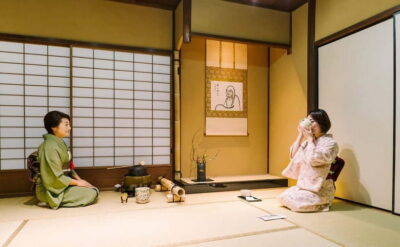
The session begins with an explanation of the tea ceremony’s history and cultural meaning. This is important because the movements can seem mysterious if you see only the ritual without context. The host explains how to appreciate the tea, how to drink it, and why each part of the process matters.
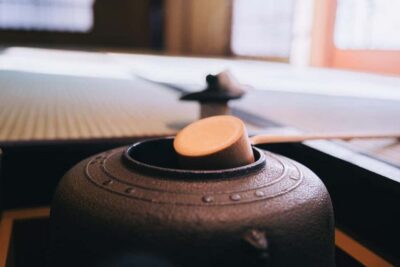
The instructor then demonstrates the preparation. You watch the careful movements before trying them yourself. This structure works well for first-time visitors because you are not expected to know where to sit, how to hold the bowl, or how to handle the matcha whisk when you arrive.
Host Kaori receives especially strong praise for her English, patience, and ability to explain details clearly. Her role is more than simply showing you a set of gestures. She helps connect the physical actions with the spirit of the ceremony and gives beginners permission to ask basic questions.
The tone is calm rather than theatrical. If you want a fast photo opportunity with costumes and a few staged motions, this may feel too serious. If you want to understand why tea preparation is treated as an art, the slower explanation is the point.
Kyoto sweets from Shioyoshi-ken
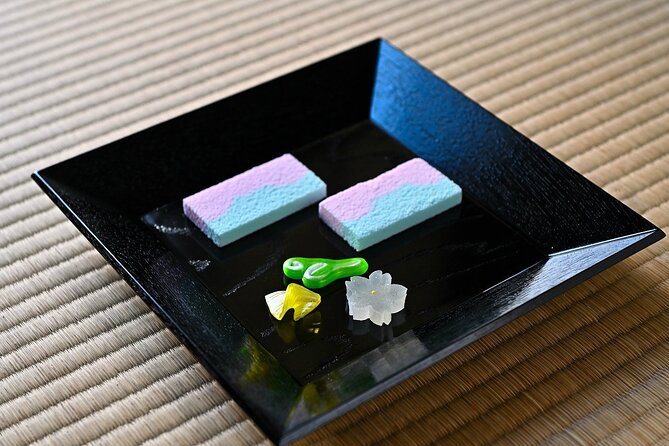
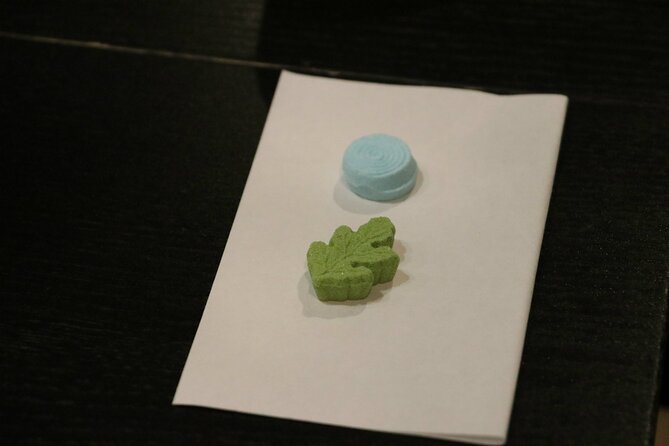
Before you make your own tea, you receive dried sweets from Shioyoshi-ken, a long-established Japanese confectionery shop in Kyoto. These sweets are traditionally served with matcha because their sweetness balances the tea’s bitter edge.
Do not expect a large snack or dessert course. The portions are small, and the sweets are designed to prepare your palate for the matcha, not to fill you up. The ingredients include wasanbon, a refined Japanese sugar associated with traditional sweets. That detail gives the tasting more cultural value than an ordinary packaged cookie.
Some people may find the sweets overly sugary or too modest in size. I would approach them as part of the ceremony rather than as a food stop. Their purpose is to show how tea and confectionery work together, not to provide a substantial serving.
The pairing also helps you notice the matcha differently. After tasting the sweet, the tea’s flavor becomes more balanced. That small contrast is one of the practical lessons you can take away from the session.
Watching the demonstration, then whisking matcha
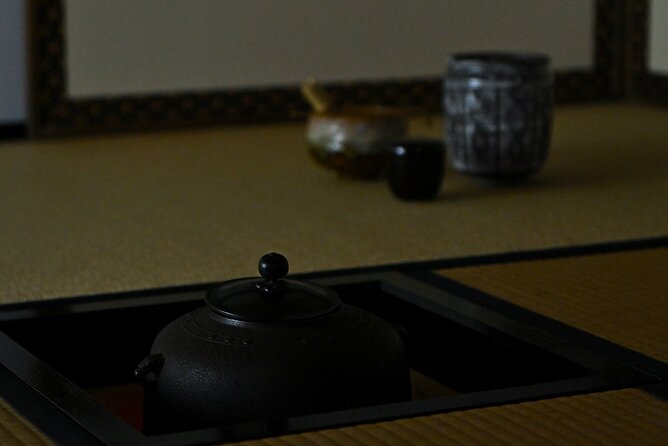
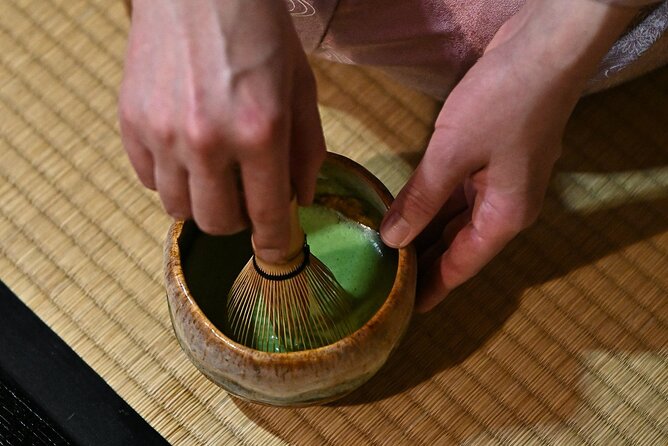
The central part of the activity is the matcha preparation. First, the instructor demonstrates the process. Then you make your own bowl under guidance.
That hands-on step is a major reason to choose this experience over simply visiting a tea room. You do not have to remember every movement perfectly. The host gives detailed instructions, and the format is designed for beginners. You learn how to prepare the tea, how to hold and appreciate it, and how to drink it in the customary manner.
The matcha comes from a historic shop in Kyoto. The tea is served in the style associated with the ceremony, so you experience both the flavor and the method. Several people describe the tea as delicious, with one calling it the best matcha they had tasted. Taste is personal, of course, but the careful preparation makes a difference.
You also receive advice for making matcha at home without formal tea utensils. This is a useful touch. Many visitors enjoy matcha in Japan but assume they need a complete tea set to repeat the experience. The lesson shows that you can carry the basic technique home without turning your kitchen into a tea school.
Expect some variation in your finished bowl. Your whisking speed, technique, and amount of foam may differ from the instructor’s. That is part of the fun. You are learning a skill, not taking an exam.
Same place, a different pot:
- Kyoto: Table-Style Tea Ceremony at a Kyo-Machiya
★ 4.9 · 1,211 reviews - Kimono Tea Ceremony at Kyoto Maikoya, NISHIKI
★ 5.0 · 911 reviews - Kyoto: Arashiyama Bamboo Forest, Monkeys, Matcha & Temple Tour
★ 5.0 · 759 reviews - Kyoto: Kimono Tea Ceremony at Orizuruya Gion
★ 4.9 · 618 reviews
The ceremony itself, without the pressure
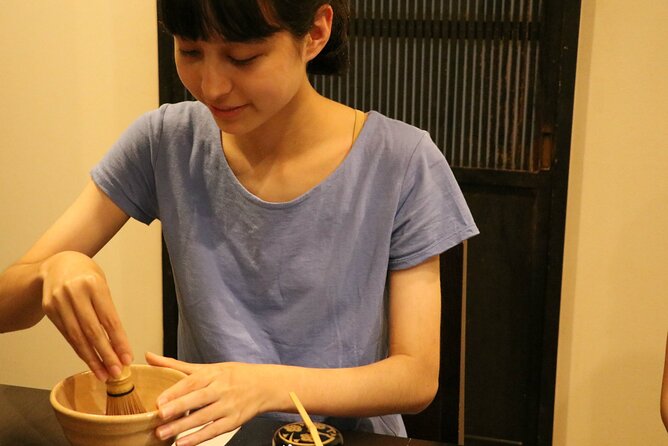
A formal Japanese tea ceremony can involve precise rules, quiet movements, and traditional seating. This session gives you an introduction without expecting you to arrive with prior knowledge.
You learn how to appreciate the bowl, how to drink the matcha, and how to respond to the ceremony’s rhythm. The host explains the customs instead of assuming that you already understand them. That makes the experience accessible for families, couples, and first-time visitors.
The atmosphere is often described as calming and serene. The small room, garden entrance, sweets, and deliberate preparation all help slow the pace. You may find this especially welcome after a morning spent moving between crowded temples and busy shopping streets.
At the same time, the experience is not a full-length tea-school course. In 45 minutes, you receive a well-shaped introduction, not an exhaustive study of Japanese tea. If you have already attended several ceremonies, you may want something more formal or longer.
The activity also appears best suited to people who are willing to observe quietly for part of the time. The practical lesson comes after the demonstration, but the ritual itself asks you to pay attention rather than constantly take photographs or chat.
Seating, clothing, and comfort
The traditional setting may require sitting on the floor. One person with bad knees found the activity manageable because a stool was available, and the host was accommodating when people could not sit in the usual manner.
That does not mean the room will be fully comfortable for everyone with mobility concerns. If kneeling or floor seating is difficult, contact the provider in advance and ask about the stool. You should not assume that the seating arrangement will be identical to a standard chair-based tour.
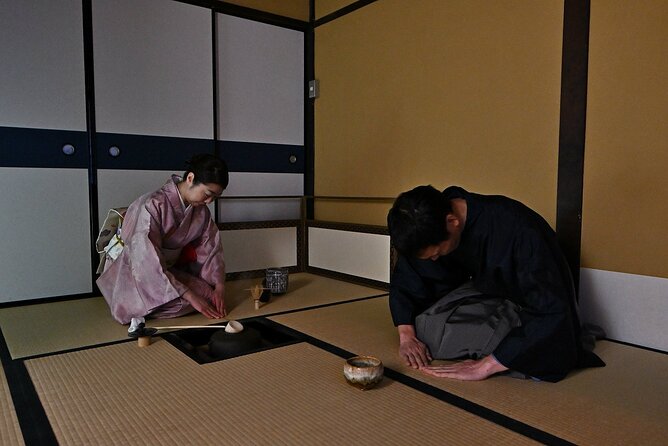
A kimono is not advertised as included. One description notes that the hostess wore a kimono, which adds to the visual character of the ceremony, but you should book this for the tea lesson and traditional setting, not for a costume session.
The activity is suitable for families, and one family described the length as a good fit. Children who can listen quietly and follow simple instructions should find the hands-on matcha preparation engaging. Very young children may have less patience for the formal explanation.
How much value do you get for $39.63?
At $39.63 per person, the price is reasonable if you value the setting, instruction, sweets, and personal attention. You are paying for more than a cup of green tea. The fee covers access to a traditional townhouse tearoom, an explanation of tea culture, sweets from a respected Kyoto shop, matcha, and guided practice.
The small group limit improves the value. With 10 people or fewer, the instructor can answer questions and watch your technique. If your session has only three or four people, the experience may feel close to private without the cost of a private booking.
The short length is the main question. Forty-five minutes passes quickly, and some people may judge the price high for a brief activity. You should book it if you want a focused cultural introduction that fits neatly into a busy Kyoto day. You may want to skip it if you are looking for a long meal, a full tea-school ceremony, or several hours of instruction.
The sweets are also modest. This is not a food tour, and you should not treat the small serving as part of the financial calculation in the same way you would a dessert tasting. The value rests mainly in the setting and the chance to make matcha yourself.
Getting there and planning your visit
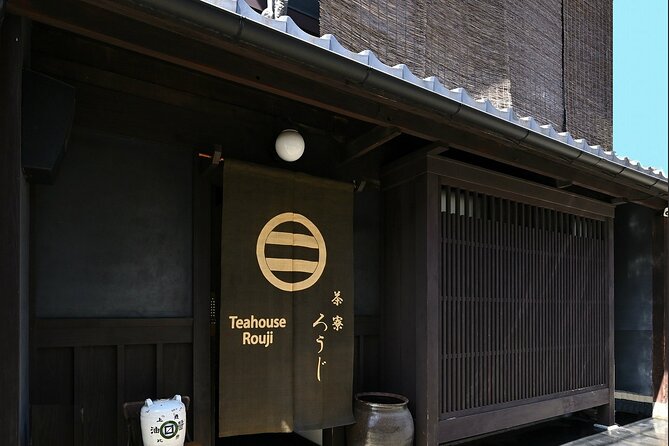
The meeting point is in Kyoto’s Nakagyo Ward at 22-26 Nishinokyo Ikenouchicho. It is near public transportation, but you should allow enough time to identify the townhouse and arrive without rushing. The activity begins at the stated meeting time and ends back at the same point.
A mobile ticket makes entry simple. Confirmation is sent within 48 hours of booking, subject to availability, so do not leave a time-sensitive reservation until the last moment if your Kyoto schedule is tight.
The activity requires a minimum number of participants. If that minimum is not reached and the session is canceled, you are offered another date or experience, or a full refund.
Free cancellation is available up to 24 hours before the start time. Changes or cancellations made less than 24 hours before the activity are not accepted, and the amount paid is not refunded. The cut-off uses Kyoto local time, so check the time carefully if you are booking from abroad.
There has been at least one reported scheduling misunderstanding involving confirmation messages and an arrival at the wrong time. The provider stated that the issue was handled through Viator and that alternative timing had been offered. To protect yourself, check the final confirmation carefully and contact the booking company promptly if any time changes are unclear.
Who should book this tea ceremony?
I would recommend this experience to you if you want a first look at Japanese tea culture without committing to a long formal ceremony. It suits couples, families, and small groups who enjoy learning by doing.
It is a good fit if you value:
- A genuine traditional setting rather than a modern classroom
- Clear English instruction
- A calm activity away from crowded sightseeing spots
- A small group and a personal host
- A chance to repeat the technique at home
- Cultural context along with the ritual
I would think twice if you want a substantial meal, a large tasting, a kimono rental, or a long ceremony with extensive formal procedures. The activity is a short introduction, and the sweets are small.
The best time to schedule it is when you can slow down afterward. You do not need to rush straight into another major attraction. Give yourself room to enjoy the quiet mood and perhaps look for matcha or a whisk later if the lesson inspires you.
Should you book it?
Book this tea ceremony if you want a friendly, well-explained introduction to matcha in an old Kyoto townhouse. The strongest reasons are the authentic tearoom, the small group format, the sweets from Shioyoshi-ken, and the chance to prepare your own tea.
At $39.63, it offers fair value for a focused cultural activity, but the short duration means expectations matter. You are buying a carefully presented taste of tea culture, not a full afternoon ceremony or a meal.
If you have sensitive knees, ask about the stool before arriving. If you need strict scheduling, double-check the confirmation time. For most first-time visitors who want something quieter and more personal than a standard sightseeing stop, this is a worthwhile Kyoto memory.
FAQ
How long does the tea ceremony last?
The experience lasts approximately 45 minutes. Some descriptions refer to it as about one hour, so allow a little extra time around the scheduled start and end.
How much does the experience cost?
The listed price is $39.63 per person.
Where does the tea ceremony take place?
It takes place at 22-26 Nishinokyo Ikenouchicho in Nakagyo Ward, Kyoto, inside a 130-year-old Kyoto townhouse.
Where does the activity end?
The activity ends back at the meeting point.
How many people can join?
The maximum group size is 10 people.
Do I make my own matcha?
Yes. You first watch the instructor demonstrate the preparation, then make your own matcha with detailed guidance.
Are sweets included?
Yes. You receive dried Japanese sweets from Shioyoshi-ken, a long-established confectionery shop in Kyoto.
Do I need tea utensils at home to make matcha?
No. The instruction includes tips for enjoying and preparing matcha at home without formal tea utensils.
Is the activity suitable for someone who cannot sit traditionally?
A stool is available if needed, and the host has accommodated people who could not sit in the traditional manner. Ask about your needs before arrival if floor seating may be difficult.
Can I cancel for a full refund?
You can cancel up to 24 hours before the start time for a full refund. Cancellations or changes made less than 24 hours before the experience are not accepted, and the payment is not refunded.
Just added around Kyoto
- Uji Walking Tour – Byodo-in temple and Tea Ceremony from Kyoto★ 3.5 · 3 reviews
- Tea ceremony at Kyoto’s Zen Temple Teahouse★ 5.0 · 2 reviews
- Kyoto: Authentic Tea Ceremony in a Small Group★ 5.0 · 7 reviews
- Tea Ceremony in 150 Years Old Townhouse with Tables and Chairs★ 5.0 · 22 reviews
- Tea Ceremony Experience in Traditional Kyoto Townhouse★ 5.0 · 19 reviews
- Traditional Tea Ceremony in Kyoto★ 4.5 · 3 reviews
- Silent Beauty of Kyoto Zen Walk and Tea Experience★ 5.0 · 2 reviews
- Kyoto Private Tea Ceremony at a Japanese Inns★ 5.0 · 12 reviews
Tea Ceremonies in Kyoto, compared.
Tea Ceremony in a Traditional Tea House in Kiyomizu
Read our review →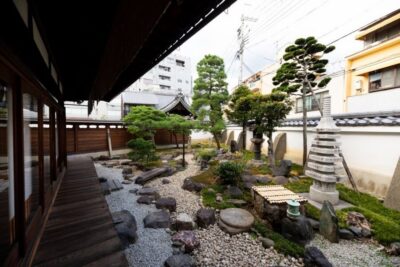
Tea Ceremony in 100-year-old Kyo-Machiya Townhouse
Read our review →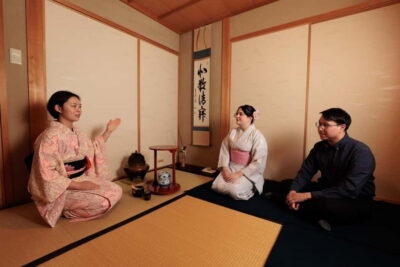
Browse the lists this tour appears in