
Review · JAPAN
Ceramics and Green Tea Tour of Nagasaki and Saga Prefecture
Pottery and tea reveal a quieter Japan. This private day trip from Fukuoka takes you through Saga and nearby Nagasaki, where porcelain villages, old kilns, tea farms, shrines, and mountain roads replace city streets. I like the way the tour joins two local crafts that are often treated separately, and I like the freedom to adjust how many ceramic and tea stops suit your interests. The main drawback is the long day: about 10 to 11 hours, with roughly three hours spent in the vehicle.
You travel in a private, air-conditioned vehicle for a group of up to three people. Lunch, snacks, bottled water, WiFi, parking, and commentary are included, which makes the $716.68 group price easier to assess. For three people, that is about $239 per person before any shopping. For one person, it is costly, but the privacy and door-to-door transport may be worth it if you want a focused day beyond Fukuoka.
Key points before you book

- Okawachiyama’s mountain pottery village gives you a peaceful introduction to Saga’s ceramic traditions away from the main city routes.
- Arita’s porcelain story includes the Izumiyama Quarry, Tozan Shrine, the Kyushu Ceramic Museum, and time to shop at Arita Sera.
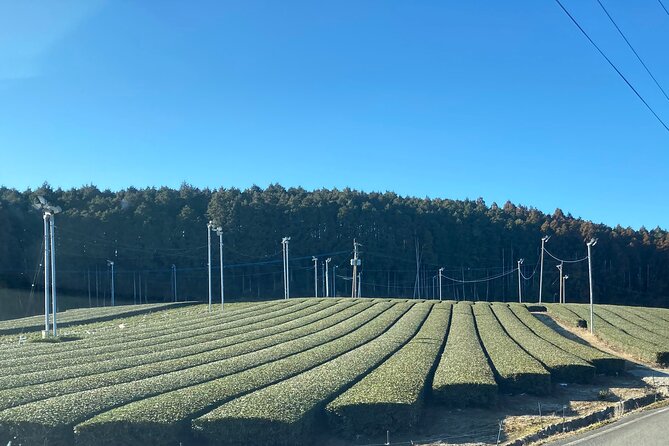
- Ureshino tea stops explain how green tea is grown, prepared, tasted, and connected to local history.
- The day is private for your group, with transportation, food, water, WiFi, and parking included.
- About three hours are spent driving, but the rural scenery and onboard commentary make the transfers part of the day.
- The tour suits small groups best, especially couples or friends who want both shopping and cultural context.
Why this part of Kyushu matters
Saga Prefecture is one of Japan’s key pottery areas. Arita is especially important because porcelain production began here after Korean potters discovered porcelain stone at Izumiyama around 1616. The region’s ceramics are not just souvenirs. They are tied to trade, food, religious buildings, family workshops, and everyday Japanese dining.
Ureshino adds a second local specialty. Its green tea tradition gives the tour a useful change of pace after several hours focused on clay and porcelain. You move from kiln towns and museum displays to tea tasting, production, and the story of Japan’s first Ureshino tea.
This combination is the tour’s strongest idea. You are not simply taken to one shop after another. You get a sense of how local materials, skilled hands, food, religion, and commerce fit together.
More Green Tea Tours in Japan
- Experience all of Japanese culture and Japanese food experience classes “origami, udon, Japanese food, green tea, calligraphy” in 4 hours
★ 5.0 · 105 reviews - Uji: Green Tea Tour with Byodoin and Koshoji Temple Visits
★ 4.8 · 72 reviews - Scenic Green Tea Fields of Hidden Kyoto & Local Tea Exp (Private)
★ 5.0 · 32 reviews
Okawachiyama Village, pottery in the mountains
The first stop is Okawachiyama Village in Imari Town. It sits in a mountainous area of Saga and has a more secluded feel than a standard shopping street. You have about an hour here, with no admission charge.
This is a good opening stop because it introduces the setting before the day turns toward museums and larger shopping areas. You can look for pottery, see the village environment, and begin to understand why Saga ceramics developed in these rural areas.
The one-hour visit is enough for an introduction, but it is not a long workshop or hands-on class. If you hope to watch a full pottery demonstration, the supplied schedule does not promise one. Think of Okawachiyama as a scenic village stop with ceramic character rather than a formal lesson.
Izumiyama Quarry and the beginning of Arita porcelain
At Izumiyama Quarry, you spend about 20 minutes at the place linked to Japan’s first successful porcelain production. Korean potters led by Yi Sam Pyeong found porcelain stone here roughly 400 years ago.
The short visit works best when you already understand why the site matters. The quarry itself is not presented as a large museum attraction. Its value comes from the story: this local stone helped make Arita a major porcelain center.
I would pay close attention to the guide’s explanation here. A quick stop can feel slight if you only see the site without context. With the story of Yi Sam Pyeong and the discovery of porcelain stone, those 20 minutes become a useful bridge between geology and craft.
Tozan Shrine, where porcelain reaches the gate
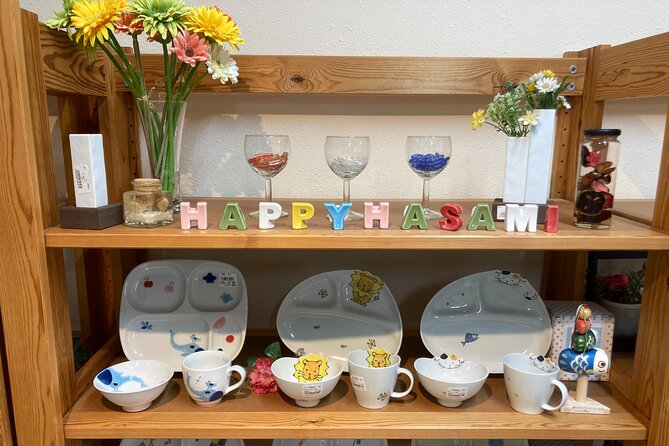
Tozan Shrine offers one of the tour’s most unusual sights. In a region devoted to ceramics, even a traditional religious site uses porcelain designs.
You have about 20 minutes here, and admission is free. The stop is brief, but it gives you a clear example of how deeply pottery is tied to Arita’s identity. Ceramics are not confined to plates in a shop window. They appear in the visual details of a shrine.
This is also a welcome break from shopping and museum displays. You can see a local place of worship while still following the ceramic theme. Do not expect a long religious site visit. The appeal is the porcelain decoration and the contrast between a traditional shrine setting and ceramic art.
Same place, a different pot:
- Kyoto: Tea Ceremony in a Traditional Tea House in Kiyomizu
★ 4.9 · 3,519 reviews - Kyoto: Tea Ceremony Ju-An at Jotokuji Temple
★ 4.9 · 3,207 reviews - Kyoto: 45-Minute Tea Ceremony Lesson Experience
★ 4.3 · 2,378 reviews - World Heritage Kyoto & Nara Uji Authentic Matcha Experience
★ 5.0 · 1,573 reviews
Kyushu Ceramic Museum, the best place for context
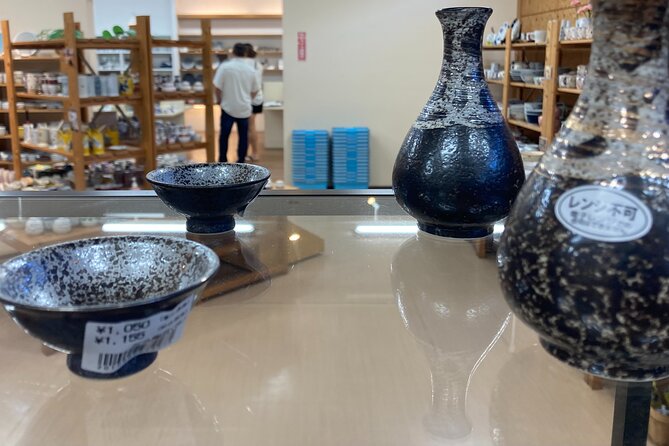
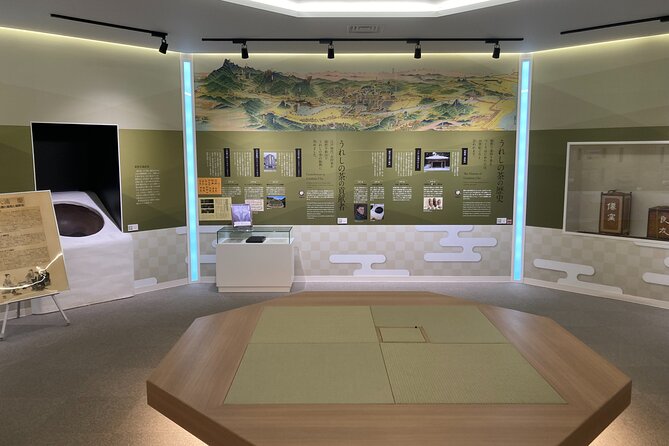
The Kyushu Ceramic Museum gives you about 45 minutes to understand the wider story of pottery in the area. English information is available, so you can follow the displays without needing to know Japanese.
I consider this one of the most useful stops for anyone who does not already know the difference between the region’s pottery traditions. Shops can show you beautiful objects, but a museum helps explain what you are looking at and why one style, shape, or finish may matter.
Forty-five minutes is enough for a focused visit, though not enough for every display if you read slowly. I would use this stop to build a shopping plan for later. Notice the forms and decoration you prefer, then compare those impressions with what you find at Arita Sera.
Two hours at Arita Sera for serious shopping
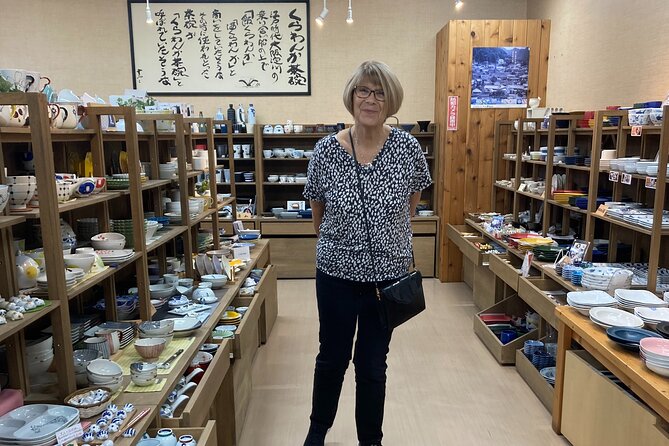
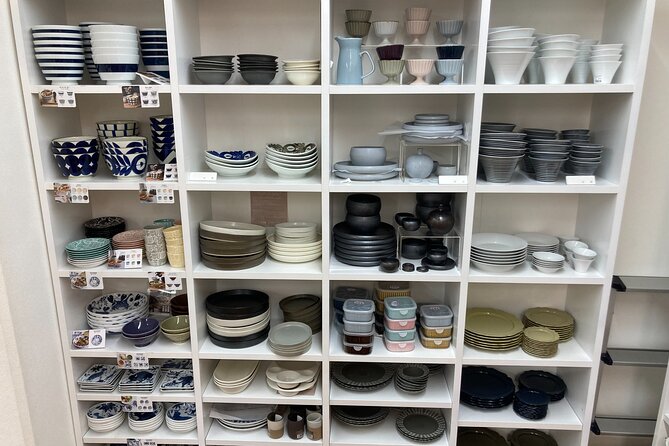
Arita Sera is the longest stop of the day, with about two hours set aside. That is important because ceramic shopping requires time. You may want to compare styles, prices, colors, sizes, and practical details such as whether a piece suits daily use.
The tour description makes a useful point here: different people have different tastes in porcelain. One person may want traditional designs, while another prefers simple modern pieces. A long stop gives you room to browse rather than being rushed into the first shop.
This is also where the private format helps. Your group can spend more time shopping if that is the priority, or move on once you have found what you want. The schedule says you can fine-tune the number of attractions related to ceramics and tea, so ask about the balance when arranging the day.
Keep your luggage and carrying capacity in mind. The tour is designed to accommodate purchases, but the supplied details do not specify shipping services or baggage arrangements. If you plan to buy large or fragile pieces, ask the provider ahead of time.
Arita Porcelain Park, a shorter change of scene
Arita Porcelain Park receives about 45 minutes. It sits close to Nagasaki Prefecture, although the area remains part of the same broader ceramic region around Arita and Saga.
The stop adds variety after the museum and shopping time. You get another setting connected to porcelain, rather than spending the whole day in one town. Since admission is free, it also adds interest without adding a separate ticket cost.
Forty-five minutes is not a lot of time for an extensive visit, so I would treat this as a compact stop. It may appeal most if you want to see another side of Arita’s porcelain culture. If shopping is your main goal, you may prefer to protect your time at Arita Sera.
Hasami’s Ceramics Park and the rural road
Ceramics Park, also called Yakimono Kouen, is in Hasami, a town of about 15,000 people surrounded by mountains and rolling green hills. You have about 30 minutes here.
This stop gives you a wider view of the region. Hasami is not presented simply as a collection of shops. The town itself, with its surrounding countryside, helps you see how ceramic production fits into a smaller rural community.
Half an hour is enough for a look around, but not for a long visit or detailed shopping session. The value is in the setting and the additional ceramic perspective. After several indoor stops, the open countryside and short visit can keep the day from feeling repetitive.
Ureshino Tea Exchange Museum, Chaoshiru
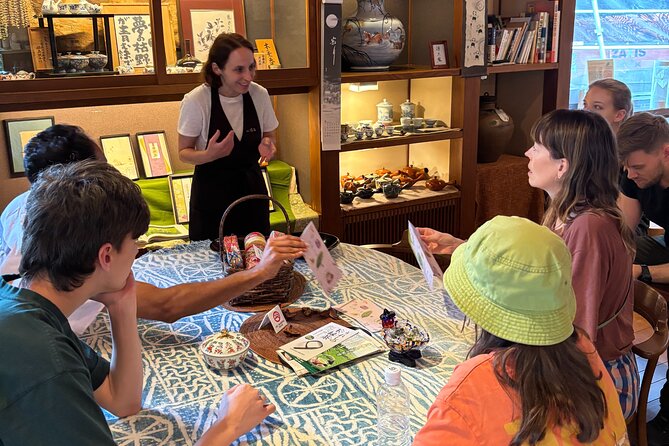
The tour then shifts from porcelain to green tea at the Ureshino Tea Exchange Museum, known as Chaoshiru. You spend about 45 minutes learning about green tea and its place in local culture.
The focus is not only on health claims. Green tea is connected to taste, preparation, farming, and daily life. The tour description highlights its reputation as a drink associated with brain function and digestion, but I would approach this stop mainly as a chance to understand tea as a cultural product rather than a cure-all.
The museum gives the tea portion a useful foundation. You learn some background before moving on to a specialist producer. That sequence makes sense: first understand the regional tea tradition, then taste and discuss the details with someone working in the field.
Tokunaga Seicha, a tea lesson with a European specialist
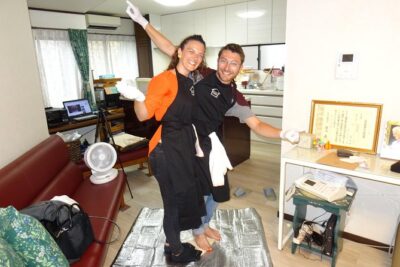
At Tokunaga Seicha, you meet the wife of the owner of this regional tea producer. She is originally from Europe and works as a tea sommelier. Her role adds an unusual bridge between Japanese tea production and an international audience.
You spend about 30 minutes here. That is short, but a specialist explanation can make the visit memorable. You may learn how green tea differs by type, how it should be prepared, and how to notice flavor. The exact tasting format is not specified, so you should not assume a full tea ceremony or extended workshop.
This is likely the tea stop most useful to someone who wants practical guidance. If you are buying tea, ask about the differences between products and how to prepare them at home. The stop also gives the day a personal connection, since you are meeting someone directly involved in local tea production.
The giant tree and the first Ureshino tea
The final stop is the site associated with Japan’s first Ureshino tea. It takes about 15 minutes and includes the giant tree of Ureshino, located in a rural part of Saga Prefecture.
Fifteen minutes may sound brief, but this is a symbolic closing stop. After learning about tea production and tasting, you finish with a place linked to the origin story of Ureshino tea.
Do not expect a long museum visit here. The appeal is the historical setting and the giant tree. It gives the tea portion a sense of place before you return to Fukuoka.
Three hours on the road, and why that matters
The tour lasts 10 to 11 hours, with about three hours spent traveling between attractions. That is a major part of the experience, not a minor footnote.
The good news is that you travel in an air-conditioned private vehicle with WiFi, bottled still and sparkling water, snacks, and commentary. The rural views between stops are part of the appeal. You see more of Kyushu than you would from a city-based walking tour.
The tradeoff is time. If you dislike long drives, this may feel tiring. The itinerary covers many places across Saga and the edge of Nagasaki, so the vehicle is what makes the route possible. A private car also saves you from planning several regional train and taxi connections.
Pickup is offered, but the supplied details do not state the exact pickup area or time. Confirm those details before booking. Lunch is included, with Japanese and Western choices, and may be served as a sit-down meal or something convenient to eat on the go.
Is $716.68 a fair price?
The price is $716.68 per group of up to three people. The group structure matters. Three people sharing the cost pay about $239 each, while two people pay about $358 each. For a solo participant, the same private price is a much larger commitment.
You are paying for more than admission tickets. Most stops have no admission charge, and the museum ticket is included. The main value comes from private transportation, pickup, parking, commentary, WiFi, food, drinks, and a route that would be difficult to organize efficiently in one day.
I would call it reasonable for a small group that wants a customized ceramic and tea day without renting a car. It is less attractive if you only want one pottery village, one tea shop, or a short introduction. The best value comes when you use the full day and take advantage of the mix of shopping, museums, rural sites, and specialist instruction.
Who should book this private Kyushu day trip?
I would recommend this tour to:
- Couples who want different interests covered in one day
- Small groups sharing the private vehicle cost
- Ceramic buyers who want time to compare regional porcelain
- Tea drinkers who want more than a quick souvenir stop
- Visitors based in Fukuoka who have already seen the main urban sights
- Anyone who prefers a flexible private route over public transport connections
It is less suitable if you want a slow, single-town visit. Ten stops create variety, but the schedule is active. You also need to accept that some visits last only 15 to 30 minutes.
The tour is private, and only your group participates. Most people can take part, but the supplied information does not give detailed accessibility notes for each site. Ask the provider if you need specific mobility arrangements.
Practical booking advice
This experience is booked about 49 days ahead on average, so I would not leave it until the last minute if your Fukuoka dates are fixed. The tour requires good weather. If poor weather causes cancellation, you are offered another date or a full refund.
The standard cancellation rule is strict: the experience is non-refundable and cannot be changed for any reason after booking. Check your schedule carefully before paying.
The provider is Shannon Lefebvre. Since the route includes many stops and a long drive, I would contact the provider with three clear preferences: how much time you want for shopping, how strongly you favor tea over ceramics, and whether you prefer a sit-down lunch or something faster.
Should you book it?
Book this tour if you want a private, well-filled day focused on two regional crafts and you are comfortable spending several hours on the road. The strongest parts are the mix of Arita porcelain sites, the two-hour shopping window, the English-supported ceramic museum, and the tea specialist at Tokunaga Seicha.
Skip it if your budget is tight, you dislike shopping, or you want a relaxed visit with long stays at only one or two places. For a couple or trio with real interest in ceramics and green tea, though, this is a useful way to reach parts of Saga and nearby Nagasaki that are hard to connect independently from Fukuoka.
FAQ
Where does the ceramics and green tea tour depart from?
The tour departs from Fukuoka, Japan, and pickup is offered. The exact pickup details should be confirmed with the provider.
How long does the tour take?
The experience lasts approximately 10 to 11 hours. About three hours of that time is spent traveling between attractions.
How many people can join the private tour?
The price covers a group of up to three people. Only your group participates in the activity.
Is lunch included?
Yes. Lunch is included, with Japanese and Western options. It may be provided as a sit-down meal or as food to eat on the go.
Are drinks and snacks provided?
Yes. Bottled sparkling and still water are provided throughout the day. Extra snacks are carried in the vehicles and may also be served at picnic-style stops.
What happens if bad weather cancels the tour?
The tour requires good weather. If it is canceled because of poor weather, you are offered a different date or a full refund.
Just added around Japan
- Yokohama : Tea Ceremony with Sweets and Souvenir★ 5.0 · 5 reviews
- Walking Tour: Yanaka,Nezu& Sendagi: Tea Ceremony & Old Tokyo★ 5.0 · 3 reviews
- Visit local home for music and tea ceremony near Disney★ 4.9 · 13 reviews
- Trip to Kamakura & Enoshima: Shrines, Seaside, Temples &Tea★ 5.0 · 11 reviews
- Yokohama: Sushi & Gyoza Cooking with Matcha & GreenTea Experience★ 5.0 · 3 reviews
- Kyoto tea town for matcha lovers★ 5.0 · 16 reviews
- Uji: Private immersion into Kyoto’s tea and reglious culture★ 5.0 · 17 reviews
- Uji Tea Ceremony and UNESCO Heritage Walking Tour★ 5.0 · 20 reviews
Green Tea Tours in Japan, compared.
Green Tea Tour with Byodoin and Koshoji Temple Visits
Read our review →
Scenic Green Tea Fields of Hidden Kyoto & Local Tea Exp (Private)
Read our review →
Osaka; Japanese Tea ceremony experience, Macha and Sencha
Read our review →
Slow Cycling Tour at Uji’s Matcha Green Tea Fields and Heritage
Read our review →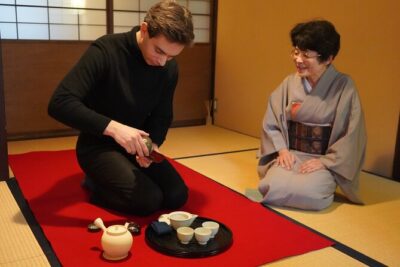
Sencha-do the Japanese Tea Ceremony Workshop in Kyoto
Read our review →Browse the lists this tour appears in