
Review · BEIJING
Beijing: Chinese Culture Tea Ceremony Reservation Service
Tea slows Beijing down. This two-hour ceremony near Tiananmen gives you a calm cultural break, with a choice of tea leaves and a clear look at traditional preparation. I like the English-speaking instructor and the thoughtful ceremony schedule at 10:00 AM or 3:00 PM. I also like the central location, close to Tiananmen Square and the Forbidden City. The main catch is cost: the $7 reservation fee covers only the booking, while tea-house spending averages about 398 RMB per person.
This is not a sightseeing tour with a guide leading you through Beijing. It is a reserved seat at a traditional teahouse and courtyard, followed by a structured tea session. You should arrive ready to pay for the tea-house experience and any tea leaves you decide to buy.
Key points to know before booking
- The $7 price is only a reservation fee: Your tea, food if offered, and tea leaves are paid for separately at the teahouse.
- Two appointment times are available: The scheduled starts are 10:00 AM and 3:00 PM, with each session lasting about two hours.
- The location works well with major sights: The teahouse is described as close to Tiananmen Square, the Forbidden City, and Yonghe Temple.
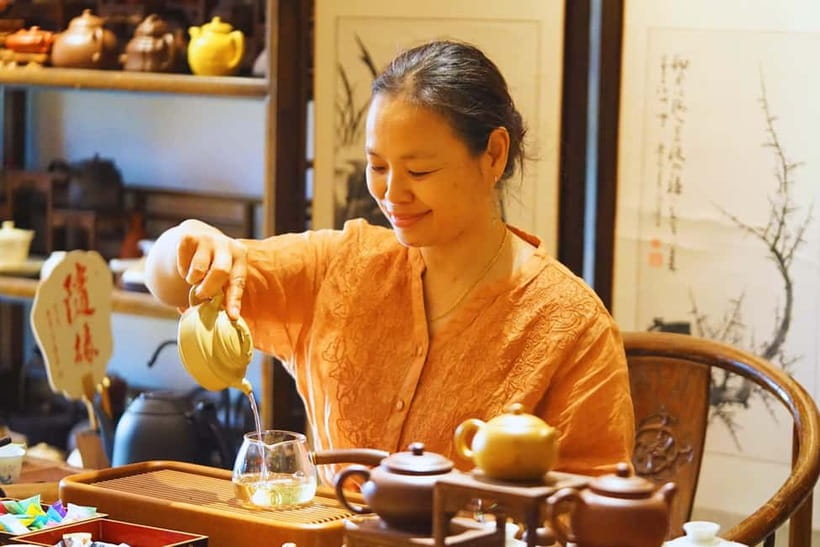
- The ceremony follows a set sequence: You will warm the utensils, add and shake the leaves, smell the aroma, rinse and brew the tea, then serve and taste it.
- English help is included: An English-speaking tea ceremony instructor explains the process, supported by an English textual and visual guide.
- The mood is quiet and deliberate: The focus is simplicity, nature, balance, and harmony between heart and mind.
A quiet pause near Tiananmen
Beijing can be a demanding city to visit. Tiananmen Square and the Forbidden City call for time, attention, and plenty of walking. A tea ceremony gives you a different kind of cultural experience, one that asks you to sit still and notice small actions.
I like that the activity is placed near the city center rather than far outside Beijing. You can fit it around major sightseeing, though you should allow enough time to find the building and reach the second floor. The meeting instructions say to take the elevator to the second floor after arriving. Express elevators are available, which should make the arrival easier.
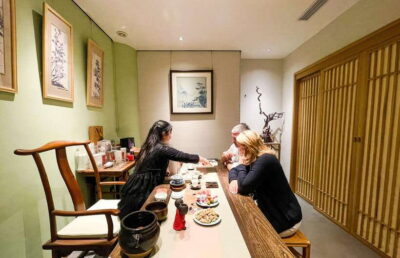
The setting is described as a traditional teahouse and courtyard. The exact room layout and group size are not provided, so you should not expect a private ceremony unless that is confirmed after booking. The reservation secures your place, but it does not turn the session into a private tour.
More Tea Ceremonies in China
- Traditional Chinese Tea Ceremony Experience
★ 4.7 · 74 reviews - Beijing Culture: Tea Ceremony, Heritage Instrument & Calligraphy
★ 5.0 · 57 reviews - Chinese Tea ceremony in Beijing Hutong courtyard
★ 4.7 · 26 reviews
What your two hours look like
The ceremony follows a clear order. That matters because Chinese tea preparation is not simply a matter of pouring hot water into a cup. Each movement has a purpose, from warming the vessels to releasing the leaves fragrance.
The session begins with the host and guest greeting each other. This opening sets a respectful tone and introduces the basic relationship at the heart of the ceremony. You are not just being served tea. You are taking part in a formal exchange between the person preparing the tea and the person receiving it.
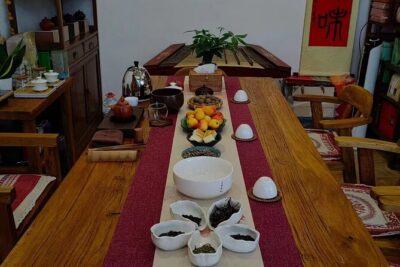
Next come the utensils. The host warms them before adding the tea leaves. This practical step prepares the cups and brewing vessel, while also making the process feel measured rather than rushed. You will then choose your preferred tea leaves, an important part of the booking because the reservation does not include the cost of those leaves.
The leaves are added and shaken to release their fragrance. You will smell the tea before drinking it, which encourages you to notice more than taste alone. The cups are warmed, the tea is rinsed, and then the first proper brew is prepared.
Finally, the tea is served for you to enjoy. The full sequence includes greeting, warming, adding, shaking, smelling, rinsing, brewing, serving, and tasting. For someone new to Chinese tea customs, this order gives you a useful framework. You can follow along without needing to know the etiquette in advance.
Choosing your tea and understanding the extra cost
The advertised price can look wonderfully low at first. The $7 per-person charge is useful as a reservation fee, but it is not the price of the complete experience. You will pay additional expenses at the teahouse, and the stated average spending is around 398 RMB per person. Tea leaves are not included, especially if you decide to purchase some to take home.
I would treat the $7 as the cost of securing access, not as the total budget. Before committing to any tea purchase, ask clearly about the price and what it includes. The supplied details do not list the tea varieties, serving sizes, food options, or exact breakdown of that 398 RMB average, so you should get those details at the teahouse.
This is the most important value question. If you only want to sample a cup of tea and leave, the total price may feel high. If you want an organized introduction to tea preparation, a central location, English instruction, and time to examine several stages of the ceremony, the cost may make more sense.
The tea leaves themselves may be the part that makes the bill change. You choose your preferred leaves, and buying tea is optional in the sense that the purchase cost is separate. I would decide in advance whether you want only the ceremony or also a package of tea to bring home.
Why the English instructor matters
The included English-speaking instructor is one of the strongest practical features. Tea etiquette can be difficult to follow if you are watching without explanation. An instructor can tell you what is happening as the utensils are warmed, the leaves are rinsed, and the aroma is released.
The experience also includes an English textual and visual guide. That gives you something to consult for the teahouse location, transportation details, and ceremony information. It is especially useful in a large city where arriving at the correct building can take more effort than expected.
This is not advertised as a full guided tour of Beijing. A tour guide and an audio guide are not included. The instructor’s role is connected to the tea ceremony, not to the history of Tiananmen Square, the Forbidden City, or Yonghe Temple.
That distinction helps you set the right expectations. You will get support for the cultural activity, but you should arrange your own sightseeing plans and transportation around it.
More Tea Ceremonies in Beijing:
- Beijing Culture Event: Tradition Music, Tea Ceremony, Calligraphy
★ 5.0 · 11 reviews - Beijing: Temple Of Heaven+Tai Chi Class+Tea Ceremony
★ 5.0 · 8 reviews - Traditional Chinese Tea Ceremony Experience
★ 5.0 · 7 reviews - Beijing Tai Chi and Tea Ceremony Experience
★ 5.0 · 4 reviews
Fitting the ceremony into a Beijing day
The available appointment times are 10:00 AM and 3:00 PM. These times are presented as especially suitable for drinking tea according to traditional Chinese culture and medicine. They also happen to work well for a sightseeing schedule.
The 10:00 AM session can make a good start to the day. You could use the ceremony as a gentle opening before spending more time around central Beijing. Since the teahouse is described as close to Tiananmen Square and the Forbidden City, the location may be convenient for a same-day visit to those sights. Still, you should allow time for entry procedures and the walk between places.
The 3:00 PM session suits a midday break. You can visit a major sight earlier, then sit down for tea before continuing into the evening. The teahouse is open from 10:00 AM to 8:00 PM, but the available appointment choices are specifically listed as 10:00 AM and 3:00 PM. Do not assume that you can arrive at any time during opening hours.
The activity lasts two hours. That is long enough for a complete ceremony without taking over your entire day. It is not a quick stop, so avoid placing it between two tightly timed reservations.
The location near Beijing’s major sights
The teahouse is described as very close to Tiananmen Square, the Forbidden City, and Yonghe Temple. That central position is a real advantage for visitors who want cultural activities without spending much of the day crossing the city.
Near Tiananmen and the Forbidden City, you will already be in one of Beijing’s most important sightseeing areas. A tea ceremony adds a personal, hands-on experience to the monumental scale of the imperial sites. You see grand courtyards and enormous gates elsewhere in your day, then sit with small cups, leaves, steam, and careful movements.
The mention of Yonghe Temple also makes the location useful for a different kind of cultural outing. The supplied information does not give exact walking times between the teahouse and these sights, so plan with the address and visual guide rather than relying only on the phrase near.
On arrival, take the elevator to the second floor. The express elevator option may help if you are in a hurry or carrying luggage. The activity ends back at the meeting point, so you will not be escorted onward to another attraction.
What the atmosphere is meant to teach
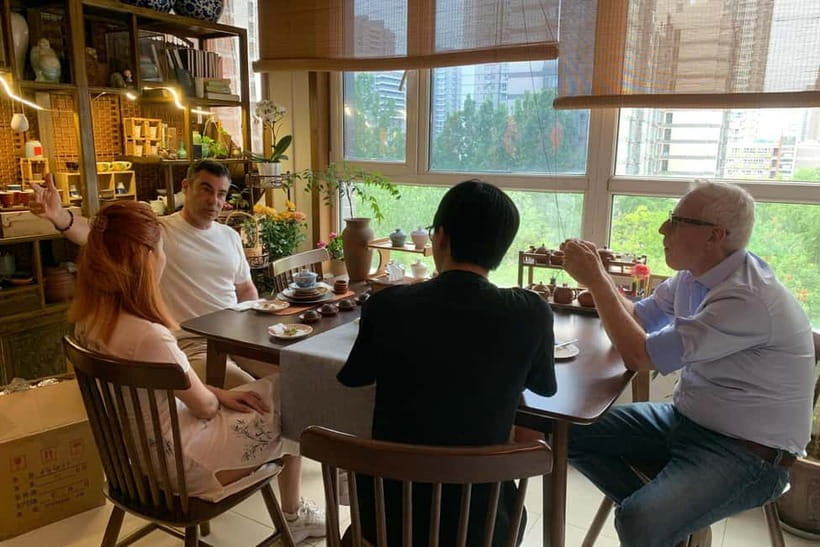
The central ideas are simplicity, nature, balance, and harmony between heart and mind. Those words can sound abstract, but the ceremony gives them a practical form. You slow down, handle the utensils carefully, smell the leaves, and drink in small servings instead of rushing through a large cup.
I like this because it gives you a way to engage with Chinese culture through your senses. You are not only hearing an explanation. You are watching a process and taking part in it.
The session can also be useful for curious beginners. You do not need to arrive as a tea expert. The ordered steps make the experience approachable, and the instructor can explain what each action means. The ceremony may appeal most to people who enjoy small details, quiet settings, and cultural customs that reward patience.
It may be less suitable if you want a fast, highly social activity or a broad overview of Beijing. There is no listed walking tour, city commentary, or major sightseeing stop included.
Accessibility and practical comfort
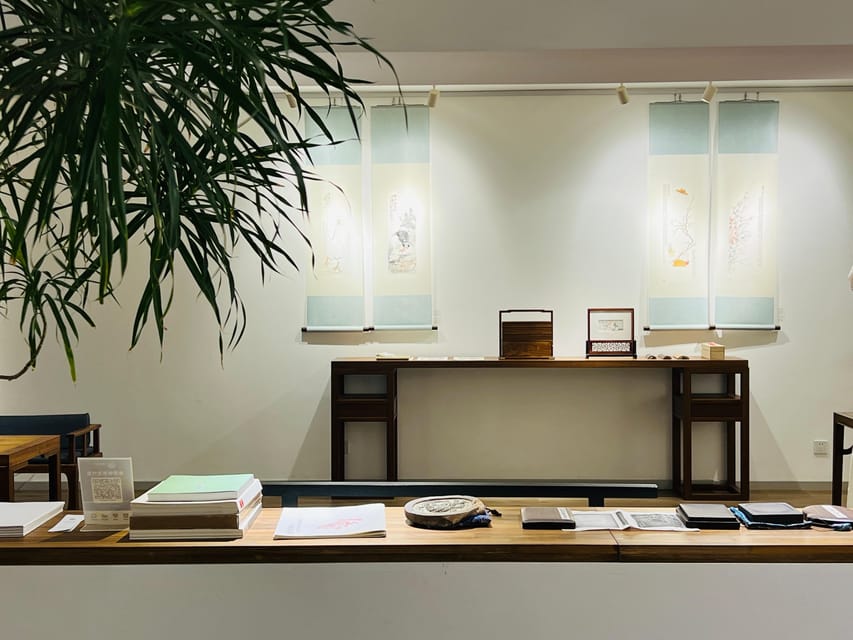
The activity is listed as wheelchair accessible. That is helpful, especially with the second-floor meeting point and elevator access. The express elevators may also make arrival easier for anyone who prefers to avoid stairs or long waits.
The information does not describe the size of the courtyard, the table arrangement, or restroom facilities. If those details matter to you, ask the provider before confirming. The booking service can provide the teahouse and transportation guide, but the listing does not promise a specific seating arrangement.
Bring the name and phone number used for the reservation. You are instructed to provide those details upon arrival. Having them ready should reduce confusion at the meeting point.
The service quality and what to expect from the host

The strongest praise centers on the service. The host is described as friendly, welcoming, attentive, and warm. Those qualities matter in a tea ceremony because the host controls the pace and explains a series of unfamiliar actions.
A warm welcome can make the experience easier for first-time participants. You can ask questions, follow the sequence, and take your time with the tea instead of worrying about making a mistake. The favorable comments about the tea itself also suggest that the actual tasting is a meaningful part of the visit, not just a demonstration.
Still, individual instruction can vary. Only an English-speaking instructor is promised, not a particular person by name. There is also no promise that every tea variety or every ceremony format will be available on every day.
Who should book this tea ceremony?
I would recommend it most strongly to three kinds of people:
- You want a direct introduction to Chinese tea customs rather than another general sightseeing lecture.
- You enjoy slow cultural activities and are happy to spend two hours seated and attentive.
- You want an English-supported experience near central Beijing sights.
It can also work well for couples, families with older children, and visitors who need a break from walking. The wheelchair-accessible listing and elevator access make it worth considering for visitors who need step-free entry.
I would be more cautious if you are watching your budget closely. The $7 reservation fee is attractive, but the average additional spending of about 398 RMB per person changes the calculation. Ask about the expected tea-house bill before ordering, especially if you are not planning to buy tea leaves.
You should also skip it if your main goal is to learn about Beijing’s imperial buildings. The location is convenient for those sights, but the ceremony itself focuses on tea, etiquette, and the balance of the ritual.
Booking flexibility and final value
You can cancel up to 24 hours before the appointment for a full refund. The reserve-now-and-pay-later option also keeps your plans flexible, which is useful in Beijing when sightseeing times can shift.
The best value comes from treating this as a cultural lesson with tea, not as a cheap drink stop. You are paying for a reserved place, an English guide, a visual and written guide, and a structured ceremony in a central teahouse. The tea-house bill remains separate, so budget for the full visit rather than the headline fee alone.
Should you book it?
Book this experience if you want a calm, organized introduction to Chinese tea culture and appreciate having English help during the ceremony. The central location, welcoming service, and careful sequence make it a good companion to visits around Tiananmen Square and the Forbidden City.
Skip it if you want a low-cost cup of tea, a private tour, or a broad Beijing sightseeing experience. Before you go, confirm the expected tea-house spending and decide if you want to purchase tea leaves. With that cost understood, this can be a thoughtful two-hour pause in a very busy city.
FAQ
How much does the reservation cost?
The reservation service costs $7 per person.
Does the $7 fee include the tea?
No. The reservation fee does not cover expenses at the teahouse.
How much should I expect to spend at the teahouse?
Average spending is around 398 RMB per person. This average does not include the cost of purchasing tea leaves.
How long does the tea ceremony last?
The activity lasts two hours.
What appointment times are available?
The specifically selected appointment times are 10:00 AM and 3:00 PM.
Where is the teahouse located?
The teahouse is described as very close to Tiananmen Square, the Forbidden City, and Yonghe Temple.
Is an English-speaking instructor included?
Yes. An English-speaking tea ceremony instructor is included.
Is a tour guide included?
No. A general tour guide and an audio guide are not included.
What happens during the tea ceremony?
The host and guest greet each other, prepare the tea, warm the utensils, add and shake the tea leaves, smell the aroma, warm the cups, rinse the tea, brew it, serve it, and enjoy it.
Is the activity wheelchair accessible?
Yes. The activity is listed as wheelchair accessible, and the meeting instructions direct you to take the elevator to the second floor.
Just added around Beijing
- Private Tour to the Temple of Heaven and Tea tasting at the Maliandao Tea city★ 5.0 · 3 reviews
- Traditional Chinese Tea Ceremony Experience★ 5.0 · 7 reviews
- Private Beijing Spiritual Tour with Lunch and Tea Ceremony★ 5.0 · 2 reviews
- Temple of Heaven Private Tour and Tea Tasting at Maliandao Tea Street★ 5.0 · 2 reviews
- Beijing Tai Chi and Tea Ceremony Experience★ 5.0 · 4 reviews
- 3-Hour Private Hutong Walking Tour with Drum Show at Drum Tower and Tea Tasting★ 5.0 · 3 reviews
- 3-hour Morning/Afternoon Tea Tasting on Maliandao Street & Dimsum★ 5.0 · 7 reviews
- Beijing:Learn Calligraphy & Enjoy Kung Fu Tea Ceremony★ 5.0 · 2 reviews
Tea Ceremonies in China, compared.
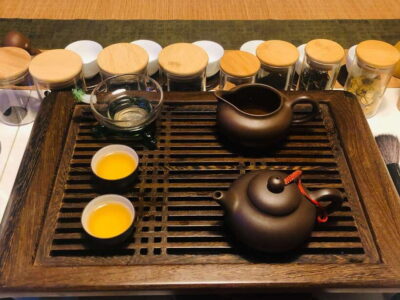
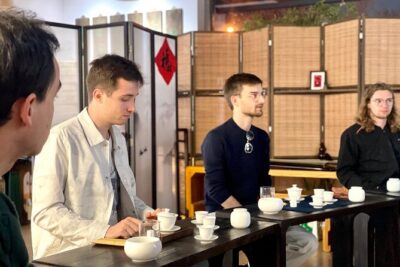
Beijing Culture: Tea Ceremony, Heritage Instrument & Calligraphy
Read our review →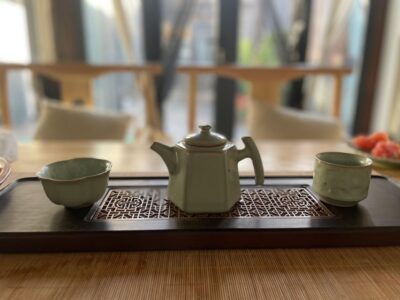
Chinese Tea ceremony in Beijing Hutong courtyard
Read our review →
Beijing Culture Event: Tradition Music, Tea Ceremony, Calligraphy
Read our review →
Browse the lists this tour appears in