
Review · BEIJING
Beijing Culture Event: Tradition Music, Tea Ceremony, Calligraphy
Slow down in Beijing. This small cultural session brings tea, the ancient guqin, and Chinese calligraphy together in one calm, hands-on visit. I like the three-part format, which gives you more than a short demonstration, and I like the chance to try the instruments and brushwork yourself. The price is another major strength: at $15 per person, it offers strong value for a two-to-three-hour activity.
The main consideration is location. You meet on Huagong Road in Chaoyang District and return there at the end, so you will need to plan your own way to and from the venue. The session also depends on availability and a minimum number of participants, and the schedule is described both as two to three hours and as a three-hour program.
Key points at a glance
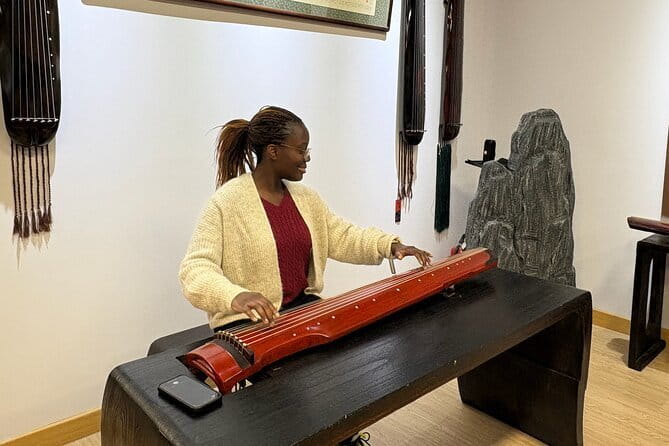
- A rare guqin lesson: Hear a 2,000-year-old Chinese instrument played by a performer connected with the Beijing Guqin Association, then try a simple melody yourself.
- Three traditions in one visit: Tea preparation, live music, and calligraphy create a varied cultural program without sending you across Beijing.
- Small group setting: The maximum group size is 12, which should give you a quieter setting and a better chance to ask questions.
- Excellent price: At $15, the session costs less than many single cultural activities while including instruction and hands-on practice.
- Best for curious beginners: No prior music or calligraphy experience is required, and the program suits couples, families, first-time visitors, and business groups.
Why this Beijing cultural experience is worth your time
Beijing offers grand palaces, broad public squares, and famous historic sights. Those places show you the public face of China. This experience takes a smaller route into Chinese culture through three practices that have traditionally been linked with patience, refinement, and self-discipline.
I like the way the activities balance watching and doing. You begin with a tea ceremony, listen to a guqin performance, and then pick up a brush and instrument yourself. That matters because a demonstration can be pleasant but easy to forget. Trying even a basic technique gives you a better sense of the care behind it.
The low price also changes the calculation. At $15, you are not paying for a full-day tour or a major attraction. You are paying for a focused cultural session with an English guide, tea or coffee, a traditional music performance, use of an old guqin, and practical activities. For a half day in Beijing, that is a reasonable buy.
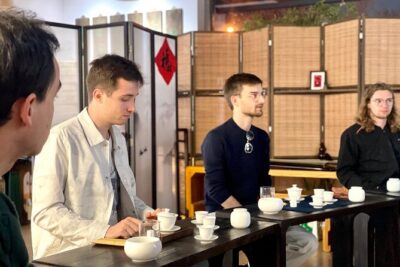
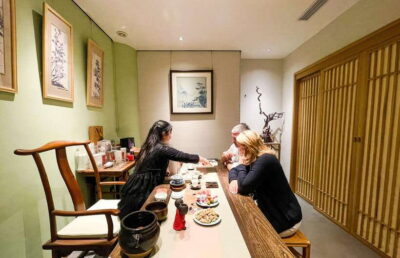
The activity has a maximum of 12 people. That is small enough to feel more personal than a large stage performance, while still allowing you to meet other people. The setting is intended to be peaceful rather than hurried, which suits anyone who wants a quieter break from Beijing’s traffic and crowded sights.
More Tea Ceremonies in China
- Traditional Chinese Tea Ceremony Experience
★ 4.7 · 74 reviews - Beijing Culture: Tea Ceremony, Heritage Instrument & Calligraphy
★ 5.0 · 57 reviews - Chinese Tea ceremony in Beijing Hutong courtyard
★ 4.7 · 26 reviews
Meeting at Huagong Road in Chaoyang District
The meeting point is on Huagong Road, written as Hua Gong Lu, in Chaoyang District. The experience begins and ends at the same place, so this is not a sightseeing tour that drops you near another attraction.
That arrangement has one clear benefit: you do not have to keep track of changing stops. Once you reach the meeting point, the program stays in one setting. The drawback is that transportation planning is your responsibility. The information confirms that the location is near public transportation, but it does not provide a pickup service or a detailed route.
I would allow extra time to find the exact meeting point, especially if you are unfamiliar with Beijing addresses. Keep the mobile ticket available on your phone, since the booking includes mobile ticket access. Confirmation is sent within 48 hours of booking, subject to availability, so do not leave your reservation until the last possible moment.
The total program is listed as about two to three hours, with the itinerary describing a three-hour session. Plan on setting aside three hours. That gives you enough time to arrive without rushing and keeps the activity from colliding with a tightly scheduled museum visit or dinner reservation.
Tea ceremony: a quiet start with useful cultural context
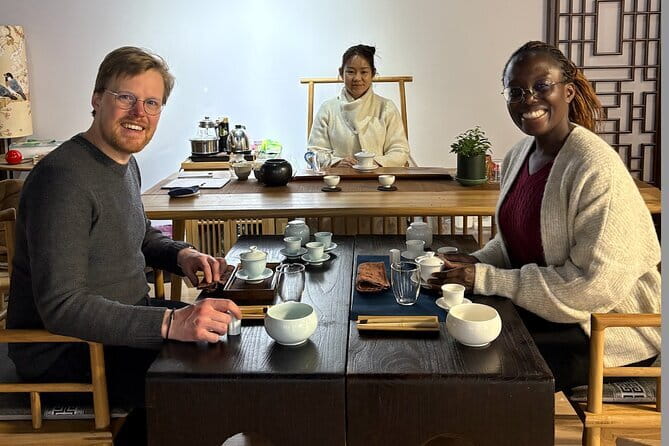
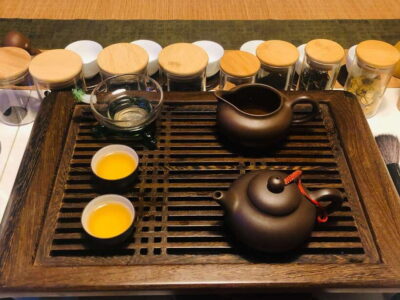
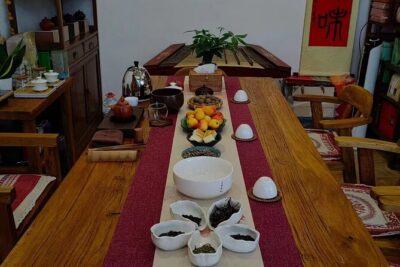
The first part is a guided tea ceremony and tasting. You learn about the role of tea, along with basic ceremony etiquette and preparation. This is not simply a cup of tea handed to you at the door. The point is to show how brewing, serving, and drinking can be treated as a thoughtful social practice.
I like this opening because it sets the pace for the rest of the session. Tea gives you a gentle introduction before the more unusual guqin activity. It also provides a useful reminder that Chinese traditions often place value on attention to small movements: how something is prepared, presented, and received.
The ceremony is described as both a performance and an experience. You should expect to watch the guide prepare tea, then take part in some of the process. The exact tea selection is not specified, so you should not book this expecting a particular variety.
The atmosphere is one of the program’s strongest points. The tea ceremony creates a calm beginning, and the small group format helps keep it from feeling like a loud demonstration. If you prefer active sightseeing from morning until night, the quiet pace may feel slow. If you want a pause between major Beijing sights, it should be welcome.
Tea or coffee is included. Lunch and dinner are not, so treat this as a cultural activity rather than a meal replacement.
Guqin music: the most distinctive part of the visit

The guqin is the heart of the program. This long, plucked Chinese instrument has a history of about 2,000 years and has traditionally been associated with scholars and dignitaries. The experience uses a guqin with more than 50 years of history, which gives the lesson a physical connection to the past without pretending that the instrument itself is ancient.
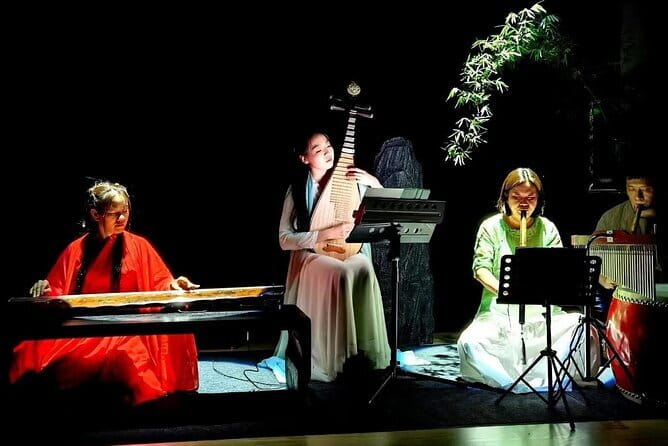
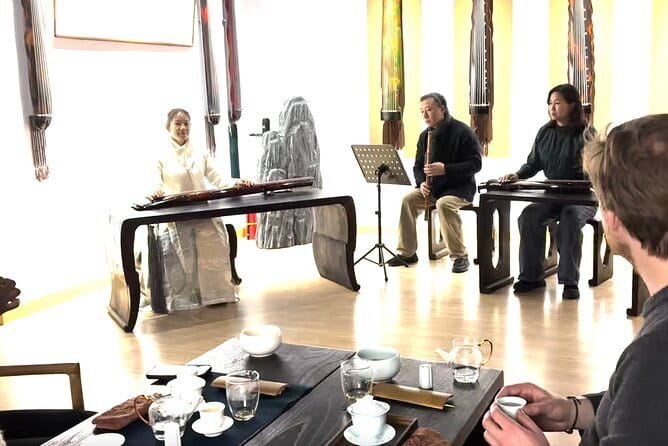
The performer is described as a master from the Beijing Guqin Association. That is important. The guqin is not a familiar instrument for most international visitors, and a skilled performer can explain its sound and cultural role far better than a generic entertainment act.
You first listen to a traditional performance. The tone is often described as mellow, restrained, and peaceful. It is not a loud stage show, so you will get more from it if you pay attention to the small changes in tone and rhythm.
Then comes the hands-on portion. You can try to play a simple tune from Crouching Tiger, Hidden Dragon. No previous music experience is required. Do not expect to leave as a guqin player after one session. The value is in feeling how the instrument responds and understanding that traditional music can use a very different musical language from the piano or guitar.
One especially interesting point concerns old Chinese music notation. The guide explains that ancient guqin scores are written with Chinese characters rather than standard Western staff notation. That detail gives musicians and anyone interested in writing systems something extra to think about. You are not only hearing music. You are seeing how a musical tradition records and passes on sound.
The guqin portion may be the best reason to book this experience. Tea ceremonies and calligraphy workshops are available in many cities, but a guided introduction to the guqin is less common. The performance, instrument access, and explanation form a good combination.
More Tea Ceremonies in Beijing:
- Beijing: Temple Of Heaven+Tai Chi Class+Tea Ceremony
★ 5.0 · 8 reviews - Traditional Chinese Tea Ceremony Experience
★ 5.0 · 7 reviews - Beijing Tai Chi and Tea Ceremony Experience
★ 5.0 · 4 reviews - Beijing: Chinese Culture Tea Ceremony Reservation Service
★ 4.8 · 4 reviews
Calligraphy: making your own piece
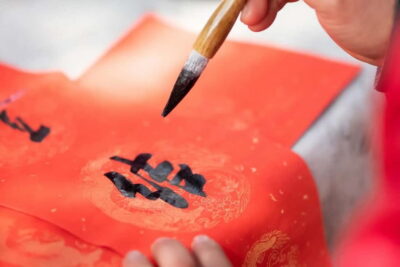
The final main activity is a Chinese calligraphy workshop. You learn basic brush techniques and write a meaningful word or short phrase of your own.
This is where the program becomes especially personal. You are not only looking at characters on a wall or watching an expert write them. You get to make something that can serve as a simple keepsake from Beijing. Your result may look more like a first attempt than a museum piece, but that is part of the charm.
Calligraphy is also a good way to understand the physical side of Chinese writing. Brush angle, pressure, spacing, and the order of strokes all affect the final character. Even a short phrase requires control. The exercise encourages you to slow down and focus on each movement.
You should not need Chinese language skills to participate. The activity is designed around basic technique and a meaningful word or phrase, with guidance from an English-speaking guide. The exact choice of phrase is up to you, but the supplied details do not specify a set list of characters or a particular calligraphy style.
The calm mood continues here. Calligraphy can feel meditative, but the workshop is still hands-on and social. Couples can write for each other, families can create pieces together, and business groups can use the activity as a more memorable alternative to meeting over coffee.
Small groups, English guidance, and the overall atmosphere
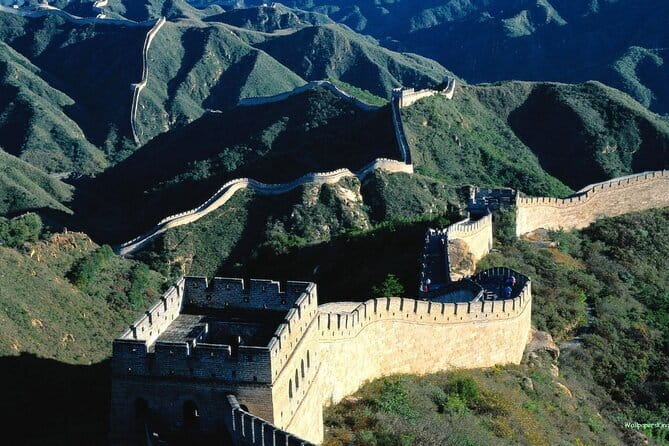
The maximum group size is 12. That limit matters because demonstrations involving tea, music, and brushwork can become frustrating when you are standing at the back of a large crowd. A group of this size should make it easier to see the instructor and get a turn with the guqin.
An English guide is included. That helps with the cultural explanations, especially during the tea ceremony and the discussion of guqin notation. The available information does not name the guide, so you should not expect to request a particular instructor.
The tone is gentle and low-pressure. You can expect a cultural lesson rather than a staged show with a strict performance schedule. This makes the activity suitable for people who dislike noisy group tours or who want something reflective after a busy day.
The session also appears to work well for several types of visitors:
- First-time visitors to China: You get three clear introductions to Chinese traditions in one sitting.
- Couples: Tea, music, and writing create a more distinctive date than another restaurant meal.
- Families: The activities give children and adults something to watch and try.
- Musicians: The guqin and its character-based notation offer a fresh comparison with Western music.
- Business groups: The setting provides a relaxed cultural activity for clients or colleagues.
- Quiet culture seekers: The pace is calm, and participation does not require public performance or advanced skills.
People with mobility needs should note that the activity is listed as suitable for most participants, but detailed information about seating, steps, or restroom access is not provided. Service animals are allowed.
What the $15 price really includes
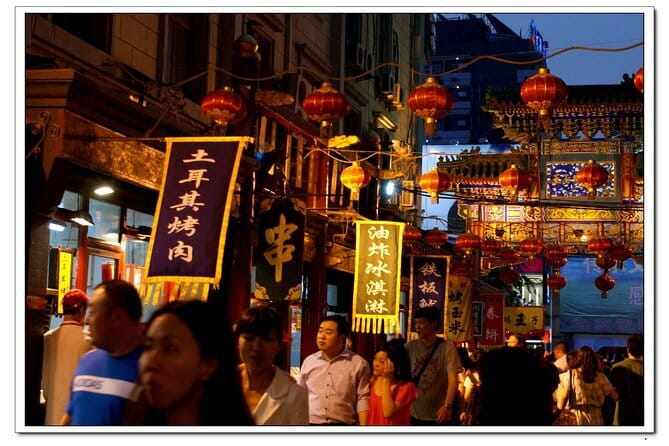
The price is the clearest selling point. For $15 per person, you receive a tea ceremony and tasting, traditional instrument performance, use of a guqin with more than 50 years of history, calligraphy instruction, an English guide, and tea or coffee.
That is a lot of content for a short session. The program is not a luxury private lesson, and you should not expect a long individual music class or a formal calligraphy certificate. Still, the combination gives you a better value than paying separately for three short introductions.
The program also avoids a common problem with inexpensive cultural activities: offering only a photo opportunity. Here you have several chances to participate. You brew or taste tea, try the guqin, and practice brushwork. Those activities make the price feel practical rather than merely cheap.
Personal purchases are not included. Lunch and dinner are also not included. If you want souvenirs, tea to take home, or additional food, budget separately.
Some feedback refers to wearing hanfu, traditional Chinese clothing, during the experience. Hanfu is not clearly listed among the included services, so I would confirm this directly before booking if clothing is important to you. Do not assume it is guaranteed at the $15 price.
Booking timing and cancellation details

The activity is booked, on average, 44 days ahead, which suggests you should reserve early if your Beijing dates are fixed. Confirmation arrives within 48 hours, subject to availability.
You can cancel for a full refund up to 24 hours before the scheduled start time. Cancellations made within 24 hours are not refunded, and changes inside that period are not accepted. Cut-off times follow Beijing local time, so check the clock carefully if you are arranging the booking from another time zone.
The experience requires a minimum number of participants. If that minimum is not reached and the session is canceled, you are offered another date or experience, or a full refund.
Should you book this Beijing culture event?
I would book it if you want a low-cost, small-group activity that offers more than a standard tea tasting. The guqin performance and beginner lesson are the strongest features, while the tea ceremony and calligraphy give the visit a satisfying three-part structure.
It is particularly good for a first trip to China, a couple seeking a quieter evening, a family looking for a shared activity, or anyone curious about music and writing traditions. At $15, the risk is low, provided Huagong Road fits your plans.
I would skip it only if your schedule cannot spare three hours, you need hotel pickup, or you are looking for a large-scale performance rather than instruction and participation. For everyone else, this is a thoughtful way to trade a little sightseeing time for tea, music, brushwork, and a closer look at Chinese cultural practice.
FAQ
Where does the experience begin?
It begins at Huagong Road, also written as Hua Gong Lu, in Chaoyang District, Beijing.
Where does the experience end?
The activity ends back at the meeting point on Huagong Road.
How long does the experience last?
The duration is approximately two to three hours. The itinerary describes a three-hour session, so you should plan for three hours.
How much does the experience cost?
The listed price is $15 per person.
What activities are included?
The program includes a tea ceremony and tasting, a traditional guqin performance, a chance to try the guqin, and a Chinese calligraphy workshop.
Is an English guide included?
Yes. An English guide is included.
Is prior music or calligraphy experience required?
No. The guqin activity is suitable for beginners, and the calligraphy workshop teaches basic brush techniques.
How many people can join the group?
The maximum group size is 12 participants.
What is the cancellation policy?
You can cancel up to 24 hours before the start time for a full refund. Cancellations or changes made less than 24 hours before the start time are not accepted for a refund.
More Tea and Calligraphy Workshops in Beijing
- Beijing Hands-On Culture Tour: Tea, Instrument, Calligraphy
★ 5.0 · 6 reviews - Beijing:Learn Calligraphy & Enjoy Kung Fu Tea Ceremony
★ 5.0 · 2 reviews - Kyoto: Tea Ceremony Meditation – Make Matcha with Tea Master
★ 4.8 · 406 reviews - Osaka: Tea Ceremony, Calligraphy, and Kimono Experience
★ 4.9 · 130 reviews
Just added around Beijing
- Private Tour to the Temple of Heaven and Tea tasting at the Maliandao Tea city★ 5.0 · 3 reviews
- Traditional Chinese Tea Ceremony Experience★ 5.0 · 7 reviews
- Beijing Tai Chi and Tea Ceremony Experience★ 5.0 · 4 reviews
- Private Beijing Spiritual Tour with Lunch and Tea Ceremony★ 5.0 · 2 reviews
- Temple of Heaven Private Tour and Tea Tasting at Maliandao Tea Street★ 5.0 · 2 reviews
- 3-hour Morning/Afternoon Tea Tasting on Maliandao Street & Dimsum★ 5.0 · 7 reviews
- 3-Hour Private Hutong Walking Tour with Drum Show at Drum Tower and Tea Tasting★ 5.0 · 3 reviews
- Beijing:Learn Calligraphy & Enjoy Kung Fu Tea Ceremony★ 5.0 · 2 reviews
Tea Ceremonies in China, compared.
Beijing Culture: Tea Ceremony, Heritage Instrument & Calligraphy
Read our review →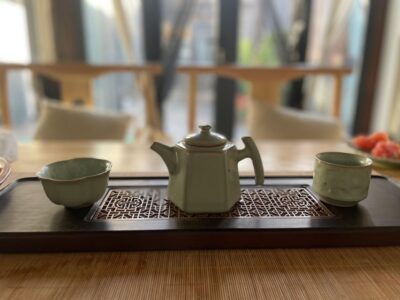
Chinese Tea ceremony in Beijing Hutong courtyard
Read our review →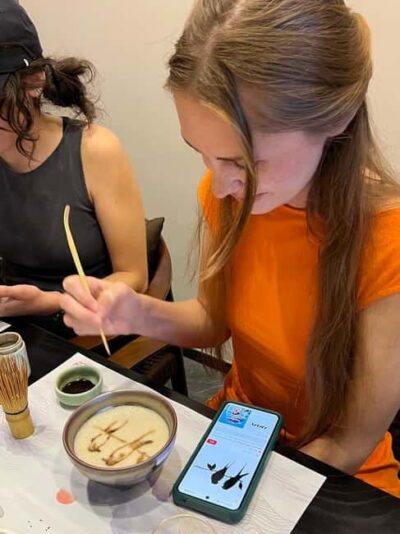
Browse the lists this tour appears in