
Review · JAPAN
Authentic Japanese Tea Ceremony Experience in Kamakura
Quiet ritual, close to Tokyo. This 60-minute Kamakura tea ceremony gives you a clear look at Japanese hospitality, not just a cup of green tea. I like the small group limit of six and the chance to whisk and serve matcha yourself. The main drawback is finding the meeting point, since the directions near Kita-Kamakura Station could be clearer.
I also like the thoughtful setup: a certified tea master explains the meaning behind each movement, then lets you try it step by step. At $36 per person, the price is fair for two servings of matcha, seasonal wagashi, utensils, and a traditional performance. Just remember to bring socks, remove your shoes, and tell the staff ahead of time if kneeling is difficult.
Key points at a glance
- Only six people per session: The small group keeps the tea room calm and gives you room to ask questions.
- Two servings of matcha: You watch the ceremony, then whisk and serve tea yourself with guidance.
- Five to seven minutes from the station: The tea room is near Restaurant Wata, close to JR Kita-Kamakura Station.
- English and Japanese instruction: You can follow the history, manners, and practical steps without guessing.
- Chairs are available: If sitting on tatami is hard, request a chair in advance.
- A good cultural break from Tokyo: The one-hour format fits neatly into a day in Kamakura.
Why this Kamakura tea ceremony is worth your time
Kamakura is a smart place for a tea ceremony. It is close enough to Tokyo for an easy day trip, yet the town has a slower feel than the capital. A quiet tea room makes a useful pause between temple visits, train rides, and busy streets.
This session focuses on sadō, the way of tea. You are not simply handed matcha and a sweet. The instructor explains why the host moves carefully, how guests should behave, and how the ceremony expresses welcome and respect. That context matters. Without it, a tea ceremony can seem like a series of lovely gestures. With it, you start to see the purpose behind the silence, the order, and the attention given to each guest.
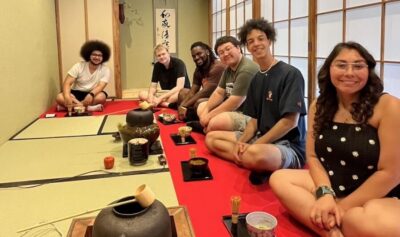
The program is also practical. You watch a full tea-making performance, then get to handle the whisk and make tea yourself. That hands-on part gives you a better memory than simply sitting back for a demonstration. You will probably make a slightly imperfect bowl, which is exactly why guidance helps. No previous experience is expected.
The session has earned especially strong praise for being pleasant, friendly, interesting, and beautiful. That matches the design of the activity: the mood is personal rather than theatrical, and the group is small enough for direct instruction.
More Tea Ceremonies in Japan:
- Kyoto: Tea Ceremony in a Traditional Tea House in Kiyomizu
★ 4.9 · 3,519 reviews - Kyoto: Tea Ceremony Ju-An at Jotokuji Temple
★ 4.9 · 3,207 reviews - Kyoto: 45-Minute Tea Ceremony Lesson Experience
★ 4.3 · 2,378 reviews
Entering the sukiya-zukuri tea room
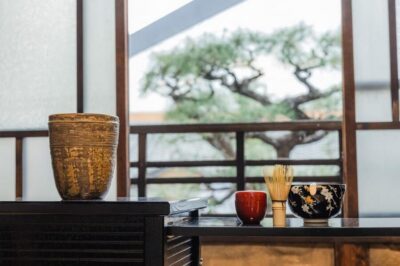
The room is designed in the sukiya-zukuri style, a traditional approach associated with simplicity, natural materials, and careful attention to space. The supplied information does not give a full architectural tour, so you should not expect a long lesson in building design. Still, the room itself is part of the teaching.
You remove your shoes before entering the tatami room, so wear clean socks. This is not just a practical rule. The change from street shoes to a quiet interior helps mark the shift from ordinary sightseeing to a formal cultural setting.
There is no required dress code, but modest clothing is recommended. Choose clothes that let you sit comfortably and avoid anything that makes kneeling or moving your hands awkward. Chairs can be provided if kneeling is difficult, but you should notify the staff in advance rather than waiting until the session begins.
The meeting point is listed as tea room Chikusuian, near Restaurant Wata, about a seven-minute walk from Kita-Kamakura Station. Another description places it at about five minutes from the station. Allow a little extra time, particularly if you are arriving by train and need to identify the restaurant or nearby entrance. One Italian-language comment called the activity beautiful, while a French-language comment praised the pleasant and convivial setting but pointed out that the location details could be improved. That is useful advice: save the meeting information before leaving the station.
What happens during the 60 minutes
The hour is short enough for most schedules but long enough to cover more than a photo opportunity. The session follows a simple progression.
First, you learn the meaning of tea
The certified tea master introduces the history and ideas connected with Japanese tea ceremony. You learn about the customs and manners that shape the experience, including how to behave in the room and why the host follows a set order.
The lesson also introduces omotenashi, the Japanese ideal of wholehearted hospitality. In the tea room, this means the host prepares for the guest with care and attention. The point is not speed. It is making the guest feel considered through small actions.
The instructor also explains the connection between tea ceremony and Zen ideas such as mindfulness. You do not need a background in Buddhism or Japanese culture to follow along. The English instruction is intended to make the session comfortable for first-time visitors.
A few more tea experiences around Japan worth a look
- World Heritage Kyoto & Nara Uji Authentic Matcha Experience
★ 5.0 · 1,573 reviews - Osaka: Tea Ceremony Experience
★ 4.9 · 1,426 reviews - Kyoto: Table-Style Tea Ceremony at a Kyo-Machiya
★ 4.9 · 1,211 reviews - Kanazawa: Kenrokuen Tea Ceremony Experience
★ 4.8 · 1,139 reviews
Then, you watch the tea being made
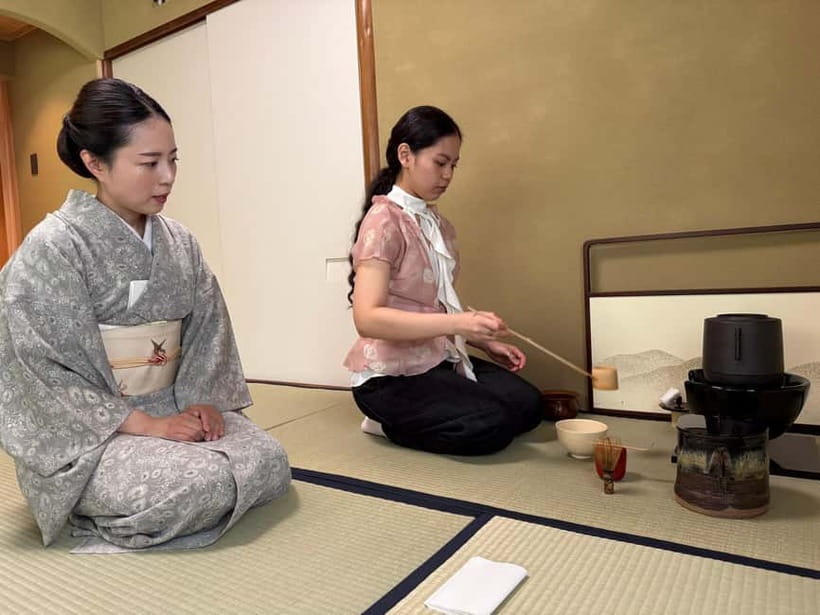
The tea master performs the ritual, showing how matcha is prepared and served. The movements are deliberate, and the order matters. You will see the use of traditional tea utensils and the care given to the bowl, whisk, sweets, and serving process.
This is a good moment to watch rather than worry about taking pictures. Photos are allowed at designated times, not continuously throughout the ceremony. That rule helps protect the calm atmosphere and keeps cameras from distracting you from the explanation.
You enjoy matcha and seasonal wagashi
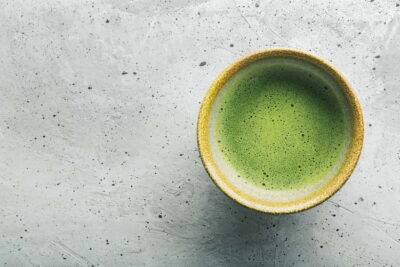
You receive two servings of freshly whisked matcha, paired with Japanese sweets called wagashi. The sweets are seasonal, though the specific varieties are not listed. Wagashi are traditionally served with tea because their sweetness balances the sharp, grassy flavor of matcha.
If you are new to powdered green tea, the taste may surprise you. Matcha is not sweet by itself, and its texture is different from ordinary brewed tea. The wagashi helps soften that first impression. Two servings also give you a useful comparison between the tea prepared for you and the tea you make yourself.
Finally, you whisk and serve tea
The hands-on portion is the heart of the session. You receive step-by-step help using the tea utensils, whisking matcha, and serving it properly. You do not need to know the correct wrist movement beforehand. That is what the instructor is there to teach.
This part works well for families with children aged seven and up, couples, and adults who prefer doing something rather than watching a performance. Children will need to handle the quiet setting and formal manners, though. It is not a noisy craft workshop.
Small groups make a real difference
The maximum group size is six. That number matters more here than it would on a standard sightseeing tour. In a large group, the instructor would have to repeat the same instructions and your turn at the whisk might be brief. With six or fewer, you get a more personal chance to ask questions and receive help.
A small room also changes the mood. Tea ceremony depends on attention, and a crowded space can make the ritual feel like a show. This format keeps it closer to a hosted cultural lesson.
The tradeoff is limited availability. Small sessions fill more quickly than large group activities, especially during busy periods in Kamakura. If this is important to your day, reserve ahead and use the flexible booking option if your plans are still changing. You can cancel up to 24 hours in advance for a full refund, according to the stated conditions.
Is $36 a fair price?
At $36 per person, this is not the cheapest way to taste matcha in Japan. You can find tea in many cafés for much less. But that comparison misses the point. You are paying for a one-hour lesson, a traditional tea room, a live performance, two servings of matcha, seasonal wagashi, rental utensils, and personal instruction.
The strongest value comes from the hands-on teaching. A simple tea tasting would give you a drink and perhaps a sweet. This session gives you a basic understanding of the etiquette and lets you practice the ritual yourself.
I would consider it good value if you want cultural context and a guided activity. It is less useful if you only want a quick cup of matcha or prefer to spend your entire Kamakura visit outdoors. The experience is also best for people who enjoy quiet, structured activities. If you want a casual café stop, this may feel too formal.
Getting there from central Tokyo
Kita-Kamakura Station is the key landmark. The tea room is within a short walk, listed as approximately five to seven minutes from the station. That makes the activity easy to add to a Kamakura day, particularly if you are already visiting the area around Kita-Kamakura.
The directions deserve care. The meeting point is near Restaurant Wata, and the Japanese name of the tea room is Chikusuian. Keep both details visible on your phone. Since one comment specifically noted that the location information could be clearer for international visitors, do not assume you can find the entrance instantly.
A practical plan is to arrive in the Kita-Kamakura area before your start time, then allow several minutes to walk and orient yourself. The one-hour duration does not include extra time for getting lost, removing shoes, or settling in. A calm arrival will suit the tone of the session much better than a last-minute dash.
Who will enjoy it most
This tea ceremony fits several kinds of visitors:
- First-time visitors to Japan: You learn basic tea manners and get a clear introduction to a major part of Japanese culture.
- Couples: The quiet setting gives you a shared activity that feels more personal than another sightseeing stop.
- Families with children seven and older: The whisking portion offers something active, though children should be ready for a calm and formal room.
- Cultural enthusiasts: You get both the ritual and the ideas behind it, including hospitality and mindfulness.
- Visitors staying in Tokyo: The short session can fit into a Kamakura outing without taking an entire day.
- People who prefer small groups: Six participants is a manageable number for questions and individual guidance.
It is not suitable for wheelchair users according to the provided information. Pregnant women are also listed under the restrictions. Anyone with mobility concerns should ask about the available chair before booking, since chairs are available for people who find kneeling difficult, but the room still requires removing shoes and entering a tatami space.
Useful etiquette before you arrive
Bring socks. You must remove your shoes, and going barefoot in a formal tea room is not appropriate.
Wear modest clothing and choose something comfortable for sitting. If you need a chair, notify the staff before the session. Do not wait until the ceremony is underway, since the room arrangement may need to be adjusted.
Photos are welcome only at designated times. Follow the instructor’s lead rather than photographing every movement. The ceremony depends on concentration, and a phone held up at the wrong moment can interrupt the experience for everyone.
You will also get more from the lesson if you treat the manners as part of the activity rather than as rules to memorize. Watch how the host moves, listen to the explanation, and ask questions during the appropriate moments. The point is not to perform perfectly. It is to understand why the ritual is done with such care.
Should you book this tea ceremony?
Book it if you want a small, English-friendly cultural lesson with real participation. The best features are the six-person limit, two servings of matcha, seasonal wagashi, and the chance to whisk and serve tea yourself. The certified tea master gives the ritual useful context, so you leave with more than a souvenir photo.
Think twice if you dislike formal rooms, sitting on tatami, or carefully observed etiquette. Also allow extra time to find the meeting point near Restaurant Wata and Kita-Kamakura Station. For most visitors who want a quiet, authentic activity during a Kamakura day, $36 is a reasonable price for an hour of focused instruction and hospitality.
FAQ
How long does the Japanese tea ceremony last?
The session lasts approximately 60 minutes.
Where does the tea ceremony meet?
Meet at tea room Chikusuian, near Restaurant Wata. It is about a five to seven-minute walk from JR Kita-Kamakura Station.
Is the experience available in English?
Yes. Instruction is offered in Japanese and English.
What is included in the price?
The experience includes matcha, Japanese wagashi sweets, rental tea ceremony utensils, and a traditional tea ceremony performance.
Do I need to bring anything?
Bring socks because shoes must be removed before entering the tatami tea room.
Can I join if kneeling is difficult?
Chairs are available if kneeling is difficult. You should notify the staff in advance so they can prepare appropriately.
Just added around Japan
- Yokohama : Tea Ceremony with Sweets and Souvenir★ 5.0 · 5 reviews
- Walking Tour: Yanaka,Nezu& Sendagi: Tea Ceremony & Old Tokyo★ 5.0 · 3 reviews
- Visit local home for music and tea ceremony near Disney★ 4.9 · 13 reviews
- Trip to Kamakura & Enoshima: Shrines, Seaside, Temples &Tea★ 5.0 · 11 reviews
- Yokohama: Sushi & Gyoza Cooking with Matcha & GreenTea Experience★ 5.0 · 3 reviews
- Kyoto tea town for matcha lovers★ 5.0 · 16 reviews
- Uji: Private immersion into Kyoto’s tea and reglious culture★ 5.0 · 17 reviews
- Uji Tea Ceremony and UNESCO Heritage Walking Tour★ 5.0 · 20 reviews
Tea Ceremony Experiences, compared.
Tea Ceremony in a Traditional Tea House in Kiyomizu
Read our review →
Browse the lists this tour appears in