
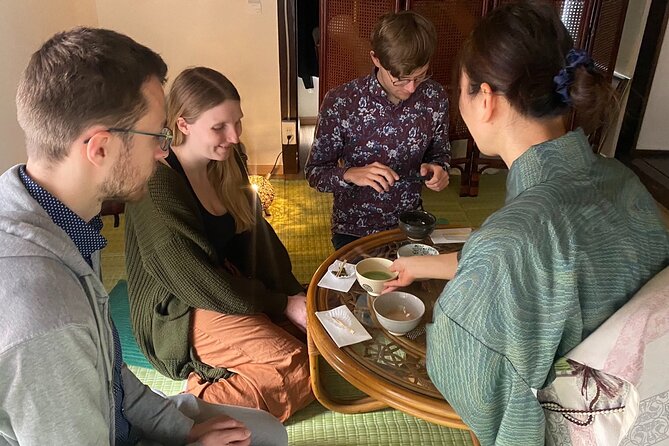
Review · JAPAN
Tea Ceremony in a Century-old Japanese Town House
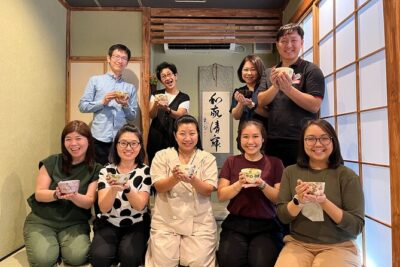
Slow down for matcha in Beppu. This one-hour experience gives you a clear introduction to Japanese tea ceremony customs inside a recently modernized, century-old town house. I like the English-speaking interpreter, who guides you through each step, and the chance to make your own cup instead of only watching a demonstration. The small local sweet served with the tea is another thoughtful touch.
The main consideration is value. At $45.61 per person, you receive one cup of matcha, a sweet, instruction, and a private group setting. Some people may expect a more formal room, several teas, or a longer ceremony, but this experience is better understood as a friendly cultural lesson than as an elaborate temple-style performance.
Key points to know before booking
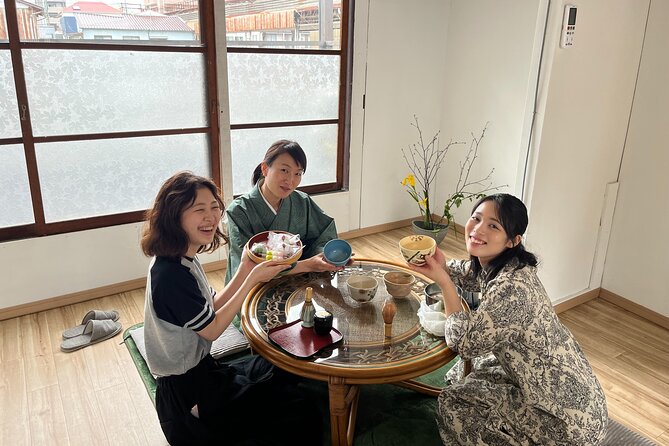
- A century-old town house with a modern interior: The building has age and local character, but it has been updated as a community space rather than preserved as a perfectly traditional tea room.
- A kimono-clad local instructor: You watch a professional demonstrate the ceremony before trying the process yourself.
- Step-by-step English interpretation: You learn the meaning behind the gestures and etiquette, not just the mechanics of whisking tea.
- One hour, one cup of matcha: The format is focused and approachable, but it is not a tea tasting with several varieties.
- Private group participation: Only your group takes part, which allows room for questions and some good-natured mistakes.
- Arrive on time: Late arrival without advance notice can lead to a charge of up to 50 percent of the activity fee.
What this Beppu tea ceremony actually offers
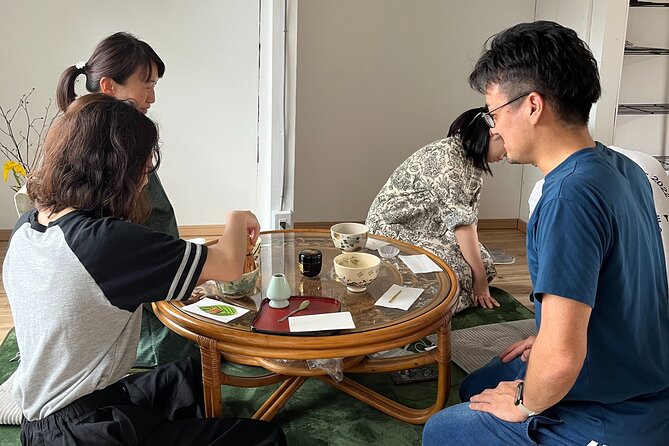
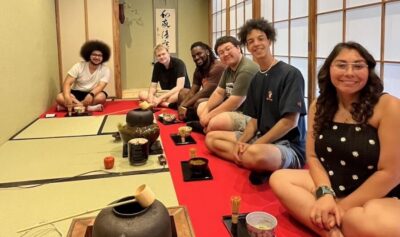
The appeal here is simple: you do not merely sit quietly while someone else performs a ritual. You first watch a local instructor, dressed in kimono, carry out the tea ceremony. Then you try to prepare your own matcha with help from the instructor and interpreter.
That order matters. Japanese tea ceremony etiquette can look mysterious when you see it without explanation. A bow, a turn of the bowl, the way utensils are handled, and the order of each movement all have a purpose. The English-speaking interpreter gives you the cultural background as the demonstration unfolds, so you can understand what you are seeing.
I like this teaching approach because it keeps the ceremony from becoming a staged photo opportunity. You receive context, then take part. The mood also seems forgiving. One account describes a patient instructor who guided the group through its mistakes, with plenty of laughter alongside the more serious lessons. That is useful to know if you worry about getting every gesture right.
You will not be expected to behave like a tea master after one hour. The goal is to give you a working sense of the ceremony and its importance, while allowing you to experience the careful movements for yourself.
More Tea Ceremonies in Japan:
- Kyoto: Tea Ceremony in a Traditional Tea House in Kiyomizu
★ 4.9 · 3,519 reviews - Kyoto: Tea Ceremony Ju-An at Jotokuji Temple
★ 4.9 · 3,207 reviews - Kyoto: 45-Minute Tea Ceremony Lesson Experience
★ 4.3 · 2,378 reviews
Arriving at Space Beppu in Chiyomachi
The meeting point is Space Beppu, at 12番9号 Chiyomachi, Beppu, Oita 874-0942. The activity begins and ends there, so you do not need to arrange transport between several stops.
The location is near public transportation, which helps if you are moving around Beppu without a car. Still, plan enough time to find the address and arrive before the start. The operator asks participants to be punctual because a late arrival can interrupt the demonstration and affect the rest of the group. If you arrive late without prior notice, as much as 50 percent of the activity fee may be charged as a cancellation fee.
This is not the sort of appointment to squeeze between two distant sightseeing stops. Give yourself a comfortable margin. The experience lasts about an hour, but your full schedule should include time to reach Space Beppu, settle in, and find your way onward afterward.
The setting deserves a realistic description. The building is more than a century old, which is unusual in Japan, but it has been recently modernized. You may see elements of an old town house, yet the inside may feel more like a clean community space than a preserved tea pavilion.
That distinction is important. If your picture of a tea ceremony includes tatami mats, an austere tea room, and an untouched traditional interior, this venue may feel too modern. If you care more about learning the practice from a local instructor than about the room itself, the setting should make more sense.
Watching the demonstration in kimono
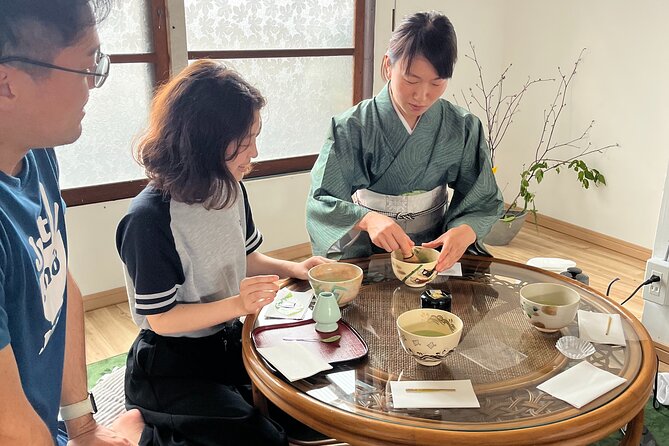
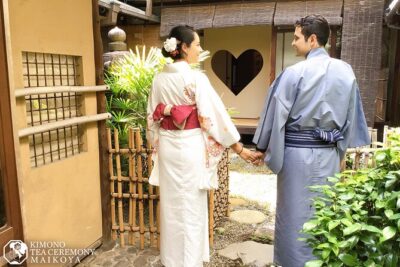
The demonstration is the heart of the first half. The local instructor wears traditional kimono and shows how the ceremony proceeds. The interpreter explains the history, etiquette, and cultural importance in English, helping you follow details that would otherwise pass quickly.
Japanese tea ceremony is not simply about drinking powdered green tea. Its form places value on attention, respect, cleanliness, and the relationship between host and guest. Even a short introduction can help you notice why the host handles each object with care and why the guest responds in a certain way.
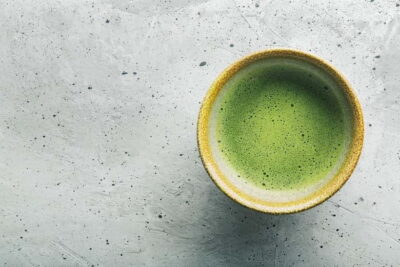
The word matcha refers to powdered green tea whisked with water. It has a distinctive taste and texture, and it is different from the ordinary brewed green tea you may encounter elsewhere in Japan. The ceremony focuses on matcha, not a range of loose-leaf teas or flavored drinks.
The instructor’s patience appears to be one of the strongest parts of the experience. That matters because the etiquette can feel awkward at first. You may forget which way to turn the bowl or hesitate over the next movement. The format allows you to learn by doing rather than sitting silently and worrying about mistakes.
The private setup also helps. Only your group participates, so the interpreter can direct the explanation to your party. The activity is not a large presentation where you watch from the back of a room. Group size can affect the pace, but the private format gives you a better chance to ask questions and take part directly.
Making your own matcha
After the demonstration, you are invited to make your own cup of matcha. This is the practical payoff. You handle the process yourself, with guidance from the instructor and interpreter.
Making matcha requires more than stirring. The whisking motion, the amount of water, and the care given to the bowl all affect the result. Your first cup may not look perfect, and that is part of the lesson. The emphasis is on understanding the process and its etiquette, not producing a competition-quality foam.
I particularly like that the activity gives you a real task. Watching a ceremony can be interesting, but participation makes the details easier to remember. You may leave with a clearer sense of how much control and patience the preparation requires.
Keep your expectations in check, though. The experience provides one cup of tea. It is not designed as a tasting session with matcha from several regions, different grades, or a comparison of preparation styles. Two people rated the experience less highly because they expected more tea or several varieties.
That criticism is fair if you are paying mainly for the amount of food and drink. It is less of an issue if you are paying for the explanation, demonstration, and chance to make matcha in a guided setting. The value depends on which of those matters most to you.
A few more tea experiences around Japan worth a look
- World Heritage Kyoto & Nara Uji Authentic Matcha Experience
★ 5.0 · 1,573 reviews - Osaka: Tea Ceremony Experience
★ 4.9 · 1,426 reviews - Kyoto: Table-Style Tea Ceremony at a Kyo-Machiya
★ 4.9 · 1,211 reviews - Kanazawa: Kenrokuen Tea Ceremony Experience
★ 4.8 · 1,139 reviews
The sweet served beside the tea
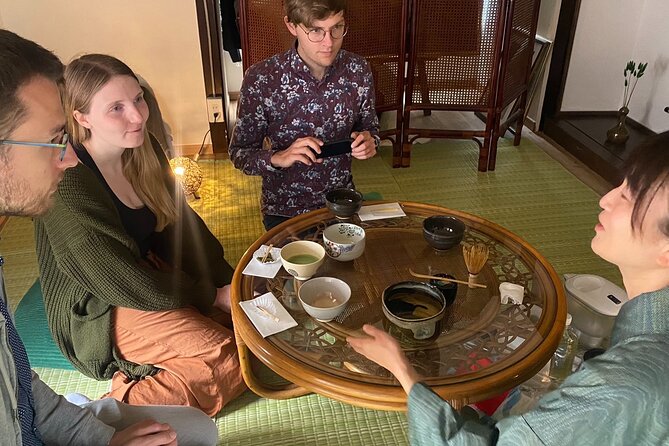
A Japanese sweet is served with the matcha. This is not just a snack added for decoration. Sweet foods help balance matcha’s strong, slightly bitter flavor, and the pairing is part of the tea experience.
The information provided does not identify the exact sweet, so you should not book this expecting a particular pastry or regional specialty by name. Think of it as a small traditional accompaniment rather than a full refreshment.
The portion is modest. If you want a substantial meal, eat beforehand or plan another stop afterward. The one-hour activity is centered on ceremony and instruction, not food. The sweet gives you a taste of the custom and helps complete the presentation, but it does not change the basic value calculation.
Why the town house setting may divide opinion
The old building is an appealing idea. A century-old Japanese town house gives the experience a connection to Beppu’s past and offers something different from a hotel lounge or a generic classroom.
At the same time, the recent modernization changes the mood. The interior is not presented as a fully traditional tea room, and that has disappointed people who expected a more formal setting. I would treat the building as an old local property adapted for community use, not as a museum piece.
That may actually work in your favor. A modernized room can feel less intimidating, especially if you have never attended a tea ceremony. You can concentrate on the instruction rather than worrying about making a mistake in a highly formal space.
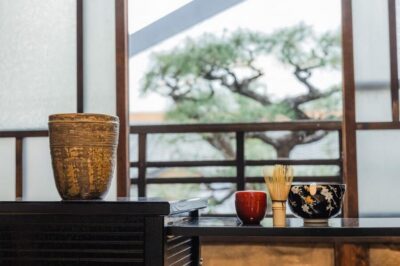
For photographers, the kimono and tea utensils provide visual interest, but the setting may not deliver the classic images associated with a historic temple. If atmosphere is your top priority, compare this with a more formal tea ceremony before booking.
Is $45.61 a fair price?
The cost is $45.61 per person. For a one-hour activity, that is not a bargain if you measure value by the amount of tea and food. You receive one matcha and one sweet, so anyone expecting several tastings may feel shortchanged.
The price makes more sense when you count the service involved. You have a local professional instructor, an English-speaking interpreter, a demonstration, hands-on preparation, cultural explanation, and a private group format. You are paying for access and instruction, not simply for a bowl of tea.
I would consider it a reasonable cultural activity for someone who wants a short introduction without committing to a long formal ceremony. It is also easier to fit into a Beppu schedule than a half-day class. Group discounts may improve the value if you are booking for several people, though the available information does not specify the discount amount.
The experience receives an overall rating of 4.4 from seven reviews. That suggests a generally positive response, but the smaller number of ratings means I would read the description carefully rather than treat the score as a guarantee. The praise centers on the instructor’s patience and the fun of learning. The reservations center on the modern room and the single cup of tea.
Who will enjoy this most
I would recommend this activity to you if:
- You want a guided introduction to Japanese tea ceremony etiquette.
- You prefer taking part instead of only watching.
- You need an English explanation of the cultural meaning behind the steps.
- You enjoy small-group or private activities.
- You have about one hour in Beppu.
- You are comfortable with a modernized setting rather than a fully traditional tea room.
Families and first-time visitors may appreciate the relaxed teaching style, especially if children or beginners are likely to make mistakes. The patient instruction and private format can make the experience less stiff.
You may want to skip it if your main goal is a formal, highly polished ceremony in an untouched historic room. You should also think twice if you expect multiple teas, generous refreshments, or a long lesson in tea production. This experience is narrow by design: one ceremony, one explanation, one cup, and one hands-on attempt.
Space Beppu’s response to one activity also refers to calligraphy and flowing noodles. Those may be available as related cultural experiences, but they are not described as included in this tea ceremony. Do not assume you will receive them as part of the $45.61 booking unless the operator confirms it.
Booking and cancellation details
Confirmation is provided within 48 hours of booking, subject to availability. The experience can be booked with a mobile ticket, and free cancellation is available if you cancel at least 24 hours before the local start time.
Cancellations made less than 24 hours before the start are not refunded, and changes during that period are not accepted. The separate late-arrival rule is worth remembering: arriving late without prior notice may result in a charge of up to 50 percent of the activity fee.
The activity is private to your group, not an open group tour. That makes it a good choice for friends, couples, or families who want to learn together without strangers sharing the session.
Should you book the Space Beppu tea ceremony?
Book it if you want a short, guided, hands-on introduction to matcha and Japanese tea etiquette. The English interpretation, kimono-clad instructor, patient teaching style, and private format give the experience real substance beyond a quick cup of tea.
Pass if you are paying $45.61 mainly for a grand traditional setting or a broad tasting menu. The modernized town house and single serving may not match those expectations.
My practical advice is to book this as a cultural lesson, not as a luxury tea service. Arrive early, expect one cup, enjoy the sweet, and treat any mistakes as part of the fun. With those expectations, this can be a pleasant and useful pause in a Beppu visit.
FAQ
Where does the tea ceremony take place?
It takes place at Space Beppu, Japan, 874-0942 Oita, Beppu, Chiyomachi, 12番9号.
How long does the experience last?
The tea ceremony lasts approximately one hour.
Where does the activity end?
It ends back at the meeting point at Space Beppu.
Is the experience conducted in English?
An English-speaking interpreter explains the history, etiquette, and cultural importance of the tea ceremony step by step.
Will I get to make matcha myself?
Yes. After watching a demonstration by a local professional, you are invited to prepare your own cup of matcha.
Is a sweet served with the tea?
Yes. A Japanese sweet local delicacy is served alongside the matcha.
How many teas are included?
The experience description specifies one cup of matcha. It does not include a stated tasting of several teas.
Is this a private activity?
Yes. Only your group participates in the activity.
Can I cancel for a full refund?
Yes, if you cancel at least 24 hours before the local start time. Cancellations made less than 24 hours before the start are not refunded.
Just added around Japan
- Yokohama : Tea Ceremony with Sweets and Souvenir★ 5.0 · 5 reviews
- Walking Tour: Yanaka,Nezu& Sendagi: Tea Ceremony & Old Tokyo★ 5.0 · 3 reviews
- Visit local home for music and tea ceremony near Disney★ 4.9 · 13 reviews
- Trip to Kamakura & Enoshima: Shrines, Seaside, Temples &Tea★ 5.0 · 11 reviews
- Yokohama: Sushi & Gyoza Cooking with Matcha & GreenTea Experience★ 5.0 · 3 reviews
- Kyoto tea town for matcha lovers★ 5.0 · 16 reviews
- Uji: Private immersion into Kyoto’s tea and reglious culture★ 5.0 · 17 reviews
- Uji Tea Ceremony and UNESCO Heritage Walking Tour★ 5.0 · 20 reviews
Tea Ceremony Experiences, compared.
Tea Ceremony in a Traditional Tea House in Kiyomizu
Read our review →
Browse the lists this tour appears in