
Review · OSAKA
Sheraton Miyako Hotel Osaka: Tea Ceremony with Kimono Rental
Quiet ritual, polished setting, real participation. This 75-minute tea ceremony at the Sheraton Miyako Hotel Osaka gives you more than a staged photo stop: you wear a kimono, sit in a tea room, watch a certified tea master prepare matcha, then make your own. I especially like the small group of up to 10 and the chance to learn the meaning behind the gestures, not just copy them. The seasonal Japanese sweets and peaceful garden outside the tea room add a fine local touch.
The main drawback is practical: much of the class takes place on tatami mats, and late entry is not permitted. Chairs and cushions are available, but the activity is not suitable for wheelchair users or people with back problems. At $103 per person, it is not a budget attraction, but the kimono rental, instruction, sweets, matcha, and hands-on tea making make it a fair choice for visitors seeking a focused cultural experience.
Key details before you book
- The tea room is inside a large hotel: Find Urakuan on the 4th floor of the Sheraton Miyako Hotel Osaka, where a small traditional room creates a quiet change of mood from the rest of the building.
- You wear the kimono over your clothes: The provided garments are designed for easy use, so you do not need to arrive already dressed in traditional clothing.
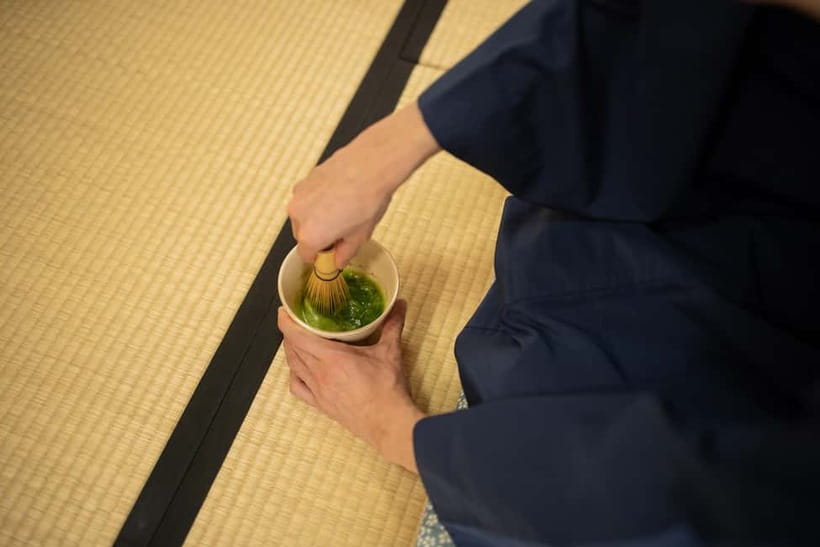
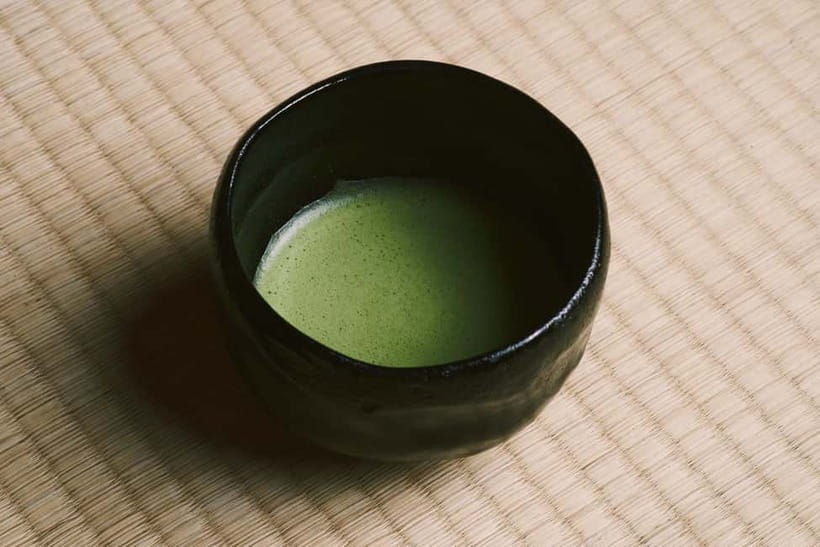
- You prepare your own matcha: After watching the tea master, you get to whisk and drink your own tea, then compare it with the more polished version prepared by the instructor.
- The class is limited to 10 people: This keeps the lesson personal and gives you room to ask questions and take photographs.
- Tatami seating is flexible: You can sit on the floor with a cushion or request a chair, but people with back problems should choose another activity.
- English and Japanese instruction is available: The teacher explains ceremony customs, etiquette, culture, and history in both listed languages.
Arriving at Urakuan on Osaka’s fourth floor
Your meeting point is the tea room Urakuan on the fourth floor of the Sheraton Miyako Hotel Osaka at 6-chome-1-55 Uehonmachi, in Osaka’s Tennoji Ward. Hotel pickup and drop-off are not included, so you need to make your own way there and allow enough time to find the room.
That location may sound less romantic than a historic temple. In practice, it gives the activity a useful advantage: you get a traditional tea room without leaving central Osaka or committing half a day to a larger sightseeing program. The small room inside the hotel feels separate from the ordinary hotel setting, and a small Japanese garden outside adds a pleasant visual pause.
Arrive before the scheduled start. Late entry is not permitted, which matters here because the opening part of a tea ceremony depends on order and quiet. Rushing in after the lesson begins would interrupt the class and leave you trying to catch up with the first instructions.
The room is on the fourth floor, so keep the meeting details handy rather than assuming hotel staff will automatically direct you to the class. Comfortable clothes are the only listed item to bring.
More Kimono and Tea Ceremonies in Osaka
- Osaka: Tea Ceremony, Calligraphy, and Kimono Experience
★ 4.9 · 130 reviews - Samurai Show, Tea Ceremony, Japanese Traditional Activities
★ 5.0 · 56 reviews - Samurai dress-up and shows, plus Tea Ceremony & Calligraphy
★ 5.0 · 27 reviews
Putting on a kimono without a full dressing appointment
The kimono rental is one of the clearest reasons to choose this activity over a simple matcha tasting. Suitable options are available for both women and men, and you receive guidance on how to put the garment on over your regular clothes.
This is not presented as a long professional dressing session. The kimono is selected so you can wear it with relative ease, which keeps the focus on the tea ceremony rather than on a complicated costume change. That also makes the activity less demanding for a first visit to Japan. You do not need special clothing or prior knowledge.
Still, allow a little patience during this part. Wearing a kimono changes how you move and sit, and the lesson becomes more meaningful when you treat it as part of the cultural introduction rather than only as a photo opportunity. The garment sets the tone for the ceremony and helps you pay attention to posture, gestures, and manners.
You have ample time for photographs during the experience. The garden outside the tea room gives you another spot for pictures, although the central purpose remains the lesson itself.
Learning the rules before tasting the matcha
Once everyone is dressed, the tea master explains the culture, history, traditions, and etiquette connected with the ceremony. This introduction is important because many of the actions can seem mysterious if you see only the finished ritual.
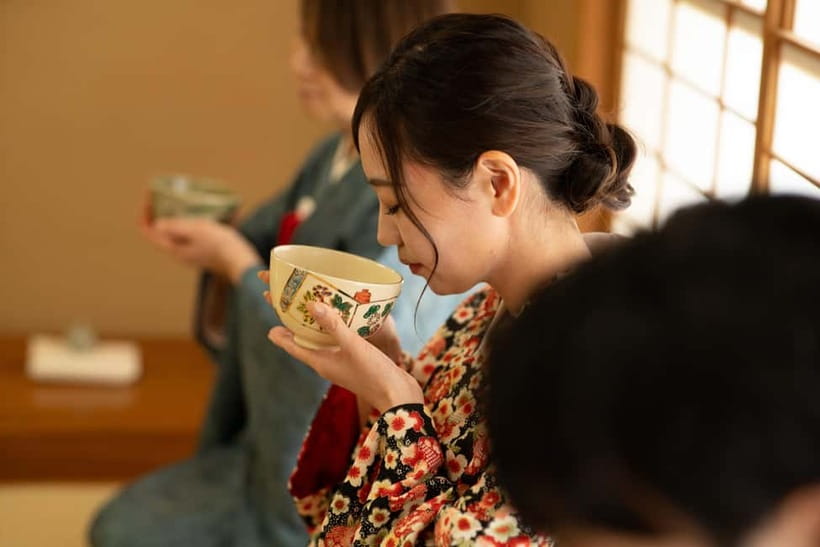
You learn how to receive the tea, how to appreciate the bowl, and how to approach the sweets and matcha with care. The instruction gives a reason for the ceremony’s measured pace. Instead of simply watching a sequence of movements, you begin to understand why attention, respect, and calm matter so much.
The class is taught in English and Japanese. The supplied information does not identify the instructor by name, but it does specify a certified tea ceremony master. That matters for an activity built around small details. A skilled teacher can show the difference between doing the steps correctly and simply waving a bamboo whisk around.
The group size is limited to 10 participants. That is small enough for the teacher to demonstrate clearly and for you to ask questions, while still allowing you to share the atmosphere with a few other people. If you want a private ceremony for just your own party, this information does not promise that arrangement, so check availability before booking.
Watching the tea master prepare matcha
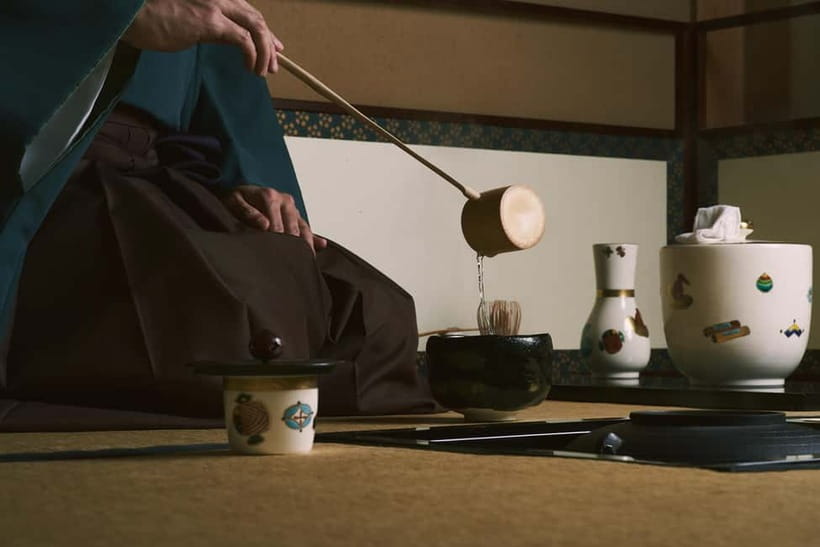
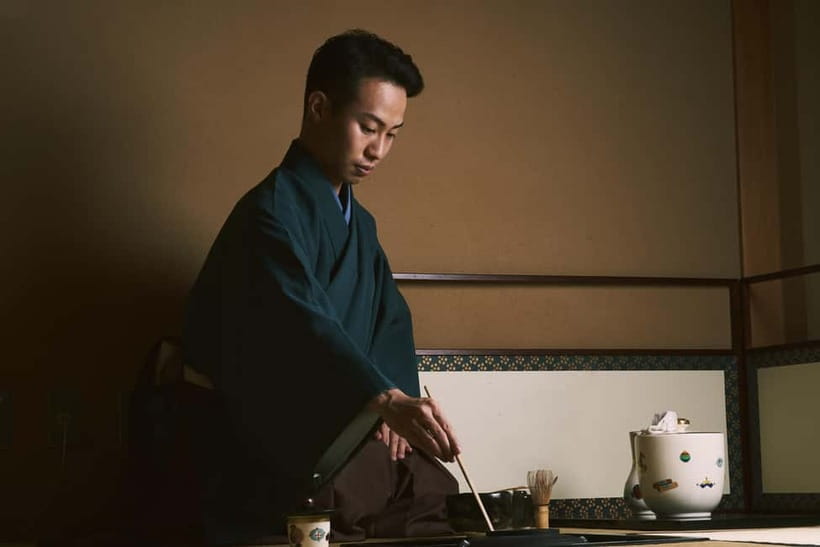
The demonstration is the calm center of the class. The tea master prepares matcha while explaining what is happening, giving you time to watch the hand movements and the order of service.
A good demonstration helps you notice details that are easy to miss in a crowded cultural show. The position of the bowl, the handling of the utensils, and the controlled whisking all carry more weight than speed. The tea master’s preparation is also a useful benchmark for your own attempt later.
The setting helps. Urakuan is a traditional tea room with tatami flooring, and the room’s scale encourages quiet attention. A small tea room inside a large modern hotel may sound like an odd pairing, but that contrast is part of the appeal. You can finish a day in Osaka’s busy streets and enter a space organized around stillness.
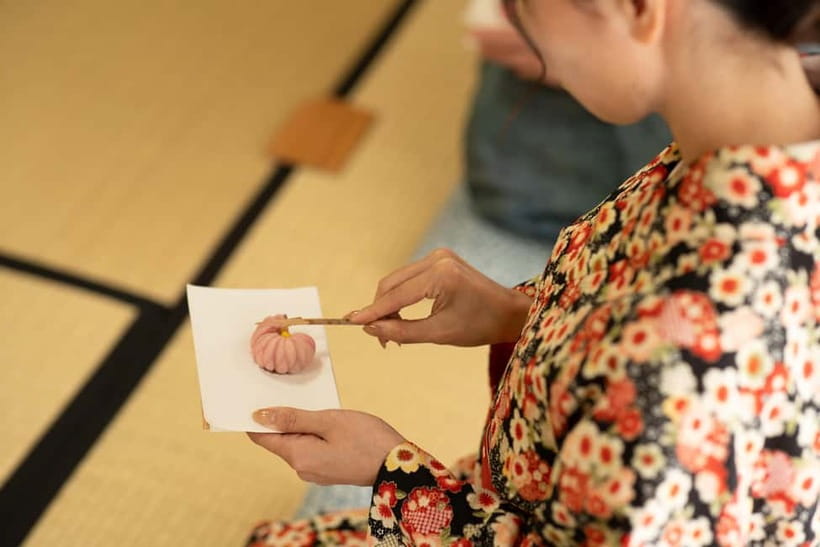
The activity includes green tea and Japanese sweets. The sweets are seasonal, giving the tasting a connection to the time of year rather than serving an identical snack in every season. The combination is not just refreshment. Japanese tea ceremony traditionally treats the sweet and the bitter tea as partners, so tasting both helps you understand the balance the teacher is explaining.
More Tea Ceremonies in Osaka
- Osaka: Tea Ceremony Experience
★ 4.9 · 1,426 reviews - Tea Ceremony Experience in Osaka Doutonbori
★ 5.0 · 754 reviews - Osaka: Japanese Traditional Sweets Making and Tea Ceremony
★ 4.7 · 118 reviews - Osaka: Private Tea Ceremony and Calligraphy Experience
★ 5.0 · 50 reviews
Making your own matcha and tasting the difference
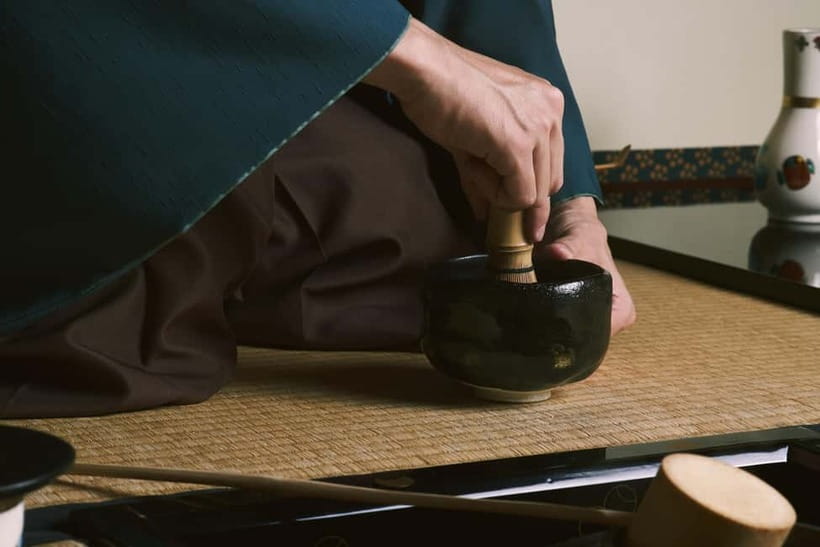
After watching the demonstration, you get to make your own matcha. This hands-on step gives the class its strongest practical value. You are not only observing a specialist. You are trying the preparation yourself, then drinking the tea you made.
Do not expect your first bowl to match the tea master’s. That difference is part of the lesson. The whisking technique, amount of powder, and level of control all affect the final drink. One of the clearest details from this experience is that the tea prepared by the master tastes different from the tea made by a beginner. That is a useful, friendly reminder that traditional skills are learned through practice.
You also learn how to enjoy matcha at home. The class does not turn you into a tea master in 75 minutes, but it gives you a basic understanding of the process and etiquette. If you buy matcha later, you will have a better idea of how to whisk it and how to approach the drink.
This is where the price starts to make more sense. You are paying for instruction and participation, not just a cup of tea. The kimono, tea room, sweets, demonstration, and your own preparation are bundled into one short session.
Tatami, cushions, and the comfort question
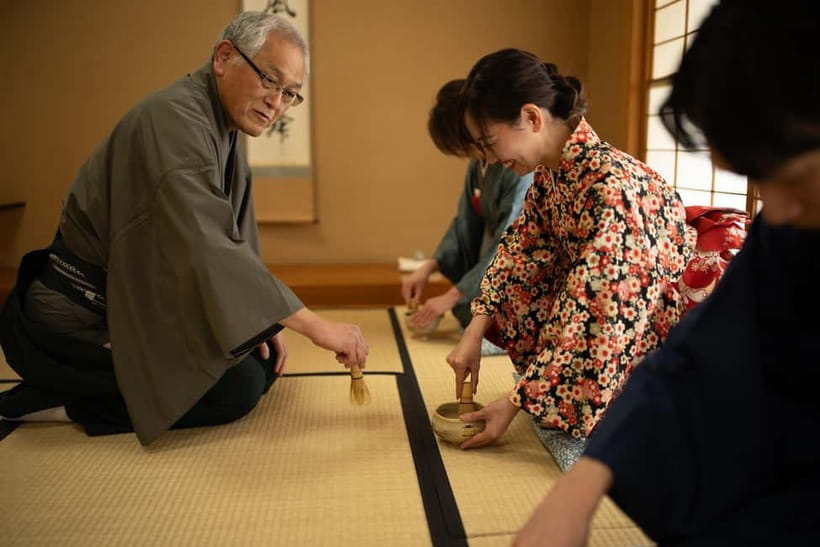
The tea ceremony takes place on tatami, and floor seating is part of the traditional setting. You can sit on a cushion, which offers some support, or request a chair if sitting on the floor is uncomfortable.
That flexibility makes the class workable for many people who are unsure about kneeling or sitting traditionally. Do not assume, however, that a chair removes every physical concern. You still need to spend much of the 75 minutes in a formal tea room, and the activity specifically excludes people with back problems.
Wheelchair users should also choose another option. The available information lists the experience as unsuitable for wheelchair users, and no further accessibility details are provided. If you have a mobility concern that is not covered here, contact the provider before reserving.
Comfortable clothing is recommended. Since the kimono is worn over your clothes, loose, practical clothing should make the dressing and sitting portions easier. Arrive ready to move carefully and sit quietly rather than treating this as a quick photo session.
Is $103 a fair price in Osaka?
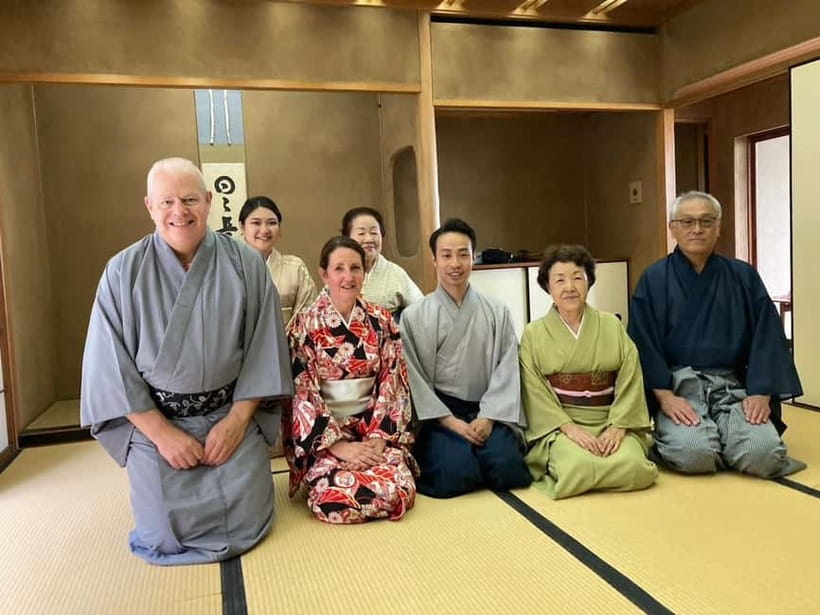
At $103 per person, this is a premium short activity. You can find cheaper ways to drink matcha in Osaka, especially if you only want the flavor and a quick introduction.
The value improves if you want several elements in one place. Your fee covers the kimono rental, a certified tea master, the demonstration, your own tea making, matcha, Japanese sweets, and use of a traditional tea room. You also receive cultural and historical explanation in English or Japanese, plus time for photographs.
The 75-minute length is another factor. It is long enough to feel like a proper appointment, but short enough to fit around other Osaka plans. You could schedule it on a day when you want a calm break from sightseeing rather than devote an entire morning to a cultural program.
I would consider the price worthwhile for a first-time visitor who values personal participation and a polished setting. I would hesitate if you mainly want a low-cost taste of matcha, do not care about wearing a kimono, or are uncomfortable with the physical requirements of tatami seating.
Who will enjoy this tea ceremony most?
I would recommend this activity to you if you want a gentle introduction to Japanese etiquette and prefer learning by doing. It suits couples, solo visitors, small family groups, and anyone who wants photographs with a clear cultural purpose behind them.
It is also a good fit for a final day in Osaka. The class has a quiet, reflective quality that can provide a graceful pause before departure. One visitor described it as an unforgettable last-day experience, and that placement makes sense: the ceremony is compact, calm, and easy to remember.
You should think twice if your priority is a highly formal ceremony lasting several hours. This is a short lesson designed for visitors, with a rental kimono and a practical introduction. It offers access and participation, but it is not a substitute for years of tea training.
The same caution applies if you need fully step-free access or cannot sit comfortably for part of the session. A chair is available upon request, but the activity remains centered on a traditional tea room and its customs.
Booking and timing advice for a smoother visit
The experience offers free cancellation up to 24 hours before the start time, with a full refund, and you can reserve now and pay later. Those terms are useful when your Osaka schedule is still shifting, but you should still choose a time you can reach early.
The class has limited capacity, with no more than 10 participants. Small groups are a major part of its appeal, so popular time slots may suit you less if you wait until the last minute. Check the available starting times when you book.
Bring only what you need and wear comfortable clothes. The tea room supplies the kimono, matcha, sweets, and tea-making experience. Since late arrivals cannot enter, build in time to reach the fourth-floor Urakuan room before the class begins.
Should you book the Sheraton Miyako tea ceremony?
Book it if you want a well-contained cultural activity with real participation. The strongest features are the certified tea master, small class size, kimono rental, seasonal sweets, traditional room, and chance to prepare your own matcha. The Japanese garden outside the room is a welcome extra for photographs and a quiet moment.
Skip it if you want the cheapest possible tea tasting, need wheelchair access, have back problems, or dislike sitting on tatami. At $103, the activity earns its price through the full package and personal instruction, not through duration alone.
For the right visitor, this is a thoughtful way to meet Japanese tea culture in Osaka. You leave with more than a sweet and a picture. You gain a basic understanding of the ritual and a technique you can try again at home.
FAQ
Where does the tea ceremony take place?
It takes place in the Urakuan tea room on the fourth floor of the Sheraton Miyako Hotel Osaka at 6-chome-1-55 Uehonmachi, Tennoji Ward, Osaka.
How long does the activity last?
The tea ceremony with kimono rental lasts 75 minutes.
How much does it cost?
The listed price is $103 per person.
Is kimono rental included?
Yes. Kimono rental is included, and suitable options are available for women and men.
Do I need to know how to wear a kimono?
No. You receive guidance on how to wear the provided kimono over your regular clothes.
What is included with the tea ceremony?
The package includes matcha, Japanese sweets, kimono rental, a tea ceremony demonstration, and tea making.
Can I make my own matcha?
Yes. After watching the tea master, you can prepare and drink your own matcha.
Is the activity offered in English?
Yes. Instruction is available in English and Japanese.
Can I sit on a chair instead of the tatami?
Yes. Participants normally sit on tatami mats, but chairs are available upon request. A cushion is also provided.
What happens if I arrive late?
Late entry is not permitted, so you need to arrive before the class starts.
Is the activity suitable for wheelchair users?
No. The activity is listed as unsuitable for wheelchair users.
Can I cancel for a refund?
Yes. You can cancel up to 24 hours in advance for a full refund. You can also reserve now and pay later.
Just added around Osaka
- Osaka:Zen Tea Ceremony and Foot Bath Experience<45min>★ 5.0 · 7 reviews
- Osaka Japanese Cooking And Matcha Class near Osaka Castle★ 5.0 · 22 reviews
- Osaka: Tea Ceremony, Calligraphy, and Kimono Experience★ 5.0 · 6 reviews
- Nara Deer Park, Uji Matcha, & Hot Spring Full-Day Tour from Osaka★ 4.0 · 21 reviews
- Osaka: Nara, Todaiji, Uji Matcha, and Hot Spring Tour★ 4.0 · 7 reviews
- Craft Sushi and Matcha Ice Cream in Central Osaka (3-Course Meal)★ 5.0 · 2 reviews
- Tea and Calligraphy Session at a Table in Osaka★ 5.0 · 4 reviews
- ZEN therapy | Shiatsu-style massage, EnergyTherapy & Japanese Tea★ 5.0 · 5 reviews
Tea Ceremonies in Osaka, compared.
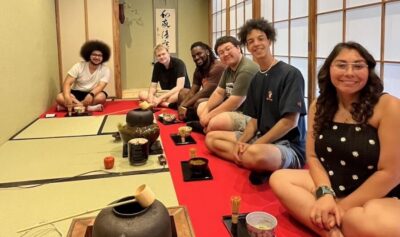
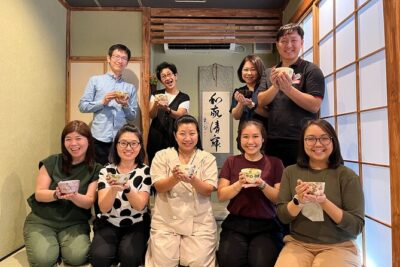
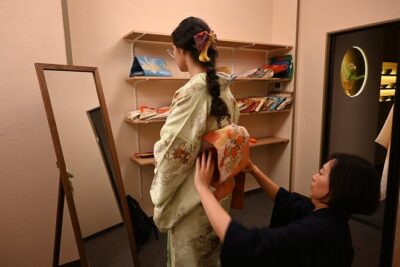
Tea Ceremony, Calligraphy, and Kimono Experience
Read our review →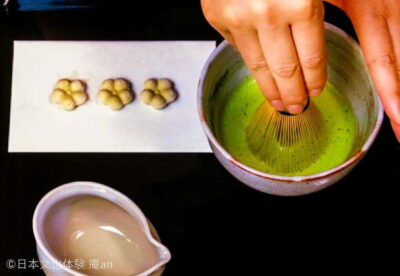
Japanese Traditional Sweets Making and Tea Ceremony
Read our review →
Samurai Show, Tea Ceremony, Japanese Traditional Activities
Read our review →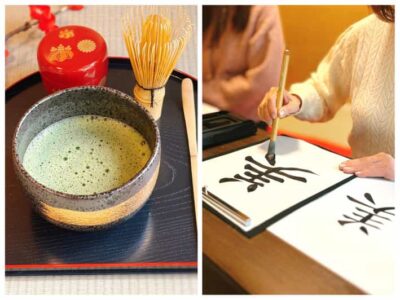
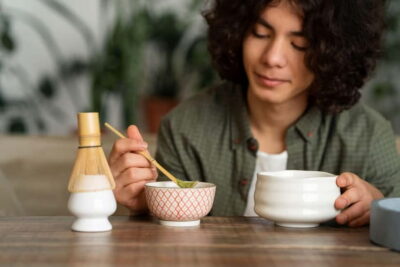
Osaka; Japanese Tea ceremony experience, Macha and Sencha
Read our review →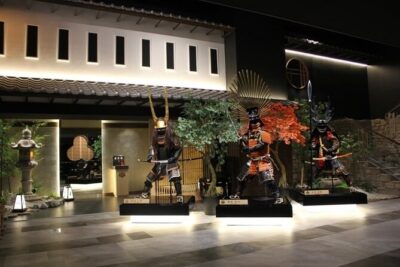
Samurai dress-up and shows, plus Tea Ceremony & Calligraphy
Read our review →Browse the lists this tour appears in