
Review · KYOTO
Kyoto: Tea Ceremony, in traditional Japan house (ENG/ES/NLD)
Tea is a quiet window into Japan. This one-hour Kyoto experience takes place in a roughly 100-year-old house, where you watch a formal tea ceremony, learn why each movement matters, and prepare your own bowl of matcha. I especially like the small group limit of six and the relaxed setting, which makes it easy to ask questions rather than simply sit and watch. The main drawback is that floor seating and strong caffeine may not suit everyone.
I also like the setting across from Shinrenji temple, with a view of a small Japanese garden and seasonal details inside the tea room. The price is $45 per person, a fair deal for two bowls of matcha, two Japanese sweets, interpretation, and personal instruction, though the one-hour format can finish sooner when fewer people book the time slot.
Key points at a glance
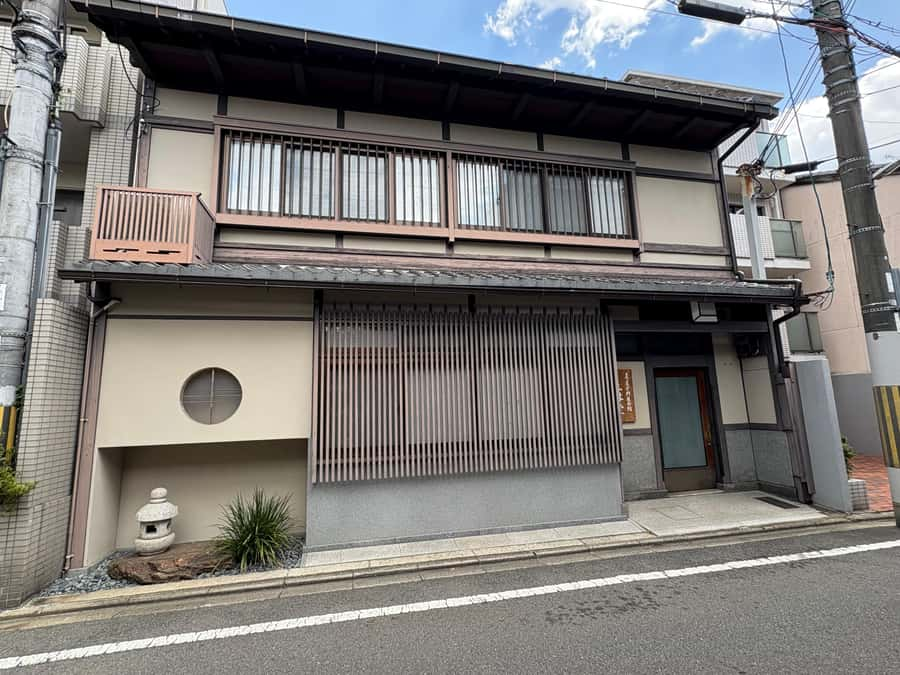
- A tea house with a past: The ceremony takes place in an old family home once connected to kimono-fabric sellers and later given to the temple across the road.
- A real teacher at work: The ceremony is performed by a Japanese tea teacher with 50 years of experience.
- You make your own matcha: After watching the teacher, you whisk a second bowl yourself. It is harder than it looks, which makes the lesson memorable.
- Small groups matter: With no more than six people, you should have a clear view and time to ask questions.
- Language help is built in: English and Dutch are available, with Spanish offered upon request. A native English speaker translates the Japanese explanations.
- Plan for the floor: Seiza kneeling is traditional, but chairs are available. Wear socks, since bare feet are not allowed.
Entering a 100-year-old Kyoto home
The meeting point is across from Shinrenji temple, about five minutes from the Hankyu-Omiya or Shijo-Omiya bus stop. Look for the person holding a tablet with the GetYourGuide logo. The location is central enough to fit neatly into a day of sightseeing around western Kyoto, and the short walk from public transportation keeps the appointment simple.
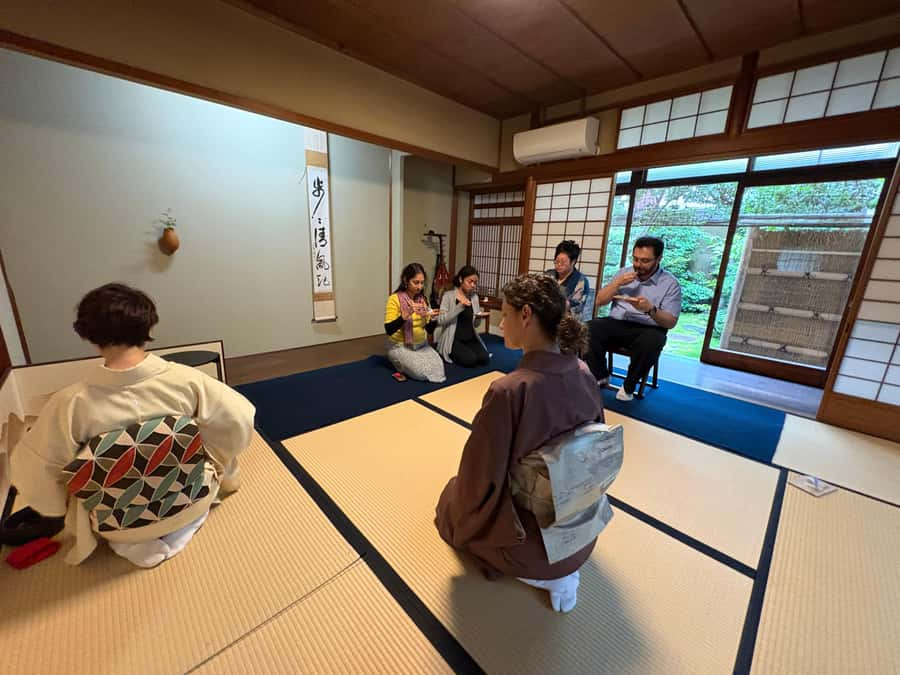
The house itself gives the experience much of its character. It once belonged to a family that sold kimono fabrics, and the building eventually came into the possession of the temple across the road. The tea room was part of the original home because the former owners practiced tea ceremony themselves.
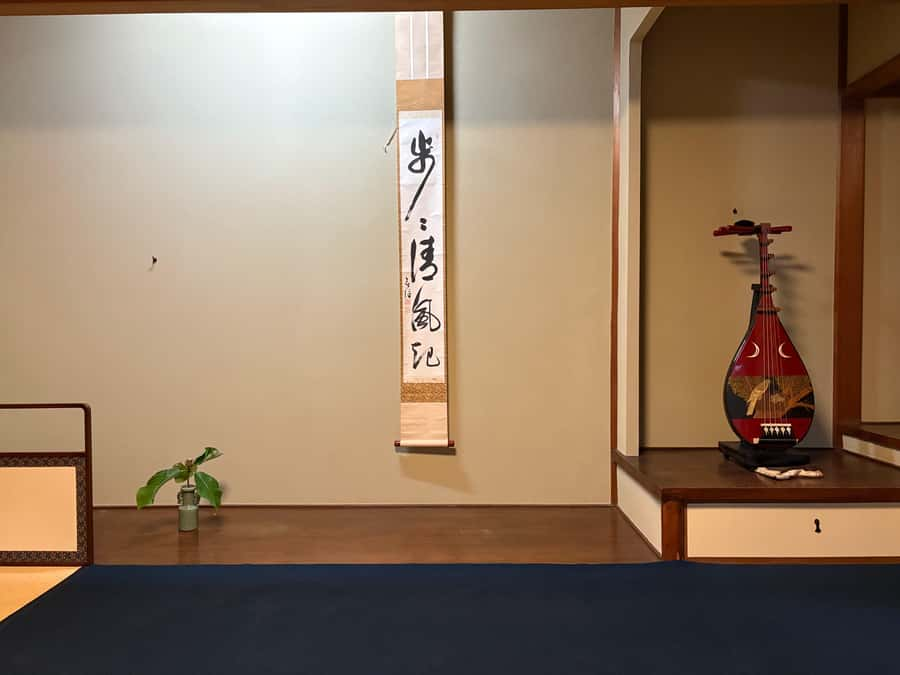
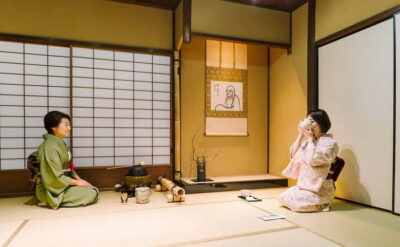
That detail matters. You are not watching a tea demonstration in a modern activity room. You are sitting in a room designed for this purpose, within a house that has been tied to Kyoto life for generations. The small garden view adds a calm visual focus, though the garden is not presented as a separate sightseeing stop.
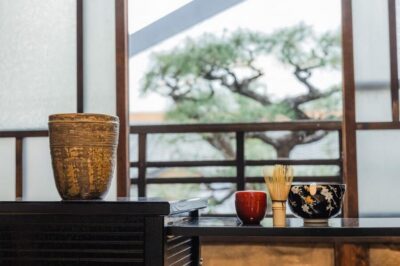
Inside, look for seasonal flowers and a hanging scroll with a seasonal saying. The flowers, scroll, utensils, and sweets change throughout the year. These are not random decorations. In Japanese tea practice, the season shapes the room, the tools, and the food, so these small changes help show how tea ceremony connects to the calendar.
More Tea Ceremonies in Kyoto
- Kyoto: Tea Ceremony in a Traditional Tea House in Kiyomizu
★ 4.9 · 3,519 reviews - Kyoto: Tea Ceremony Ju-An at Jotokuji Temple
★ 4.9 · 3,207 reviews - Kyoto: 45-Minute Tea Ceremony Lesson Experience
★ 4.3 · 2,378 reviews
Understanding sadō before the tea is served
The experience begins with an introduction to sadō, also called chanoyu. These terms refer to the Japanese way of tea, an art with its own rules, gestures, tools, and values. You will learn that the ceremony is not simply a polite way to serve a drink. It is a practice people may study for decades.
The teacher explains the history and purpose of the ceremony, along with the tea room and the items used inside it. This opening is important because some gestures can seem mysterious if you do not know what you are watching. A careful turn of a bowl or the placement of an utensil has meaning, even when the action looks simple.
The tone is casual rather than stiff. Questions are encouraged, and the small group makes it easier to speak up. That is a major advantage for first-time visitors. You can ask about the bowl, the whisk, the sweets, or the order of the movements without feeling as if you are interrupting a large performance.
English interpretation is provided by a native English speaker. Dutch is also available, and a native Spanish speaker can be arranged upon request. Spanish-speaking groups have also been accommodated with a fully Spanish-language experience, including staff connected to more than 30 years of tea ceremony practice. If language is important to you, request Spanish in advance rather than assuming it will be automatic at every session.
Watching a tea teacher with 50 years of practice
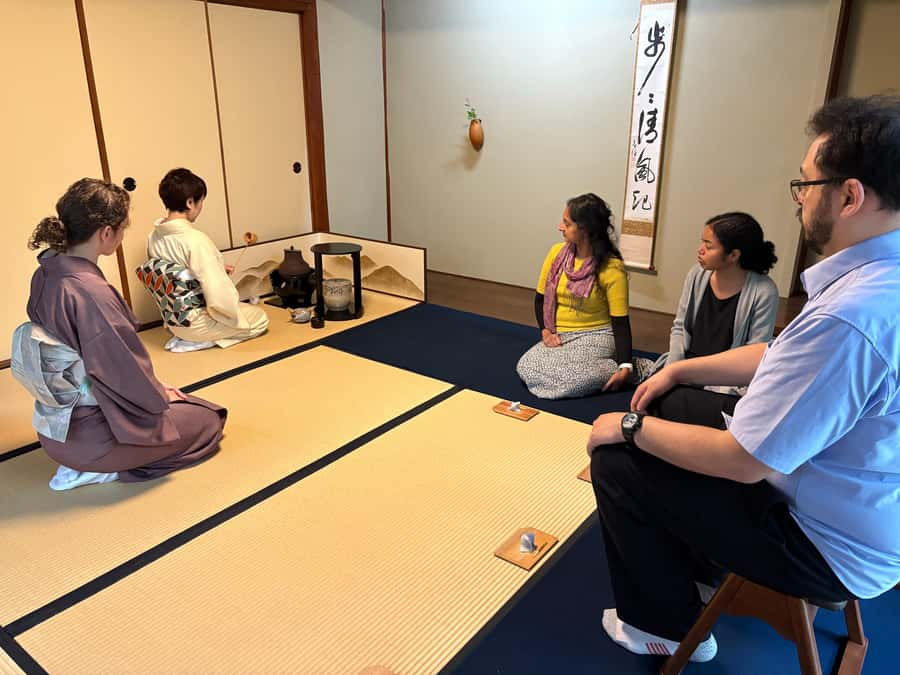
The central part of the hour is the ceremony itself. A Japanese tea teacher with 50 years of experience performs it while the explanations help you follow the sequence. This is where the activity shifts from a talk about tea to a close look at the discipline behind it.
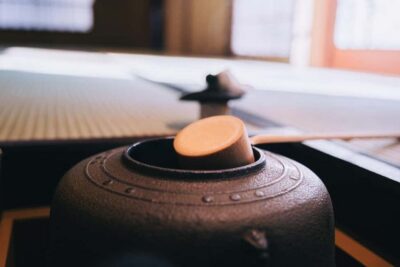
The appeal is in the precision. The teacher prepares the matcha with controlled movements, handles the equipment carefully, and presents the tea along with a Japanese sweet. You are given enough context to understand what is happening, but the ceremony still has room to feel quiet and formal.
A small group improves this part of the experience. With a maximum of six people, you should be able to see the preparation without craning around a crowd. You also have a better chance to notice the details that disappear in a large demonstration, such as the handling of the bowl and the rhythm of whisking.
You are allowed to take photographs and videos. Still, I would keep your phone away for at least part of the ceremony. The point is not only to record the movements, but to notice the calm pace and the relationship between host, guest, room, and objects. You can take a few pictures without turning the whole activity into a filming session.
Matcha, sweets, and your turn with the whisk
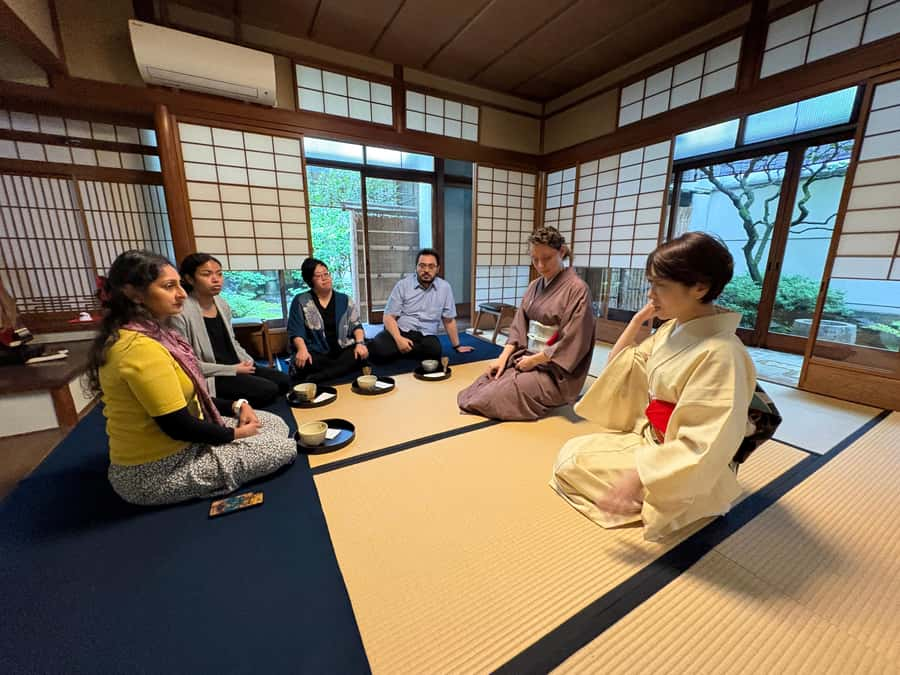
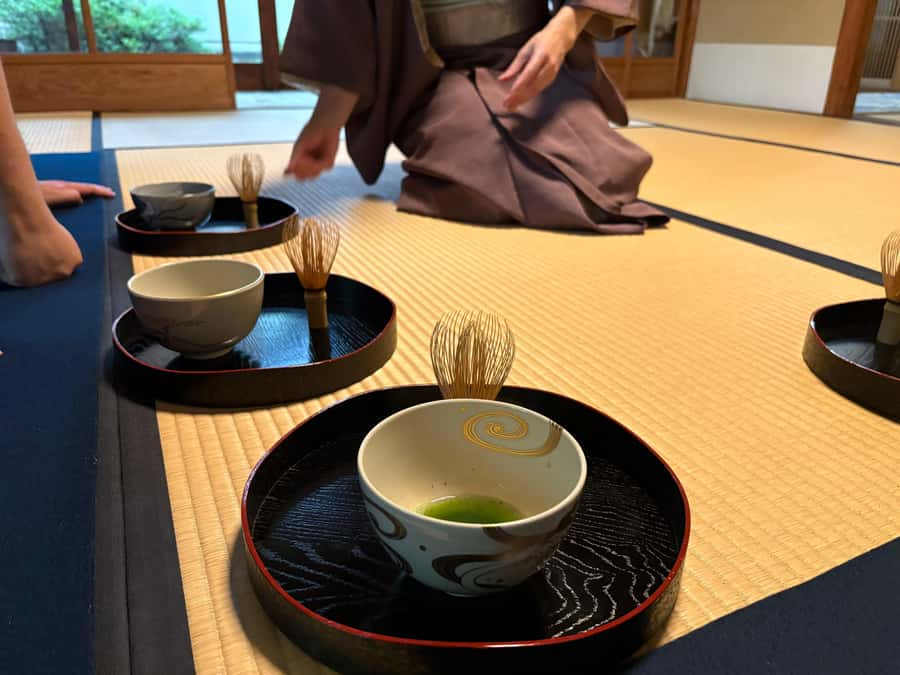
You receive two bowls of matcha during the experience. The teacher prepares the first, giving you a chance to taste the drink as it should be served. It comes with a Japanese sweet, and the sweet balances the strong, slightly bitter flavor of the powdered green tea.
You then prepare your own bowl. This hands-on part is one of the best reasons to choose this experience instead of a demonstration alone. You get to handle the whisk and see how much work goes into producing the smooth, foamy texture associated with matcha.
Do not expect your first bowl to look perfect. One participant described the whisking as harder than it seemed, which is exactly the lesson. The process looks effortless when performed by a trained teacher. Once the whisk is in your hands, you quickly understand the value of years of practice.
Your bowl is served with a second small sweet. Most of the sweets contain anko, or sweet red bean paste, and they are made to order. No alternative sweets are available, so this is worth considering if you dislike red bean paste or have a dietary restriction that makes it unsuitable.
The matcha contains a high amount of caffeine. If you cannot consume caffeine for medical reasons, you will not be able to drink the tea. The activity still offers cultural value without tasting it, but the booking price includes the tea experience, so people avoiding caffeine should think carefully before reserving.
Same place, a different pot:
- Kyoto: Table-Style Tea Ceremony at a Kyo-Machiya
★ 4.9 · 1,211 reviews - Kimono Tea Ceremony at Kyoto Maikoya, NISHIKI
★ 5.0 · 911 reviews - Kyoto: Arashiyama Bamboo Forest, Monkeys, Matcha & Temple Tour
★ 5.0 · 759 reviews - Kyoto: Kimono Tea Ceremony at Orizuruya Gion
★ 4.9 · 618 reviews
Why the small group limit of six helps
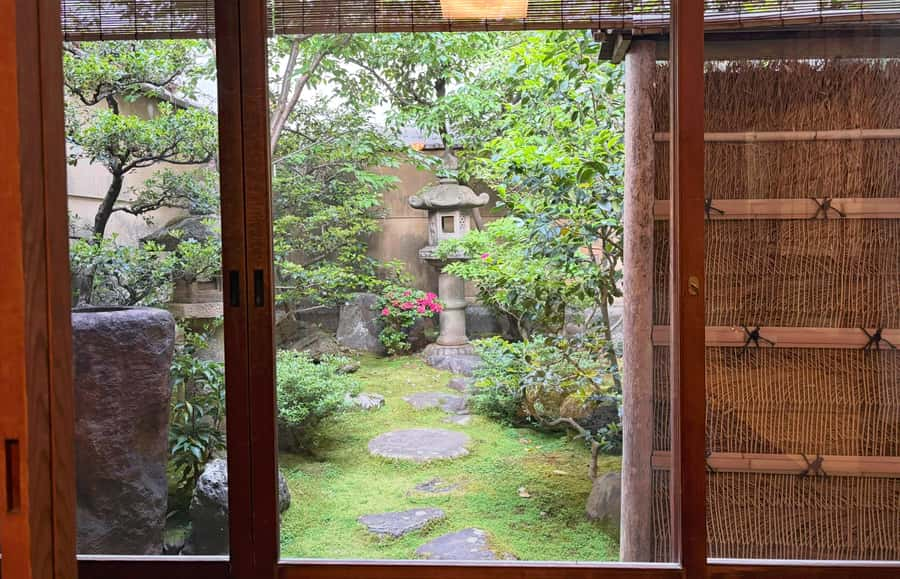
The advertised group limit is six people, giving the session a personal feel without requiring a private booking. Everyone should have a clear view of the ceremony, and there is room for questions and conversation.
The session length needs a little explanation. The full schedule is one hour when six people attend. If only two people book the time slot, the ceremony may end sooner because the teacher has fewer bowls to prepare. That is not a problem if you want a short introduction, but it matters if you are planning another appointment immediately afterward.
The experience has also worked well for families with a baby. Staff have been described as kind and friendly in that setting. Even so, the tea room is a quiet traditional space, so parents should be ready to help a child remain settled during the ceremony.
This is not a large cultural show with a fixed script aimed at dozens of people. It is closer to a guided introduction in a private home. If you want lots of spectacle, it may feel understated. If you prefer direct explanations and a chance to participate, the format works well.
Sitting in seiza, with chairs available
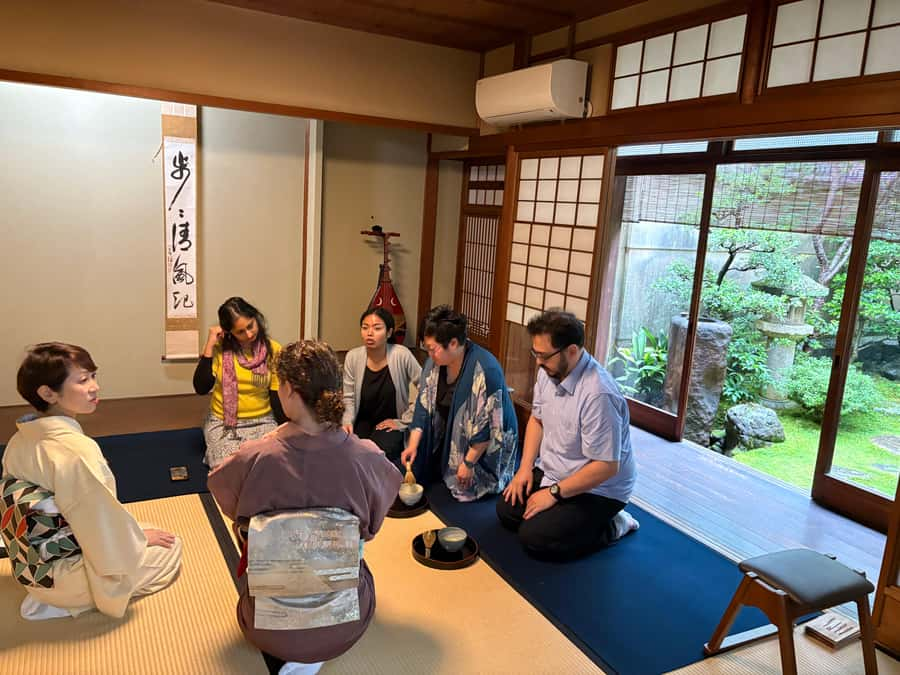
Traditional tea ceremony often uses seiza, the formal kneeling position with your legs folded beneath you and your weight resting on your heels. It can become uncomfortable, especially for anyone unused to sitting on the floor.
You may request a chair. Do not wait until your knees are hurting. Tell the staff at the start if you need one, particularly if you have knee problems or cannot kneel for an extended period.
The activity is not suitable for wheelchair users. Bare feet are not allowed in the tea room, so wear socks or bring a pair in your day bag. This is an easy requirement to miss if you are wearing sandals during a warm Kyoto day.
Drinks are not allowed in the tea room. The matcha and sweets provided during the ceremony are the planned refreshments.
Is $45 a fair price?
At $45 per person, this is not the cheapest way to taste matcha in Kyoto. You can buy a bowl of green tea for far less. But that comparison misses what you are paying for here.
The price includes a teacher-led ceremony, an explanation of the room and customs, two bowls of matcha, two sweets, translation support, and the chance to make your own tea. You also get a small-group setting in a historic house rather than a quick counter-service tasting.
I consider the price reasonable for someone who wants context and participation. The strongest value comes from the teacher’s long experience and the personal scale. You are not merely handed a drink. You learn what you are seeing, taste the teacher’s preparation, then try the process yourself.
The value is less convincing if you only want matcha, dislike red bean sweets, or cannot drink caffeine. It is also worth remembering that a small booking may produce a shorter session, even though the listed duration is one hour.
Who should book this tea ceremony?
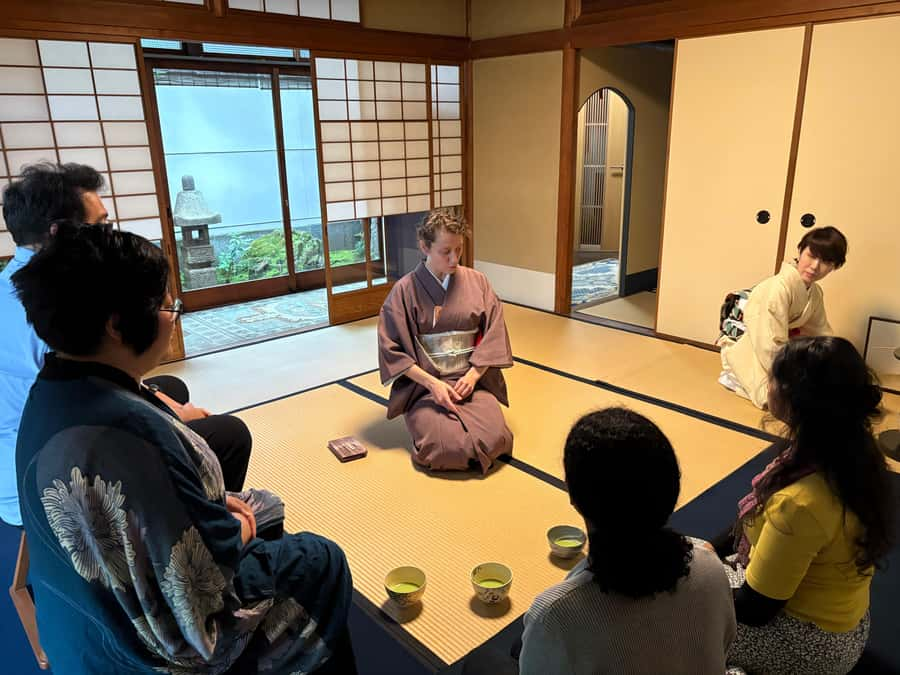
I would recommend it to first-time visitors who want a clear, friendly introduction to Japanese tea practice. The explanations make the customs easier to understand, and the hands-on whisking gives you something to remember after the ceremony ends.
It suits people who enjoy traditional buildings, seasonal details, and quiet cultural activities. The experience also works well for couples, small families, and anyone who prefers asking questions instead of listening to a long lecture.
Language support makes it useful for English, Dutch, and Spanish speakers. Spanish speakers should request that option ahead of time. The relaxed tone is especially helpful if you feel nervous about making a mistake, since you are guided through the process rather than expected to know the etiquette already.
I would be more cautious about recommending it to anyone with a serious caffeine restriction, strong dislike of anko, mobility limitations, or no interest in floor seating. Chairs solve the kneeling issue for many people, but wheelchair users cannot take part.
Practical timing and booking advice
The activity lasts about one hour, with starting times based on availability. Because it is near Hankyu-Omiya and Shijo-Omiya, you can pair it with other Kyoto plans, but leave enough time to find Shinrenji and the correct building.
Cancellation is free up to 24 hours before the scheduled start, and you can reserve now and pay later. Those policies help if your Kyoto plans are still shifting, though they do not change the need to arrive at the stated meeting point.
Bring socks, confirm Spanish assistance if needed, and mention a chair request when you arrive. If you are sensitive to caffeine, decide before booking whether watching and preparing matcha without drinking it would still make the experience worthwhile.
FAQ
How long does the Kyoto tea ceremony last?
The stated duration is one hour. If the time slot is not full, the ceremony may finish sooner because preparing tea for fewer people takes less time.
How many people can join the experience?
The group is limited to a maximum of six participants.
What languages are available?
English, Dutch, and Spanish are available. Spanish support is offered upon request, and a native English speaker translates the Japanese explanations.
How much matcha will I drink?
You receive two bowls of matcha: one prepared by the teacher and one prepared by yourself.
Are sweets included?
Yes. You receive one seasonal Japanese sweet with the teacher’s tea and one small sweet with your own bowl. Most sweets contain anko, or sweet red bean paste.
Do I have to sit on the floor?
Sitting in seiza is traditional, but chairs are available upon request. Wheelchair users cannot take part in this experience.
What should I bring?
Bring or wear socks, since bare feet are not allowed in the tea room. Remember that matcha contains a high amount of caffeine.
Should you book it?
Book this experience if you want more than a quick cup of matcha. The combination of a 100-year-old home, a teacher with 50 years of practice, seasonal tea-room details, clear language support, and your own turn with the whisk gives the hour real substance.
Skip it if caffeine, red bean sweets, floor seating, or traditional etiquette are poor fits. For everyone else, $45 is a sensible price for a personal Kyoto lesson that lets you watch, ask, taste, and try.
Just added around Kyoto
- Uji Walking Tour – Byodo-in temple and Tea Ceremony from Kyoto★ 3.5 · 3 reviews
- Tea ceremony at Kyoto’s Zen Temple Teahouse★ 5.0 · 2 reviews
- Kyoto: Authentic Tea Ceremony in a Small Group★ 5.0 · 7 reviews
- Tea Ceremony in 150 Years Old Townhouse with Tables and Chairs★ 5.0 · 22 reviews
- Silent Beauty of Kyoto Zen Walk and Tea Experience★ 5.0 · 2 reviews
- Tea Ceremony Experience in Traditional Kyoto Townhouse★ 5.0 · 19 reviews
- Traditional Tea Ceremony in Kyoto★ 4.5 · 3 reviews
- Sencha-do the Japanese Tea Ceremony Workshop in Kyoto★ 5.0 · 21 reviews
Tea Ceremonies in Kyoto, compared.
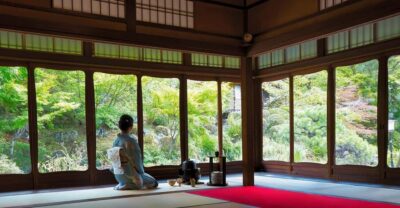
Tea Ceremony in a Traditional Tea House in Kiyomizu
Read our review →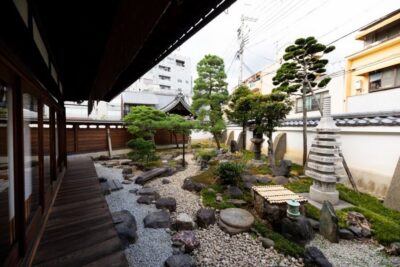
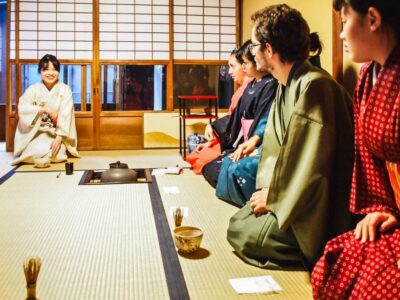
Tea Ceremony in 100-year-old Kyo-Machiya Townhouse
Read our review →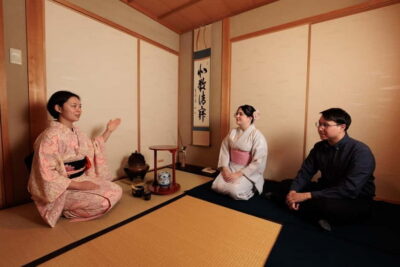
Browse the lists this tour appears in