
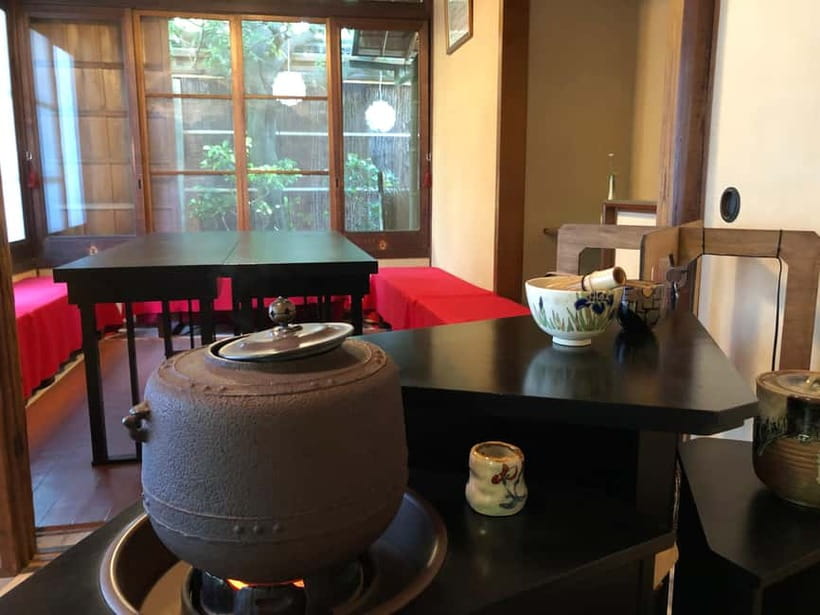
Review · KYOTO
Kyoto: Kimono and Tea Ceremony Experience at Cultural Asset
Old Kyoto still survives behind unmarked doors. At Tondaya, you step into a 140-year-old machiya, dress in a silk kimono, and watch a traditional tea ceremony in rooms shaped by old Japanese customs. I especially like the beautiful wooden interiors and gardens, plus the generous time for taking photos. The main drawback is that shared sessions can feel crowded, and English explanations may depend on a translation device.
You should also know that this is not a quick costume photo stop. The visit includes a house tour, historical objects, kimono dressing, and a formal tea presentation. At $222 per person, it is expensive, but the setting and hands-on elements give it more substance than a simple kimono rental.
Key Points Before You Book
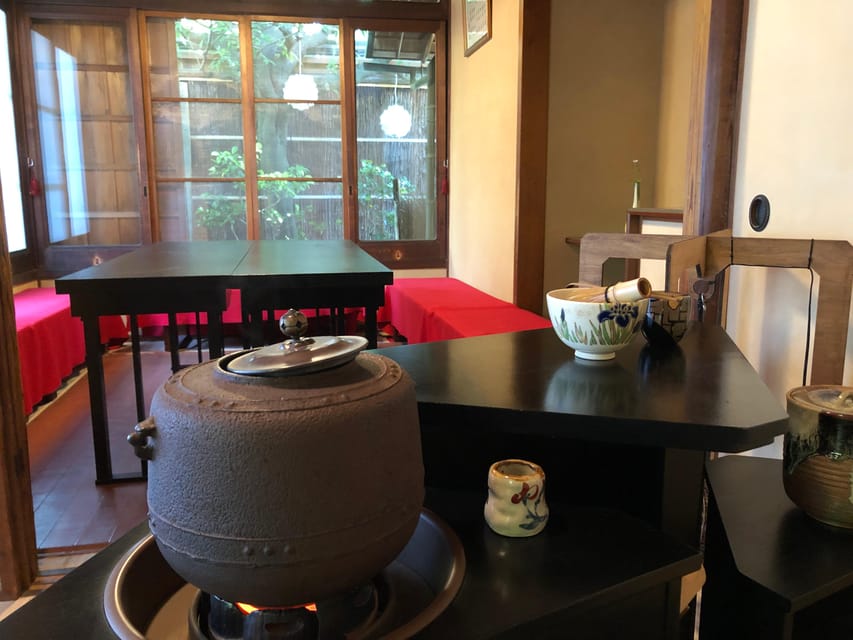
- A real cultural property: Tondaya is a nationally registered, 140-year-old machiya recognized by the Kyoto City Government.
- Silk kimono dressing: Staff help you select and wear a traditional kimono, though sizes and patterns vary.
- Tea ceremony in the house: A seasoned tea master explains and performs the ceremony in a historic room.
- Excellent photo setting: Wooden corridors, interior gardens, and traditional rooms provide plenty of attractive backdrops.
- Shared or private options: Standard sessions may include other participants, while a private booking offers a calmer visit.
- Bring socks: Bare feet are not allowed, and stockings are discouraged.
Entering Tondaya, a 140-Year-Old Kyoto Machiya
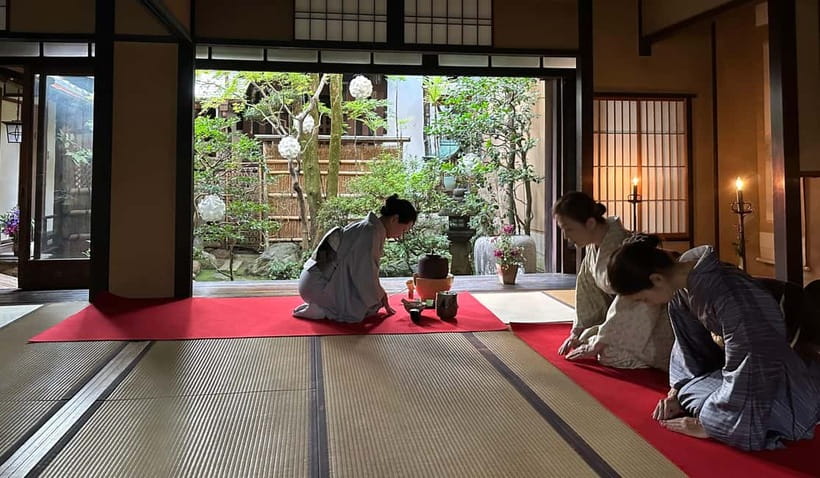
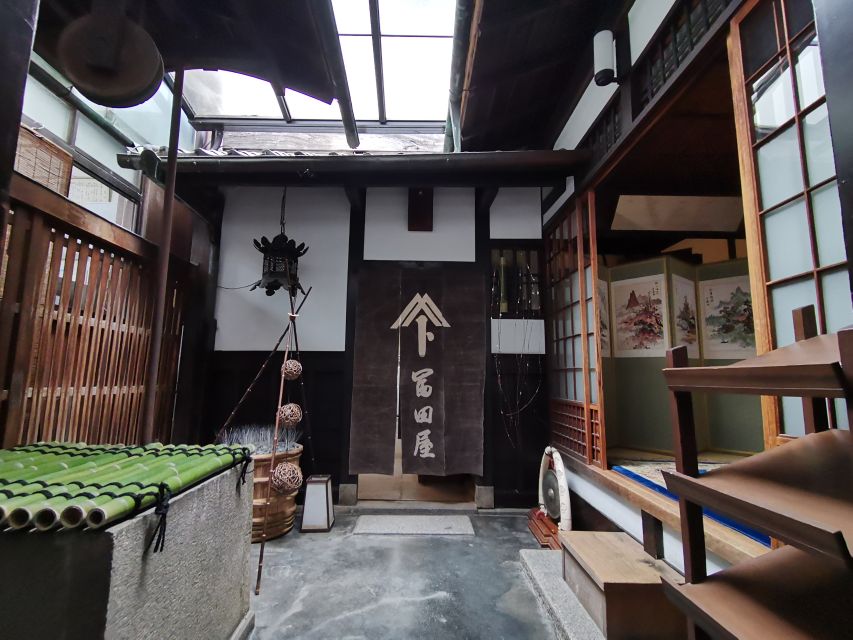
Your visit begins at Tondaya, located at 697 Ishiyakuchicho in Kyoto’s Kamigyo Ward. The building is more than a backdrop for photographs. It is a preserved machiya, the long, narrow townhouse style once common in Kyoto.
Inside, you can expect exposed wood, carefully maintained rooms, quiet garden views, and household objects connected with the building’s past. The house has enough character to make the setting feel meaningful even before the tea ceremony begins.
That matters because many kimono activities take place in modern studios or rental shops. Here, the building itself is part of the experience. You are not simply putting on Japanese clothing in a decorated room. You are moving through a place that has been maintained as a cultural property.
The house tour usually comes either before or after the tea ceremony, depending on the session. You may see historical artifacts and hear stories about the property and Japanese customs. The amount of explanation can vary with the staff member and the language situation, so visitors hoping for a detailed lecture should consider booking the private option.
More Kimono and Tea Ceremonies in Kyoto
- Kimono Tea Ceremony at Kyoto Maikoya, NISHIKI
★ 5.0 · 911 reviews - Kyoto: Kimono Tea Ceremony at Orizuruya Gion
★ 4.9 · 618 reviews - KYOTO Tea Ceremony with kimono near by Imamiya Jinjya Shrine
★ 5.0 · 343 reviews
Choosing and Wearing the Silk Kimono
The kimono dressing is one of the most enjoyable parts of the visit. Staff help you select a garment and dress you in the traditional layers. The process is described as taking about five minutes, though your full visit can take longer when you include changing, waiting, photography, and the ceremony.
The clothing is made from high-quality silk, giving the experience a more traditional feel than a basic rental outfit. You can expect staff to adjust the garment carefully, tie the sash, and create the finished look before you enter the main rooms.
There are a few practical limits. Kimono choices depend on size and availability. Tall visitors may receive larger garments in simpler solid colors, while shorter visitors might find more printed designs. One person also found that the fit was not ideal, so do not expect every garment to fit like custom clothing.
Wear something comfortable and avoid clothing that is tight around the neck. A wet T-shirt cannot be covered by a kimono, so bring a dry shirt if you are arriving after a hot or rainy walk. Hair styling and makeup are not included, so plan those separately if they matter to your photographs.
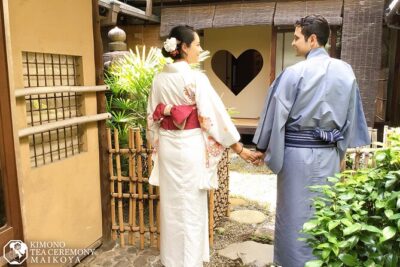
The staff generally allow plenty of time for pictures after you are dressed. This is a major strength. You can pose in the garden, along the wooden corridors, and in traditional rooms without feeling rushed through a single photo stop.
Photography is not allowed while you are being dressed or undressed. That rule is sensible, since the dressing rooms are working spaces rather than display areas. Once you are ready, staff may take pictures for you, and you will also have time to use your own phone or camera.
The Tea Ceremony in a Traditional Room
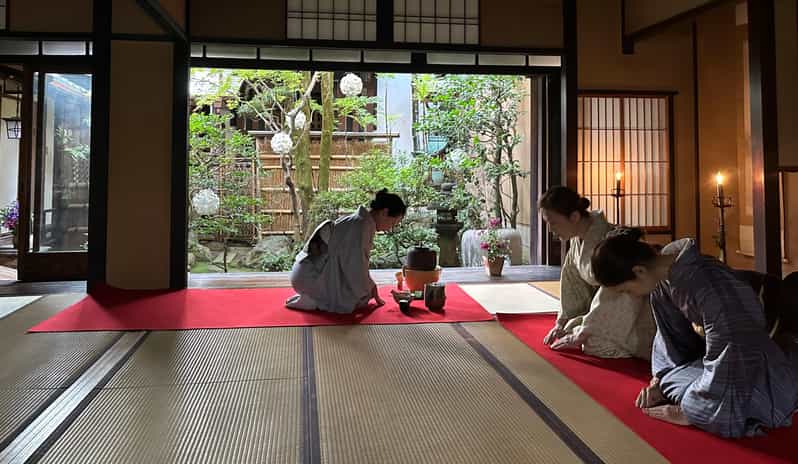
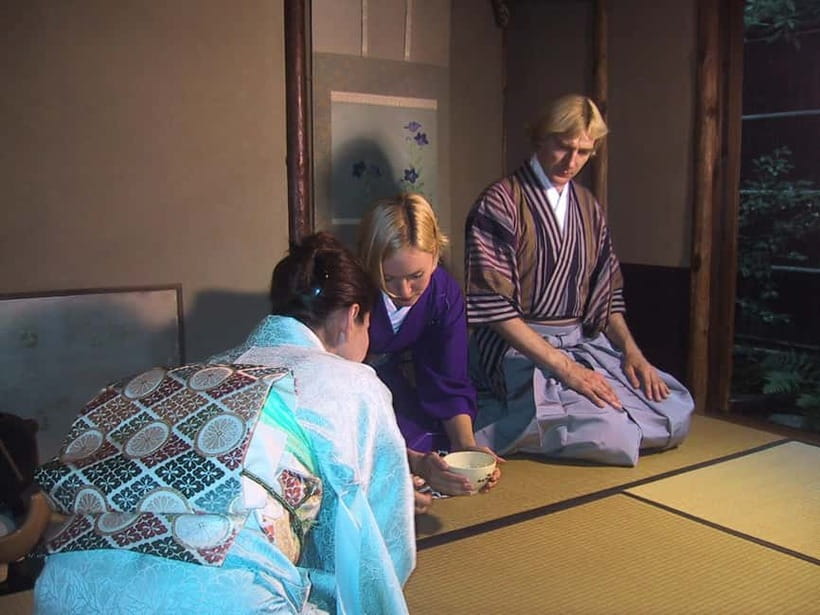
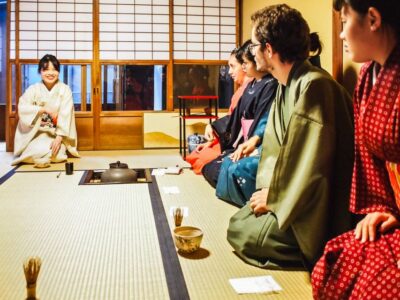
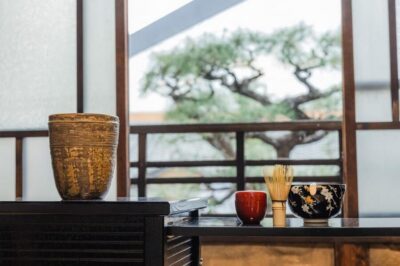
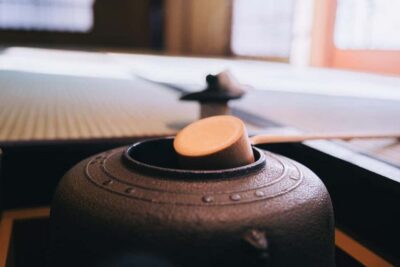
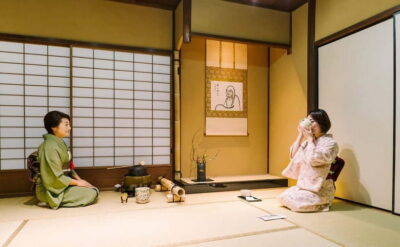
The tea ceremony is the heart of the visit. A tea master prepares and serves matcha in a formal setting while explaining the movements, tools, and customs involved. You watch the careful sequence of actions rather than simply receiving a cup of tea at a counter.
The ceremony gives you a useful introduction to the values behind Japanese tea culture: quiet attention, respect, clean movements, and care for the setting. It is not a performance designed for speed. Small gestures matter, and the atmosphere depends on participants staying quiet and attentive.
The quality of the explanation depends on the staff member leading your session. Some instructors explain the ceremony clearly in English. Others have limited English and may use a translation device or translation app. That does not necessarily spoil the experience, but it can reduce the historical and cultural detail you receive.
You may sit on the floor during the ceremony. A few small chairs may be available, but you should not assume you will have one. If sitting on the floor is difficult, contact the operator before booking and ask what can be arranged.
The standard session may include several groups at once. This can mean waiting, a less direct view of the tea master, or background noise from people who are not paying attention. A shared ceremony works best when everyone puts away their phones and treats the room with respect.
If you want to ask many questions, take your time, or have a clear view of the tea preparation, the private option is worth serious thought. A private visit also feels more like being welcomed into a traditional home, rather than joining a scheduled attraction.
Touring the House and Finding the Best Photo Spots
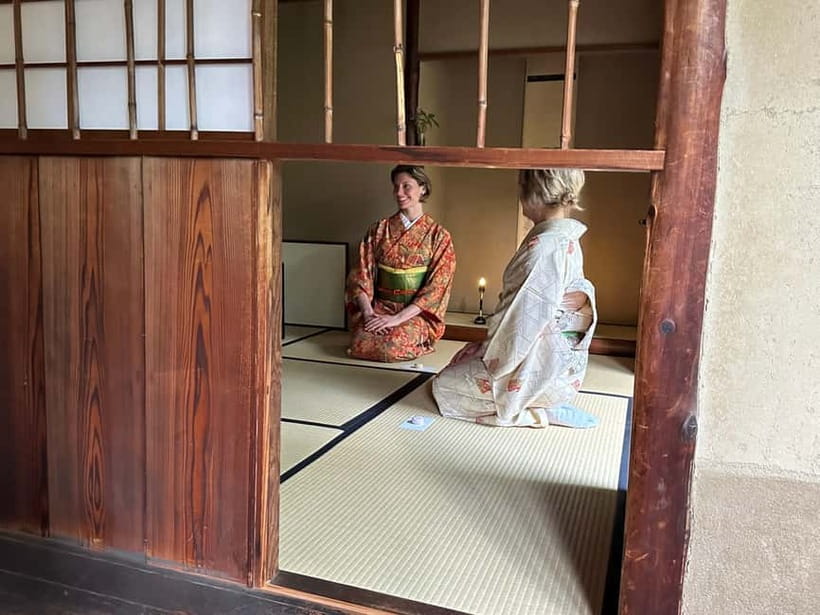
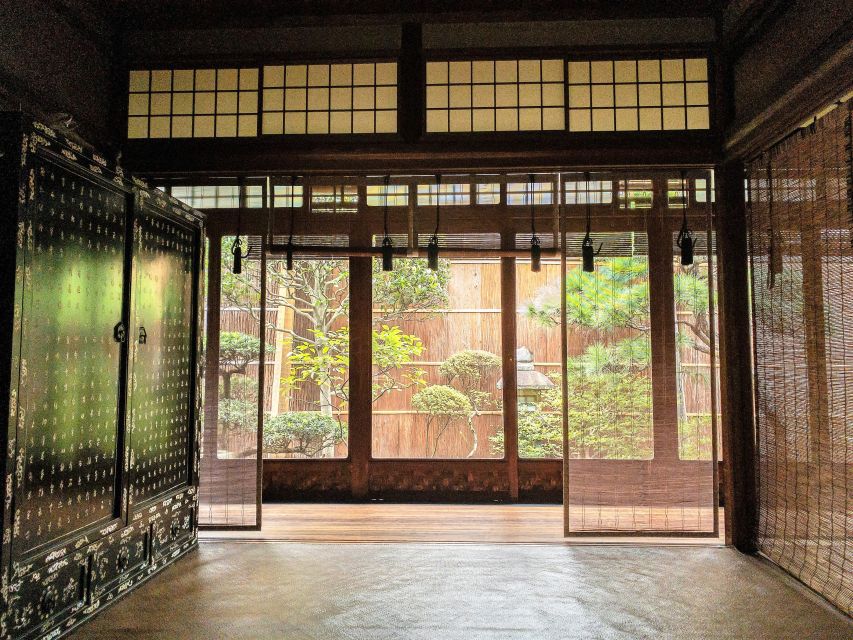
The house tour adds needed context to the kimono and tea. You move through rooms with traditional woodwork, gardens, and objects that connect the building to Kyoto’s past. The setting is attractive without much staging, which is why the photos can look intimate even when other people are present.
The interior gardens are especially useful for photographs. You can create a range of images without leaving the property: close portraits in the wooden rooms, full-length shots beside garden views, and quieter pictures along the corridors.
I like that the photography is not limited to one marked area. You have time to look around and choose a setting that suits your clothing. Staff may also help take photos, which is useful for couples and families who want pictures together.
Still, this is a working historic house, not a private photo studio. Other participants may enter the frame, and busy sessions can feel crowded. Visit timing may affect the mood. Some people have found the house nearly quiet, while others have experienced a more chaotic group.
Arriving early can help you get settled, but do not assume that arriving far ahead guarantees a private experience. Staff may begin dressing early, and the official schedule can stretch beyond the stated 90 minutes. Allow extra time if you have a train, restaurant booking, or another timed activity afterward.
More Tea Ceremonies in Kyoto
- Kyoto: Tea Ceremony in a Traditional Tea House in Kiyomizu
★ 4.9 · 3,519 reviews - Kyoto: Tea Ceremony Ju-An at Jotokuji Temple
★ 4.9 · 3,207 reviews - Kyoto: 45-Minute Tea Ceremony Lesson Experience
★ 4.3 · 2,378 reviews - Kyoto: Table-Style Tea Ceremony at a Kyo-Machiya
★ 4.9 · 1,211 reviews
Group Size, Language, and the Pace of the Visit
The duration is listed as 90 minutes to four hours, which is a wide range. The shorter end may suit a compact shared session, while a private or fuller visit can take much longer. Waiting for dressing, gathering the group, touring the rooms, and changing back all affect the pace.
The standard experience is conducted with other participants unless you choose the private option. Group size can make a real difference here. A small group lets you see the ceremony more clearly and ask questions. A larger group creates more waiting and can make the tea room feel crowded.
The staff speak Japanese and English, but not every staff member speaks English fluently. Some explanations may come through a translation device. If detailed cultural information is important to you, ask for the private experience and confirm the language support available.
Patience helps. The strongest part of the visit is the warmth of the staff, who are often praised for being friendly, attentive, and willing to help with photographs. Communication may be imperfect, but a smile, a calm pace, and a willingness to watch carefully go a long way.
The setting also calls for respectful behavior. Keep your phone away during the tea ceremony unless the staff clearly invite photography. Do not talk over the tea master or interrupt the presentation. You will have dedicated photo time later.
Is $222 a Fair Price?
At $222 per person, this is not a bargain activity. You are paying for several parts at once: entrance to the cultural property, kimono dressing, the tea ceremony, staff assistance, the house tour, and access to the gardens and rooms for photographs.
The value depends on what you want. If your goal is simply to wear a kimono for a few pictures, a lower-priced rental may make more sense. If you want a historic setting, an organized ceremony, and staff who help explain the traditions, Tondaya offers more than a standard rental shop.
The price also makes group conditions more important. A crowded session can feel less satisfying at this rate, especially if explanations are brief or your view of the tea master is blocked. A private booking may be the better use of your money if the price difference is manageable for your group.
I would consider this a special-occasion purchase. It works well for couples, families, and visitors who want a structured cultural activity rather than a self-guided visit. You are paying for atmosphere and access as much as for the clothing.
The experience has earned an overall rating of 4.3 from 306 ratings, which fits the pattern here: strong praise for the house, staff, photographs, and tea ceremony, with repeated reservations about crowding, language, kimono fit, and cost.
What to Bring and Wear
Bring your own socks. Bare feet are not permitted, and stockings are not recommended. Plain socks that are comfortable for sitting and walking inside the house are the safest choice.
Wear a shirt that is dry and not too tight around the neck. A wet shirt cannot be covered by the kimono, and the staff may ask you to change before dressing you.
You do not need to bring makeup or hair accessories unless you want to prepare your own look. Hair styling and makeup are not included.
Keep your belongings manageable. You will be changing clothes, sitting in traditional rooms, and moving through a historic house. The operator specifically asks visitors to arrive on time, so do not rely on a rushed arrival after navigating Kyoto’s streets.
Who Will Enjoy Tondaya Most?
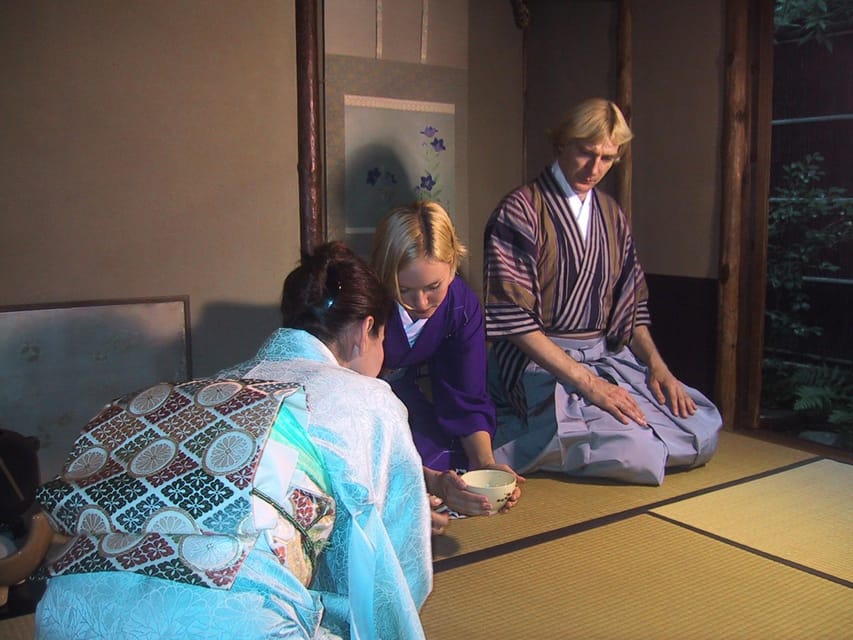
I would recommend this experience to you if you want three things together: traditional clothing, a tea ceremony, and a historic Kyoto setting. It suits first-time visitors who want a guided introduction to Japanese customs without planning several separate activities.
It is also a good choice for photographers, couples, and families. The staff allow time for personal pictures, and the house gives you more visual variety than a plain rental studio.
You may want to skip it if you dislike group activities, sitting on the floor, or structured ceremonies. You should also think twice if you expect fluent English throughout or a large selection of perfectly fitted kimono patterns.
The private option is the wiser choice for anyone who values quiet, detailed explanations, or a slower pace. A shared session can still be enjoyable, but your experience will depend partly on the size and manners of the group joining you.
Should You Book the Kimono and Tea Ceremony?
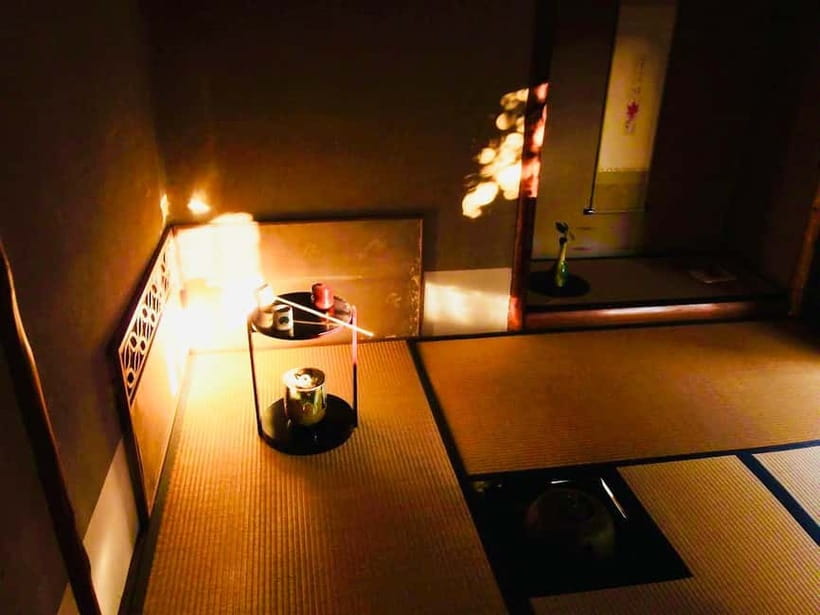
Book it if you want a polished cultural introduction in a genuine old Kyoto townhouse. The historic house and interior gardens give the activity real character, while the tea ceremony adds meaning to the kimono rather than treating it as a costume alone.
I would choose the private option if your budget allows, especially for couples or anyone who wants careful explanations and better views. For a shared booking, arrive on time, bring socks, wear a dry comfortable shirt, and treat the tea room as a place for quiet attention.
At $222, this is a splurge. But if traditional architecture, silk clothing, tea culture, and photographs all matter to you, Tondaya offers enough in one visit to justify the cost. If you only want a quick kimono picture, spend less elsewhere.
FAQ
Where does the Kyoto kimono and tea ceremony take place?
The experience takes place at Tondaya, Nishijin Japanese Cultural Experience Museum, at 697 Ishiyakuchicho, Kamigyo Ward, Kyoto, Japan.
How long does the experience last?
The stated duration ranges from 90 minutes to four hours. The exact length depends on the selected session and may include kimono dressing, waiting, the tea ceremony, the house tour, photographs, and changing back.
Is the tea ceremony private?
A standard booking may include other participants. A private experience is available if you prefer a more personal setting.
What languages are available?
The listed languages are English and Japanese. Not every staff member speaks English fluently, so a translation device may be used when needed.
What should I bring?
Bring socks. Bare feet are not allowed, and stockings are discouraged.
Are hair styling and makeup included?
No. The experience includes entrance, kimono dressing, and the tea ceremony, but hair styling and makeup are not included.
Can I cancel the booking?
You can cancel up to 24 hours in advance for a full refund. Reserve now and pay later is also available.
Just added around Kyoto
- Uji Walking Tour – Byodo-in temple and Tea Ceremony from Kyoto★ 3.5 · 3 reviews
- Tea ceremony at Kyoto’s Zen Temple Teahouse★ 5.0 · 2 reviews
- Kyoto: Authentic Tea Ceremony in a Small Group★ 5.0 · 7 reviews
- Tea Ceremony in 150 Years Old Townhouse with Tables and Chairs★ 5.0 · 22 reviews
- Tea Ceremony Experience in Traditional Kyoto Townhouse★ 5.0 · 19 reviews
- Traditional Tea Ceremony in Kyoto★ 4.5 · 3 reviews
- Silent Beauty of Kyoto Zen Walk and Tea Experience★ 5.0 · 2 reviews
- Kyoto Private Tea Ceremony at a Japanese Inns★ 5.0 · 12 reviews
Tea Ceremonies in Kyoto, compared.
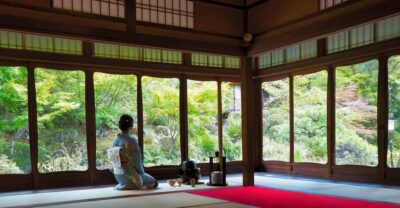
Tea Ceremony in a Traditional Tea House in Kiyomizu
Read our review →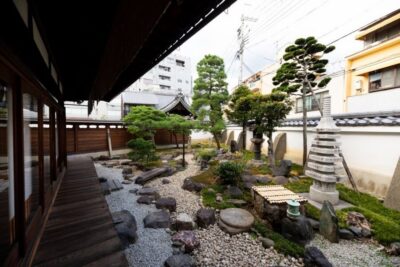
Tea Ceremony in 100-year-old Kyo-Machiya Townhouse
Read our review →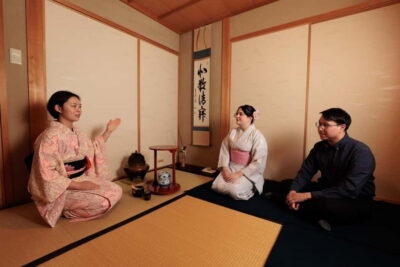
Browse the lists this tour appears in