
Review · HONG KONG
Hong Kong: MingCha Tea Tasting and Pairing Workshop
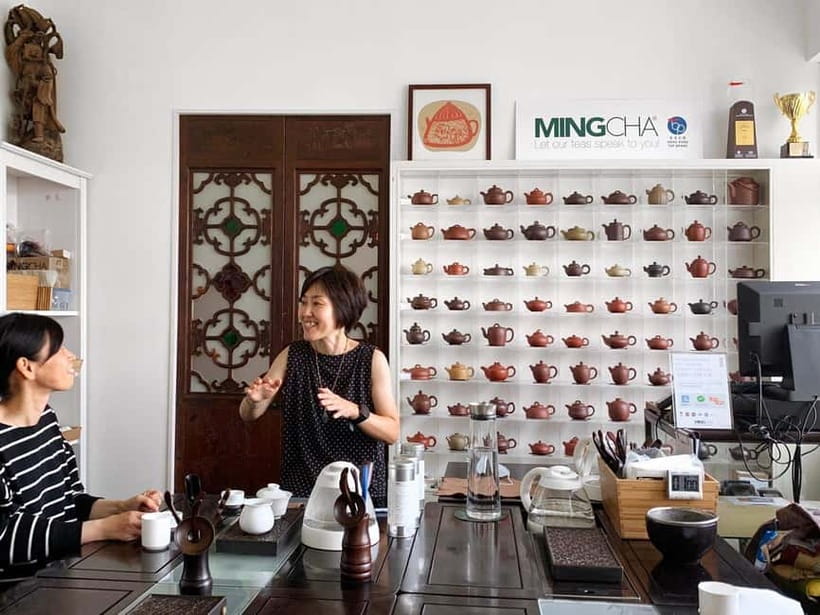
Tea turns a short Hong Kong outing into a cultural lesson. At MingCha Tea House, you taste several Chinese teas while learning how soil, weather, harvest, and processing shape each cup. I like the hands-on gaiwan brewing, and I like the clever food pairings, including rose honey toast. The main consideration is timing: the session is listed as 1.5 hours, but one recent booking described an experience lasting about three hours.
This is not just a sit-down tea sampling. You examine dry leaves, smell them before and after brewing, taste several rounds, and hear how tea moves from plant to finished drink. Hosts such as Vivian Mak and Vanessa bring a personal, friendly touch, though the workshop can feel more detailed than a quick tourist stop.
Key points to know before booking
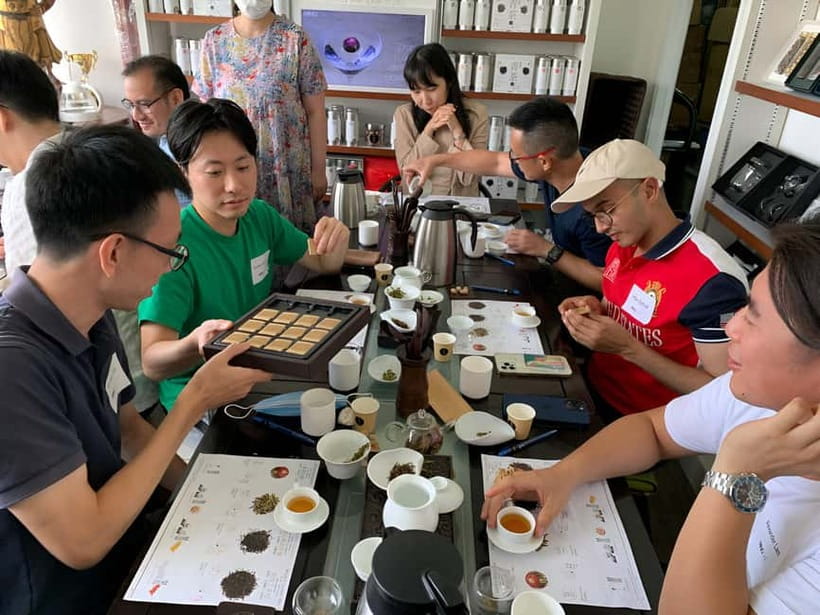
- Four to five tea styles in one session: You may sample green, scented green, red, oolong, white, and puer teas, with four premium handcrafted teas included.
- Five senses are part of the lesson: You look at the leaves, smell their changing aromas, taste repeated brews, feel the leaves, and even pay attention to the sound of preparation.
- You practice with a gaiwan: This is not a demonstration where you simply watch. You brew tea yourself and serve it to others.
- Tea comes with matching snacks: Rose honey toast is one example of how food can change the way a tea tastes.
- Small enough to stay interactive: Sessions allow up to 20 people, with instruction in English, Cantonese, and Mandarin.
- Easy MTR access: MingCha Tea House is about a five-minute walk from Chai Wan MTR Station, Exit C.
Why this Chai Wan tea workshop is worth your time
Hong Kong has no shortage of tea shops, but most offer a purchase, not a lesson. MingCha Tea House gives you a way to understand what is in your cup and why it tastes the way it does.
The experience takes place at Fortune Factory Building, in Block B on the 15th floor. That setting is practical rather than grand. You enter through the green building entrance, which is also a parking lot, walk in, turn left, find the stainless steel Block B sign, and take the passenger lift to the 15th floor. At the top, look for the brown door and press the bell on the right.
That slightly workaday arrival is part of the experience. You are not walking into a polished hotel lounge designed for passing tourists. You are visiting a specialist tea house where the focus is on the leaves, brewing, and conversation.
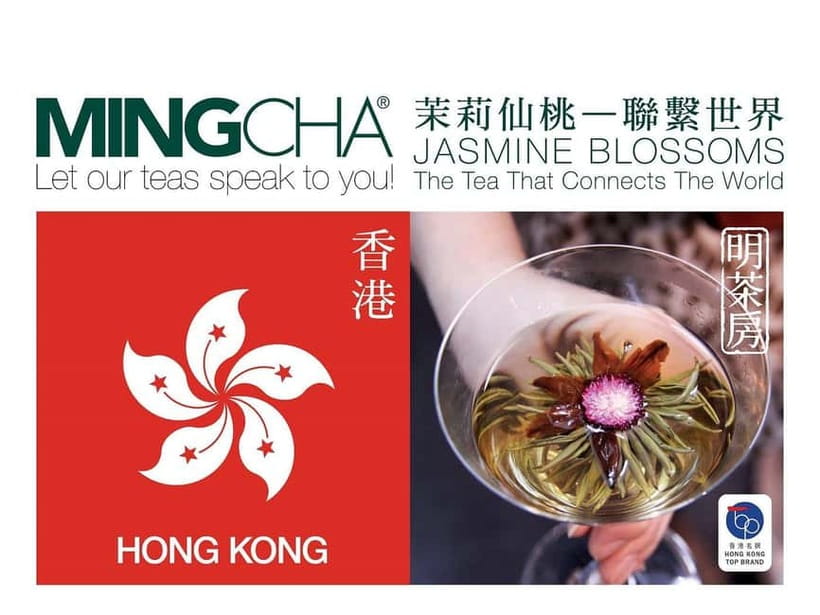
MingCha was founded by Vivian Mak, an artist and designer who became a tea entrepreneur. Her background helps explain the workshop’s attention to presentation and pairing. MingCha received a Hong Kong Top Brand award in 2017 and was named among the world’s best tea shops by FOOD & WINE Magazine.
Those honors are useful context, but the real value is what happens at the table. You leave with practical skills, not just a pleasant drink.
More Tea Tastings in the world:
- Twinings 2-Hour Tea Tasting Masterclass in London
★ 5.0 · 105 reviews - Tea Tasting and Pairing Concept Workshop
★ 5.0 · 57 reviews - Munnar: Tea trail, Tea Factory, and Tea Tasting Tour
★ 4.9 · 47 reviews
The first lesson: tea is more than a flavor
The workshop begins with a sensory approach. You are asked to notice tea with sight, smell, taste, touch, and sound.
First, you look at the dry leaves. Their shape, color, size, and degree of twisting offer clues about how they were handled. Once the leaves meet hot water, they change. Some unfurl dramatically, while others release color and scent in a quieter way.
You smell the leaves before and after brewing. This is one of the most useful habits to take home. The dry leaf may suggest flowers, grass, fruit, wood, or toast, while the wet leaf can reveal a different side of the tea.
Taste also changes over repeated brews. Each tea may be prepared five or six times, so you can follow its progress rather than judge it from one cup. The first brew may be light or aromatic, while later rounds can bring out sweetness, body, or a more earthy character.
Touch enters the lesson when you handle the leaves and brewing equipment. Sound matters too, especially the movement of water and the small actions involved in pouring and serving. These details slow you down. Tea becomes less about gulping a hot drink and more about noticing what is happening.
This approach suits beginners because you do not need a trained palate. You also get something useful if you already drink tea. The workshop gives you a vocabulary for describing what you notice without turning the session into a test.
Four to five teas, with several ways to compare them
The selection usually covers four to five varieties. Depending on the session, you may encounter green, scented green, red, oolong, white, and puer tea.
Chinese tea categories can confuse first-time visitors. In China, what English speakers often call black tea is commonly called red tea, referring to the color of the brewed liquor. Oolong sits between green and red tea in broad terms, with its character shaped by partial oxidation and careful processing. White tea is generally handled with less processing, while puer is known for its distinctive aging and fermentation traditions.
You do not need to memorize every category. The useful part is seeing how production changes flavor. The workshop explains the role of the tea plant, the history of tea, and the stages between harvest and brewing.
Harvest timing matters. Climate matters. Processing matters. A tea grown in one setting and handled one way can taste entirely different from another tea made from a similar plant. That lesson helps you understand why some teas are grassy and fresh, while others are floral, roasted, mellow, or earthy.
The selection also gives you a good range within 90 minutes. Four teas provide enough contrast without turning the session into a blur of samples. If the session runs closer to three hours, as one booking described, you may have even more time for discussion and repeated brewing.
The one uncertainty is worth noting. The advertised duration is approximately 1.5 hours, but the experience can apparently run longer depending on the pace and format. If you have a timed dinner, show, or airport transfer, leave a generous gap.
Brewing with a gaiwan instead of just watching
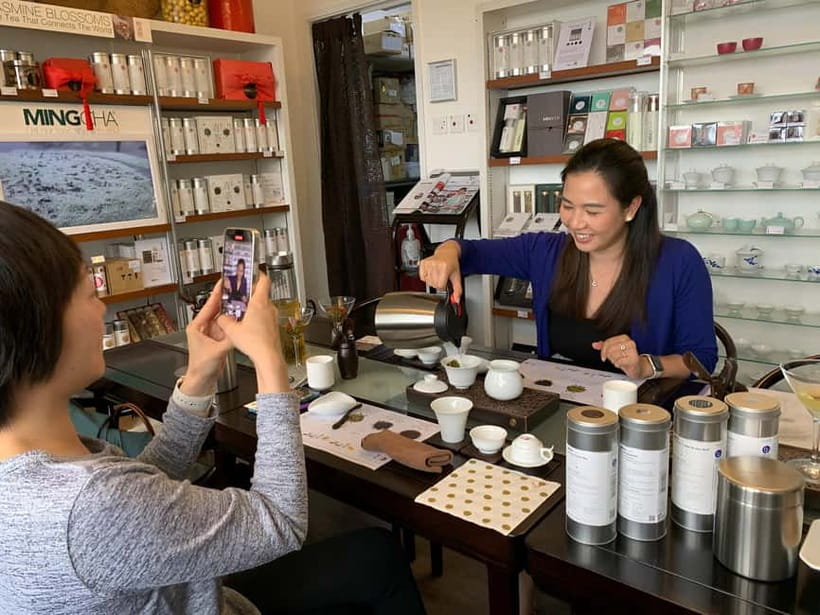
The practical heart of the workshop is the brewing practice. You use a gaiwan, a small lidded bowl traditionally used to brew Chinese tea.
A gaiwan can look simple, but it takes a little care. You need to control the lid, hold the bowl safely, manage the pour, and avoid letting the leaves over-steep. The workshop lets you practice these actions rather than watching a tea master do everything.
You also brew for other people, which changes the lesson. Serving tea requires attention to the amount poured, the pace, and the condition of the leaves. It makes the process social and gives you a better chance of remembering it at home.
I especially like this part for anyone who buys tea during a Hong Kong trip. A package of good leaves is not much use if you brew it with the wrong amount of water or leave it steeping too long. The session gives you a traditional method that can be repeated in your own kitchen.
You should not expect to become a tea expert in one visit. The point is more practical: you learn enough to brew with greater confidence, compare teas fairly, and avoid treating every Chinese tea as if it should be prepared in the same way.
More Food and Drink Tours in the world:
- Jakarta: Volcano, Tea/Rice Fields, Hot Spring, Local Food
★ 4.9 · 515 reviews - Private Tea Ceremony and Sake Tasting in Kyoto Samurai House
★ 5.0 · 163 reviews - SF’s Chinatown: Tea & Dim Sum Food Tour – Includes full meal, 3hr
★ 5.0 · 153 reviews - Experience all of Japanese culture and Japanese food experience classes “origami, udon, Japanese food, green tea, calligraphy” in 4 hours
★ 5.0 · 105 reviews
Tea and food pairings that change the tasting
The food pairing adds a playful element to the workshop. Tea is matched with small complementary snacks, including rose honey toast.
The toast works on several levels. Its crisp texture gives you a contrast to the liquid tea, while the gentle floral sweetness can bring out different notes in the cup. You may notice the tea as sharper, softer, sweeter, or more aromatic when tasted with food.
This is a useful lesson because tea is often served with snacks in Chinese settings, but the pairing is not always explained. Here, you learn to ask why a particular food works with a particular tea.
The food is not presented as a full meal. Additional food and drinks are not included, so eat beforehand if you need something substantial. Think of the snacks as part of the tasting lesson, not lunch.
The pairings are also easy to adapt at home. You do not need specialist ingredients to copy the idea. The useful takeaway is to match texture, sweetness, and aroma rather than serve any snack at random.
Vivian Mak is praised for unusual tea and food combinations, and that creative angle helps keep the workshop from feeling like a dry lecture. Even if you are not deeply interested in tea, the pairing gives you a reason to pay attention.
The teaching style and group size
MingCha’s tea masters lead the session in English, Cantonese, and Mandarin. The multilingual format makes the workshop accessible to a broad mix of participants, while the teaching is designed for both beginners and people who already know a little about tea.
One recent booking described the women leading the session as very capable and said the class explained both tea production and proper preparation. Another described Vivian and Vanessa as strong hosts and presenters who made the session entertaining as well as informative.
That balance matters. Tea can become a technical subject quickly, with discussions of botany, oxidation, processing, geography, and brewing temperatures. A good host keeps those details connected to the cup in front of you.
The maximum group size is 20. That is not a private lesson, but it is still small enough for an interactive workshop rather than a large performance. Your experience may depend on the actual attendance and on how much you choose to participate.
If you prefer quiet, self-guided tasting, this format may feel too social. If you like asking questions and trying things yourself, the group setup should work well.
How much value you get for $63
At $63 per person, this is not the cheapest way to drink tea in Hong Kong. You can buy an inexpensive cup almost anywhere. The price makes more sense when you count what is included: four premium handcrafted teas, multiple brews, food pairings, instruction, and brewing practice.
You are paying for access to a specialist setting and for the time of tea professionals. The session also gives you knowledge that can improve future tea purchases and tastings. If you are curious about Chinese culture, that lasting benefit is more important than the amount of tea served during the workshop.
The value is strongest for three types of people:
- You want a structured introduction to Chinese tea.
- You already enjoy tea and want better brewing skills.
- You are looking for an indoor Hong Kong activity with a cultural focus.
The value is weaker if you want a large meal, a souvenir, or a quick stop near the main sightseeing areas. MingCha is in Chai Wan, so you need to travel there. The five-minute walk from Chai Wan MTR Station, Exit C keeps the journey simple, but this is still a planned outing rather than a casual stop near Central.
The free cancellation policy allows cancellation up to 24 hours before the experience for a full refund, and you can reserve now and pay later. Those terms help if your Hong Kong schedule is still shifting.
Who should book, and who might skip it
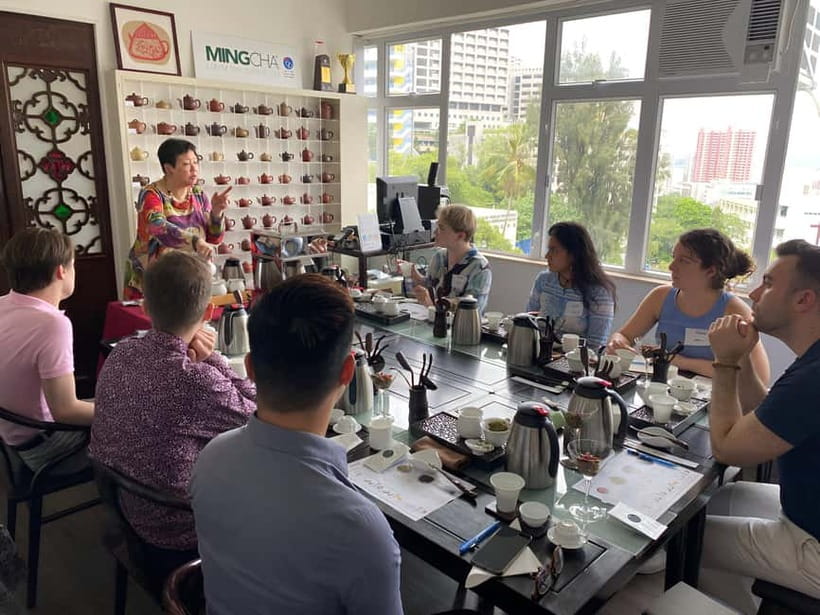
I would recommend this workshop to curious beginners. You do not need prior tea knowledge, and the five-senses approach gives you clear ways to notice differences without feeling lost.
It also suits experienced tea drinkers who want to compare several Chinese styles in one sitting. The repeated brews and gaiwan practice offer more substance than a standard retail tasting.
Culture seekers will find plenty to appreciate. The class connects tea to botany, production, history, and daily habits. It also shows how tea can be paired with food, which opens a wider view of Chinese hospitality.
Families with older children may find the hands-on format engaging, though the provided information does not specify a minimum age. Anyone who dislikes group instruction, has very little free time, or expects a full meal should think twice.
A rainy day is a particularly good time to schedule it. One recent participant said the workshop brightened a wet day in Hong Kong and changed their view of how tea can be enjoyed. That feels like the right role for this experience: a calm, useful break from the city’s noise.
Practical details for arriving prepared
Plan for about 1.5 hours, but allow extra time because one session was described as lasting around three hours. Check the starting time when booking and avoid placing a tight commitment immediately afterward.
From Chai Wan MTR Station, use Exit C. The tea house is in Fortune Factory Building, Block B, Unit B2 on the 15th floor. Enter through the green entrance, walk left, locate the stainless steel Block B sign, then take the passenger lift. The brown door should be visible when you arrive, with the bell on the right.
The workshop is offered in English, Cantonese, and Mandarin. Transportation is not included, but the MTR makes the venue straightforward to reach.
Wear something comfortable for sitting and handling tea equipment. The most useful preparation is simple: arrive curious, and do not worry about knowing the right words for flavors. The hosts guide you through the process.
Should you book the MingCha Tea Tasting?
Book it if you want more than a cup of tea. The combination of repeated tastings, tea production lessons, gaiwan practice, and food pairing gives you a real understanding of how Chinese tea is made and enjoyed.
At $63, it is a considered purchase, not an impulse stop. I would choose it for a rainy afternoon, a culture-focused itinerary, or a trip with someone who loves food and drink. I would skip it only if your schedule is tight or you want a full meal rather than tasting snacks.
For most curious visitors, MingCha offers good value because you leave with practical skills as well as pleasant memories. Just allow extra time, find the building entrance carefully, and arrive ready to taste slowly.
FAQ
How long does the MingCha tea workshop last?
The stated duration is approximately 1.5 hours. One booking described the experience as lasting about three hours, so you should leave extra time in your schedule.
How much does the workshop cost?
The price is $63 per person.
How many teas will I taste?
The workshop includes a tasting of four premium handcrafted teas. The session may explore four to five tea varieties, including green, scented green, red, oolong, white, and puer teas.
Is food included?
Yes. The experience includes tea and food pairings with complementary snacks. Additional food and drinks outside the pairing are not included.
Can beginners attend?
Yes. The workshop is suitable for tea enthusiasts, novices, and people interested in culture. No previous tea knowledge is stated as a requirement.
What languages are available?
The workshop is conducted in English, Cantonese, and Mandarin. The listed host or greeter languages are English, Traditional Chinese, and Chinese.
How do I reach MingCha Tea House?
MingCha Tea House is about a five-minute walk from Chai Wan MTR Station, Exit C. It is in Fortune Factory Building, Block B, 15/F, Unit B2. Enter through the green parking-lot entrance, find Block B, take the passenger lift to the 15th floor, and look for the brown door.
Just added around the world
- Yogyakarta: Prambanan Tour, Sukuh Temple & Tea Plantation★ 5.0 · 3 reviews
- Yokohama : Tea Ceremony with Sweets and Souvenir★ 5.0 · 5 reviews
- York: Private Horse-Drawn Carriage Ride and Afternoon Tea★ 5.0 · 3 reviews
- Wadi Rum: 2-Hour Jeep Tour with Bedouin Tea★ 5.0 · 11 reviews
- Walking Tour: Yanaka,Nezu& Sendagi: Tea Ceremony & Old Tokyo★ 5.0 · 3 reviews
- Washington, D.C.: Tea Around Town Bus Tour with Landmarks★ 3.4 · 7 reviews
- Visit local home for music and tea ceremony near Disney★ 4.9 · 13 reviews
- Volcano, Hot Spring, Mud Bath & Tea plantation all included★ 5.0 · 5 reviews
Tea Tastings, compared.
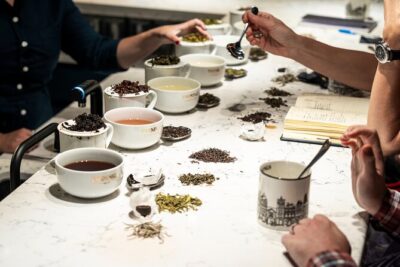
Twinings 2-Hour Tea Tasting Masterclass in London
Read our review →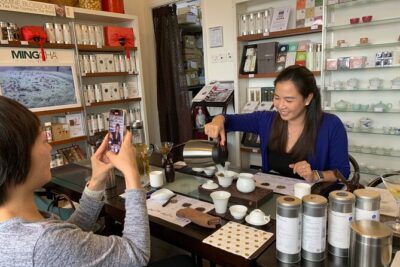
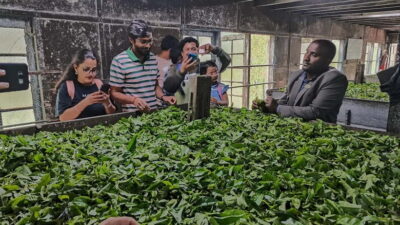

Matcha Experience with of Japanese Tea Tasting in Tokyo
Read our review →
Montmartre Hill French Afternoon Tea Tasting Tour with Crepes and Macarons
Read our review →
Munnar Tea Trail Tour , Tea factory visit & Tea Tasting
Read our review →Browse the lists this tour appears in