
Review · LONDON
Twinings 2-Hour Tea Tasting Masterclass in London
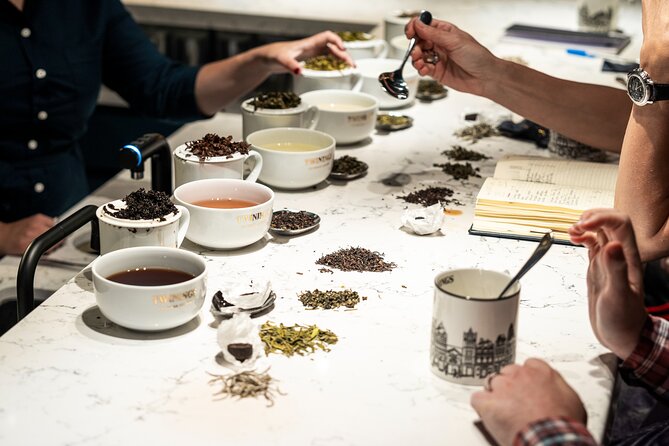
Tea tells a bigger story than you might expect. At Twinings on London’s Strand, this two-hour class connects the drink in your cup with tea production, British customs, and the company’s long place in London life. I like the six-tea tasting, which covers white, yellow, green, oolong, black, and pu’erh. I also like the small-group format, where guides such as Alessandra, Liam, Rachel, Rosie, and Angelo can keep the session friendly and interactive. The main drawback is simple: at $69.45 per person, this costs much more than an ordinary cup of tea, so it makes sense mainly if you want to learn, not just sip.
The class begins and ends at 216 Strand, a central London address that is easy to pair with sightseeing around the Strand and Temple. You may taste teas you have never tried before, describe aroma and mouthfeel, and learn why professionals slurp tea. Just note that the published group limit is five people, while one account describes a group of six, so the exact class size may vary.
Key points at a glance
- Six major tea categories: Taste white, yellow, green, oolong, black, and pu’erh in one sitting.
- A real tasting lesson: Learn to judge appearance, aroma, flavour, mouthfeel, and aftertaste rather than simply deciding if you like a cup.
- Tea from plant to cup: The class explains how tea is grown, harvested, processed, and prepared.
- British tea culture: You connect tea’s arrival in Britain with the customs that made it part of daily life.
- Small and personal: The class has a listed maximum of five people, giving the instructor room to answer questions.
- A useful souvenir stop: A product discount may be offered after class, and the lesson can help you choose teas with more confidence.
Why this Twinings class is different from afternoon tea
London offers plenty of places for afternoon tea, but this is not an afternoon tea service. You will not be sitting down to a tiered stand of sandwiches and cakes. The point here is to understand tea itself.
That difference matters. Afternoon tea is mainly a meal and a social ritual. This class is closer to a guided tasting workshop. You look at the leaves, smell the brewed tea, taste it, and learn language for describing what you notice. It is a good choice if you have ever enjoyed tea but felt that all the labels sounded like a foreign language.
Twinings gives the lesson a fitting home. The company has a long connection with British tea culture, and the session uses that setting to explain how tea became part of life in England. The focus is not only on the brand. You also learn about origins, production, categories, and the way tea quality is judged.
I especially like that the class works for different levels of interest. A serious tea drinker can ask detailed questions, while a beginner can arrive knowing almost nothing and still follow the lesson. One attendee described starting with no tea knowledge and leaving with a better understanding of the Twinings brand, tea quality, and the five main points used in tasting.
More Tea Tastings in London:
- Tea Tasting and Pairing Concept Workshop
★ 5.0 · 57 reviews - Munnar: Tea trail, Tea Factory, and Tea Tasting Tour
★ 4.9 · 47 reviews - Biking Real Shanghai& Tea Tasting Experience
★ 4.5 · 45 reviews
Starting at 216 Strand
Your meeting point is Twinings, 216 Strand, Temple, London WC2R 1AP. The activity returns to this same location, so you do not need to plan transport between several parts of the city.
The address is useful for a London sightseeing day. It places you near the Strand and Temple area, with public transport nearby. You should still allow enough time to find the shop and arrive calmly. A tasting class is not the sort of activity you want to join while distracted by a last-minute dash through central London.
The exact class room is not described in the basic details, but one account places the session in a clean, stylish basement bar area. That gives you a sense of the setting: intimate rather than grand, with a more private classroom feel than a busy retail floor.
The space is also reported to be air-conditioned, which can be welcome on a warm London day. Service animals are allowed. The class is offered in English, so you should be comfortable following spoken explanations and taking part in discussion in English.
The first lesson: where tea comes from
The opening part of the class answers the big questions. Where does tea grow? How did it reach Britain? What happens between the tea plant and the cup?
You follow the plant’s path from bud to finished drink. The guide explains production and processing, then shows how those steps help create different kinds of tea. This is one of the strongest parts of the session because it gives the tasting a clear purpose. Instead of treating white, green, black, and other teas as unrelated products, you begin to see how they fit into one larger family.
The British section adds a useful London angle. Tea is not just a beverage here. It has shaped habits, trade, social customs, and everyday language. The guides are praised for making this material lively, funny, and easy to follow. Alessandra, Liam, Rachel, Rosie, and Angelo are all singled out in the feedback for bringing warmth and energy to the teaching.
The quality of an instructor matters a lot in a class like this. A dry lecture would make two hours feel long. Here, the repeated descriptions point to guides who encourage questions, tell stories, and keep the pace moving. Rosie, in particular, is described as cheerful and interactive, while Liam is praised for making the history engaging. Alessandra is noted for handling questions with confidence and passion.
Tasting six categories of tea
The tasting includes six broad categories:
- White
- Yellow
- Green
- Oolong
- Black
- Pu’erh
This is a strong lineup for a two-hour introduction. It gives you variety in colour, aroma, body, and finish without turning the class into an exhausting parade of cups.
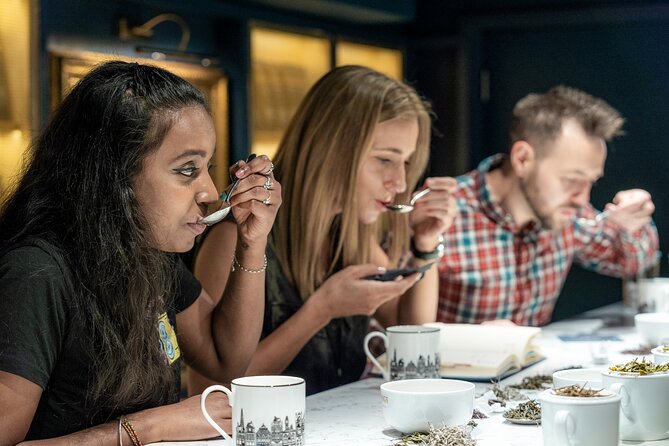
You do not simply drink each sample and move on. The exercise asks you to notice what is in front of you. You may consider the tea’s appearance, aroma, flavour, mouthfeel, and aftertaste. The guides provide words to help describe these impressions, which is useful if your normal tasting vocabulary begins and ends with good or strong.
The class also teaches the professional habit of slurping. It may feel silly at first, but it helps spread the tea across your palate and brings more aroma into the tasting. That hands-on element makes the session more memorable. You are not just listening to facts about tea. You are using your senses to test them.
The six styles also give you a chance to discover personal preferences. You may already have a firm black tea habit, then find that a floral white tea or earthy pu’erh catches your attention. Or you may learn that the teas you expected to like do not suit you at all. That is useful information, especially before you spend money on a large box of something unfamiliar.
More Food and Drink Tours in London:
- Tea and Doughnuts: Historic Walking Food Tour of Southwark
★ 4.6 · 14 reviews - Jakarta: Volcano, Tea/Rice Fields, Hot Spring, Local Food
★ 4.9 · 515 reviews - Private Tea Ceremony and Sake Tasting in Kyoto Samurai House
★ 5.0 · 163 reviews - SF’s Chinatown: Tea & Dim Sum Food Tour – Includes full meal, 3hr
★ 5.0 · 153 reviews
Learning how professionals judge a cup
The tasting method is one of the best reasons to pay for this experience. Tea can be judged in a vague way, but the class gives you a framework.
First, look at the tea. Colour and clarity can tell you something, though they do not tell the whole story. Then smell it before tasting. Aroma may suggest flowers, fruit, earth, grass, spice, or other notes. After that, taste the tea slowly and consider its weight and texture in your mouth.
The class also draws attention to aftertaste. Some teas disappear quickly after you swallow, while others leave a longer impression. Learning to notice that difference helps you understand why two teas that look similar can feel completely different.
This approach is valuable even if you are not trying to become a tea expert. It slows down a routine drink and gives you a way to explain what you like. You may leave with a better idea of how to choose tea in the shop, how to compare loose-leaf options, and how to discuss flavour without relying on vague labels.
The lesson is interactive rather than purely visual. You are asked to describe what you taste, and the guide offers examples of useful words. That makes the class more approachable for beginners. Nobody needs a trained palate before arriving.
The guides make or break the two hours
The strongest praise is aimed at the instructors. That is important because the basic subject matter could be delivered in a dull way. Here, the teaching style appears to be a major part of the value.
Alessandra is described as exceptionally well informed and willing to answer every question. Liam receives praise for making tea history lively and for clearly enjoying his work. Rachel is described as both entertaining and well prepared. Rosie is noted for her humour and upbeat teaching style, while Angelo is praised for explaining the tea industry and British culture in a clear way.
Different guides may give the class a slightly different personality. That is normal, and it means you should not expect a scripted performance where every session feels identical. The common thread is an approachable teaching style and plenty of enthusiasm for tea.
The small group helps. With a listed maximum of five people, the guide has more room to notice reactions, answer questions, and involve each person in the tasting. One session was attended by only one person, yet the instructor still gave that individual full attention. Another account describes a group of six, so the actual number may not always match the listed limit, but this remains a far more personal setting than a large public lecture.
Is $69.45 good value?
At $69.45, this is not a cheap way to drink tea. If you only want to sample a few Twinings products, you can spend far less in the shop. The price makes more sense when you treat the experience as a guided class with a teacher, structured tasting, history lesson, and sensory training.
I think the value is strongest for three kinds of people. First, tea lovers get a wider vocabulary and a better grasp of how different styles are made. Second, curious visitors get a distinctly London experience tied to a long-standing British tea company. Third, gift buyers can give something more personal than another standard afternoon tea booking.
The session also lasts about two hours, which is a useful length. It is long enough to cover production, British tea culture, six categories, and the tasting method, but not so long that the lesson becomes a full-day commitment. The feedback repeatedly describes the timing as just right.
A product discount after class may improve the value, though the details of that offer are not specified. I would not count on a particular discount amount when budgeting. Think of any saving as a bonus, not the main reason to book.
Who should book this experience?
You should consider this class if you enjoy food and drink experiences that teach you something. It is especially suited to tea drinkers who want to move beyond familiar breakfast blends.
It also works well for mixed-age groups. A parent, adult child, or grandparent can take part together because the lesson does not depend on specialist knowledge. One three-generation family group described it as their favourite London activity, which says a lot about its broad appeal.
You do not need to be an experienced tea drinker. In fact, beginners may gain the most. The tasting offers a gentle introduction to styles you might not order on your own, and the instructor supplies the language needed to make sense of them.
You might skip it if your schedule is packed or if you want a traditional cream tea with food. This class is about tasting and learning, not a leisurely meal. You should also think twice if $69.45 feels too high for a beverage-focused activity.
Practical tips for getting more from the class
Arrive with an open mind. You may have strong opinions about black tea or green tea, but the point is to compare rather than defend your usual order.
Do not worry about having the right tasting vocabulary. The class gives you examples and asks you to describe what you notice. A beginner’s honest reaction is more useful than trying to sound polished.
Plan a little time after the session if you want to shop. The tasting may change what you are looking for, and one attendee wished there had been more shopping time after learning which teas suited them. If you want to buy products, avoid scheduling another immediate appointment.
This experience can also fit nicely into a wider central London day. The start and finish at 216 Strand simplify your schedule, and the nearby public transport makes it practical to continue sightseeing afterward.
Free cancellation is available if you cancel at least 24 hours before the start time. Cancellations or changes made less than 24 hours ahead are not refunded or accepted, so check your plans before the cutoff.
Should you book the Twinings tea tasting?
Book it if you want more than a cup of tea. The class offers a clear introduction to tea production, British tea culture, six tea categories, and professional tasting habits. The guides are the real strength, with Alessandra, Liam, Rachel, Rosie, and Angelo receiving repeated praise for humour, warmth, and strong command of the subject.
I would recommend it most to tea lovers, curious first-time tasters, and anyone looking for a different London activity that works across generations. At $69.45, it is a considered purchase, but the two hours feel worthwhile if you take part fully and use the lesson to sharpen your own taste.
Skip it only if you want food, a short retail stop, or the lowest-cost way to drink Twinings tea. For everyone else, this is a thoughtful and enjoyable way to see a familiar British drink from a new angle.
FAQ
Where does the Twinings tea tasting take place?
The class starts at 216 Strand, Temple, London WC2R 1AP, UK, and ends back at the same meeting point.
How long does the masterclass last?
The experience lasts approximately two hours.
Which teas are included?
You taste six categories: white, yellow, green, oolong, black, and pu’erh.
Is the class offered in English?
Yes. The experience is offered in English.
How many people can attend?
The listed maximum is five people. One account describes a six-person group, so the exact class size may vary.
Can I cancel for a full refund?
Yes, if you cancel at least 24 hours before the experience starts. Cancellations or changes made less than 24 hours before the start time are not refunded or accepted.
More Two-Hour Experiences in London
- Skipton: 2-Hour Afternoon Tea Cruise
★ 4.8 · 508 reviews - Agafay Desert, 2H of Quad Biking, tea & transfer from Marrakech
★ 5.0 · 55 reviews - Sydney Harbour: 2-Hour Morning Yacht Cruise with Morning Tea
★ 4.8 · 42 reviews - 2 Hours Mochi &Nerikiri Making & Matcha Class in Bunkyo
★ 5.0 · 21 reviews
Just added around London
- Royal Afternoon Tea & Walk at Kensington Palace★ 4.5 · 3 reviews
- Kensington Palace Special Exhibition, Guided Walk & High Tea★ 5.0 · 2 reviews
- Royal London Tour with Afternoon Tea at The Rubens at the Palace★ 4.5 · 5 reviews
- Official National Gallery Highlights Tour and Afternoon Tea★ 3.5 · 10 reviews
- Harry Potter Tour & Magical Afternoon Tea★ 4.5 · 22 reviews
- Overnight Lake District with Cream Tea and Cruise from London★ 4.5 · 7 reviews
- Christmas Delights: Festive Tea & Doughnuts at Borough Market★ 5.0 · 3 reviews
- London: Afternoon Tea Experience at The Clipper Lounge★ 5.0 · 2 reviews
Tea Tastings, compared.

Matcha Experience with of Japanese Tea Tasting in Tokyo
Read our review →

Montmartre Hill French Afternoon Tea Tasting Tour with Crepes and Macarons
Read our review →
Munnar Tea Trail Tour , Tea factory visit & Tea Tasting
Read our review →
Full Day Tour In Uzungol Lake with Turkish Tea Tasting
Read our review →Browse the lists this tour appears in