
Review · HONG KONG
Tea Tasting and Pairing Concept Workshop
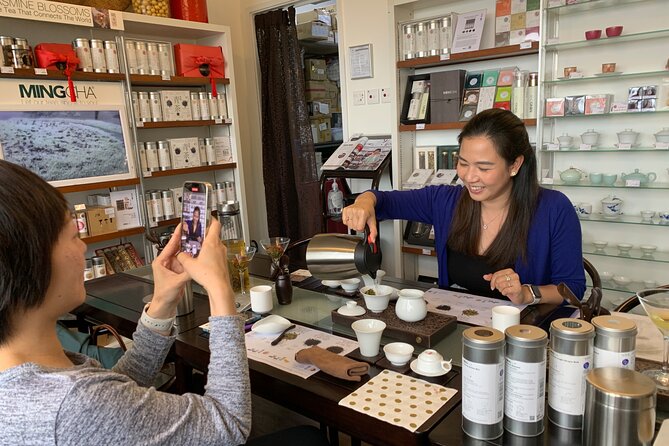
Tea tastes better when you know why. At MingCha Tea House in Chai Wan, you learn to taste four premium Chinese teas, brew them with traditional tea ware, and match them with dried nuts, chocolate, and flower honey toast. I especially like the hands-on kung-fu tea service and the way the workshop uses all five senses instead of treating tea as a simple drink. The main drawback is the location: Chai Wan is away from Hong Kong’s central sightseeing areas, so you need to allow time to reach the tea house.
I also like that you can choose a family-friendly format and one of two start times. The session lasts about 90 minutes, with a maximum of 20 people, so it offers more guidance than a quick tea sampling. At $65.60 per person, it is not a bargain snack stop, but the price is reasonable if you want instruction, several premium teas, food pairings, and a proper brewing lesson in one sitting.
Key points at a glance
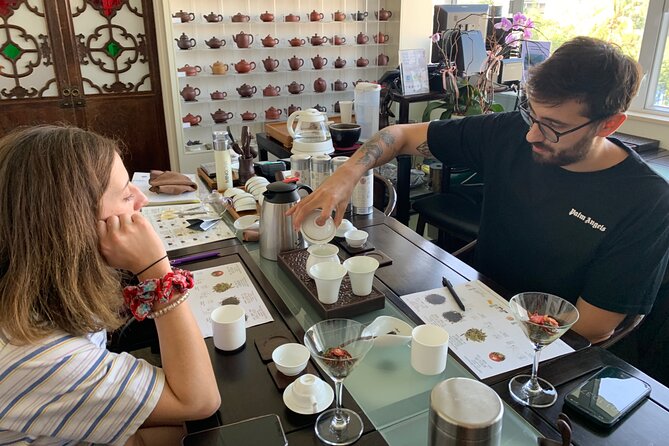
- Four distinct teas: Taste Green, Scented Green, Red, and Oolong teas from selected premium categories.
- Hands-on kung-fu brewing: Use traditional tea ware while learning how to steep and pour tea properly.
- Tea with food: Compare tea flavors alongside dried nuts, chocolate, and flower honey toast.
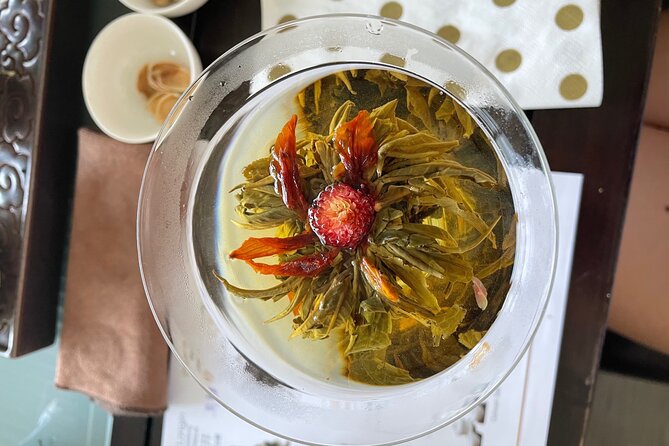
- A memorable jasmine presentation: Jasmine Blossoms add a visual touch that makes the tasting feel special.
- Small enough for instruction: The group limit is 20 people, with a 90-minute session.
- Useful Chai Wan base: The tea house is near public transportation, though it is not in the heart of central Hong Kong.
Why this Hong Kong tea workshop is worth your time
Tea is part of daily life in Hong Kong, but ordering a cup and understanding it are two different things. This workshop gives you a practical introduction to how tea changes with processing, brewing, temperature, timing, and food.
I like the fact that the session is built around comparison. You do not simply taste one tea and hear a few facts. You sample four types from different categories, then consider how each one works with sweet or savory flavors. That makes the lesson easier to remember when you are shopping for tea or choosing a drink with dessert later in your trip.
The format also suits people who normally feel unsure at a tasting. You are not expected to arrive with specialist knowledge. The workshop uses sight, smell, taste, touch, and the sound of pouring to make tea easier to understand. That gives the experience a relaxed, practical quality.
The most frequently praised part is the host, Vivian. She is described as warm, funny, patient, and passionate about tea. Her role matters here because a tea class can become dry if the instructor focuses only on names and processing methods. Vivian’s style appears to keep the material lively while still teaching proper preparation.
More Tea Tastings in China
- Biking Real Shanghai& Tea Tasting Experience
★ 4.5 · 45 reviews - Shanghai 3-Hour Afternoon Tea Tasting and Dessert Tour
★ 4.9 · 15 reviews - Private Shanghai City and Zhujiajiao Combo Tour with Boating, Tea Tasting, Lunch
★ 5.0 · 15 reviews
Arriving at MingCha Tea House in Chai Wan
The meeting point is MingCha Tea House, B2, 15/F, Fortune Factory Building Block B, 40 Lee Chung Street, Chai Wan, Hong Kong. The tea house is near public transportation, which helps, but you should still check your route before leaving. Chai Wan is not next to the main tourist areas around Central, Tsim Sha Tsui, or the harbor promenade.
I would treat the journey as part of your scheduling rather than trying to squeeze the workshop between tightly timed attractions. The session lasts about an hour and a half, and it ends back at the meeting point. Allow enough time to find the correct building and floor, especially if you are unfamiliar with Hong Kong’s industrial and commercial buildings.
A mobile ticket makes arrival simple. Confirmation is sent within 48 hours, subject to availability, so do not assume your place is final until you receive it. The activity offers two start times, but the exact times should be checked when booking.
The building address is a useful detail to save on your phone. Fortune Factory Building Block B is more specific than simply searching for Chai Wan, and having the full address ready can help if you need directions.
Four teas, four different starting points
The workshop includes four teas from selected categories: Green, Scented Green, Red, and Oolong. That selection gives you a clear progression through different tea styles without making the session too long.
Green tea generally gives you a chance to notice fresh, grassy, or lighter notes. The workshop helps you consider how those qualities work with food rather than tasting the tea in isolation.
Scented Green tea adds aroma to the lesson. This category prepares you to pay attention to fragrance before the tea reaches your mouth. The famous Jasmine Blossoms presentation is a memorable part of the session, especially if you have only encountered jasmine tea in a teabag or a basic restaurant pot.
Red tea provides a fuller contrast to the greener styles. The change makes it easier to see how tea categories can differ in color, body, aroma, and aftertaste.
Oolong completes the group with another distinct style. Since oolong can vary widely, tasting it beside green and red tea gives you a better sense of why tea names alone do not tell the whole story.
The value is in the side-by-side tasting. If you sampled these teas on separate days, you might remember only that you liked one more than another. In the workshop, you can compare them while the differences are fresh.
Learning kung-fu tea preparation
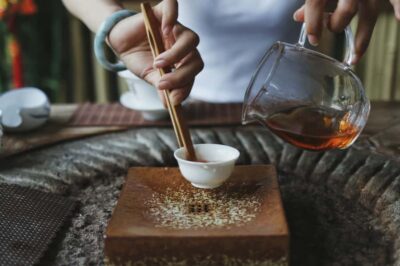
The brewing lesson uses a kung-fu style, also written as gongfu in many tea settings, with traditional tea ware. This is not a martial arts class. It is a careful method of preparing tea in small quantities, often with attention to steeping time, pouring, and the relationship between leaves and water.
You get a hands-on role rather than simply watching Vivian work. You learn how to steep and pour properly, which gives the session a useful skill you can repeat at home. The method also slows the tasting down. Instead of filling one large mug and forgetting about it, you pay attention to how the leaves open and how the flavor develops.
One especially interesting activity involves observing the leaves before and after brewing. That simple comparison helps you connect the dry appearance of the tea with the brewed drink. It also makes the lesson more visual for children and for anyone who learns better by handling objects than by listening to a long explanation.
You should expect some instruction on preparation and serving rather than a rushed sequence of samples. The workshop is still accessible, but it asks you to pay attention. If you prefer to sit back while someone else does everything, this may feel more involved than a standard afternoon tea.
Same place, a different pot:
- One-Day Hangzhou Dragon Well Tea Culture & West Lake Private Tour
★ 5.0 · 98 reviews - Traditional Chinese Tea Ceremony Experience
★ 4.7 · 74 reviews - Beijing Culture: Tea Ceremony, Heritage Instrument & Calligraphy
★ 5.0 · 57 reviews - Tea Village in lost Town and Buddha 1 day tour
★ 5.0 · 32 reviews
Pairing dried nuts, chocolate, and flower honey toast
The food is there to show how tea behaves with different flavors. Pairings include dried nuts, chocolate, and flower honey toast. These are modest accompaniments, not a full meal, so plan to eat before or after if you need lunch or dinner.
Dried nuts give you a useful contrast because they are less sugary than chocolate or honey toast. They can make a tea seem lighter, more roasted, or more balanced depending on the match.
Chocolate provides a stronger test. A tea with a lighter body may be overwhelmed by it, while a fuller tea can hold its own. You do not need to agree with every pairing. The point is to notice how your perception changes when the food changes.
Flower honey toast brings sweetness and aroma into the discussion. It also connects nicely with the scented tea portion, where fragrance is as important as flavor. This kind of pairing makes the workshop more playful and gives families an easy way to compare opinions.
I like this structure because it turns tea tasting into a shared activity. You can ask which combination works best, then notice that your preference may differ from the person beside you. That is more useful than being told there is only one correct pairing.
The Jasmine Blossoms moment
The Jasmine Blossoms presentation is one of the workshop’s more distinctive details. A tea presentation that changes as the blossom opens gives you something to watch, not just something to sip.
It also explains why scented tea can feel different from an ordinary green tea. Aroma reaches you before the first taste, and the visual presentation adds another layer. This is the kind of detail that can make the workshop memorable after the trip.
If you enjoy photographing food and drink, this may be the most visually appealing part of the session. Keep in mind that the focus remains on tea, not on creating a staged photo stop. The presentation is valuable because it supports the lesson about scent and tea preparation.
The Jasmine Blossoms are also available to take home, according to the host’s follow-up with one participant who brought them back to Bangkok. If you want a souvenir, ask about availability during the workshop rather than assuming every tea shown is included in the ticket.
Vivian’s teaching style
Vivian receives especially strong praise for her hosting. The descriptions of her teaching emphasize warmth, humor, patience, and clear instruction. One particularly thoughtful touch is her willingness to help with practical needs after the class, including assisting with a taxi and waiting until it arrived.
That kind of care is useful if you are visiting Hong Kong with children, older family members, or anyone who is less confident navigating an unfamiliar area. It also suggests that the class is personal rather than purely transactional.
Her teaching covers tea types, tea preparation, serving, and the connection between processing and character. You may also hear about the differences between the teas as you taste them, rather than receiving a lecture detached from the cups in front of you.
The strongest fit is for someone who enjoys asking questions. You will get more from the workshop if you pay attention to the leaves, smell each tea before tasting it, and compare your impressions with the group. You do not need to know tea terminology in advance.
Is the $65.60 price fair?
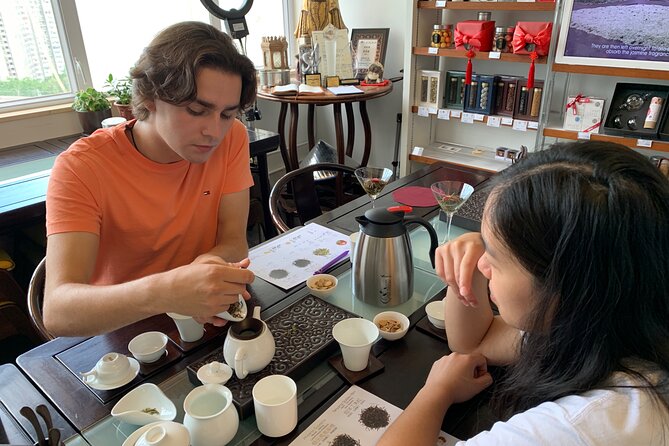
At $65.60 per person, this workshop sits above the price of a casual tea and snack. The value depends on what you want from the outing.
You are paying for about 90 minutes of guided instruction, four premium teas, traditional tea ware, hands-on preparation, food pairings, and a host who takes an active role in the session. If you only want to drink tea, the cost may seem high. If you want to understand what you are drinking and learn a method you can use again, the price is easier to justify.
The maximum group size is 20 people. That is not an intimate private lesson, but it is small enough to support a structured class. Your experience may depend partly on the final group size and on how much time you spend asking questions.
I would compare this with the cost of buying several premium teas, ordering food pairings, and trying to learn the brewing method alone. The workshop gives you context and guidance in one visit. It also avoids the guesswork of choosing unfamiliar teas from a shop menu.
The price does not include a full meal or a broad Hong Kong sightseeing program. Think of it as a focused cultural activity, not an afternoon tour of the city.
Family suitability and the 90-minute format
A family-friendly option is available, making this a good choice for children who enjoy hands-on activities. The leaf comparison, pouring practice, scents, and changing tea presentation give younger participants something concrete to do.
Still, the class involves tasting and listening. Very young children who cannot sit through an instructional session may find the pace slow. Older children and curious teenagers are more likely to appreciate the chance to handle tea ware and compare flavors.
The 90-minute duration is well judged for a workshop. It is long enough to cover four teas without turning into an entire day, yet short enough to fit into a Hong Kong itinerary. I would avoid scheduling a major attraction immediately afterward if the tea house’s location makes your transport time uncertain.
The class also works for couples, solo visitors, and families. It has enough structure for a first-time tea drinker and enough detail to interest someone who already enjoys Chinese tea.
Practical planning before you book
Book ahead if your dates are fixed. This experience is booked on average 34 days in advance, which suggests that last-minute availability may not always be reliable.
You receive confirmation within 48 hours, subject to availability. The mobile ticket is convenient, but I would keep the address and booking details available offline in case your phone connection is weak.
The activity has free cancellation if you cancel at least 24 hours before the start time. Cancellations made less than 24 hours before the session are not refunded, and changes inside that window are not accepted. The cut-off follows Hong Kong local time.
The experience requires good weather. If poor weather causes cancellation, you are offered another date or a full refund. That policy is worth noting even though much of the activity takes place indoors.
The workshop ends where it begins, at MingCha Tea House. Since no sightseeing transfer is included, plan your onward transport yourself. The tea house is near public transportation, and the host may be able to offer practical help if you need assistance after the class.
Who should book this tea experience?
I would recommend it to you if you want a cultural activity with real participation rather than a quick photo stop. It is especially suitable if you are curious about Chinese tea, enjoy trying unfamiliar foods, or want a family activity that does not depend on a long walking route.
It also works well for anyone who has bought tea in Hong Kong but never understood the differences between green, scented green, red, and oolong. You leave with a better vocabulary for describing what you like and a clearer sense of how brewing affects the cup.
You may want to skip it if your Hong Kong schedule is packed around Central and Kowloon. The trip to Chai Wan takes planning, and the workshop is too specialized if your main goal is sightseeing.
I would also skip it if you expect a full meal, a large selection of desserts, or a broad city tour. The food pairings are part of the lesson, not a substitute for lunch.
Should you book the MingCha Tea House workshop?
Yes, if you want a friendly, focused introduction to Chinese tea and are willing to travel to Chai Wan. The four-tea format, kung-fu brewing practice, food pairings, and Jasmine Blossoms presentation give you more substance than a basic tasting.
The strongest reason to book is Vivian’s personal teaching style. Her warmth and practical help add value to a class that could otherwise feel technical. Book it as a 90-minute cultural lesson, not simply as a drink break, and the $65.60 price is easier to defend.
FAQ
Where does the tea workshop take place?
It takes place at MingCha Tea House, B2, 15/F, Fortune Factory Building Block B, 40 Lee Chung Street, Chai Wan, Hong Kong.
How long does the experience last?
The workshop lasts approximately 1 hour and 30 minutes.
Where does the activity finish?
The activity ends back at the MingCha Tea House meeting point.
How many teas are included?
You taste four premium teas from selected categories: Green, Scented Green, Red, and Oolong.
What foods are paired with the tea?
The pairings include dried nuts, chocolate, and flower honey toast.
Do I get to prepare tea myself?
Yes. The workshop includes hands-on brewing in the kung-fu style using traditional tea ware, including practice with steeping and pouring.
Is the workshop suitable for children?
A family-friendly option is available, so children can join this version of the experience.
How many people can join the workshop?
The maximum group size is 20 people.
Are there different start times?
Yes. You can choose from two different start times, subject to availability.
Can I cancel for a refund?
You can cancel for a full refund up to 24 hours before the experience start time. Cancellations or changes made less than 24 hours before the start are not refunded or accepted.
More Food and Drink Tours in China
- Unlock Chinese Tea: Culture, Science, Tasting & Hands-on Brewing
★ 5.0 · 12 reviews - Tea Tasting & Brewing Experience
★ 5.0 · 10 reviews - 3-hour Morning/Afternoon Tea Tasting on Maliandao Street & Dimsum
★ 5.0 · 7 reviews - Puer Tea Picking and Tasting | 6 Hour Morning Trip
★ 5.0 · 7 reviews
Just added around China
- Full-day Tour: Spectacular Sunrise, Tea Plantation & Sunset★ 5.0 · 3 reviews
- Chinese Tea Ceremony Experience★ 5.0 · 3 reviews
- Unlock Chinese Tea: Culture, Science, Tasting & Hands-on Brewing★ 5.0 · 12 reviews
- Shanghai Mahjong Experience in Local Tea Bar★ 5.0 · 4 reviews
- Private Tour Hangzhou West Lake and Tea Fields Discovery★ 5.0 · 3 reviews
- Half-Day Hangzhou Jiuxi Stream and Tea Plantation Experience★ 5.0 · 2 reviews
- Hangzhou West Lake and Tea Plantation Half Day Tour★ 5.0 · 4 reviews
- Private Hangzhou Day Tour to West Lake, Lingyin Temple, Tea Village, Old Pagoda★ 5.0 · 17 reviews
Tea Tastings in China, compared.

Shanghai 3-Hour Afternoon Tea Tasting and Dessert Tour
Read our review →Private Shanghai City and Zhujiajiao Combo Tour with Boating, Tea Tasting, Lunch
Read our review →
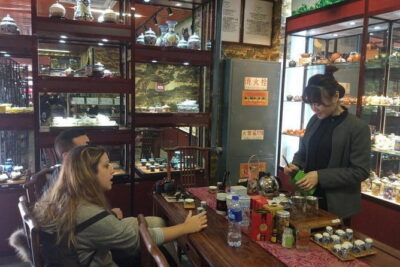
3-hour Morning/Afternoon Tea Tasting on Maliandao Street & Dimsum
Read our review →
Guilin: City Tour with Elephant Hill & Ming Tea Tasting
Read our review →
Xi’an Chinese Calligraphy Workshop: Ink Art & Tea Tasting
Read our review →Browse the lists this tour appears in