
Review · PARIS
Montmartre Hill French Afternoon Tea Tasting Tour with Crepes and Macarons
Sweet reasons to climb Montmartre. This 2.5-hour afternoon walk pairs French treats with the romantic lanes, artists’ square, Moulin Rouge, and Sacré-Cœur. I especially like the relaxed pace and the chance to find small food stops you might miss on your own. The main drawback is that the route includes uphill walking, and the exact tastings can vary.
I also like the small-group limit of 15 people, which makes it easier to hear the guide and ask questions. Guides such as Arthur, Catherine, Fabian, Dorine, and Stéphane have been praised for mixing local stories with food knowledge. One practical caution: the advertised macarons and tea did not appear on every departure, so you should confirm the current tasting lineup if those items matter most to you.
Key points at a glance
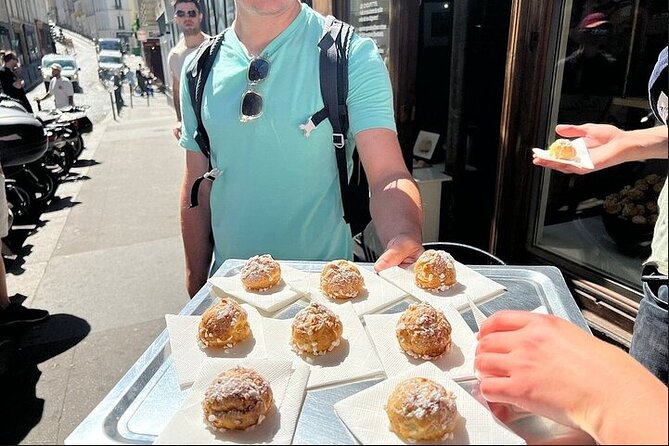
- Six or so sweet stops may fill the walk: Past tastings have included crepes, madeleines, croissants, macarons, chocolate, meringues, chouquettes, pastries, and choux-style sweets.
- The route ends at Sacré-Cœur: You finish beside the basilica after walking through Montmartre rather than simply being dropped at the main tourist steps.
- The afternoon start is useful: Meeting time is 2:30 pm, leaving your morning free for museums, markets, or a slow Paris breakfast.
- The guides add much of the value: Arthur is praised for working well with children, Catherine for local history, and Stéphane for his chef’s perspective and neighborhood connections.
- The pace is manageable but not flat: The walk is described as leisurely, yet the climb toward Sacré-Cœur still calls for comfortable shoes.
- It works well for families: The food gives children a reason to keep walking while the stories give adults more than a sugar stop.
Starting at Place Blanche near the Moulin Rouge
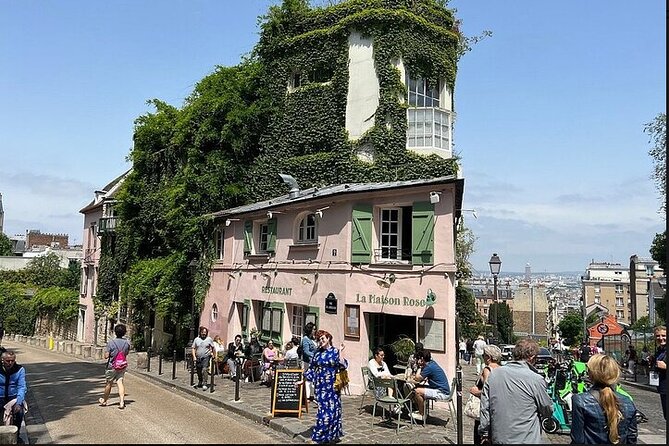
The tour begins at 5 Place Blanche at 2:30 pm. That puts you beside the Moulin Rouge, one of Paris’s most recognizable entertainment landmarks and a fitting doorway into Montmartre’s theatrical side.
This start point is near public transportation, so you can reach it without arranging a private transfer. Transport to the meeting point is not included, but that is normal for a walking tour in central Paris. You should plan to arrive a little early, especially if you are traveling with children or need to find the guide in a crowded square.
The first moments are likely about orientation. The group gathers, introductions are made, and the guide sets the tone for the afternoon. The exact order of food stops may change, but the general idea is clear: walk uphill through the neighborhood while tasting French sweets along the way.
The Moulin Rouge itself is a photo stop rather than a cabaret performance. If you want to attend a show, that requires a separate booking. Here, its role is to place you in the Pigalle and Montmartre area before the tour turns into quieter streets.
More Afternoon Tea in the world:
- London: Afternoon Tea Cruise on the River Thames
★ 4.4 · 3,274 reviews - Afternoon Tea Bus Tour in Dublin
★ 5.0 · 2,791 reviews - London: Afternoon Tea Bus Tour – 1960s Routemaster Bus
★ 4.5 · 2,032 reviews
Romantic streets beyond the main tourist route
Montmartre is easy to misunderstand. The broad stairways and Sacré-Cœur forecourt can feel crowded, but the neighborhood also has winding lanes, old facades, small shops, and corners with a village feel. A good guide helps you connect those two sides.
Several guides have taken groups along quieter streets when the main routes were packed. That matters on busy weekends, including Easter, when Montmartre can become hard to enjoy at a slow pace. The small group makes it easier to move together without losing the person explaining the next stop.
The food gives the walk a useful rhythm. Instead of listening to a long history lesson while climbing, you pause for a crepe, a pastry, or a piece of chocolate. Children get a reward every so often, and adults get a chance to compare different French sweets rather than eating one large dessert at the end.
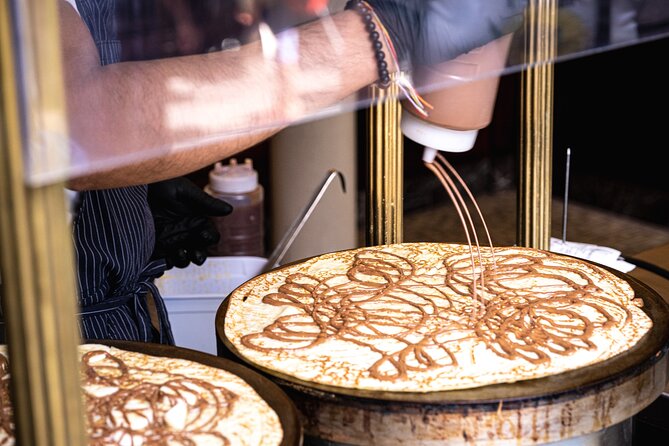
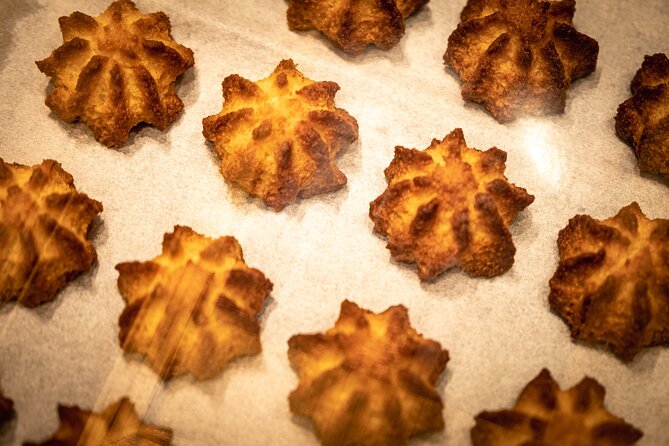
The tastings have included fresh crepes, madeleines, croissants, macarons, chocolate, meringues, chouquettes, and other pastries. One particularly appealing detail is watching a crepe being prepared before eating it. That small moment connects the food to the place and makes the stop feel less like a packaged sampling session.
Do not expect a formal British-style afternoon tea with tiered trays and a fixed menu. The experience is better understood as a walking dessert tour. Coffee or tea is included, along with hot or cold drinks, but the precise drink and food selection may change.
Place du Tertre and Montmartre’s artistic past
Place du Tertre is the famous artists’ square, and it is one of the tour’s essential stops. Van Gogh, Picasso, and Hemingway were associated with Montmartre, and the guide uses this area to explain why the neighborhood became linked with painters, writers, cabarets, and bohemian life.
The square can be crowded and commercial. That is part of the experience, but it can also be the least peaceful section of the walk. A guide helps you look beyond the easels and portrait artists to understand how the square fits into the wider story of Montmartre.
This is also where the tour’s balance matters. The afternoon is not only about eating, and it is not only about dates and names. Catherine, for example, has been praised for connecting local history with stops for sweets. Arthur has also been singled out for making the explanations accessible to younger children.
If you have seen Amélie or Midnight in Paris, the neighborhood may feel familiar. The tour can add film-related context while still focusing on the real streets and shops. That combination works well if you enjoy seeing how a place functions beyond its postcard image.
The square is a good place to keep personal belongings secure. Pickpocketing is a concern around major Paris sights, and Sacré-Cœur in particular can be crowded. That is simple practical advice, not a reason to avoid the area.
The sweets are the real reason to book
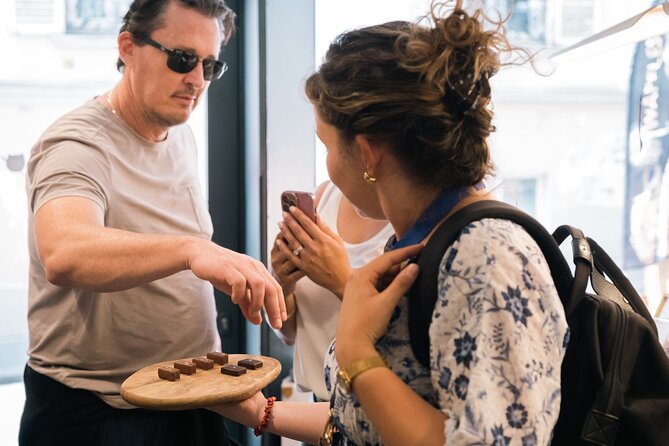
The strongest part of this experience is the range of food. You are not limited to one pastry shop or one large tasting plate. The route may introduce you to several small businesses, with each stop offering something different.
A possible afternoon could include:
- A freshly made crepe
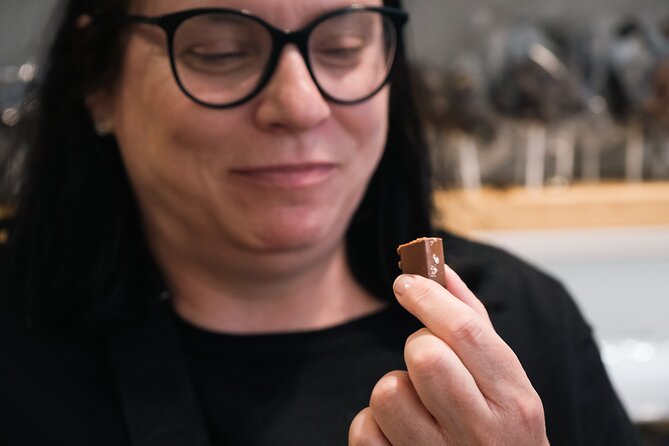
- Macarons
- Chocolate
- Madeleines
- Croissants
- Meringues
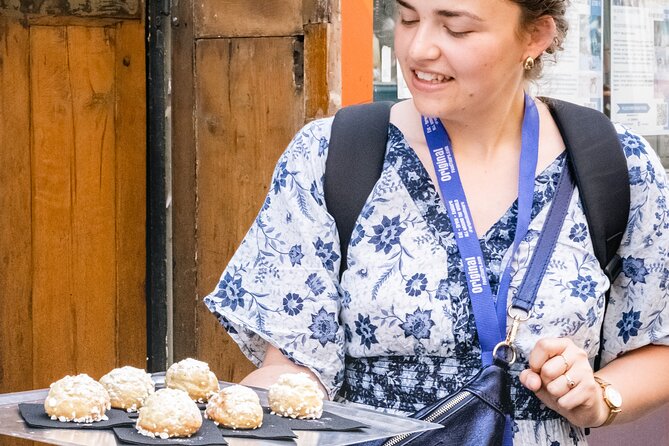
- Chouquettes
- Pastries or choux-style desserts
- Coffee or tea
- Additional surprises
The selection is generous enough that you may not want a large dinner afterward. One family found the portions so substantial that some treats became takeaways for the following days. That is useful to know if you have dinner reservations, especially early ones.
The exact food matters less than the variety and setting. You get to taste familiar French classics alongside items you might not recognize. A chouquette, for instance, is a small pastry often associated with light, simple sweetness. Madeleines and meringues offer a different texture from a cream-filled pastry or warm crepe.
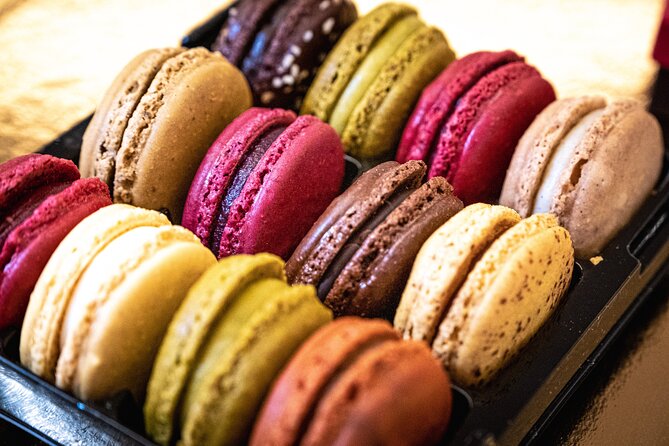
The one important qualification is consistency. The title promises macarons and afternoon tea, but at least one departure included chocolate, chouquettes, madeleines, crepes, and another creamy pastry without tea or macarons. The food was still enjoyed, but you should not treat every item in the title as guaranteed on every date.
That issue is worth weighing if you have dietary restrictions or if macarons are the main reason you are booking. The supplied information does not give a full allergy or dietary policy, so you should ask the operator directly before paying if you need specific substitutions.
More Tea Tastings in the world:
- Twinings 2-Hour Tea Tasting Masterclass in London
★ 5.0 · 105 reviews - Tea Tasting and Pairing Concept Workshop
★ 5.0 · 57 reviews - Munnar: Tea trail, Tea Factory, and Tea Tasting Tour
★ 4.9 · 47 reviews - Biking Real Shanghai& Tea Tasting Experience
★ 4.5 · 45 reviews
Walking uphill to Sacré-Cœur
The tour ends at the Basilica of Sacré-Cœur, at 35 Rue du Chevalier de la Barre. Getting there is part of the experience, not just the final location.
Montmartre is a hill, and the route includes uphill sections. The walk has been described as leisurely rather than intense, and guides can use alternative routes to reduce the difficulty. Still, this is not a flat pastry crawl. You should wear walking shoes and be ready for slopes, stairs, and standing at several food stops.
The climb has a nice payoff. From the area around Sacré-Cœur, you get broad views over Paris. Reaching the basilica after several tastings gives the afternoon a clear shape: start near the Moulin Rouge, move through village streets, pass the artists’ square, and finish high above the city.
Rain does not automatically ruin the outing. One outing continued in wet weather and was still enjoyable, but the experience naturally depends more on outdoor walking than an indoor food tour. On hot days, a warm drink may feel less appealing. One practical suggestion from a family was to replace hot chocolate with ice cream or gelato in very warm weather, though that change is not promised.
The tour ends at Sacré-Cœur rather than returning you to Place Blanche. That is convenient if you plan to explore the basilica, enjoy the view, or continue through Montmartre. It also means you need to plan your next step from the hilltop.
How the guides shape the afternoon
The guide can make or break a walking food tour, and this experience has received especially strong praise in that area. The named guides include Arthur, Catherine, Fabian, Dorine, Hugo, Loik, Pauline, Matthias, Stéphane, and others.
Their strengths differ. Arthur has been especially good with families and children, while Catherine has linked food stops with stories about the neighborhood. Fabian has been praised for his calm manner and local food knowledge. Stéphane is a chef and local resident whose connections with shopkeepers helped make a busy holiday outing feel well organized.
That does not mean every guide will deliver the same personality or exact commentary. It does suggest that the operator has a solid pool of people who can handle both the historical and culinary sides of the walk.
I like that the guides do more than point out famous buildings. They explain the food, introduce the people behind the shops, and answer questions as the group goes. That turns a series of purchases into a better understanding of how Montmartre works.
For families, this is a major advantage. A standard historical walk can lose younger children after the first few stops. Here, the sweets provide a simple incentive, while the route keeps moving.
Is $114.45 good value?
At $114.45 per person, this is not a cheap snack outing. You are paying for food, a guide, local interpretation, and about two and a half hours of walking through one of Paris’s most popular areas.
The value is strongest if you would otherwise book a separate Montmartre walk and visit several pastry shops on your own. You get an organized route, explanations in English, and a chance to sample more than one type of sweet without researching each stop.
The value is weaker if you want a full meal, a formal tea service, or a guaranteed menu. This is mostly a dessert-focused experience. It may spoil your supper, as one family cheerfully discovered, so consider it a substantial afternoon treat rather than a small snack before dinner.
A group limit of 15 helps justify the price. Smaller groups are easier to manage on narrow streets, and you are more likely to hear the guide clearly. Some departures have been much smaller, including a group of six during a very busy weekend, but the maximum is 15.
The tour is offered in English, and confirmation arrives when you book. Free cancellation is available up to 24 hours before the start time. If the minimum group size is not reached and the operator cancels, you are offered another date or experience, or a full refund.
Who should book this Montmartre food walk?
I would recommend it most strongly to:
- Families who want history with regular food breaks
- First-time Paris visitors who want a guided introduction to Montmartre
- Repeat Paris visitors who have seen the basilica but missed the neighborhood’s smaller food stops
- Film fans interested in Amélie or Midnight in Paris
- People who enjoy pastries, chocolate, crepes, and coffee or tea
- Anyone who prefers a relaxed small-group walk to a large coach tour
You should think twice if hills are difficult for you, if you need a fully accessible route, or if you want a fixed tasting menu. The available information says most people can participate, but it does not promise step-free access or specific accommodations.
You might also skip it if you already have a separate Montmartre walking tour booked. One person found that a morning hidden-streets tour covered many of the same places. Check your schedule so you are not paying twice to see the same lanes and landmarks.
My call: book it for the food and local stories
I would book this tour if I wanted a pleasant first look at Montmartre and liked the idea of eating my way uphill. The best parts are the friendly guides, varied sweets, manageable pace, and final view from Sacré-Cœur.
I would not book it solely for guaranteed macarons or a classic afternoon tea. Those elements may not appear on every departure. Go for the broader experience: crepes, pastries, chocolate, local stories, artists’ history, and a guided route through streets that are easy to miss when you rush straight to the basilica.
If you can walk uphill, enjoy sweets, and want a family-friendly afternoon with plenty of Paris atmosphere, this is a good use of half a day.
FAQ
How long does the Montmartre food tour last?
The tour lasts approximately 2 hours and 30 minutes.
What time does the tour start?
It starts at 2:30 pm.
Where does the tour begin?
The meeting point is 5 Place Blanche, 75009 Paris, near the Moulin Rouge and public transportation.
Where does the tour end?
The tour ends at the Basilica of Sacré-Cœur at 35 Rue du Chevalier de la Barre, 75018 Paris.
What food and drinks are included?
Included tastings can include crepes, macarons, chocolate, pastries, hot or cold drinks, and other surprises. Coffee and tea are also included, but the exact selection may vary.
How many people can join the tour?
The maximum group size is 15 people. The tour is offered in English, and most people can participate, although the route includes uphill walking.
More Food and Drink Tours in the world
- Jakarta: Volcano, Tea/Rice Fields, Hot Spring, Local Food
★ 4.9 · 515 reviews - Private Tea Ceremony and Sake Tasting in Kyoto Samurai House
★ 5.0 · 163 reviews - SF’s Chinatown: Tea & Dim Sum Food Tour – Includes full meal, 3hr
★ 5.0 · 153 reviews - Experience all of Japanese culture and Japanese food experience classes “origami, udon, Japanese food, green tea, calligraphy” in 4 hours
★ 5.0 · 105 reviews
Just added around the world
- Yokohama : Tea Ceremony with Sweets and Souvenir★ 5.0 · 5 reviews
- York: Private Horse-Drawn Carriage Ride and Afternoon Tea★ 5.0 · 3 reviews
- Yogyakarta: Prambanan Tour, Sukuh Temple & Tea Plantation★ 5.0 · 3 reviews
- Wadi Rum: 2-Hour Jeep Tour with Bedouin Tea★ 5.0 · 11 reviews
- Walking Tour: Yanaka,Nezu& Sendagi: Tea Ceremony & Old Tokyo★ 5.0 · 3 reviews
- Washington, D.C.: Tea Around Town Bus Tour with Landmarks★ 3.4 · 7 reviews
- Visit local home for music and tea ceremony near Disney★ 4.9 · 13 reviews
- Volcano, Hot Spring, Mud Bath & Tea plantation all included★ 5.0 · 5 reviews
Afternoon Tea Experiences, compared.

Afternoon Tea Bus Tour – 1960s Routemaster Bus
Read our review →


Browse the lists this tour appears in