
Review · BEIJING
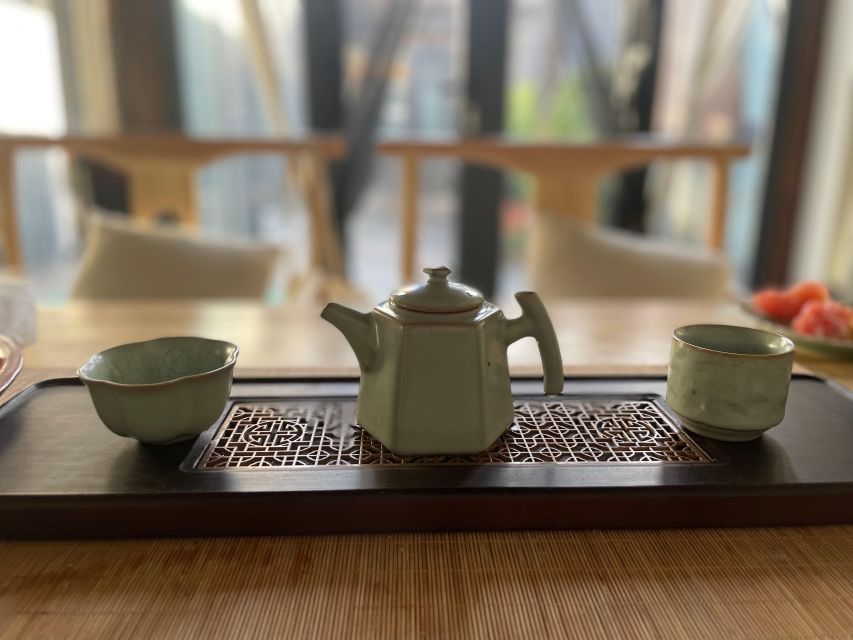
Chinese Tea ceremony in Beijing Hutong courtyard
Tea opens a quieter door into Beijing. I like the small four-person setting and the chance to sit with local hosts in a courtyard where a family has lived for generations. I also like the location, close to the Forbidden City, Imperial Ancestral Temple, and other historic sites. The main caution is price: at $31 per person, plus a stated 100 RMB per-person charge, this is not the cheapest one-hour activity.
This is a good pick if you want more than a quick cup of tea. You can choose from green, black, oolong, and Pu’er tea, learn how each is prepared, and try the process yourself. Host Limeng receives especially warm praise for her English, kindness, and ability to turn a short tasting into a friendly conversation about Beijing life.
Key points to know before booking
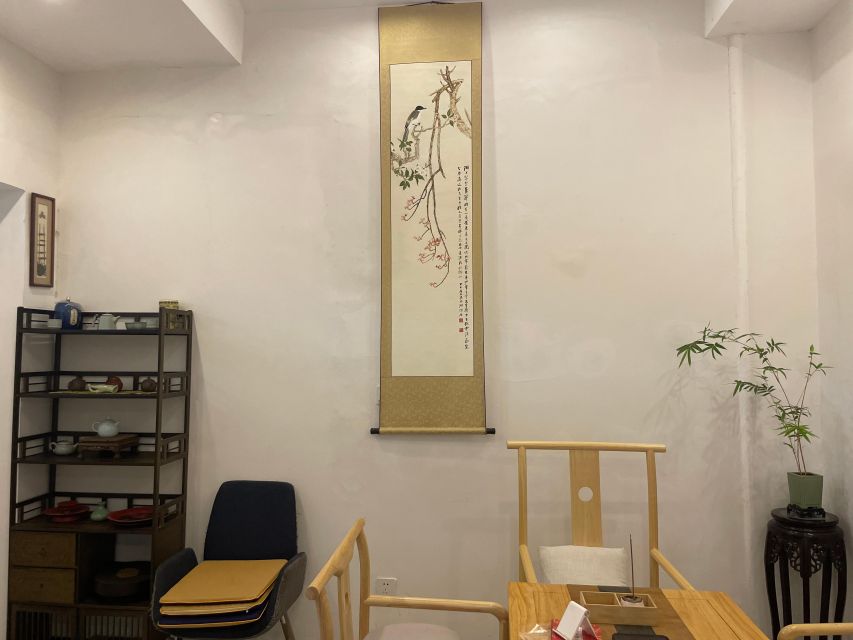
- A four-person maximum keeps the ceremony personal, with time for questions and conversation.
- You choose your tea, including green, black, oolong, and Pu’er varieties.
- The courtyard is close to the Forbidden City, making this easy to pair with sightseeing in central Beijing.
- The hosts explain more than brewing, including tea customs, seasonal choices, health beliefs, cup etiquette, and tea’s place in Chinese life.
- Snacks are included, adding a pleasant traditional touch to the tasting.
- Check the final cost and meeting point carefully, since the information gives both a $31 price and a separate 100 RMB charge, along with slightly different location descriptions.
A calm hour beside the Forbidden City
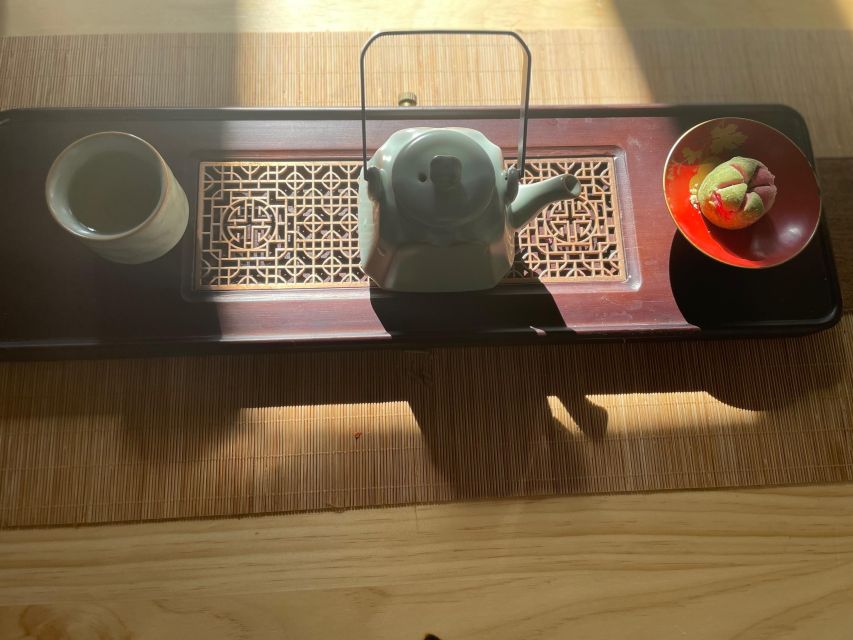
The Bayi Teahouse experience takes place in a Beijing hutong courtyard near the Forbidden City. One description puts the workshop 150 meters from the Forbidden City’s east gate. Another says it is 800 meters west of the exit gate. Those details do not match perfectly, so I would confirm the exact meeting point when you book.
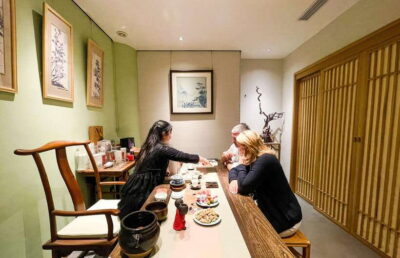
The setting is part of the appeal. You are not being taken to a remote tea plantation or a large show-style venue. Instead, you sit in an old residential part of central Beijing, close to major imperial sights but connected to ordinary neighborhood life.
That contrast matters. The Forbidden City can feel grand and formal, with vast courtyards and monumental gates. A hutong courtyard gives you a smaller, more human scale. You get a glimpse of how central Beijing is lived in, not just how it is displayed in museums.
The activity lasts one hour. That is long enough for a proper introduction and tasting, but short enough to fit before or after a visit to the Forbidden City. I would not treat it as a full historical tour of Beijing. It is better understood as a focused cultural stop, with tea providing the doorway into local customs.
More Chinese Tea Ceremonies in China
- Traditional Chinese Tea Ceremony Experience
★ 4.7 · 74 reviews - Traditional Chinese Tea Ceremony Experience
★ 5.0 · 7 reviews - Beijing:Learn Calligraphy & Enjoy Kung Fu Tea Ceremony
★ 5.0 · 2 reviews
Choosing between green, black, oolong, and Pu’er tea
You can choose from several broad tea types:
- Green tea
- Black tea
- Oolong tea
- Pu’er tea
The precise selection can vary, but this range gives you a useful introduction to different Chinese tea styles. If you already have a favorite, ask for it. If you know little about tea, ask the host to choose two contrasting teas for you.
That second approach may be more rewarding. One visitor enjoyed two distinct teas and learned how different teas may suit different seasons and bodily needs in traditional Chinese thinking. This is not simply a tasting based on flavor. The hosts connect the tea to timing, preparation, customs, and everyday habits.
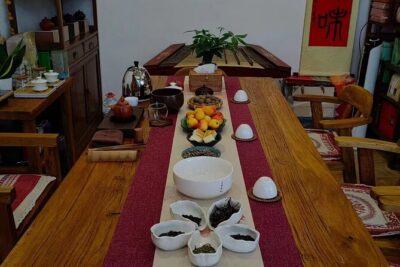
You will also receive a pot of tea and complimentary snacks. The snacks are not the main reason to book, but they help complete the ceremony. Tea in China is often served with small foods that balance the drink, and the pairing gives the hour a more social feeling.
Do not expect a Western-style afternoon tea with a large meal. The supplied details describe snacks, not lunch or a full food service. If you are hungry, eat before the appointment or plan a meal afterward.
Learning how to brew tea properly
One of the strongest parts of the experience is the practical instruction. You learn that making good tea is not simply a matter of pouring boiling water over leaves and waiting three minutes.
The hosts show you how preparation changes the taste. You may learn about water temperature, brewing time, the amount of tea used, and the way several short infusions can bring out different flavors. The exact teaching style may depend on the tea you choose, but the focus is hands-on rather than purely theoretical.
That makes the experience useful after you leave Beijing. A scenic courtyard is pleasant for an hour, but a new skill gives the activity lasting value. You can take the basic lessons home and apply them to your own tea.
You also get to try the ceremony yourself. The hosts explain how to hold the cup with grace and how tea is served and received. These small gestures may seem formal at first, but they help you understand that the ceremony is about attention and respect, not only taste.
If you are not a serious tea drinker, do not dismiss the experience. One couple who did not consider themselves tea lovers still enjoyed the flavors and got the most from the conversation with the hosts. The social side is just as important as the drink.
Meeting a family connected to the hutong
The hosts are central to the experience. The activity promises contact with local Beijing residents, and the family connection to the courtyard gives the conversation a personal angle.
You can ask about hutong life, the neighborhood, tea habits, and the history of Beijing. The discussion is not limited to memorized facts. It is a chance to hear how local life connects with the streets around the Forbidden City.
Limeng is named in several especially positive comments. She is described as warm, friendly, and fluent in English, with a talent for explaining the ceremony and encouraging cultural exchange. Other comments also praise the two hosts for their welcoming manner and willingness to talk.
The English instruction is important. Tea rituals can be difficult to follow if the explanation is rushed or translated poorly. Here, English is the stated language, and the feedback describes communication as clear and comfortable.
You should still arrive ready to participate. This is not a performance where you sit silently while someone prepares tea. Ask questions, taste carefully, and try the brewing steps. The small group format gives you a better chance to speak directly with the host.
More Tea Ceremonies in China
- Beijing Culture: Tea Ceremony, Heritage Instrument & Calligraphy
★ 5.0 · 57 reviews - Beijing Culture Event: Tradition Music, Tea Ceremony, Calligraphy
★ 5.0 · 11 reviews - Beijing: Temple Of Heaven+Tai Chi Class+Tea Ceremony
★ 5.0 · 8 reviews - Beijing Tai Chi and Tea Ceremony Experience
★ 5.0 · 4 reviews
What the one-hour visit feels like
The exact sequence can vary, but you can reasonably expect four parts.
Arriving at the hutong courtyard
The meeting point is in central Beijing, close to the Forbidden City. If hotel pickup applies to your booking, you are asked to wait in your hotel lobby 10 minutes before the scheduled pickup time. Because the location wording is inconsistent, confirm whether you are being collected or should walk to the courtyard yourself.
The hutong setting is the first attraction. You are surrounded by historic sites, including the Imperial Ancestral Temple and the Pudusi inheritance area. The short walk around the neighborhood can add context before or after the tea.
Selecting and tasting the tea
The host introduces the available tea types and helps you choose. This is a good time to say if you prefer something light, strong, floral, earthy, or unfamiliar.
You receive one pot of tea along with snacks. The tasting is not a race through many samples. The value comes from slowing down and noticing the differences in aroma, color, texture, and aftertaste.
Some participants have enjoyed two different teas during the visit. That is worth requesting if the schedule and host allow it, since comparison makes the lesson clearer.
Learning the customs
The host explains the cultural meaning behind the ceremony, including how tea is prepared, served, and enjoyed. You may learn which teas are linked with certain seasons, how tea is traditionally viewed in relation to the body, and why cup handling matters.
The health discussion should be understood as part of traditional Chinese tea culture, not as medical advice. The experience can explain customary beliefs, but it is not a health consultation.
Talking about Beijing
The final part often becomes a relaxed conversation. You can ask about the hutong, the city, local food, and nearby places to visit.
One host even gave advice about finding good, less tourist-focused Beijing duck. That sort of practical exchange can be one of the best benefits of a small local activity. Bring a short list of questions if you want more than a basic introduction.
Why the location works well with a sightseeing day
This tea ceremony is particularly easy to fit into a central Beijing itinerary. The Forbidden City is close, and several historic sites surround the courtyard.
You could schedule the ceremony before visiting the Forbidden City, using the calm hour to get oriented. You could also go afterward, when your feet need a rest and you want something quieter than another major monument.
The location may also suit a short stop between sights. A one-hour activity does not demand a full day, and the group size helps keep things moving. Still, allow time to find the exact courtyard. Hutong lanes can be confusing, and the conflicting distance descriptions make advance confirmation sensible.
Do not book this as a substitute for exploring the Forbidden City. The ceremony gives you a local perspective, but it does not include a full imperial palace visit. The two activities work best together.
Is $31 per person good value?
At $31 per person, the price is fair if you value personal contact, instruction, and location. You are paying for a small group, an English-speaking host, tea, snacks, and an hour in a residential courtyard near one of Beijing’s major sights.
The value becomes less attractive if you only want a quick drink. You could find tea more cheaply elsewhere. This activity earns its price through the explanation, the chance to brew tea yourself, and the conversation with the hosts.
For a family of four, the cost adds up quickly. One family found the experience worthwhile but felt the price was steep for four people. That is a reasonable concern, especially since a separate note says an additional 100 RMB per person will be charged.
Because the extra charge is not explained clearly, confirm the total amount before paying. Ask if the 100 RMB is a service fee, an entrance cost, or a separate booking charge. The listed payment terms allow you to reserve now and pay later, which gives you a chance to clarify the final figure.
Who will enjoy this most?
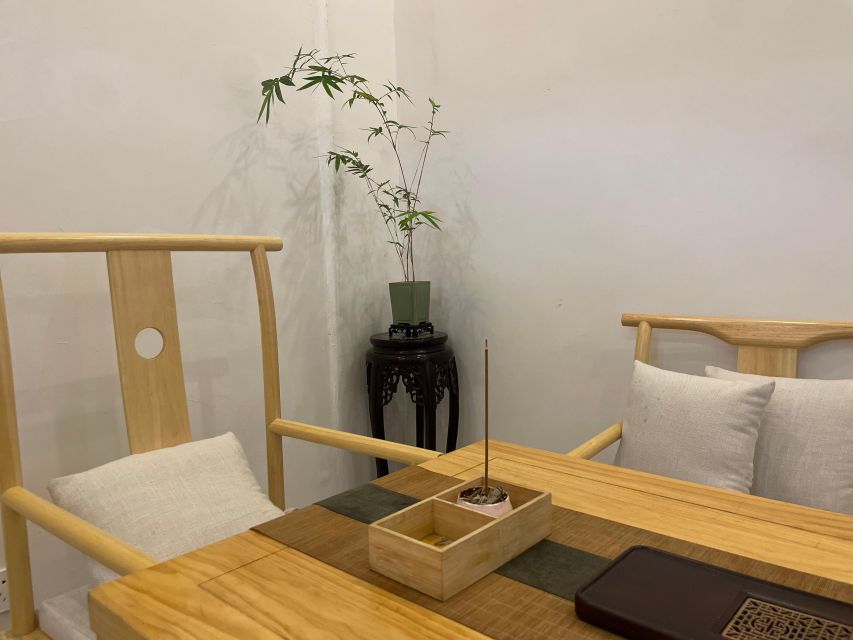
I would recommend it most strongly to:
- First-time visitors who want a gentle introduction to Chinese tea culture
- Couples looking for a quiet cultural activity
- Solo visitors who enjoy conversation with local hosts
- Families with older children who can appreciate a slower experience
- Anyone already planning to visit the Forbidden City
- Tea drinkers who want practical brewing tips
It may be less suitable if you want a long tour, a large selection of teas, or a full meal. The experience is short and intimate. Its strength is conversation and cultural explanation, not a packed schedule.
It is also not ideal if you have only a few minutes near the Forbidden City and dislike confirming meeting details. The courtyard location is attractive, but you should leave time to find it.
Booking and practical advice
The activity is wheelchair accessible, according to the supplied information. It is also offered in English and limited to four participants.
Free cancellation is available up to 24 hours before the activity for a full refund. You can reserve now and pay later, which is useful if your Beijing schedule is still changing.
I would follow three simple tips:
- Confirm the exact courtyard address and gate reference.
- Ask for the full price, including the stated 100 RMB per-person charge.
- Tell the host whether you want familiar tea or a comparison of two unusual varieties.
If pickup is part of your booking, wait in your hotel lobby 10 minutes before the scheduled time. If you are making your own way there, do not rely only on the distance given in the description. Use the confirmed address and allow extra time.
Should you book this Chinese tea ceremony?
Book it if you want a personal, low-key cultural experience close to the Forbidden City. The strongest reasons are the small group, practical brewing lesson, English conversation, and access to everyday hutong life.
Skip it if your main goal is simply to drink tea cheaply or see as many sights as possible in one hour. Also, clarify the extra charge before committing.
For most visitors with room in their Beijing schedule, this is a worthwhile pause between grand monuments. You leave with new tea skills, a better sense of local customs, and perhaps a useful food recommendation from the host. That is a lot to gain from one quiet hour.
FAQ
Where does the tea ceremony take place?
It takes place in a hutong courtyard in central Beijing, close to the Forbidden City. The information describes it as 150 meters from the Forbidden City’s east gate and also as 800 meters west of the exit gate, so confirm the exact meeting point before arrival.
How long does the experience last?
The tea ceremony lasts one hour.
What types of tea can I choose?
The available choices include black tea, green tea, oolong tea, and Pu’er tea.
Are snacks included?
Yes. Complimentary snacks are served with the tea.
Is the activity conducted in English?
Yes. English is the stated language, and the instructor is listed as English-speaking.
How many people can join?
The activity is a small group experience limited to four participants.
Is pickup available?
Pickup is listed as included, with instructions to wait in your hotel lobby 10 minutes before the scheduled pickup time. Confirm the pickup details and exact meeting point when booking.
More Chinese Tea Ceremonies in Beijing
- One-Day Hangzhou Dragon Well Tea Culture & West Lake Private Tour
★ 5.0 · 98 reviews - Authentic Hangzhou Longjing Tea Culture Experience Tour
★ 5.0 · 32 reviews - Tainan Culture Trip: Chinese Tea Ceremony_Oolong Tea
★ 5.0 · 29 reviews - Unlock Chinese Tea: Culture, Science, Tasting & Hands-on Brewing
★ 5.0 · 12 reviews
More Tea Ceremonies in Beijing
- Beijing: Chinese Culture Tea Ceremony Reservation Service
★ 4.8 · 4 reviews - Private Beijing Spiritual Tour with Lunch and Tea Ceremony
★ 5.0 · 2 reviews - Kyoto: Tea Ceremony in a Traditional Tea House in Kiyomizu
★ 4.9 · 3,519 reviews - Kyoto: Tea Ceremony Ju-An at Jotokuji Temple
★ 4.9 · 3,207 reviews
Just added around Beijing
- Private Tour to the Temple of Heaven and Tea tasting at the Maliandao Tea city★ 5.0 · 3 reviews
- Traditional Chinese Tea Ceremony Experience★ 5.0 · 7 reviews
- Temple of Heaven Private Tour and Tea Tasting at Maliandao Tea Street★ 5.0 · 2 reviews
- Beijing Tai Chi and Tea Ceremony Experience★ 5.0 · 4 reviews
- Private Beijing Spiritual Tour with Lunch and Tea Ceremony★ 5.0 · 2 reviews
- 3-Hour Private Hutong Walking Tour with Drum Show at Drum Tower and Tea Tasting★ 5.0 · 3 reviews
- 3-hour Morning/Afternoon Tea Tasting on Maliandao Street & Dimsum★ 5.0 · 7 reviews
- Beijing:Learn Calligraphy & Enjoy Kung Fu Tea Ceremony★ 5.0 · 2 reviews
Tea Ceremonies in China, compared.
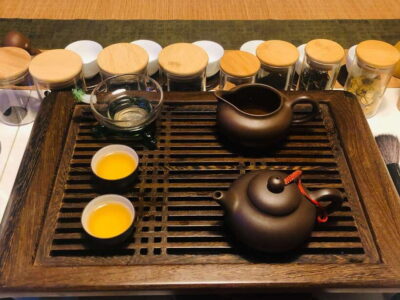
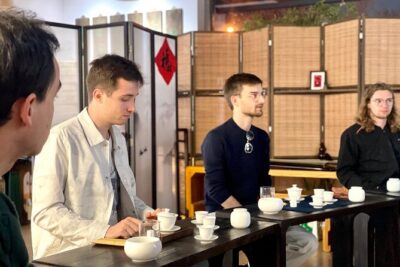
Beijing Culture: Tea Ceremony, Heritage Instrument & Calligraphy
Read our review →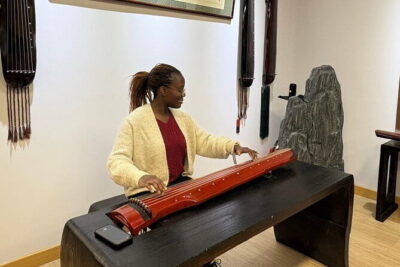
Beijing Culture Event: Tradition Music, Tea Ceremony, Calligraphy
Read our review →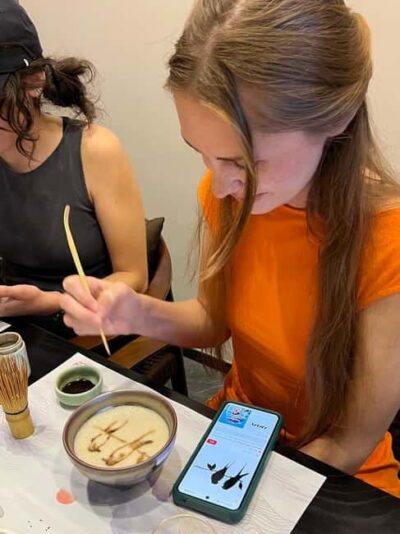
Browse the lists this tour appears in