
Review · JAPAN
Japanese Tea Making Class in Sapporo
Tea changes when temperature changes. This private 90-minute class in Sapporo turns a familiar drink into a careful tasting lesson, showing you how water, timing, serving vessels, and sweets shape Japanese tea. I like the step-by-step format and the chance to compare hot and cold tea in very different cups. The one drawback is the price, $78.48 per person, which may feel high for a short class.
I also like that you leave with practical brewing advice rather than only a cultural demonstration. The class uses two kinds of tea, explains tea types and production, and provides a summary sheet with suggested temperatures and brewing times. It begins at 10:00 a.m. near Maruyama Park, and because it is private, your group can ask questions without sharing the room with strangers.
Key points to know before booking
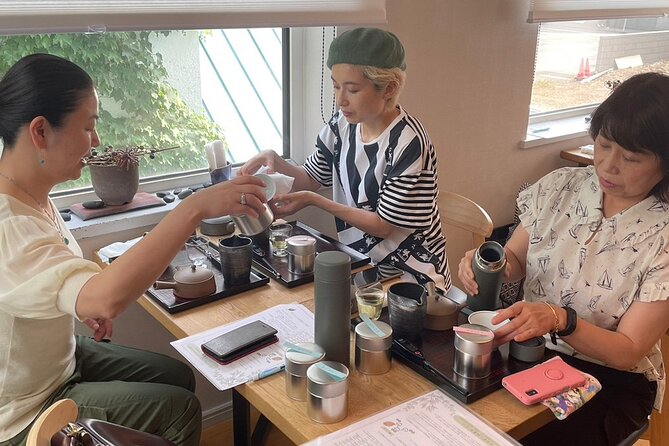
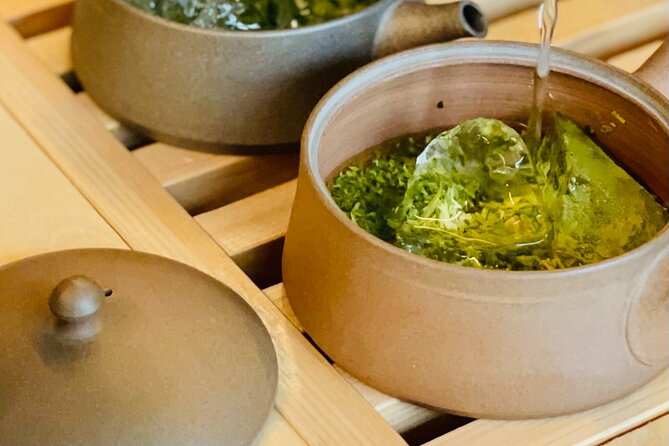
- Three brewing styles: Taste tea with lukewarm water, ice and water in a wine glass, then hot water.
- A lesson you can repeat at home: Learn how temperature and brewing time affect sweetness, aroma, bitterness, and astringency.
- Seasonal wagashi pairing: Japanese sweets are served with the tea, including sweets shaped to suggest the season.
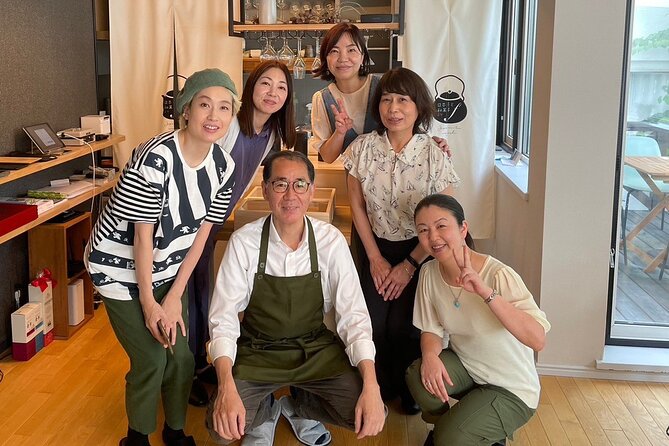
- Private 90-minute format: Only your group participates, making this a calm choice for couples, families, and small parties.
- Central Sapporo meeting point: Meet at 日本茶と和菓子 エフ, at 25-chōme-2-12 Ōdōrinishi in Chuo Ward.
- Full refund deadline: Cancel at least 24 hours before the 10:00 a.m. start for a full refund.
Why this Sapporo tea class feels different
Many tea experiences focus on ceremony, manners, or the beauty of the equipment. This one takes a more hands-on route. You make the tea yourself, then compare the results as the water temperature and serving vessel change.
That approach gives the class a clear purpose. You are not simply watching someone prepare tea. You are learning why the same leaves can taste gentle and sweet at one temperature, fragrant when chilled, and more bitter or astringent when brewed hot.
The experience is offered by 日本茶と和菓子 エフ and lasts about one hour and 30 minutes. It begins at 10:00 a.m. and returns to the same meeting point, so you do not need to arrange a separate ride at the end.
I see this as a good fit for you if you enjoy food education, Japanese culture, or small activities that leave you with a skill to use at home. It is less suitable if you want a broad Sapporo sightseeing tour or a long meal. The focus stays tightly on tea.
A few more tea experiences around Japan worth a look
- Kyoto: Tea Ceremony in a Traditional Tea House in Kiyomizu
★ 4.9 · 3,519 reviews - Kyoto: Tea Ceremony Ju-An at Jotokuji Temple
★ 4.9 · 3,207 reviews - Kyoto: 45-Minute Tea Ceremony Lesson Experience
★ 4.3 · 2,378 reviews
The first cup uses lukewarm water
The class begins with tea brewed using lukewarm water. This is meant to bring out the tea’s original flavor without immediately pushing it toward strong bitterness.
That first cup gives you a useful reference point. Pay attention to the basic taste before the class changes the method. You may notice a softer profile and clearer sweetness, depending on the tea being used.
The instructors also explain the basics of Japanese tea, including types of tea, how tea is made, and the main points of brewing. This matters because temperature is only part of the story. Brewing time also affects what reaches your cup.
For beginners, the order works well. You first taste the tea in a relatively gentle preparation, then compare later cups against it. You do not need to arrive knowing Japanese tea terms. The class is designed to teach the process gradually, with materials and teaching aids to support the explanation.
One useful result is the brewing reference sheet provided during the lesson. It summarizes temperature and brewing time for each tea, giving you something practical to take home rather than relying on memory.
The second cup is cold tea in a wine glass
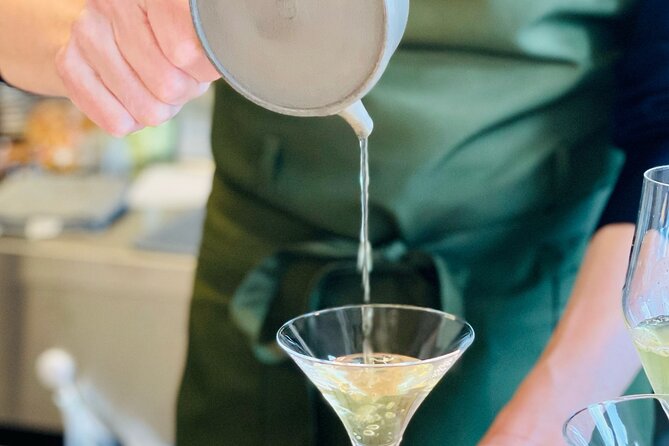
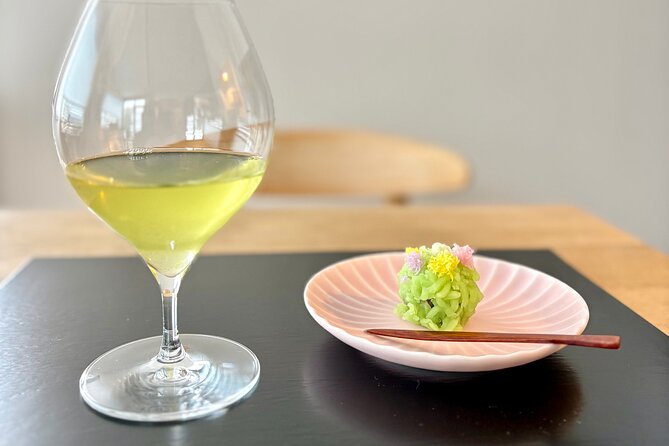
The most unusual part of the tasting is the cold preparation. Ice and water are used in a wine glass, not a standard ceramic teacup.
This is more than a visual change. A wine glass directs aroma differently and makes cold tea feel closer to a wine tasting than an everyday cup of green tea. The class uses this contrast to show how much the vessel can affect your impression of a drink.
Cold brewing also highlights sweetness and fragrance. If you normally think of Japanese tea as hot, grassy, or slightly bitter, this cup may reset your expectations. The aroma becomes a larger part of the experience, while the lower temperature can make the taste feel softer.
I especially like this part for anyone who enjoys tasting comparisons. You are not asked to accept a theory about tea. You can test it yourself, using the same general drink in another form.
The wine glass also adds a small touch of fun without turning the lesson into a gimmick. It shows that Japanese tea can be served in ways beyond the familiar cup and pot.
The third cup brings out bitterness and astringency
The final brewing method uses hot water. Here, the goal is to bring out bitterness and astringency.
These are not necessarily flaws. In Japanese tea, they can be part of the intended balance. The lesson helps you understand that a stronger or sharper cup may come from the brewing method rather than from poor-quality tea.
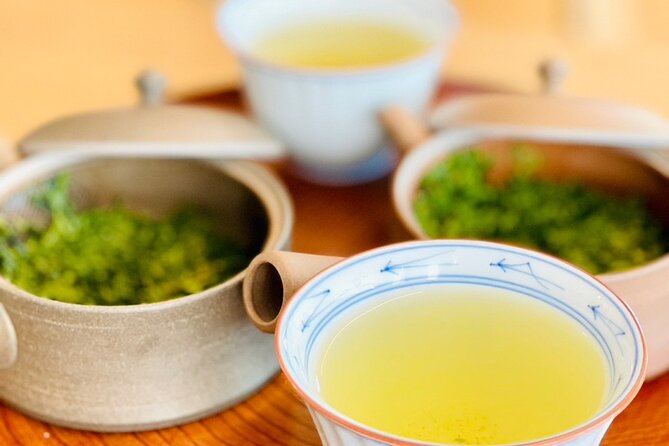
This side-by-side comparison is the heart of the class. Lukewarm water gives you one expression of the leaves. Cold tea in a wine glass shifts attention toward aroma and sweetness. Hot water creates a more forceful cup with stronger bitter and drying notes.
You may find that your favorite preparation is not the one you expected. That is part of the value. The class encourages you to notice your own preferences instead of treating one method as the only correct answer.
Because the session includes two kinds of tea, you can also compare how different leaves respond to the brewing process. The exact teas are not specified, but the lesson is designed to show differences in taste from one type to another.
Same place, a different pot:
- World Heritage Kyoto & Nara Uji Authentic Matcha Experience
★ 5.0 · 1,573 reviews - Osaka: Tea Ceremony Experience
★ 4.9 · 1,426 reviews - Kyoto: Table-Style Tea Ceremony at a Kyo-Machiya
★ 4.9 · 1,211 reviews - Kanazawa: Kenrokuen Tea Ceremony Experience
★ 4.8 · 1,139 reviews
Wagashi makes the tasting feel seasonal
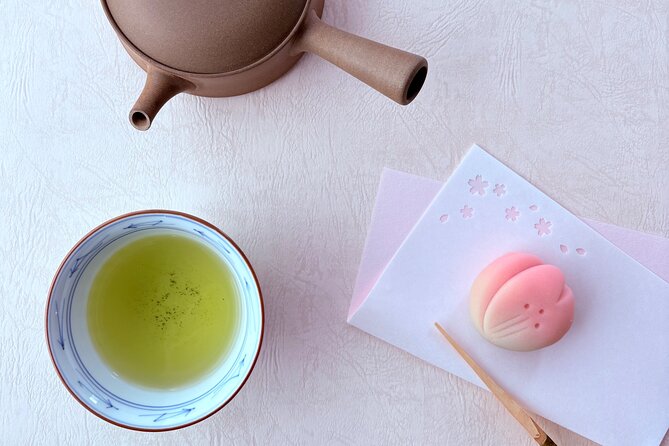
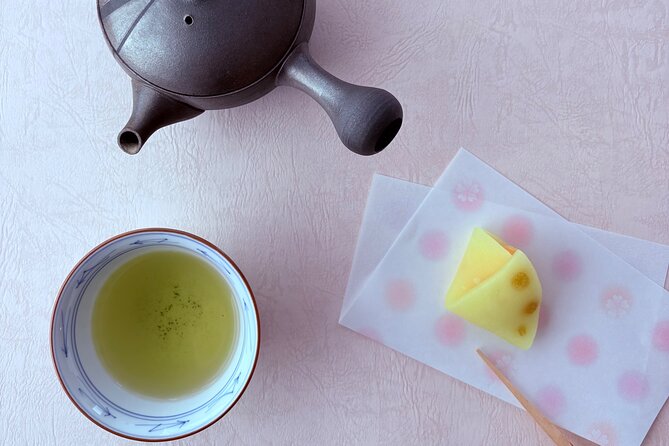
Japanese sweets, known as wagashi, are served with the tea. Their role is not simply to provide a snack. The sweetness helps balance the bitterness and astringency of the tea.
This pairing gives the class a stronger connection to Japanese food culture. A sweet bite can change how the next sip tastes, and the tea can keep the wagashi from feeling overly sugary.
The sweets also reflect the season. One example is wagashi shaped like spring flowers. Details such as these turn the snack into part of the lesson, linking the food on the plate with the time of year.
I would pay attention to the order in which you eat and drink. Try the wagashi first, then sip the tea. Try another sip after the sweet has faded. You will get more from the pairing if you treat it as a tasting rather than eating the snack quickly.
The sweets are included in the price, which helps the overall value. You are receiving a guided lesson, several tea preparations, and a seasonal food pairing rather than only a cup of tea.
What you learn about Japanese tea
The class presents Japanese tea as both a cultural tradition and a drink with modern health interest. Japanese tea contains polyphenols, which are associated with antioxidant and antibacterial properties and may help regulate blood cholesterol and body fat. It also contains theanine, an amino acid associated with relaxation.
Those points provide useful context, but I would treat them as background rather than the main reason to book. The strongest part of the class is still the tasting method. You learn through your senses, then connect what you taste to the brewing choices.
The growing interest in Japanese tea has also helped increase exports, with export volume described as roughly 2.5 times higher than a decade ago. That gives the lesson a current angle. Japanese tea is not only an old custom preserved for visitors. It is also a product receiving wider attention.
Still, this is not presented as a medical workshop. If you are interested in health benefits, you will hear useful general information, but the practical focus remains flavor, aroma, preparation, and food pairing.
A private class changes the pace
This is a private activity, so only your group takes part. That can make a large difference in a tasting class.
You can ask why one cup tastes sweeter, how long to brew a particular tea, or which method is easiest to repeat at home. You are not competing with a large group for the instructor’s attention.
The private setting may also suit people who are new to tea and do not want to feel self-conscious. You can compare your impressions openly, even if you do not know the usual vocabulary for aroma or taste.
The tradeoff is that the class may be most worthwhile for people who value personal instruction. If you simply want to drink Japanese tea without explanation, the $78.48 price per person is harder to justify.
The listed capacity is limited to your own group, but no group-size maximum is provided. If you are booking for a larger party, confirm the arrangement before paying.
Location and timing in Sapporo
The meeting point is 日本茶と和菓子 エフ, at 25-chōme-2-12 Ōdōrinishi, Chuo Ward, Sapporo, Hokkaido 064-0820. It is near public transportation, which makes the start easier to reach without private transport.
The class starts at 10:00 a.m. Plan to arrive with enough time to find the address. The activity ends back at the meeting point, so you can continue your day from the same area without arranging a pickup.
A morning tea class can work well with a sightseeing schedule. It occupies about 90 minutes, leaving the afternoon open. You might pair it with other plans in central Sapporo, but the class itself does not include transportation or visits to other attractions.
The mobile ticket is convenient. Keep the booking available on your phone when you arrive.
Is $78.48 a fair price?
At $78.48 per person, this is not a bargain tea stop. You are paying for a private, guided lesson rather than a casual beverage.
The price makes more sense if you value several elements together: instruction on tea types and production, three brewing approaches, two kinds of tea, a wine-glass presentation, seasonal wagashi, and take-home brewing guidance.
The reference sheet is important to the value. You can use it later to repeat the methods at home, which gives the experience a life beyond the 90-minute appointment.
The price is less appealing if you are mainly interested in sampling one traditional cup or watching a tea ceremony. In that case, the class may feel too instructional for your needs.
I would also factor in the private format. A private activity usually offers more room for questions and a calmer pace than a large shared demonstration. For a couple or a small group with a strong interest in tea, that may justify the cost.
Who should book this experience?
I would recommend it to:
- First-time visitors who want a clear introduction to Japanese tea
- Tea drinkers curious about temperature and brewing time
- People interested in Japanese sweets and seasonal food
- Couples or small groups who prefer private activities
- Home cooks who want techniques they can repeat
- Visitors with a free morning in Sapporo
You may want to skip it if you prefer outdoor sightseeing, a longer food tour, or a formal ceremony with elaborate rituals. The experience is practical and tasting-focused. It does not promise a full survey of Sapporo or every style of Japanese tea.
It also suits curious beginners better than experienced tea specialists seeking rare teas or advanced preparation. The class teaches the basics carefully, which is part of its appeal.
Cancellation and booking details
Confirmation is received at the time of booking. You can cancel for a full refund if you do so at least 24 hours before the 10:00 a.m. start time.
Cancellations made less than 24 hours before the class are not refunded, and changes within that period are not accepted. The cut-off follows local Sapporo time, so check the time zone before making a last-minute change.
Should you book the Sapporo tea class?
Book it if you want to understand why Japanese tea can taste so different from one preparation to the next. The class gives you direct comparisons, seasonal wagashi, private instruction, and a practical brewing guide you can use later.
I would be more cautious if your budget is tight or you want a simple cup of tea without a lesson. At $78.48, the value depends on your interest in learning.
For a tea-loving couple, a small private group, or anyone looking for a calm cultural activity in Sapporo, this is a thoughtful choice. The best reason to book is not the health talk or the novelty of a wine glass. It is the chance to discover, cup by cup, how much control you have over the final taste.
FAQ
Where does the Japanese tea class take place?
The class begins at 日本茶と和菓子 エフ, located at 25-chōme-2-12 Ōdōrinishi, Chuo Ward, Sapporo, Hokkaido 064-0820, Japan.
What time does the class start?
The scheduled start time is 10:00 a.m.
How long does the experience last?
The class lasts approximately one hour and 30 minutes.
Is transportation included?
No. Private transportation is not included, but the meeting point is near public transportation.
Where does the activity finish?
The class ends back at the original meeting point.
Is this a private activity?
Yes. Only your group participates in the activity.
What is included in the price?
Seasonal Japanese sweets are included, along with the Japanese tea experience.
How is the tea prepared during the class?
You prepare tea three ways: with lukewarm water, with ice and water in a wine glass, and with hot water.
Can I cancel for a full refund?
Yes. You must cancel at least 24 hours before the experience start time to receive a full refund.
Just added around Japan
- Yokohama : Tea Ceremony with Sweets and Souvenir★ 5.0 · 5 reviews
- Walking Tour: Yanaka,Nezu& Sendagi: Tea Ceremony & Old Tokyo★ 5.0 · 3 reviews
- Visit local home for music and tea ceremony near Disney★ 4.9 · 13 reviews
- Trip to Kamakura & Enoshima: Shrines, Seaside, Temples &Tea★ 5.0 · 11 reviews
- Yokohama: Sushi & Gyoza Cooking with Matcha & GreenTea Experience★ 5.0 · 3 reviews
- Kyoto tea town for matcha lovers★ 5.0 · 16 reviews
- Uji: Private immersion into Kyoto’s tea and reglious culture★ 5.0 · 17 reviews
- Uji Tea Ceremony and UNESCO Heritage Walking Tour★ 5.0 · 20 reviews
Japan Tea Tours, compared.
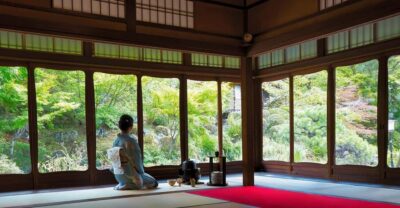
Tea Ceremony in a Traditional Tea House in Kiyomizu
Read our review →
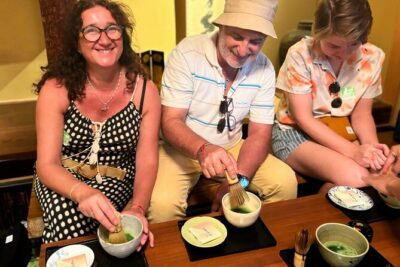
World Heritage Kyoto & Nara Uji Authentic Matcha Experience
Read our review →
Browse the lists this tour appears in