
Review · TOKYO
Tokyo Highlights Tour: Sumo, Sushi, Tea, and Tokyo Tower
Sumo starts the day with a rare window into Japan. This full-day Tokyo outing links sumo training and Tsukiji Outer Market with matcha in a historic garden, a Buddhist temple, and Tokyo Tower. I like the mix of everyday food culture and formal tradition, and I like that the day includes several admissions and a local English-speaking guide. The main catch is that sumo practice is not guaranteed, and the schedule can change during tournament periods.
The pace is active, with station transfers and walks between several stops. I would also budget extra money for breakfast and snacks at Tsukiji because food is not included. Guides can make a big difference here: Beth has been praised for being exceptionally helpful and accomplished, while Jeff was described as warm and welcoming.
Key points at a glance
- Sumo from behind the window: Watch a real training session at a Sumo Beya, with no staged performance and no interruptions for photographs.
- Tsukiji breakfast stop: Explore Tokyo’s famous food market and choose your own sushi, fruit, wagyu, sweets, or other morning treats.
- Matcha in a 1654 garden: Hama-rikyu Gardens provides a calm pause, complete with Japanese tea and wagashi.
- A quiet temple activity: At Zojo-ji, copy a Buddhist sutra and receive a Goshuin temple stamp.
- Classic Tokyo views: Tokyo Tower supplies the final panorama, with the city spread out below.
- A long, active day: The 510-minute schedule suits curious walkers more than anyone seeking a slow or easy outing.
Why this Tokyo combination works
Tokyo can feel like several cities at once. One street is devoted to fish and kitchen goods, another to temples, another to office towers. This tour works because it puts those contrasts into one carefully ordered day.
You begin with sumo, one of Japan’s most distinctive sports and rituals. Then you move into food at Tsukiji, quiet garden scenery at Hama-rikyu, Buddhist practice at Zojo-ji, and a modern city view from Tokyo Tower. The subjects are varied, but the route makes cultural sense.
At $150 per person, this is not a cheap sightseeing walk. Still, the price includes Tokyo Tower admission, Hama-rikyu Gardens admission, the tea house experience, the sutra copying activity, one train fare, and a guide for roughly eight and a half hours. If you planned to arrange each part separately, the tour would save planning time and help you understand what you are seeing.
The value depends on how much structure you want. Independent visitors can reach Tsukiji, Hama-rikyu, Zojo-ji, and Tokyo Tower on their own. The special piece is the Sumo Beya visit, along with the explanations and the smooth order of the day. If you only want a food tour or a temple visit, this outing may feel too packed.
A few more tea experiences around Tokyo worth a look
- Matcha Making Class in Tokyo with Authentic Japanese Sweets Set
★ 5.0 · 744 reviews - Kimono Tea Ceremony at Tokyo, Asakusa Maikoya
★ 5.0 · 638 reviews - Tokyo: Traditional Tea Ceremony with a Tea Master
★ 5.0 · 528 reviews
Meeting the guide at Hamacho Station
The normal meeting time is 8:15am inside Hamacho Station. From the platform, follow signs for exits A1 and A2, go upstairs, and pass through the ticket gates. Look for the green vending machine marked Merci. That is the meeting point.
This detail matters because Japanese train stations can have several exits and long corridors. Give yourself time to find Hamacho Station and reach the correct area before 8:15am. You will not want to begin a tightly timed day by rushing through Tokyo underground.
If sumo viewing is unavailable, the meeting point changes to Tsukiji Station outside entrance number 2, still at 8:15am. On Wednesdays in that situation, the meeting time becomes 9:30am, and the tour operator will contact you. Check your messages before leaving your hotel, especially if your date is close to a sumo tournament period.
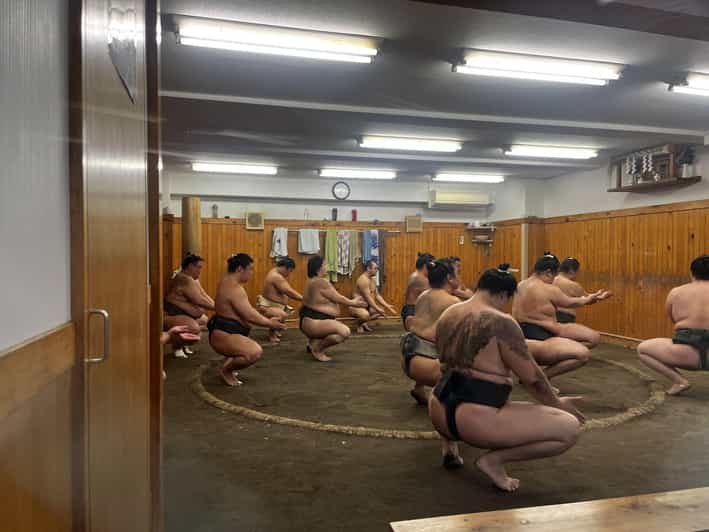
Watching sumo practice at a Sumo Beya
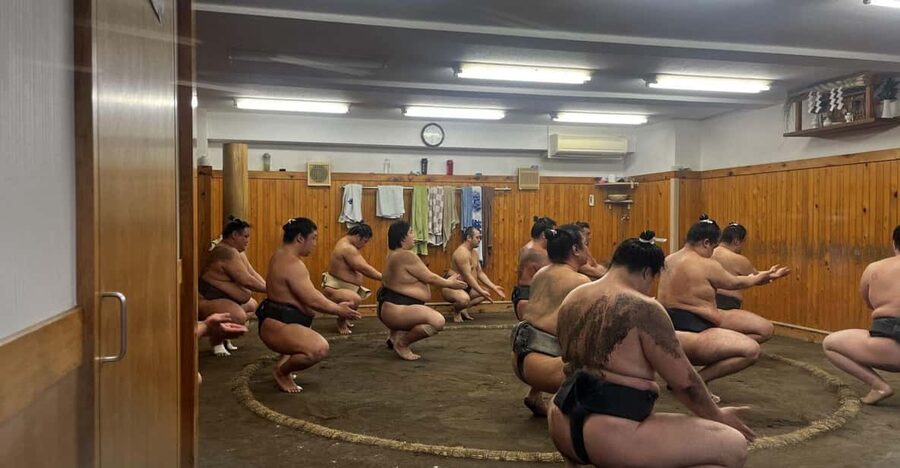
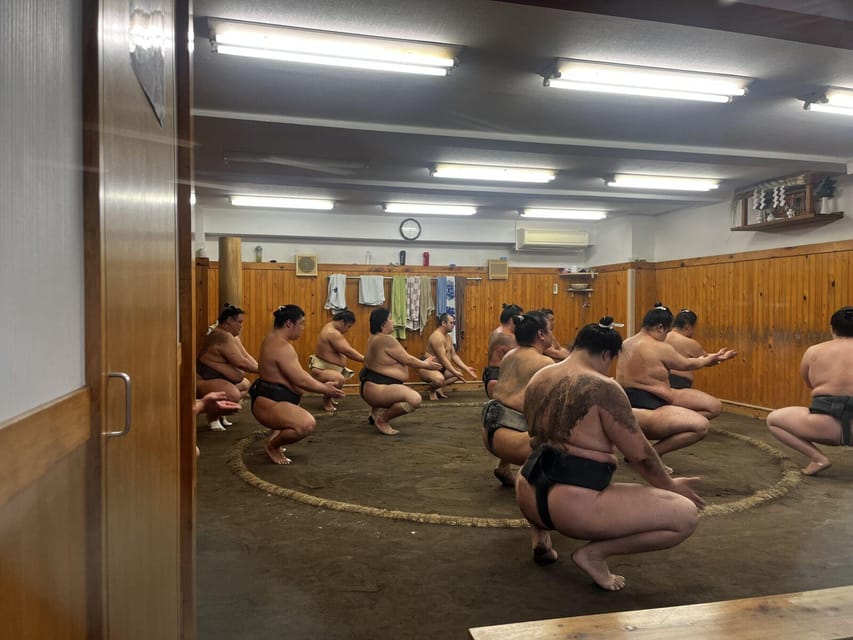
The first stop is a traditional Sumo Beya, or training room. This is the most unusual part of the day because you are watching genuine practice, not a demonstration arranged for tourists.
You view the wrestlers from outside through large windows. The athletes cannot be disturbed, so you should expect a quiet observation experience rather than close interaction. On some days, wrestlers come outside for photographs, but that is not promised.
The uncertainty is important. The Sumo Beya schedule can change, and the wrestlers may not train during your visit. Training is also closed during certain weeks when the Grand Sumo Tournaments take place in January, May, and September. If sumo is the main reason you are booking, treat this stop as a possibility, not a guarantee.
That limitation does not make the visit pointless. Even a short look through the windows gives you a sense of how different this is from attending a tournament. You see athletes preparing in their own working environment, and the rules about silence and distance are part of the experience.
The walk from Hamacho Station takes about five minutes. The group then rides a train for about 15 minutes to reach the Tsukiji area. The included train fare covers the ride from Ningyocho Station to Tsukiji Station, but transport before the tour and after it is your responsibility.
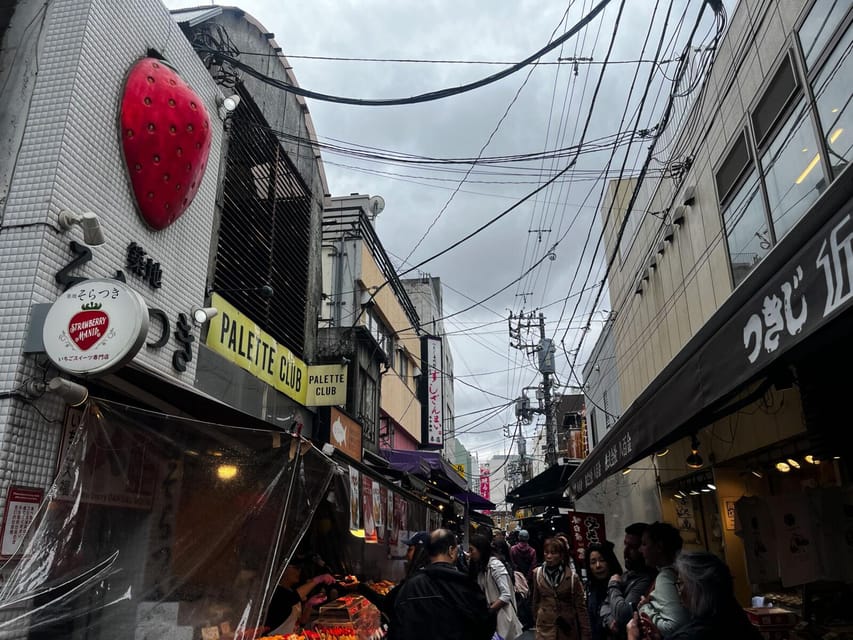
Eating your way through Tsukiji Outer Market
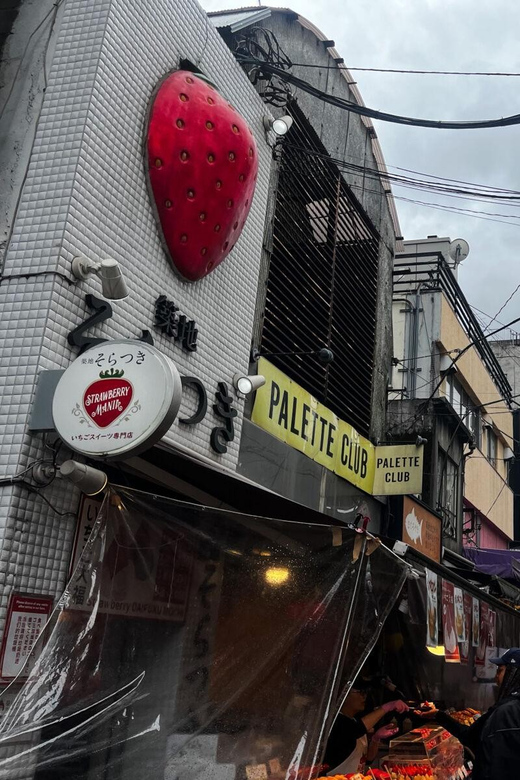
Tsukiji Outer Market is the day’s best stop for people who like to choose their own food. The market opened in 1935 and has long supplied Tokyo restaurants with seafood, fish, and sushi. The inner wholesale fish market moved elsewhere, but the outer market remains a busy food district with plenty to taste.
Your guide first shows you around, then you get free time to buy food. This is a useful arrangement. A guide can point out the main lanes and explain what you are seeing, while you still decide what to eat and how much to spend.
The tour starts early, so Tsukiji is also your practical breakfast stop. You might find sushi, wagyu, fresh fruit, sweet potatoes, and Japanese sweets. Food and drinks are not included, so carry some spending money and do not expect the $150 price to cover a meal.
I like this flexible approach better than a fixed tasting menu for a market visit. You can choose a small bite, build a larger breakfast, or simply look around if you are not hungry. The drawback is that the cost can vary, especially if you sample several premium seafood items.
You have about 90 minutes here, including the guided market visit and free time. That is enough for an introduction and some tasting, but it is not a slow, exhaustive food tour. Keep an eye on the meeting time because the rest of the day depends on the group moving together.
Same place, a different pot:
- Tokyo: Matcha Making Experience with Mochi Sweets in Asakusa
★ 4.9 · 388 reviews - Asakusa Cultural Walk & Matcha Making Tour
★ 5.0 · 245 reviews - Mt. Fuji & Lake Kawaguchiko Ropeway Panorama Full-Day Tour
★ 4.6 · 236 reviews - Tokyo: Matcha and Kimono Experience
★ 4.7 · 219 reviews
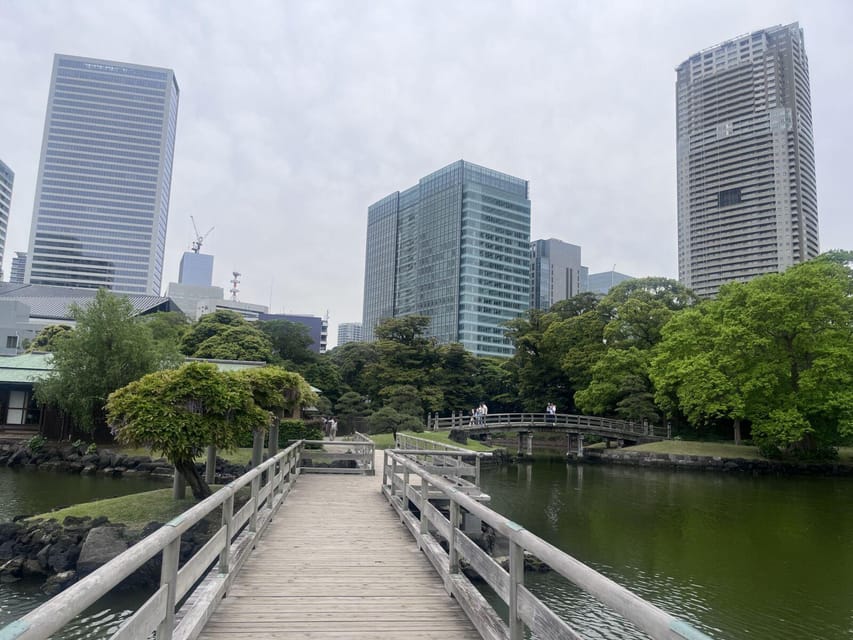
Finding quiet at Hama-rikyu Gardens
From Tsukiji, the group walks about 20 minutes to Hama-rikyu Gardens. This is a useful change of mood after the market. The garden was built in 1654 by the Tokugawa shogunate family and sits near the mouth of the Sumida River.
The guide gives you an introduction to the garden and its past, then allows free time to walk around. The open time matters because gardens are best appreciated at your own speed. You can pause, take photographs, and enjoy the contrast between traditional design and the surrounding city.
The full garden stop lasts about 80 minutes. It includes admission and a tea house experience with matcha and wagashi, a Japanese sweet. This is not just a drink break. It gives you a small introduction to the customs of a traditional tea setting without requiring you to book a separate formal ceremony.
The matcha may taste stronger and more bitter than the sweetened tea many people know. The wagashi balances it with a delicate sweetness. Together, they offer a simple lesson in how Japanese food pairings often work.
This is also one of the better rest points in the itinerary. The day involves early timing, market walking, and later temple and tower visits. Sit down, take the tea slowly, and use the garden time to reset before the next section.
Copying a sutra at Zojo-ji Temple
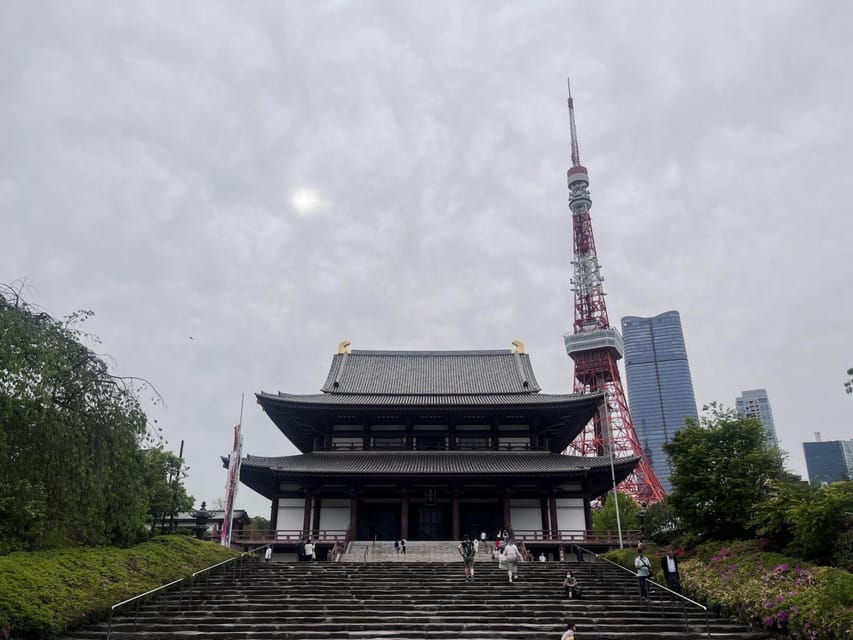
After the garden, you walk about 10 minutes to Zojo-ji Temple. Founded in 1393, this Buddhist temple has broad grounds and a long connection to the Tokugawa family. Tokyo Tower rises directly behind the temple, creating one of the city’s most memorable old-and-new views.
The temple tour explains the site and its history. You also take part in sutra copying inside the temple. You copy Buddhist text by hand while incense burns nearby, creating a quiet pause after the more active market portion of the day.
You do not need to be religious to find value in this activity. It asks you to slow down and concentrate, which can be difficult during a busy Tokyo visit. The point is not artistic skill. It is the careful act of writing, line by line, in a calm setting.
When you finish, you receive a Goshuin, or temple stamp. It makes a meaningful souvenir because it is tied to an activity you completed at the temple, rather than being a generic purchase from a shop.
The Zojo-ji stop lasts about an hour. You should be prepared for more standing and walking, and the overall experience is not designed for wheelchair users or people with mobility impairments. The tour includes several uneven or active portions, so comfortable shoes are essential.
Looking over Tokyo from Tokyo Tower
Tokyo Tower is the final major stop. Built in 1958, it is Tokyo’s oldest observatory and has a retro character that newer high-rise viewpoints do not quite match.
The ticket is included, and you have about 75 minutes at the tower. That gives you time to take in the panorama, photograph the city, and enjoy the shift from temple grounds to a high urban viewpoint.
The best feature here is the sequence. Zojo-ji and Tokyo Tower are next to each other in visual terms, but they represent very different sides of Tokyo. After seeing the tower behind the temple, you then rise above the city and look back over the area.
The tour ends at nearby Akabanebashi Station. Your guide can help with questions about trains and transport for your return journey. This is useful if Tokyo’s rail map still feels confusing, though you will need to pay for your onward trip yourself.
Timing, walking, and practical comfort
The tour lasts 510 minutes, or eight hours and 30 minutes. The official schedule includes about one hour at the Sumo Beya, 90 minutes at Tsukiji, 80 minutes at Hama-rikyu, one hour at Zojo-ji, and 75 minutes at Tokyo Tower. The remaining time goes toward train travel, walking, meeting, and moving the group between stops.
This is a full day, not a quick highlights circuit. The early start helps you catch the market at a useful time, but you may feel the length by the temple or tower. Eat enough at Tsukiji, drink water when you can, and wear shoes suited to several walks.
No group size is provided, so you should not assume a private tour. The experience is conducted in English with a live local guide. Guide quality matters here because the tour crosses sport, food, garden design, Buddhism, and city history.
The strongest personal praise has gone to the guides. Beth was described as exceptionally helpful, accomplished, and accommodating, while Jeff was praised for his warm welcome and the many things he helped uncover. Those comments suggest that the human side of the tour can be as important as the schedule.
Cancellation is free up to 24 hours before the start, and you can reserve while paying later. That gives you some flexibility, but always check the current start details because the meeting point can change if sumo is unavailable.
Who should book this day?
I would recommend it to a first-time Tokyo visitor who wants several major experiences without building a complicated route. It suits people who enjoy food, Japanese traditions, guided context, and a little physical activity.
It is also a good choice if you want more than photo stops. The sumo viewing, tea service, and sutra copying each offer a closer look at daily or ceremonial Japanese culture. They are short experiences, but together they give the day texture.
I would be more cautious if you need a flexible schedule, dislike early starts, or want a slow market morning. The tour moves on even if you would happily spend longer at Tsukiji or the gardens. It is also a poor fit for wheelchair users and people with mobility impairments.
The sumo uncertainty deserves one final warning. If seeing wrestlers is your only priority, verify the schedule before paying, and accept that training may be canceled or closed during January, May, or September tournament weeks.
Should you book the Tokyo Highlights Tour?
Book it if you want a well-filled day that combines sumo, food, tea, a temple activity, and Tokyo Tower without managing every train and admission yourself. At $150, the value is reasonable for the included tickets, tea house visit, sutra copying, and long period of English guidance.
Skip it if you prefer independent wandering, need guaranteed sumo, or cannot manage a full day of walking and standing. For the right person, this is a thoughtful introduction to Tokyo’s many sides, with the strongest moments likely to be the quiet ones: watching practice from behind the glass, sipping matcha in the garden, and copying a sutra beneath Tokyo Tower.
FAQ
How long does the tour last?
The tour lasts 510 minutes, which is eight hours and 30 minutes.
Where does the tour begin?
It normally begins at 8:15am inside Hamacho Station. Meet near the green Merci vending machine after following signs for exits A1 and A2 and passing through the ticket gates.
Where does the tour finish?
The tour finishes at Akabanebashi Station after the Tokyo Tower visit.
Is sumo training guaranteed?
No. The Sumo Beya schedule can change, and training may not be available. Training is also closed during certain weeks when Grand Sumo Tournaments take place in January, May, and September.
What happens if sumo viewing is unavailable?
The meeting point changes to Tsukiji Station outside entrance number 2 at 8:15am. If this happens on a Wednesday, the meeting time is 9:30am, and the tour operator will contact you.
Is food included in the price?
No. Food and drinks are not included. You can buy breakfast, sushi, wagyu, fruit, sweets, or other items at Tsukiji Outer Market.
What does the $150 price include?
The price includes the train fare from Ningyocho Station to Tsukiji Station, Hama-rikyu Gardens admission, the garden tea house experience, the sutra copying fee, a Tokyo Tower ticket, and an English-speaking local guide.
Is the tour suitable for wheelchair users?
No. The experience is not suitable for wheelchair users or people with mobility impairments.
Just added around Tokyo
- Yokohama : Tea Ceremony with Sweets and Souvenir★ 5.0 · 5 reviews
- Walking Tour: Yanaka,Nezu& Sendagi: Tea Ceremony & Old Tokyo★ 5.0 · 3 reviews
- Private Kimono and tea ceremony at local home near Tokyo Disney★ 5.0 · 6 reviews
- Private Mochi・Matcha sweets Making Class Near Shibuya Area★ 5.0 · 22 reviews
- Tokyo Sweets Tour: Hidden Gems & Matcha at an Old Tea House★ 5.0 · 6 reviews
- Kimono and Tea Ceremony in Asakusa Private Food Tour With Guide★ 5.0 · 4 reviews
- 2 Hours Mochi &Nerikiri Making & Matcha Class in Bunkyo★ 5.0 · 21 reviews
- Tokyo Tea Ceremony Class at a Traditional Tea Room★ 5.0 · 2 reviews
Tokyo Tea Tours, compared.

Matcha Making Class in Tokyo with Authentic Japanese Sweets Set
Read our review →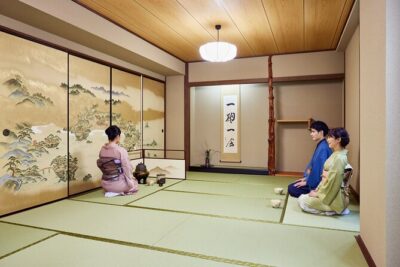
Matcha Making Experience with Mochi Sweets in Asakusa
Read our review →
Mt. Fuji & Lake Kawaguchiko Ropeway Panorama Full-Day Tour
Read our review →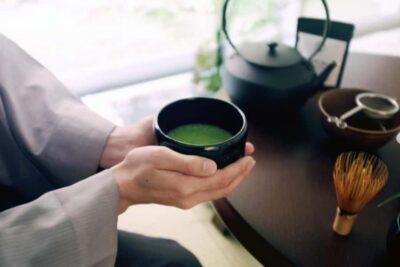
Tea Ceremony Workshop in Tokyo by the Experienced Instrucor
Read our review →Browse the lists this tour appears in