
Review · XIAN
Xi’an Calligraphy & Tea Ceremony – Dive into Ink & Brush Artistry
Your best Xi’an souvenir may come from ink. This three-hour workshop pairs a jasmine tea ceremony with hands-on Chinese calligraphy, giving you more to do than simply admire monuments. I especially like the small group size and the useful artworks you take home, though visitors wanting a broad sightseeing tour should know that most of the time is spent inside the studio.
The session is led by Yunyun, a Xi’an planner with more than 20 years of calligraphy practice and experience across more than 50 countries. Her clear English, patient teaching, and willingness to answer questions add real value. The main consideration is that the schedule begins at 2:00 pm and returns to the same meeting point, so you will need to plan your Xi’an sightseeing around it.
What makes this Xi’an workshop special
- A 3,000-year writing lesson: Follow Chinese characters from oracle-bone forms to modern script through an interactive display.
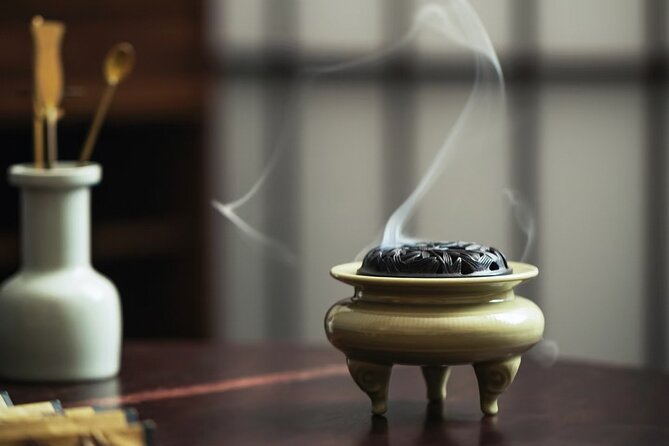
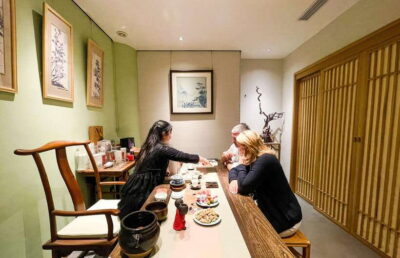
- A calm cultural welcome: Begin with jasmine tea, snacks, and an incense ritual modeled on the atmosphere of ancient scholars.
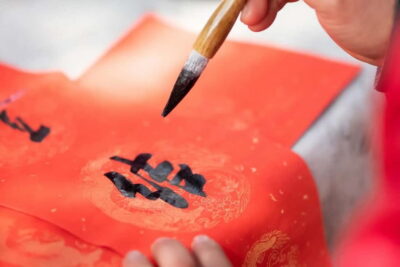
- Progressive brush practice: Start with simple strokes and characters such as 一, 十, 大, 小, 米, and 永 before moving to more meaningful words.
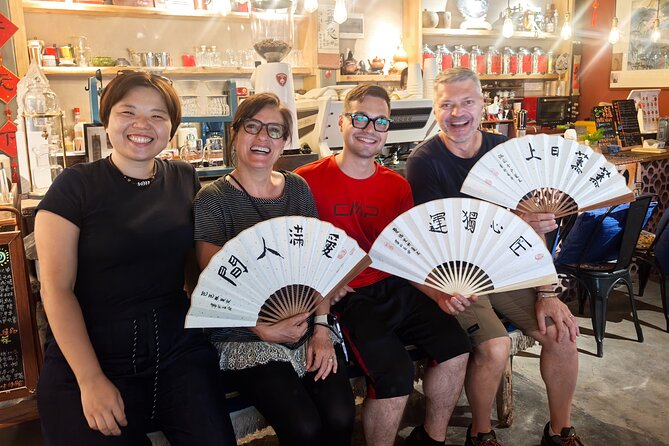
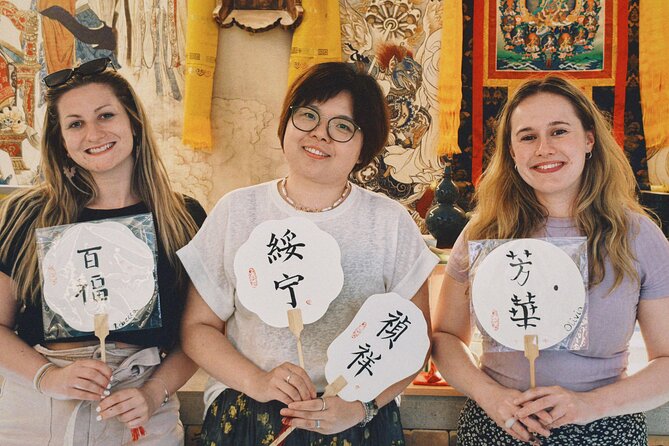
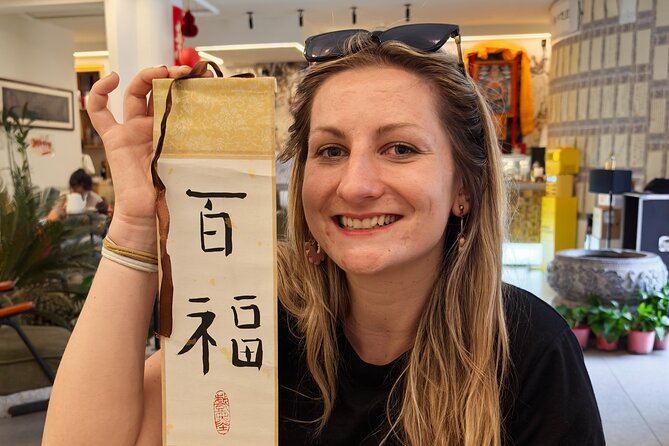
- Three personal artworks: Paint a folding fan, make bookmarks with your Chinese name, and complete a traditional scroll painting.
- A truly small group: With no more than six people, you get room for questions and individual help.
- A useful hot-weather option: The indoor setting offers a welcome break when Xi’an temperatures reach around 40 degrees Celsius.
Why calligraphy works well in Xi’an
Xi’an is famous for the Terracotta Army, ancient city walls, and imperial history. Those sights are essential, but they usually place you in the role of an observer. This workshop changes the pace. You sit down, hold the brush, and try to make a Chinese character yourself.
That matters because calligraphy is not just handwriting with a decorative twist. The order, direction, and pressure of each stroke affect the shape. A simple character can carry an idea about balance, family, love, strength, or the natural world. Even a beginner gets a small sense of how language, art, and philosophy meet in Chinese culture.
I also like the fact that you leave with more than photographs. Your fan, bookmarks, and scroll painting may not look like professional works, and they are not meant to. Their value is that you made them during your time in Xi’an. They become easy reminders of the city and the activity itself.
The workshop costs $69 per person. That is not the cheapest cultural activity in Xi’an, but the price includes the instructor, tea and snacks, all brush and ink materials, and three finished takeaways. Since the group is limited to six people, the fee also pays for personal attention rather than a large classroom demonstration.
More Tea Ceremonies in China
- Traditional Chinese Tea Ceremony Experience
★ 4.7 · 74 reviews - Beijing Culture: Tea Ceremony, Heritage Instrument & Calligraphy
★ 5.0 · 57 reviews - Chinese Tea ceremony in Beijing Hutong courtyard
★ 4.7 · 26 reviews
Starting with tea, incense, and the scholar’s setting
The experience opens at a calligraphy studio at 15 An Ju Xiang in Beilin District. You meet there at 2:00 pm, and the activity ends at the same location. The meeting point is near public transportation, which makes it easier to fit into a day of city exploring.
The first 20 minutes focus on jasmine tea and an incense ritual. This is more than a quick drink before the lesson begins. It sets a slower rhythm and introduces the idea of calligraphy as a focused cultural practice. Ancient Chinese scholars often treated writing, tea, incense, and painting as connected parts of a refined life. You get a short, practical version of that setting here.
Jasmine tea and snacks are included. The tea ceremony will not occupy the whole afternoon, so you should not book this expecting a formal, lengthy tea performance. Instead, think of it as a gentle introduction that helps explain why the brush session is meant to be calm and attentive.
This opening can be especially useful after a hot day outside. One review describes choosing the experience because Xi’an temperatures had reached about 40 degrees Celsius. The indoor format gives you a chance to sit down, cool off, and still take part in something distinctly Chinese.
Following characters from oracle bones to modern writing
Next comes a 25-minute lesson on the evolution of Chinese writing. An interactive character wall shows how written forms changed over roughly 3,000 years. Yunyun uses examples such as 家, meaning home, to show how an image or early symbol developed into the character used today.
This section gives the practical lesson some context. Without it, you might see calligraphy as a set of beautiful lines that must be copied correctly. With it, you begin to see why the characters have their shapes and how writing changed over time.
The teaching style is designed for visitors who know little or no Chinese. Yunyun uses pictures and maps as part of her explanations, and her international background helps her explain Chinese customs in terms that make sense to people from different cultures. She has traveled in more than 50 countries and has practiced calligraphy for over two decades, a useful combination for a guide working with beginners.
The time is limited, so do not expect a full academic history of Chinese writing. You get a clear introduction, not a university lecture. That is probably the right balance for a three-hour creative activity, especially when you still have more than two hours of brush practice ahead.
Learning the brush one stroke at a time
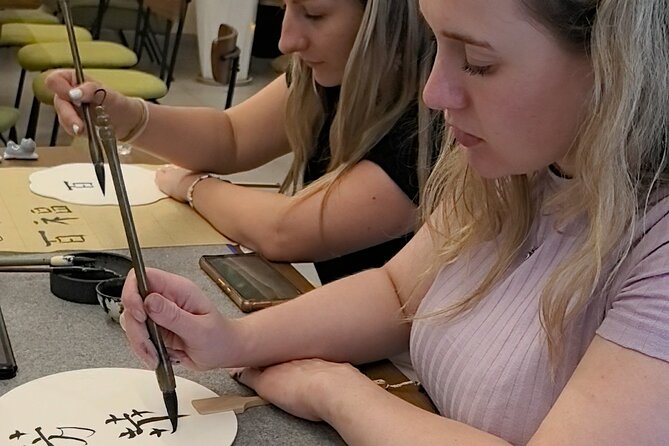
The longest instructional portion lasts about 1 hour and 10 minutes. You work at your own practice station with the basic materials: brush, ink, paper, and inkstone. The lesson begins with brush handling and simple strokes before moving to characters.
The early examples include 一, 十, 大, 小, 米, and 永. These characters give you a manageable way to practice horizontal, vertical, and angled movements. 永 is often useful for teaching several basic stroke types, and here it helps you move from isolated marks toward a complete character.
Later, you work with characters connected to ideas such as dragon, martial, and love. The Chinese characters are 龙, 武, and 爱. This is a thoughtful choice for a cultural workshop because you are not copying random symbols. You are writing words with clear meanings and a link to Chinese ideas.
Expect to make mistakes. Ink does not erase easily, and brush pressure can change the appearance of a stroke very quickly. That is part of the appeal, but it can frustrate anyone expecting a polished result on the first try. Yunyun’s role is important here. A small group of fewer than six people allows her to watch your grip, correct your movement, and answer questions as you work.
The workshop suits complete beginners because the practice is progressive. You are not expected to arrive with artistic training or Chinese language skills. Still, patience helps. You will get more from the lesson if you accept that the point is learning the movement, not producing museum-quality calligraphy.
Same place, a different pot:
- One-Day Hangzhou Dragon Well Tea Culture & West Lake Private Tour
★ 5.0 · 98 reviews - Tea Tasting and Pairing Concept Workshop
★ 5.0 · 57 reviews - Biking Real Shanghai& Tea Tasting Experience
★ 4.5 · 45 reviews - Authentic Hangzhou Longjing Tea Culture Experience Tour
★ 5.0 · 32 reviews
Making a fan, bookmarks, and a scroll painting
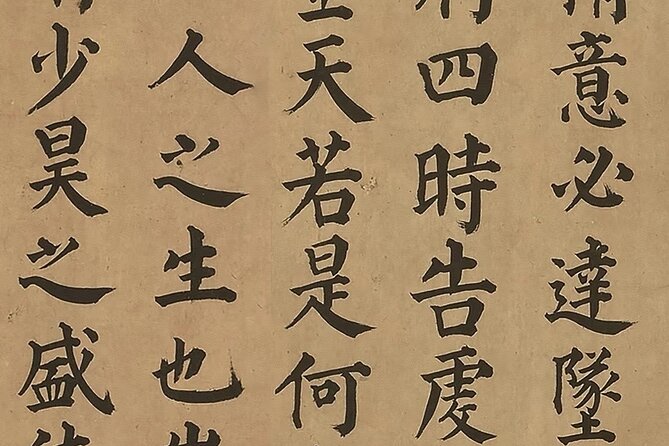
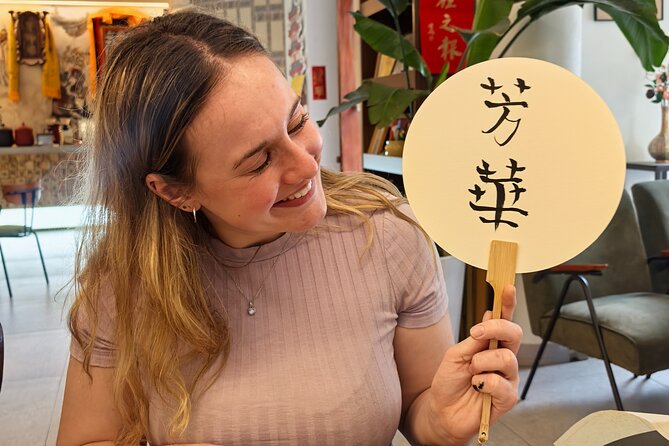
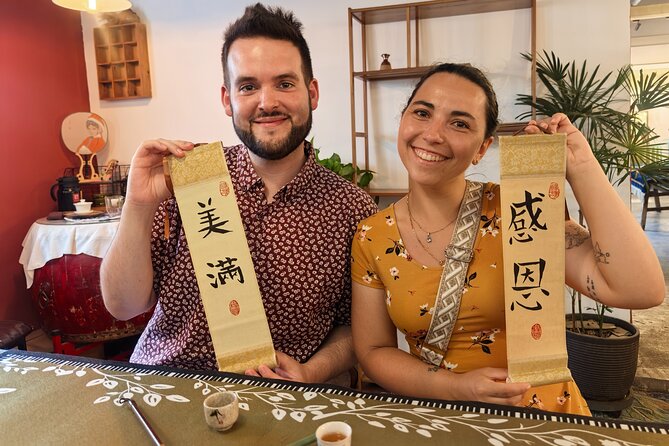
The final creative session lasts about 1 hour and 15 minutes. This is where the practice becomes a set of personal souvenirs. You design and paint a folding fan, create bookmarks with your Chinese name, and complete a traditional scroll painting.
The fan is likely to be the most memorable piece because it gives you a larger surface and a clear finished object. You choose Chinese characters for the fan, then transfer your practice into a more permanent design. That choice gives the project a personal angle. You are not simply taking home a preprinted souvenir.
The bookmarks provide another useful keepsake. Having your Chinese name included makes them more personal than a generic craft item, and the small format makes them easy to pack. The scroll painting adds a third style of work, so the final session is not just repeated handwriting on different pieces of paper.
You should allow yourself time to work carefully. The session is long enough to create several pieces, but it is not a rushed photo stop. Some people may prefer a short demonstration followed by free time. Others will appreciate the structure and the chance to produce several items under guidance.
The materials are included, so you do not need to bring ink, paper, or an inkstone. The workshop also supplies the painted folding fan, personalized bookmarks, and traditional scroll painting as part of the experience. That makes the $69 fee easier to assess: you are paying for instruction and a set of handmade objects, not just admission to a studio.
The guide makes the difference
Yunyun is the central reason this experience feels personal rather than mechanical. She has practiced calligraphy for more than 20 years, works as a Xi’an travel planner, and brings an international perspective from visiting more than 50 countries. That background helps her connect the art lesson with wider questions about Chinese culture.
Her English is described as excellent, and she explains the material clearly. She also welcomes questions and requests, which matters in a lesson where people may want to understand the meaning behind a character before painting it.
A guide can easily make a calligraphy workshop feel stiff or overly formal. Yunyun’s style is friendly, funny, and kind, while still giving detailed explanations. That balance is particularly helpful for families and first-time visitors who may feel nervous about handling ink in front of an instructor.
The group cap is six people. This is a major advantage over a large craft class. You have more opportunity to ask for help, compare brush techniques, and receive corrections before working on your final pieces. If your group is small, the session should feel more like a private lesson than a standard excursion.
Timing, comfort, and practical planning
The activity lasts approximately three hours to three hours and 20 minutes. The listed sections add up to about three hours and 10 minutes, with the remaining time allowing for transitions, questions, and the move from practice work to finished art.
It begins at 2:00 pm and ends back at the meeting point. That timing works well as an afternoon cultural activity, especially if you plan to visit outdoor sights earlier in the day. It may not suit you if you want to spend the entire afternoon at the City Wall or schedule a long-distance excursion from Xi’an.
The studio is near public transportation, but the supplied details do not specify the exact station, route, or walking time. I would check the meeting address before leaving your hotel and allow extra time to reach 15 An Ju Xiang. Confirmation is provided when you book, so keep those details available on your phone.
Most people can take part, according to the activity information. No special artistic ability is required. The experience is also mobile-ticket friendly, which keeps the practical side simple.
One unusual point is the weather policy. The activity requires good weather and may be canceled if conditions are poor, with a choice of another date or a full refund. Since the workshop takes place indoors, you may want to confirm the policy and local forecast close to the day of your booking.
Free cancellation is available up to 24 hours before the start time. Changes or cancellations made within 24 hours are not accepted for a refund, and the cut-off uses Xi’an local time.
Who will enjoy the brush and ink lesson most
I would recommend this experience to you if you want an active cultural activity rather than another guided walk. It is a strong choice for couples, families, solo visitors, and small groups who enjoy making something with their hands.
It also works well for people who have already seen Xi’an’s major sights. After the Terracotta Army and the city wall, calligraphy offers a quieter way to connect with Chinese culture. The workshop is also useful on an extremely hot day, when several hours outdoors may be uncomfortable.
You may want to choose a different activity if you are mainly interested in monuments, architecture, or a long walking tour. The session does not take you around Xi’an, and the studio setting means you will not see the city during the lesson.
It is also worth setting realistic expectations about the art. You will learn basic brush handling and produce several pieces, but you will not become an expert calligrapher in one afternoon. The real reward is the attempt, the explanation of the characters, and the objects that carry your own effort.
Should you book this Xi’an experience?
Book it if you want a small, friendly, hands-on introduction to Chinese culture. The combination of jasmine tea, incense, character history, patient instruction, and three take-home artworks gives the $69 price solid value, particularly with a group limited to six.
I would choose this for an afternoon when you need a break from Xi’an’s outdoor sights, especially during very hot weather. Skip it if you want a fast activity or prefer sightseeing to creative work. For everyone else, Yunyun’s English explanations and personal approach make this a thoughtful way to leave Xi’an with something you made yourself.
FAQ
How long does the Xi’an calligraphy and tea experience last?
The activity lasts approximately three hours to three hours and 20 minutes.
What time does the experience start?
It starts at 2:00 pm.
Where does the activity begin and end?
It begins at 15 An Ju Xiang, Beilin District, Xi’an, Shaanxi, China, 710001. It ends back at the same meeting point.
How many people can join the group?
The maximum group size is six people.
Is tea included?
Yes. Jasmine tea and snacks are included in the experience.
What calligraphy materials are provided?
The activity provides the writing materials, including ink, paper, and an inkstone.
What artwork can I take home?
You create a painted folding fan, personalized bookmarks, and a traditional scroll painting.
Can I cancel for a full refund?
Yes. You can cancel at least 24 hours before the experience start time for a full refund. Cancellations or changes made less than 24 hours before the start time are not accepted for a refund.
More Tea and Calligraphy Workshops in China
- Beijing Culture Event: Tradition Music, Tea Ceremony, Calligraphy
★ 5.0 · 11 reviews - Beijing Hands-On Culture Tour: Tea, Instrument, Calligraphy
★ 5.0 · 6 reviews - Xi’an Chinese Calligraphy Workshop: Ink Art & Tea Tasting
★ 5.0 · 4 reviews - Beijing:Learn Calligraphy & Enjoy Kung Fu Tea Ceremony
★ 5.0 · 2 reviews
Just added around China
- Full-day Tour: Spectacular Sunrise, Tea Plantation & Sunset★ 5.0 · 3 reviews
- Chinese Tea Ceremony Experience★ 5.0 · 3 reviews
- Unlock Chinese Tea: Culture, Science, Tasting & Hands-on Brewing★ 5.0 · 12 reviews
- Shanghai Mahjong Experience in Local Tea Bar★ 5.0 · 4 reviews
- Private Tour Hangzhou West Lake and Tea Fields Discovery★ 5.0 · 3 reviews
- Half-Day Hangzhou Jiuxi Stream and Tea Plantation Experience★ 5.0 · 2 reviews
- Hangzhou West Lake and Tea Plantation Half Day Tour★ 5.0 · 4 reviews
- Private Hangzhou Day Tour to West Lake, Lingyin Temple, Tea Village, Old Pagoda★ 5.0 · 17 reviews
Tea Ceremonies in China, compared.
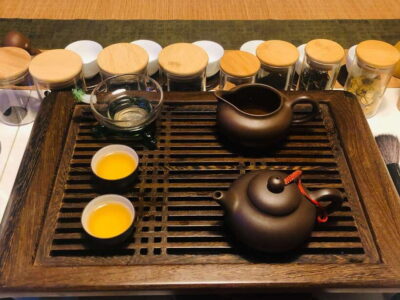

Beijing Culture: Tea Ceremony, Heritage Instrument & Calligraphy
Read our review →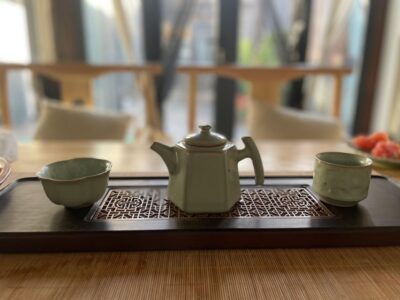
Chinese Tea ceremony in Beijing Hutong courtyard
Read our review →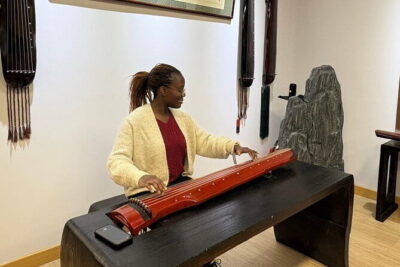
Beijing Culture Event: Tradition Music, Tea Ceremony, Calligraphy
Read our review →
Browse the lists this tour appears in