
Review · UJI
Uji Tea Ceremony and UNESCO Heritage Walking Tour
Uji turns tea into a way of reading Japan. This three-hour walk links the UNESCO-listed Byodoin Temple with a traditional tea ceremony at Taihoan, then follows quiet shrines and river bridges through one of Kyoto’s most rewarding nearby towns. I like the clear mix of major sights and local culture, and I like the small maximum group of nine, which should make questions and conversation easier. The main drawback is the tea ceremony’s short length, especially if that is your chief reason for booking.
The tour costs $70 per person and begins at 9:45 a.m. outside Uji Station. Guides such as Naoki, Katsuhiko, Maru, and Nobumasa Myake have been praised for making the history easy to follow, keeping a sensible pace, and offering useful matcha suggestions for later. You will walk for most of the three hours, with no hotel pickup, so plan your morning around reaching Uji Station on your own.
Key points to know before booking
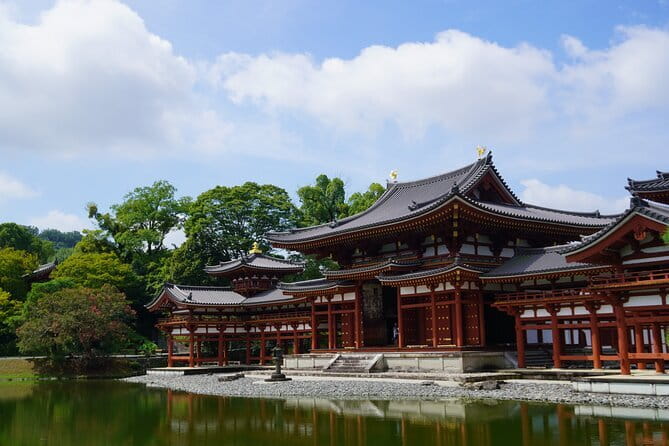
- Byodoin gets a full hour: You have time for the temple, Phoenix Hall, and the museum rather than making a quick photo stop.
- Taihoan offers a hands-on tea lesson: The included ceremony lasts about 30 minutes, within a 40-minute visit.
- The group is capped at nine people: That is a comfortable size for a walking tour and guide-led explanations.
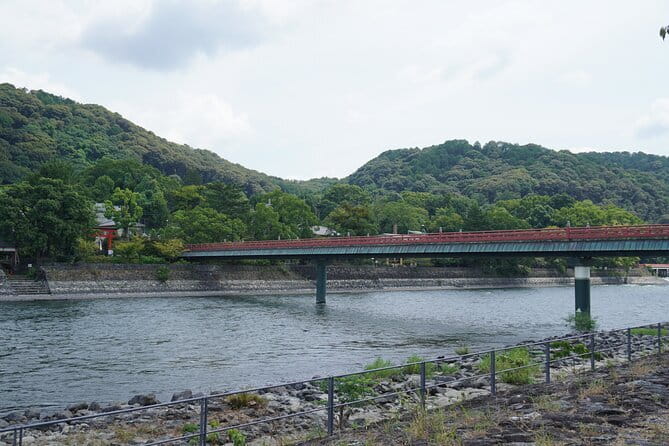
- Uji’s bridges connect the sightseeing stops: Asagiri, Tachibara, and Uji Bridge add river views and easy photo pauses.
- The tour ends near matcha shops and local food: You can continue exploring after the guide finishes.
- The pace suits families and first-time visitors: Past groups with children found the timing manageable and the explanations useful.
Why Uji makes a good half-day from Kyoto
Uji gives you a different feel from central Kyoto. The town is closely tied to Japanese green tea, but it also carries centuries of religious and imperial-era history. This tour makes those subjects easier to grasp because it does not treat the temple, tea room, shrines, and river as unrelated stops.
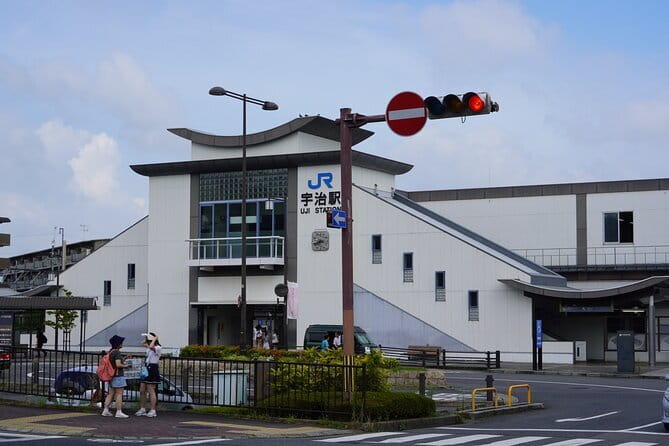
You meet at Uji Station at 9:45 a.m. and finish at Uji Bridge. That point-to-point arrangement makes sense. You do not need to retrace your steps to the station, and you finish close to places where you can continue with matcha, sweets, or lunch.
The three-hour schedule is compact but useful. You cover major sights without giving up an entire day in Kyoto. I would consider it a good choice for a first visit to Uji, particularly if you want context instead of simply following the main shopping street and taking photographs.
The group limit of nine matters. A guide can speak without shouting, and you can ask about details that catch your attention. The tour is in English, and the strongest praise has gone to the guides’ ability to explain history and culture in a friendly, clear way.
More Green Tea Tours in Japan
- Uji: Green Tea Tour with Byodoin and Koshoji Temple Visits
★ 4.8 · 72 reviews - Slow Cycling Tour at Uji’s Matcha Green Tea Fields and Heritage
★ 5.0 · 25 reviews - Kyoto Matcha Green Tea Tour
★ 4.5 · 23 reviews
Byodoin Temple and the hour around Phoenix Hall
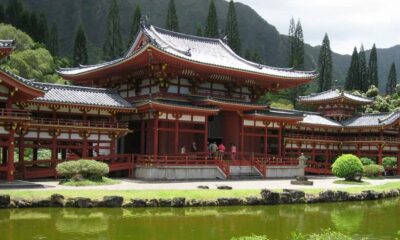
The tour begins with about an hour at Byodoin Temple, the most important stop on the route. This UNESCO World Heritage Site has more than 1,000 years of history, and its Phoenix Hall is the star attraction.
Phoenix Hall is famous for its balanced form and its position beside the pond. The name comes from the phoenix figures associated with the building. Even if you have seen photographs, the setting makes more sense when you are there, with the hall reflected in the water and framed by the temple grounds.
The included admission is a real benefit. You are not paying again at the entrance, and the guide can point out details that are easy to miss when you walk through alone. The visit also includes the Byodoin Museum, which adds useful objects and background to the buildings outside.
I especially like the full hour here. Many short town tours hurry through Byodoin, leaving you with a few photographs and little sense of why the temple matters. An hour gives you time to listen, see the hall from different angles, and take in the museum at a reasonable pace.
There is one practical point to keep in mind. Byodoin is the tour’s biggest historical attraction, so the hour may feel short if temple architecture is your main interest. You will see the key areas, but this is not an extended temple study. The guide’s explanations help you use the available time well.
The tour’s guides have received praise for explaining the significance of the temple and the wider area. Nobumasa Myake, in particular, was singled out for making the history easy to understand. That kind of background turns a beautiful building into a place with a story.
Taihoan and a short lesson in Japanese tea
After Byodoin, you spend about 40 minutes at Taihoan. The included tea ceremony takes around 30 minutes, leaving a little time for entering, settling in, and moving on.
Taihoan is presented as a place connected with the origins of Japanese green tea. That gives the ceremony a useful setting. You are not simply sampling a drink in a café. You are learning about the care, order, and gestures involved in preparing and serving tea.
Expect a formal presentation rather than a long workshop. You learn the basic steps of preparation and the meaning behind the practice. The ceremony is accessible to first-time visitors, and its quiet rhythm provides a clear change from the open temple grounds and town streets.
Families may find this stop especially worthwhile. One child enjoyed the tea ceremony greatly, and the guides have been praised for keeping the broader tour at a comfortable pace for groups with children. The ceremony gives younger participants something active to watch and remember, even though the visit is brief.
I would set your expectations carefully. If you want a detailed lesson in tea utensils, schools, etiquette, and preparation, 30 minutes will feel limited. One direct assessment found the ceremony too short, even though the rest of the tour was strong. For most people, it works best as an introduction that gives meaning to Uji’s tea culture rather than as a complete tea-study session.
The included ceremony does add value to the $70 price. You are getting more than a standard walking route through temples. Still, if tea is your only priority, you may want to schedule extra time in Uji afterward for a longer tea experience or a matcha tasting. The tour itself gives you a starting point and leaves you near places where you can continue.
Bridges, river views, and a calmer side of Uji
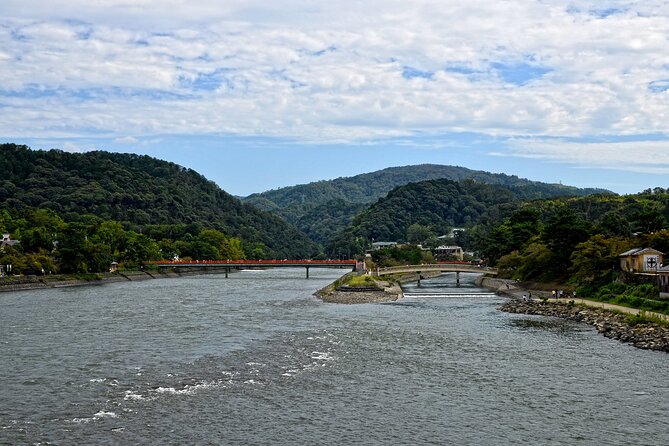
The route then moves outdoors again, with stops around Asagiri Bridge and the Tachibara and Asagiri suspension bridges. This part takes about 15 minutes, so think of it as a scenic walk and a chance for photographs rather than a major guided attraction.
The bridges give you a different view of Uji. After the temple’s formal buildings and the tea room’s careful ceremony, the river opens the route up. You can see the water, the surrounding town, and the shape of Uji from a more relaxed angle.
The short timing is sensible. You get the view without turning the tour into a long walk along the river. If you enjoy photography, this is a good place to pause, but you should not expect a long nature excursion. The tour remains focused on culture and history.
Autumn appears to be an especially appealing season for this route, with colorful trees and quieter areas adding to the walk. The tour runs in other seasons too, but the scenery will change. Since the activity requires good weather, rain can affect the experience and may lead to a different date or a full refund.
More Tea Ceremonies in Uji:
- Uji: UNESCO Heritage & Tea Ceremony Walking Tour
★ 4.6 · 54 reviews - Kyoto: Tea Ceremony in a Traditional Tea House in Kiyomizu
★ 4.9 · 3,519 reviews - Kyoto: Tea Ceremony Ju-An at Jotokuji Temple
★ 4.9 · 3,207 reviews - Kyoto: 45-Minute Tea Ceremony Lesson Experience
★ 4.3 · 2,378 reviews
Uji Shrine and Ujigami Shrine
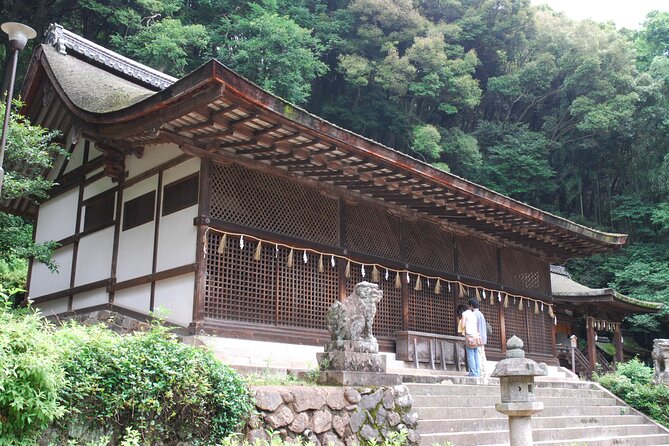
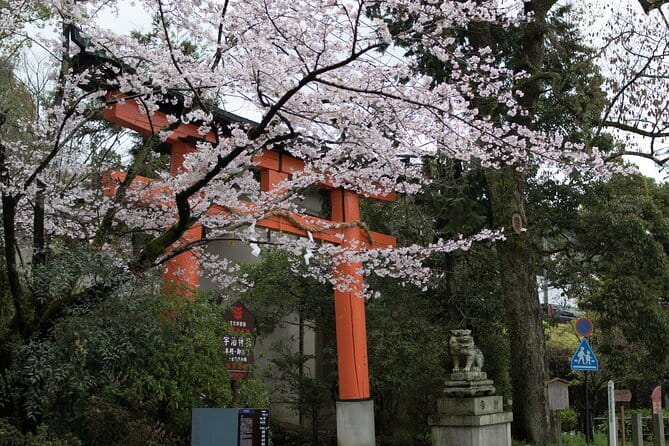
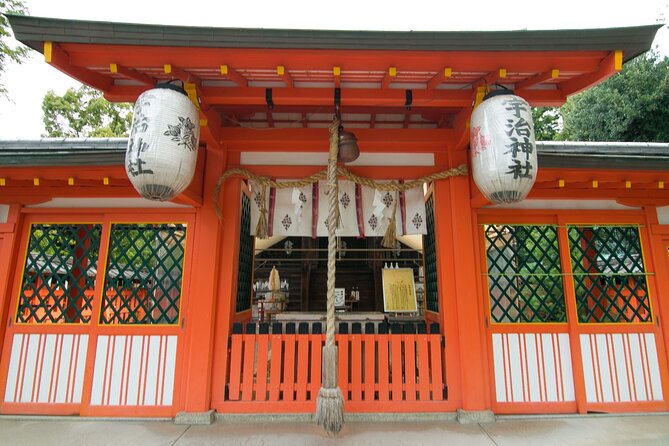
The shrine section takes about 20 minutes and includes Uji Shrine and Ujigami Shrine. These sacred sites bring another layer to the town. Byodoin shows formal temple architecture, while the shrines offer a quieter setting for understanding Japanese religious traditions.
Ujigami Shrine is particularly important as part of Uji’s historic religious area. The tour does not leave you to guess what you are seeing. A good guide can explain the difference between the shrine spaces, their role in local worship, and how they fit into Uji’s past.
The time here is short, but that may suit you if you are visiting Uji for the first time. You get a calm break from the larger temple without spending too long on details that can be difficult to absorb during a busy day of sightseeing.
This is also where a guide adds real value. Shrines can look simple at first glance, with gates, paths, and wooden buildings that seem familiar after several days in Japan. Explanations give those features meaning and help you notice how each site differs.
Finishing at Uji Bridge with matcha nearby
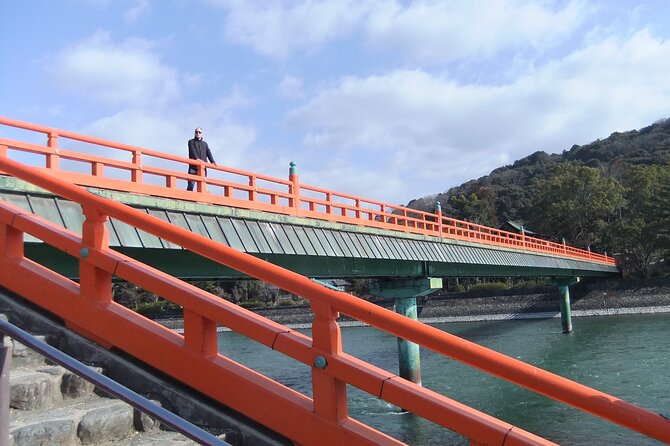
The final 45 minutes center on Uji Bridge and the surrounding area. This is more than a finish line. It gives you time to connect the town’s tea reputation with the shops and food found near the river.
Uji is famous for green tea, especially matcha, and you can use the end of the tour to try tea-based drinks, sweets, and other local treats. The guides have offered suggestions for good matcha places afterward, which is practical because you may not know how to choose among the many options on your own.
The tour does not include your personal food or drink purchases. That keeps the base price clear, but you should budget extra if you want to sample several items. The final stop is flexible in spirit, yet the tour itself ends at Uji Bridge rather than including a full meal or tasting menu.
I like ending here because the experience finishes with a living part of Uji rather than at a station entrance. You can continue exploring, stop for tea, or make your own way back by public transport. The endpoint also makes the morning feel like a route through town instead of a series of disconnected admissions.
What $70 gets you
At $70, the tour offers a fair package for a three-hour guided experience. Your fee includes an English-speaking guide, admission to Byodoin, and the tea ceremony. It does not include hotel pickup, drop-off, or personal expenses.
The main value comes from the guide. Byodoin admission alone does not explain the building, and a tea ceremony can be hard to understand without context. You are paying for a structured route, clear explanations, and the chance to ask questions along the way.
The small group improves that value. With no more than nine people, the guide can keep the pace together while still responding to individual interests. This is particularly useful for families, first-time visitors to Japan, and anyone who wants cultural background without joining a large coach group.
The price may feel less attractive if you want a long tea ceremony or prefer to explore at your own speed. You could visit the public sights independently and spend only on admission and food. The tour earns its price through interpretation, organization, and the combination of stops.
Timing, walking, and who should book
You should be comfortable walking between several stops for roughly three hours. Exact distances are not provided, but the route connects a temple, tea room, bridges, shrines, and Uji Bridge on foot. Wear shoes you can walk in comfortably and leave room in your morning for brief photo stops.
Most people can take part, and the tour is near public transportation. It begins at Uji Station, not at your hotel, so allow enough time to reach Uji before the 9:45 a.m. start. The lack of hotel pickup is normal for a town walking tour, but it is an important detail if you are staying in central Kyoto.
I would recommend this experience to:
- First-time visitors who want an introduction to Uji
- People interested in both tea culture and temple history
- Families who prefer a guided route with a steady pace
- Visitors who want a half-day outing from the Kyoto area
- Anyone who enjoys asking questions and getting local food suggestions
I would be more cautious if your main goal is a long, formal tea lesson. The ceremony is meaningful but brief. I would also skip this tour if you dislike fixed routes or prefer spending an hour or more at every shrine and temple.
The guide style seems to be one of the strongest parts. Naoki has been praised for covering plenty of ground without rushing and for suggesting matcha places afterward. Katsuhiko has been praised for prompt communication, family-friendly timing, and helping people find quieter areas. Maru has been appreciated for making Uji’s history fun, while Nobumasa Myake has been noted for clear temple explanations.
You can cancel for a full refund up to 24 hours before the start time. Changes made within 24 hours are not accepted for a refund, and poor weather may result in a different date or a full refund. That policy is worth noting because bridges and outdoor shrine paths are a meaningful part of the route.
Should you book the Uji tea and heritage walk?
I would book this tour if you want Uji explained, not just photographed. The best parts are the well-chosen sequence, the included Byodoin admission, the small group, and the way the tea ceremony gives the town’s green tea reputation a human scale.
Book it early in your Kyoto planning if you want the 9:45 a.m. start and a group of no more than nine. Afterward, keep time for your own matcha stop near Uji Bridge. That extra hour will make up for the short tea ceremony and let you follow the guide’s local suggestions.
Skip it only if you want an extended tea lesson or completely free-form sightseeing. For a compact introduction to Uji’s temples, tea, shrines, bridges, and food culture, $70 is a sensible use of a half-day.
FAQ
How long is the Uji tea and heritage walking tour?
The tour lasts approximately three hours.
Where does the tour start?
It starts at Uji Station in Uji, Kyoto, at 9:45 a.m.
Where does the tour finish?
The tour ends at Uji Bridge in Uji.
Is Byodoin Temple admission included?
Yes. Entrance to Byodoin Temple is included in the tour price.
Is the tea ceremony included?
Yes. The tour includes a tea ceremony at Taihoan. The ceremony lasts about 30 minutes within a 40-minute stop.
Is hotel pickup or drop-off provided?
No. Hotel pickup and drop-off are not included.
How many people can join the tour?
The tour has a maximum of nine people.
Can I cancel for a full refund?
Yes, if you cancel at least 24 hours before the local start time. Cancellations made less than 24 hours in advance are not refunded. If poor weather cancels the tour, you are offered another date or a full refund.
More History Tours in Uji
- World Heritage Kyoto & Nara Uji Authentic Matcha Experience
★ 5.0 · 1,573 reviews - Beijing Culture: Tea Ceremony, Heritage Instrument & Calligraphy
★ 5.0 · 57 reviews - Tea and Doughnuts: Historic Walking Food Tour of Southwark
★ 4.6 · 14 reviews - Victoria Falls: Cultural Tour with High Tea
★ 4.8 · 12 reviews
More Green Tea Tours in Uji
- Experience all of Japanese culture and Japanese food experience classes “origami, udon, Japanese food, green tea, calligraphy” in 4 hours
★ 5.0 · 105 reviews - Scenic Green Tea Fields of Hidden Kyoto & Local Tea Exp (Private)
★ 5.0 · 32 reviews - Osaka; Japanese Tea ceremony experience, Macha and Sencha
★ 4.9 · 29 reviews - Kyoto Matcha Green Tea Tour
★ 4.7 · 28 reviews
Just added around Uji
- Kyoto tea town for matcha lovers★ 5.0 · 16 reviews
- Uji: Private immersion into Kyoto’s tea and reglious culture★ 5.0 · 17 reviews
- Uji and Wazuka Matcha Farm Half Day Private Guided Tour★ 5.0 · 21 reviews
- Kyoto Matcha Green Tea Tour★ 4.5 · 23 reviews
- 7 Hours Private Guided Tour Uji and Wazuka Matcha Farm★ 5.0 · 2 reviews
- Utilising upcycled Matcha! Creating matcha incense (Uji, Kyoto)★ 5.0 · 6 reviews
- Half Day Matcha Tour in Uji, home of culture, with a local★ 4.8 · 14 reviews
- Kyoto: Tea Museum and Tsuen Teahouse Guided Tour★ 5.0 · 2 reviews
Green Tea Tours in Japan, compared.

Green Tea Tour with Byodoin and Koshoji Temple Visits
Read our review →
Scenic Green Tea Fields of Hidden Kyoto & Local Tea Exp (Private)
Read our review →
Osaka; Japanese Tea ceremony experience, Macha and Sencha
Read our review →
Slow Cycling Tour at Uji’s Matcha Green Tea Fields and Heritage
Read our review →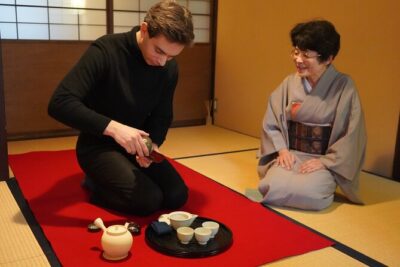
Sencha-do the Japanese Tea Ceremony Workshop in Kyoto
Read our review →Browse the lists this tour appears in