
Review · TOKYO
Tokyo Small-Group Ramen, Gyoza & Matcha Class with a Pro Chef
Ramen tastes better when you make it yourself. This two-hour class in Zoshigaya gives you hands-on practice with dashi, miso ramen, gyoza, and matcha, all in a group capped at four people. I like the personal instruction and the fact that dinner is included, along with recipes you can use back home. I also like the easy access from Ikebukuro, Shibuya, and Shinjuku.
The main drawback is the fixed menu. This class cannot accommodate vegetarian, vegan, halal, or gluten-free diets, so you need to be comfortable with the ingredients served. Alcohol is also extra, at 500 yen per drink, and payable in cash.
Key points to know before booking
- Four-person maximum: The small group gives you room to ask questions and work at your own pace.
- Three Japanese food skills in one class: You learn dashi, miso ramen, and gyoza rather than only assembling a finished dish.
- Matcha is part of the meal: You prepare your own tea and eat it with seasonal Japanese sweets.
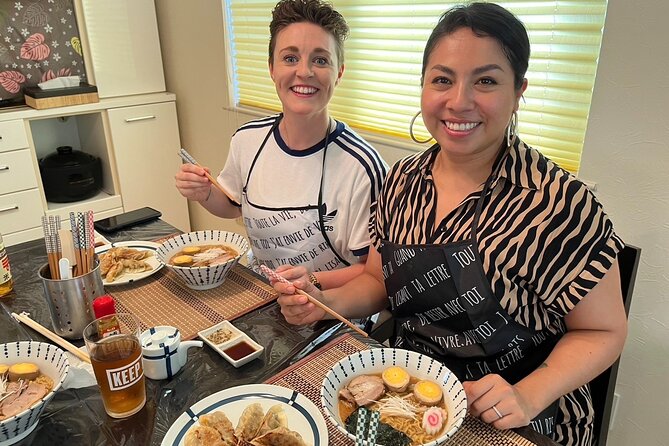
- Dinner is included: Your finished ramen and gyoza are served during the class.
- Useful Ikebukuro location: The meeting point is in Zoshigaya, with shopping and sightseeing nearby.
- Recipes and photos go home with you: You receive take-home recipes and photos from the experience.
What the two-hour class is really like
This is a compact cooking lesson rather than a long food tour. You meet at 3-chōme-1-7 Zōshigaya, Toshima City, then settle into a small classroom where an English-speaking guide explains the ingredients and techniques.
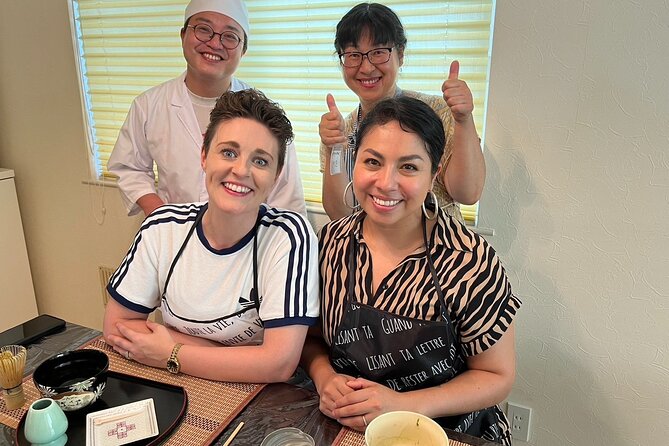
The format should suit you if you want to participate instead of simply watching a chef work. The chef demonstrates the steps, then helps you prepare the food yourself. Since the maximum group size is four, the lesson has a more personal feel than a large demonstration class. You can ask questions, slow down for a tricky step, or get help with a technique that feels unfamiliar.
The two-hour schedule also matters. You get a proper meal and several cooking skills, but you do not lose half a day. I see this as a good fit for a busy Tokyo schedule, especially if you have sightseeing plans in Ikebukuro before or after the class.
The tone is meant to be friendly and practical. Instructions are given in English, and the recipes are written so you can repeat the dishes at home. That last point adds real value. Many cooking classes end with a tasty meal and little else. Here, you have something to refer to when your Tokyo trip is over and you are standing in your own kitchen with a packet of miso.
More Matcha Experiences in Tokyo
- Matcha Making Class in Tokyo with Authentic Japanese Sweets Set
★ 5.0 · 744 reviews - Tokyo: Matcha Making Experience with Mochi Sweets in Asakusa
★ 4.9 · 388 reviews - Asakusa Cultural Walk & Matcha Making Tour
★ 5.0 · 245 reviews
Starting with dashi, the quiet base of Japanese cooking
The class begins with dashi, a basic Japanese stock that gives many dishes their savory depth. It is not the loudest part of the meal, but it is one of the most useful skills covered.
Learning dashi helps you understand why Japanese cooking can taste full without being heavy. It also gives the ramen broth a proper foundation. The lesson is not only about following a recipe. You get a look at how one simple base supports a larger dish.
The exact ingredients and method are not specified in the available details, so you should not expect a long technical lecture about every regional style of dashi. The value is in seeing and practicing the basic method as part of the ramen preparation.
For a first Japanese cooking class, this is a sensible place to begin. You learn a technique that can be used beyond one bowl of ramen, while the chef keeps the pace moving toward the main meal.
Building miso ramen from the broth up
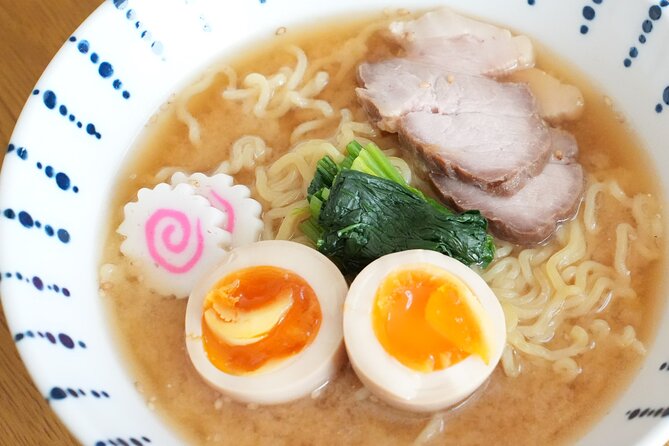
Miso ramen is the centerpiece of the class. Rather than receiving a bowl prepared in advance, you work through the process of creating a rich miso-based ramen meal.
I like this part because ramen can look simple at the table while hiding several separate jobs in the kitchen. The broth, seasoning, noodles, and toppings must come together at the right time. A chef-led class gives you a chance to see how those parts relate.
The class description promises authentic dashi and rich miso ramen, but it does not list the precise toppings, noodle type, or miso blend. That is useful to remember if you are hoping to study one specific regional ramen style. You will learn the core preparation, not necessarily every detail of a famous shop’s recipe.
Still, the meal has an advantage over a purely technical lesson. You eat the ramen you helped make. That gives you an immediate way to judge the balance of the broth and the result of your work. It also makes the experience suitable for families and mixed-age groups. A 19-year-old food enthusiast and grandparents all enjoyed the class together, and the food was considered delicious. The lesson also kept to its promised timing, which is a welcome detail when your day is planned around trains and reservations.
Folding gyoza without losing the filling
Gyoza brings a different skill to the table. Ramen depends on broth and timing. Gyoza requires careful handling, filling, and shaping.
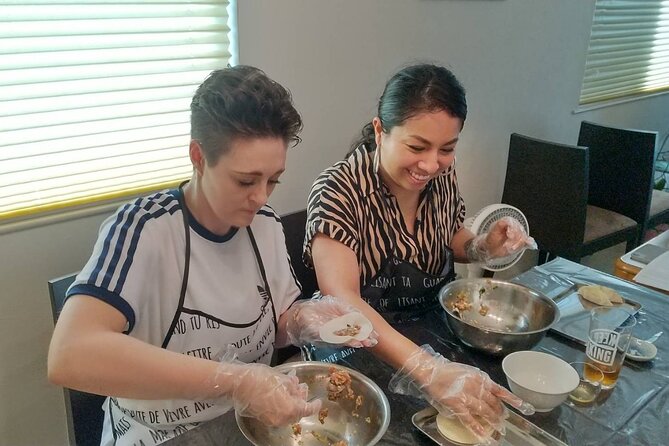
The class teaches you how to make juicy gyoza, with the chef available to explain the method. This is the sort of task where a small group matters. You can watch the folding technique closely and ask for help if your first few dumplings look more like sealed envelopes than restaurant food.
The description does not state the exact filling or folding style, so I would treat this as a practical introduction rather than a specialist dumpling workshop. You should come ready to learn the basic process and enjoy the finished result, not expect an advanced study of every gyoza variation in Japan.
Making gyoza also gives the class a nice change of pace. You move from broth preparation to shaping individual pieces, then sit down to eat both dishes as dinner. That keeps the lesson active and gives you more than one recipe to take home.
Same place, a different pot:
- Kimono Tea Ceremony at Tokyo, Asakusa Maikoya
★ 5.0 · 638 reviews - Tokyo: Traditional Tea Ceremony with a Tea Master
★ 5.0 · 528 reviews - Mt. Fuji & Lake Kawaguchiko Ropeway Panorama Full-Day Tour
★ 4.6 · 236 reviews - Tokyo: Matcha and Kimono Experience
★ 4.7 · 219 reviews
Preparing matcha with seasonal Japanese sweets
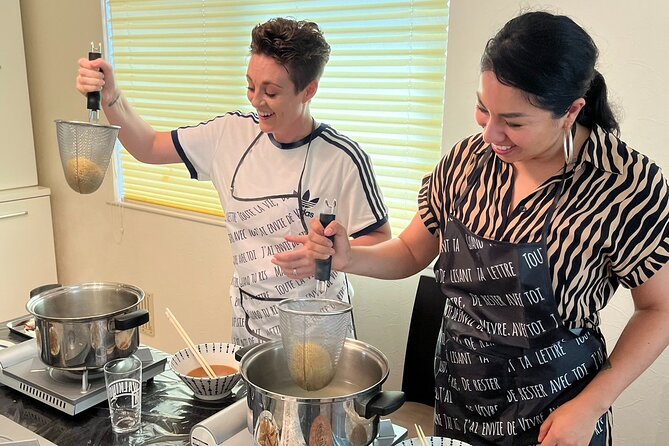
The matcha portion changes the mood of the class. After the savory cooking, you prepare your own matcha and enjoy it with seasonal Japanese sweets.
This is not simply a drink added to the menu. It introduces a small part of Japanese tea culture and gives you a chance to practice a different kind of preparation. The cooking lesson is hands-on and energetic, while matcha asks for a little more care and attention.
Seasonal sweets are included, though the particular sweet is not specified. That means you should expect a Japanese sweet selected for the time of year, rather than a guaranteed item. The matcha also makes the class feel more complete. You get a savory dinner, then a traditional-style finish.
I especially like this inclusion for people who want more than a standard ramen workshop. The tea activity adds cultural context without requiring a separate formal tea ceremony. It is brief enough to fit the two-hour schedule, but distinct enough to give the experience another layer.
Dinner, drinks, and what the price covers
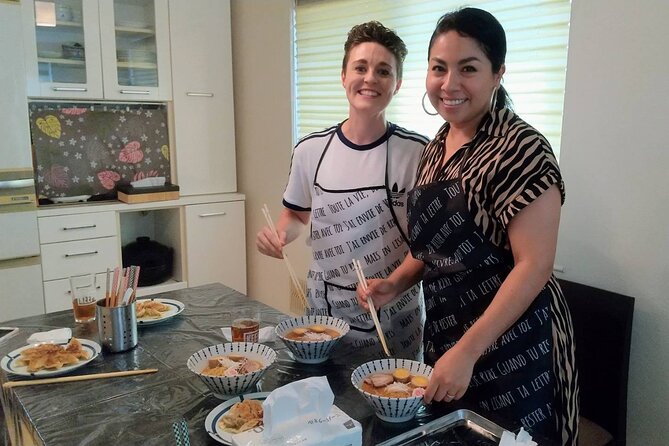
The cost is $104.51 per person. That is not a budget meal, but the price includes a cooking lesson, dinner, matcha, seasonal sweets, an apron, take-home recipes, and photos provided afterward.
I would judge the value by the full package rather than by the food alone. In central Tokyo, you can find cheaper ramen and gyoza. You are paying here for instruction, a small group, the chance to make the dishes yourself, and guidance in English. If you care about learning techniques you can repeat at home, the price makes more sense.
The dinner includes miso ramen and gyoza. Matcha and Japanese sweets are also included. Alcohol is not part of the price. You can buy Hakkaisan sake, served as 180 milliliters, or Kirin Ichiban Shibori beer, served as 350 milliliters, for 500 yen each. Payment for these drinks is in cash.
Soda and other non-alcoholic drinks are not included in the stated package. If you want to keep your costs simple, skip the optional alcohol and treat the included meal as the full food experience.
Getting to Zoshigaya from Tokyo’s main districts
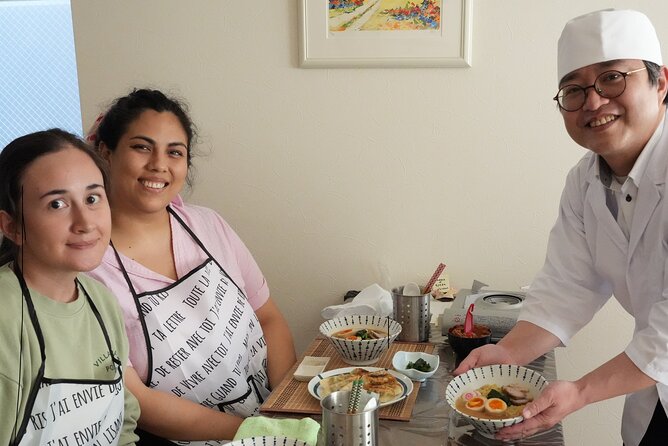
The classroom is in Zoshigaya, near Ikebukuro. The area is accessible by public transportation, and the location is described as one train ride from Shibuya on the Fukutoshin Line.
The route also puts the class within reach of Shinjuku. From Shibuya, you pass by the Meiji Shrine area and Shinjuku on the way toward Ikebukuro. That makes this a practical addition to a day spent around the west side of Tokyo.
Your meeting point is in Zoshigaya, not at a major sightseeing landmark. Give yourself enough time to find the exact address, especially if you are unfamiliar with Tokyo station exits and residential streets. The provider sends confirmation within 48 hours of booking, subject to availability, so check the final meeting instructions before you set out.
After class, you finish back at the same meeting point. You do not need to arrange a separate ride to a restaurant or return to a hotel area. From there, you can continue into Ikebukuro for shopping and entertainment.
What to do around Ikebukuro after class
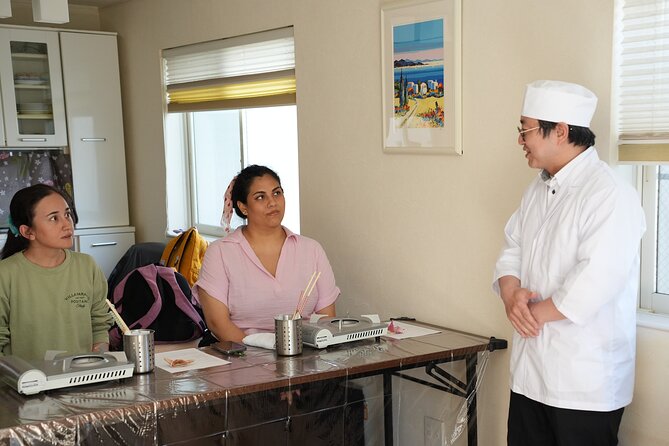
Ikebukuro gives you plenty to do before or after the lesson. The area has Animate, the Pokémon Center, and electronic stores, making it an easy choice if you want to pair the cooking class with shopping.
Near the classroom is Kishimo Shrine, marked by red torii gates. A short visit there can add a quieter stop to your day, especially after the focused work of cooking. The shrine is a useful nearby point of interest because you do not need to cross Tokyo for another activity once the class ends.
The class description presents the area as a reason to book the experience, but you should keep your own schedule in mind. The cooking activity ends at the meeting point, and no private transportation is provided. You will handle your own train connections and any sightseeing before or after the lesson.
Who will enjoy this class most
I would recommend this experience to you if you meet several of these conditions:
- You want to cook rather than only eat.
- You enjoy ramen and gyoza and would like recipes to try at home.
- You prefer a group of four or fewer.
- You want English-language instruction.
- You have a free two-hour slot near Ikebukuro, Shibuya, or Shinjuku.
- You like adding a cultural activity, such as matcha preparation, to a food lesson.
- You are comfortable with the fixed menu and have no listed dietary restrictions.
It also suits families and mixed-age groups. The cooking is structured, the chef answers questions, and the pace can be adjusted for the people in the room. The experience received a full five-star rating from the available feedback, with particular praise for the delicious results, clear answers, and respect for the scheduled time.
I would not choose it if you need halal, vegetarian, vegan, or gluten-free food. The provider clearly states that these needs cannot be accommodated. I would also look elsewhere if you want a full-day market tour, a restaurant crawl, or a highly specialized ramen lesson focused on regional variations.
Booking details and cancellation advice
The activity uses a mobile ticket, which is convenient for a day of sightseeing. Confirmation arrives within 48 hours of booking if space is available, and the group maximum is four people.
Free cancellation is available if you cancel at least 24 hours before the start time. Cancellations made inside that window are not refunded, and late changes are not accepted. The cut-off uses Tokyo local time, so check the clock carefully if you are booking from another country.
The class requires a minimum number of participants. If the provider cancels because that minimum is not met, you can receive a different date or experience, or a full refund.
Should you book the Tokyo ramen and matcha class?
I would book this class if you want a focused, friendly introduction to Japanese cooking with a meal at the end. The strongest reasons are the four-person limit, English instruction, practical recipes, and the mix of savory cooking with matcha and seasonal sweets.
The $104.51 price is reasonable for a small-group lesson that includes dinner, an apron, recipes, matcha, sweets, and photos. It is less appealing if you only want a cheap bowl of ramen, since Tokyo offers many less expensive ways to eat.
Make the decision based on the menu first. If you need vegetarian, vegan, halal, or gluten-free food, this is not the right choice. If you can eat the set menu and have two hours near Ikebukuro, this class gives you a useful skill, a proper dinner, and an easy way to connect food with Japanese culture.
FAQ
Where does the cooking class meet?
The meeting point is 3-chōme-1-7 Zōshigaya, Toshima City, Tokyo 171-0032, Japan.
How long does the experience last?
The class lasts approximately two hours.
How many people can join the class?
The activity has a maximum of four participants.
Is the class taught in English?
Yes. An English-speaking guide explains the ingredients and cooking techniques.
What food will I make?
You will learn to make dashi, miso ramen, and gyoza.
Is dinner included?
Yes. Dinner includes the miso ramen and gyoza you prepare during the class.
Is matcha included?
Yes. You prepare matcha and enjoy it with Japanese sweets.
Are aprons and recipes provided?
Yes. Aprons and take-home recipes are included.
Can the class accommodate vegetarian, vegan, halal, or gluten-free diets?
No. The provider states that vegetarian, vegan, halal, and gluten-free menus are not available.
Can I cancel for a full refund?
Yes, if you cancel at least 24 hours before the experience start time. Cancellations made less than 24 hours before the start time are not refunded.
Just added around Tokyo
- Yokohama : Tea Ceremony with Sweets and Souvenir★ 5.0 · 5 reviews
- Walking Tour: Yanaka,Nezu& Sendagi: Tea Ceremony & Old Tokyo★ 5.0 · 3 reviews
- Private Kimono and tea ceremony at local home near Tokyo Disney★ 5.0 · 6 reviews
- Private Mochi・Matcha sweets Making Class Near Shibuya Area★ 5.0 · 22 reviews
- Tokyo Sweets Tour: Hidden Gems & Matcha at an Old Tea House★ 5.0 · 6 reviews
- Kimono and Tea Ceremony in Asakusa Private Food Tour With Guide★ 5.0 · 4 reviews
- 2 Hours Mochi &Nerikiri Making & Matcha Class in Bunkyo★ 5.0 · 21 reviews
- Tokyo Tea Ceremony Class at a Traditional Tea Room★ 5.0 · 2 reviews
Matcha Experiences in Tokyo, compared.

Matcha Making Class in Tokyo with Authentic Japanese Sweets Set
Read our review →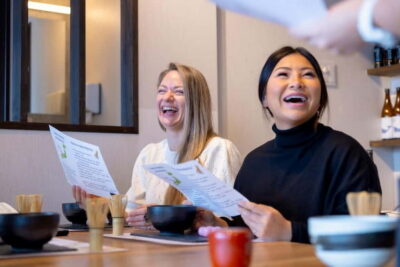
Matcha Making Experience with Mochi Sweets in Asakusa
Read our review →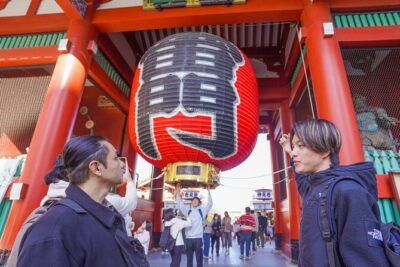
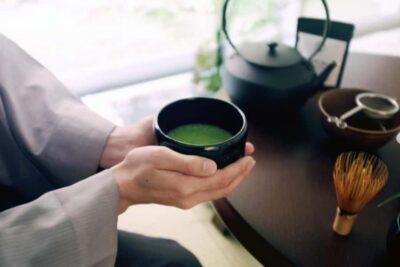
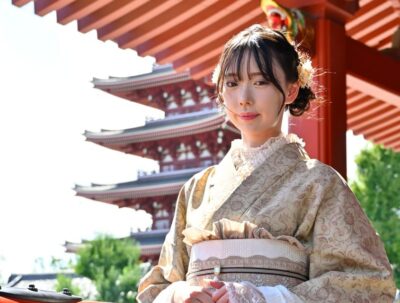
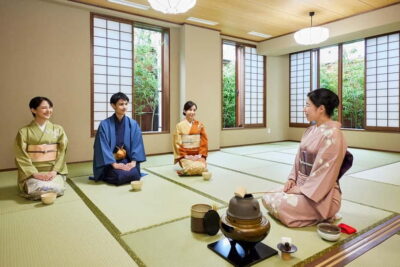
Asakusa: Kimono Tea Ceremony with Matcha and Sweet
Read our review →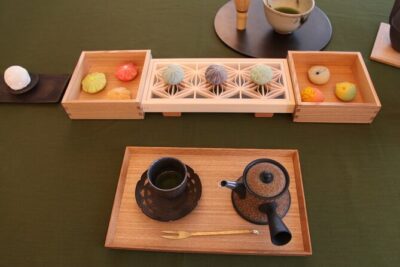
Make Traditional Nerikiri Sweets & Matcha experience in Shibuya
Read our review →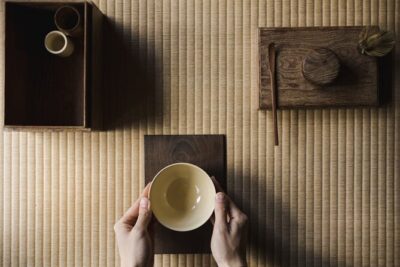
Browse the lists this tour appears in