
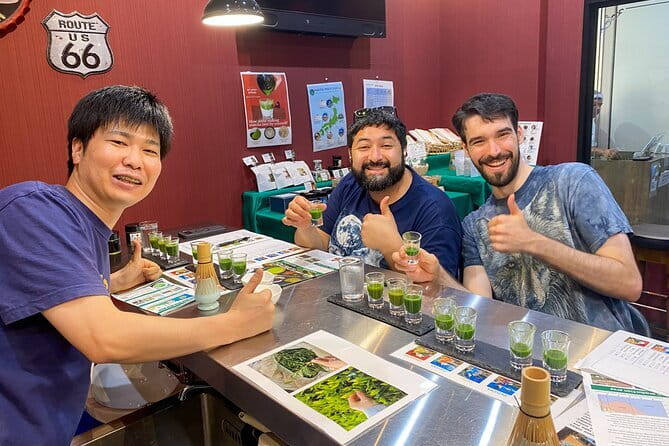
Review · TOKYO
【NEW】Matcha Making Experience and Matcha Comparison in Tokyo
Matcha reveals more than its color. This small-group Tokyo experience lets you compare matcha from five Japanese tea regions, learn how it is grown and processed, then whisk your own cup with a bamboo tea whisk. I like the ten matcha samples and the chance to taste real regional differences instead of judging matcha by a single café drink. I also like the instructors’ backgrounds, especially Chisei’s six years as a tea farmer in Kyoto.
The main consideration is the price: $62.12 per person for about 90 minutes is not a casual cup of tea. You are paying for instruction, several tastings, equipment, and a hands-on lesson. If you only want a sweet matcha latte, this will feel like too much. If you want to understand what sits in the bowl, it offers strong value.
Key points at a glance
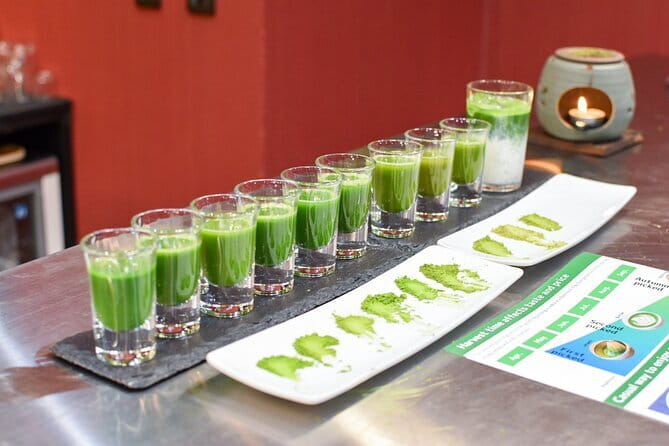
- Five tea regions in one sitting: Taste matcha connected to Kyoto, Shizuoka, Aichi, Fukuoka, and Kagoshima.
- Eight teas in the formal comparison: Six are ceremonial grade, while two are sold worldwide as matcha but are not technically defined as matcha.
- A former Kyoto tea farmer leads the lesson: Chisei worked across cultivation and processing, with agricultural science and soil science training.
- You make your own usucha: After tasting, choose a favorite and prepare traditional thin matcha with a bamboo whisk.
- A relaxed final course: Matcha latte and matcha sweets use an original blend made for milk and sugar.
- Very small group: The experience accepts a maximum of five people, which gives you room to ask questions.
Meeting the instructors in Tokyo’s Taito City
The experience begins at 9:30 a.m. at matcha tripJapan, inside the Henn Na Hotel in Tokyo’s Taito City. Look for the second-floor sports bar called Leaf at 3-chōme 198 Kotobuki. The activity returns to this same spot, so you do not need to arrange a separate ending point.
That fixed location makes the morning easy to plan around. You can fit the experience before another Tokyo activity, though you should allow time to find the hotel and reach the second floor. The meeting point is near public transportation, but the supplied details do not name a specific station or provide directions from your hotel.
The group limit of five matters here. Matcha preparation benefits from a little personal attention, especially if you have never used a bamboo whisk. Chisei leads the tea instruction, while Rina and the crew help run the tea bar. Chisei holds a bachelor’s degree in agricultural science and worked as a tea farmer in Kyoto for six years. The assistant has a bachelor’s degree in pharmacy and works as a pharmacist.
Those qualifications do not turn the session into a university lecture. They do give the conversation a useful base. You can ask about soil, cultivation, processing, and the difference between a tea that looks like matcha and one that meets the definition.
More Matcha Experiences in Tokyo
- Matcha Making Class in Tokyo with Authentic Japanese Sweets Set
★ 5.0 · 744 reviews - Tokyo: Matcha Making Experience with Mochi Sweets in Asakusa
★ 4.9 · 388 reviews - Asakusa Cultural Walk & Matcha Making Tour
★ 5.0 · 245 reviews
Starting with a welcome drink and tea history
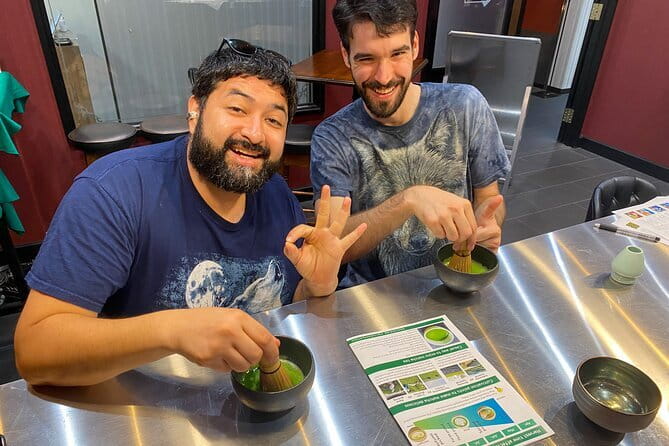
The first part is a welcome drink. While you have it, the team explains the history and production of the matcha you will taste.
This opening is useful because matcha can be confusing. Many products sold outside Japan use the word matcha loosely. Some may be powdered green tea without meeting the usual definition of matcha. The session tackles that issue directly instead of treating all green powder as the same thing.
You also hear about cultivation methods. Chisei’s experience is especially relevant because he worked from tea growing through processing in Kyoto. That lets the lesson connect farming choices with what eventually reaches your bowl.
The agricultural angle gives the session more substance than a simple tasting flight. You learn to think about matcha as a finished product shaped by growing conditions, production methods, processing, aroma, color, and taste. The goal is not to memorize technical terms. It is to notice what changes from one sample to the next.
Comparing teas from Kyoto, Shizuoka, Aichi, Fukuoka, and Kagoshima
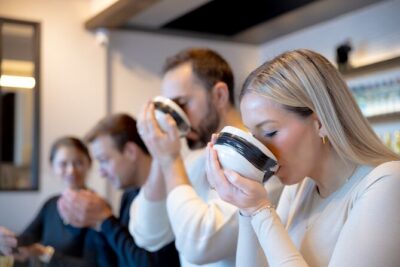
The central part of the morning is the comparison. You taste matcha associated with five important Japanese production areas: Kyoto, Shizuoka, Aichi, Fukuoka, and Kagoshima.
The experience provides ten kinds of matcha in small portions overall. The formal comparison serves eight types. Six are ceremonial grade, and two are not technically defined as matcha but are sold as matcha in many parts of the world.
That contrast is one of the most useful parts of the session. You are not simply told that one tea is better. You can look at each powder, notice its color, smell the prepared tea, and taste it yourself. The comparison helps show why two products labeled matcha may have very different qualities.
Small portions are a sensible choice. Ten full bowls would be excessive, especially early in the day. Smaller servings let you compare without turning the session into a caffeine challenge. The format also puts attention on differences in fragrance, flavor, and color rather than on finishing a large drink.
The regional spread adds context. Kyoto gives the session a direct link to Chisei’s farming experience, while Shizuoka, Aichi, Fukuoka, and Kagoshima bring other Japanese tea-producing areas into the same room. You do not have to travel across Japan to sample this range.
A useful tip is to pay attention before you drink. First look at the color. Then notice the fragrance. Only after that, taste the tea. This order helps you identify differences that might disappear if you rush straight to the cup.
The experience does not promise that you will develop the same favorite as anyone else. That is part of the fun. The point is to find the style you prefer. Some people may prefer a tea with a stronger aroma, while others may like a gentler or more familiar taste. The session gives you enough variety to make that choice for yourself.
Making usucha with your chosen matcha
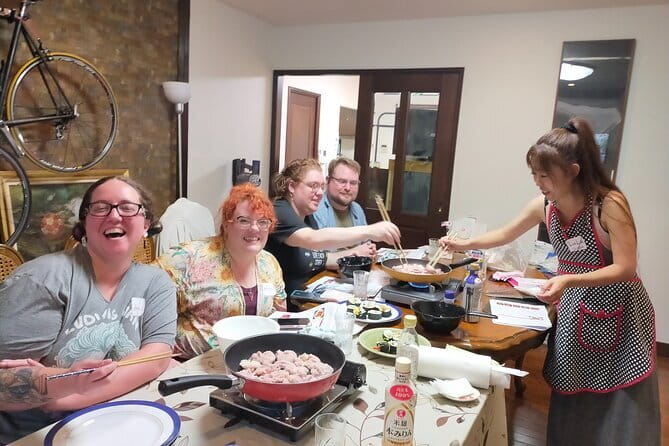
After the comparison, you select the matcha you liked best and prepare your own cup. The final drink is usucha, the thinner style of matcha commonly associated with everyday tea preparation.
You use a bamboo tea whisk, or chasen, to mix the powder with water. This is not just a demonstration where you watch someone else make the drink. You handle the tools and complete the preparation yourself.
For a first-time visitor, this is where the earlier tasting becomes practical. You have already chosen a powder based on its color, aroma, and taste. Now you prepare it and see how the process changes your relationship with the tea.
The lesson also has value after you leave Tokyo. The stated aim is that you can make matcha at home once the experience ends. You are not only paying for a drink consumed on the spot. You are learning a repeatable preparation method, with the added benefit of knowing which type of matcha you enjoy.
Do not expect a full formal tea ceremony. The supplied details describe a matcha-making experience, comparison, and instruction, not a ceremonial performance with an elaborate sequence of rituals. That makes it a good fit if you want practical skills and tasting context rather than a highly formal cultural presentation.
Same place, a different pot:
- Kimono Tea Ceremony at Tokyo, Asakusa Maikoya
★ 5.0 · 638 reviews - Tokyo: Traditional Tea Ceremony with a Tea Master
★ 5.0 · 528 reviews - Mt. Fuji & Lake Kawaguchiko Ropeway Panorama Full-Day Tour
★ 4.6 · 236 reviews - Tokyo: Matcha and Kimono Experience
★ 4.7 · 219 reviews
Ending with a matcha latte and sweets
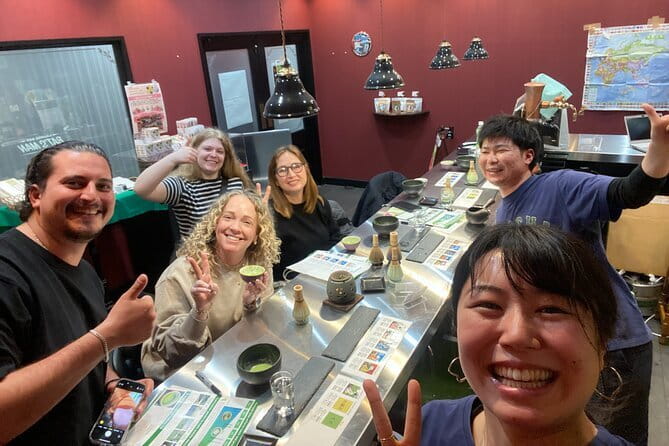
The final food and drink portion shifts away from pure tasting. You receive matcha latte and matcha sweets made with an original blend designed to work with milk and sugar.
This is a smart finish. After several small servings of straight matcha, a latte gives you a familiar point of comparison. You can see how a blend made for milk differs from a tea intended to be enjoyed on its own.
The sweets add another change in texture and flavor. The supplied details do not specify the type of sweets, so you should not expect a particular pastry or dessert. What is clear is that the final course is built around a matcha blend that suits a sweeter preparation.
This part may appeal most to people who already enjoy café-style matcha drinks. It also makes the experience friendlier for companions who are unsure about drinking several bowls of unsweetened tea. Still, the heart of the session remains the regional comparison and the hands-on whisking.
Is $62.12 a fair price?
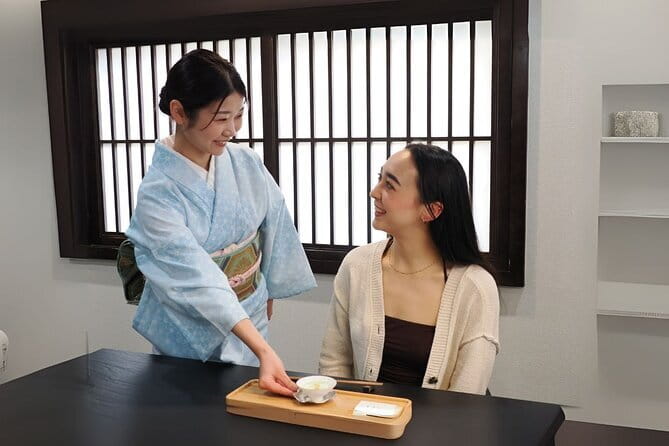
At $62.12 per person, this is more expensive than ordering a matcha drink in Tokyo. That comparison, however, misses what is included.
You receive a welcome drink, ten kinds of matcha overall, a structured comparison of eight types, instruction from a former tea farmer, one matcha you prepare yourself, and a matcha latte with sweets. You also get an English or Japanese local guide and a small-group setting limited to five people.
I see the strongest value in the range of samples. Buying ten matchas on your own would be difficult, and café menus rarely let you compare five production regions side by side. The agricultural and processing explanation adds another layer that a standard tea bar cannot easily provide.
The price is less attractive if you already know a great deal about Japanese tea and only want a quick tasting. It may also feel high if you do not enjoy unsweetened drinks or have no interest in making matcha at home.
For most first-time matcha drinkers, the cost makes sense if you treat it as a short educational activity rather than a beverage purchase. The group size, range of teas, and expert-led comparison are the parts that justify the fee.
Who will enjoy this experience most?
I would recommend it to anyone who wants to understand why matcha tastes different from one product to another. It suits food-focused visitors, tea fans, curious couples, and small groups looking for something more specific than another general sightseeing stop.
It is also a good choice for people who have only tried matcha in Western cafés. The session directly addresses products sold as matcha that may not meet the technical definition. That makes it a useful reset for your expectations.
You do not need to be an expert. The format begins with basic history and production, then moves toward tasting and preparation. A willingness to notice small differences matters more than prior tea knowledge.
The experience may not suit you if you dislike powdered tea, want a formal tea ceremony, or prefer a long cultural program. At 90 minutes, it is focused and compact. The advantage is that you can learn one subject properly without giving up half a day in Tokyo.
Practical details before you book
The experience starts at 9:30 a.m. and lasts about one hour and 30 minutes. Plan to arrive at the Henn Na Hotel in Taito City and find Sports Bar Leaf on the second floor. Since the activity ends at the meeting point, you can continue your day from there.
A mobile ticket is provided, and confirmation arrives when you book. English and Japanese guiding are available. Service animals are allowed, and the site is near public transportation.
The experience has free cancellation if you cancel at least 24 hours before the local start time. Cancellations or changes made within 24 hours are not accepted for a refund. Tips are not included.
The experience is usually booked about 20 days ahead. That lead time is worth noting because the group is capped at five people. If your schedule is fixed, booking early is sensible.
Should you book Matcha Making Experience and Matcha Comparison in Tokyo?
Book it if you want a focused, hands-on lesson with a serious tasting component. The best features are the five production areas, the comparison between ceremonial-grade and loosely labeled products, and Chisei’s direct experience as a Kyoto tea farmer.
Skip it if you only want a sweet drink or expect a formal tea ceremony. At $62.12, the experience earns its price through variety, instruction, and the chance to make matcha yourself. For a curious tea drinker, that is a worthwhile morning in Tokyo.
FAQ
Where does the matcha experience start?
It starts at matcha tripJapan in the Henn Na Hotel at 3-chōme 198 Kotobuki, Taito City, Tokyo. The venue is on the second floor at Sports Bar Leaf.
What time does the experience begin?
The experience begins at 9:30 a.m.
How long does the matcha experience last?
It lasts approximately one hour and 30 minutes.
How many kinds of matcha are included?
You can enjoy ten kinds of matcha overall. The comparison portion serves eight types, including six ceremonial-grade matchas and two products sold as matcha that are not technically defined as matcha.
Which tea-producing regions are included?
The matchas come from Kyoto, Shizuoka, Aichi, Fukuoka, and Kagoshima.
Can I cancel for a full refund?
Yes. You can cancel for a full refund at least 24 hours before the experience start time. Cancellations or changes made less than 24 hours before the start are not accepted for a refund.
Just added around Tokyo
- Yokohama : Tea Ceremony with Sweets and Souvenir★ 5.0 · 5 reviews
- Walking Tour: Yanaka,Nezu& Sendagi: Tea Ceremony & Old Tokyo★ 5.0 · 3 reviews
- Private Kimono and tea ceremony at local home near Tokyo Disney★ 5.0 · 6 reviews
- Private Mochi・Matcha sweets Making Class Near Shibuya Area★ 5.0 · 22 reviews
- 2 Hours Mochi &Nerikiri Making & Matcha Class in Bunkyo★ 5.0 · 21 reviews
- Tokyo Sweets Tour: Hidden Gems & Matcha at an Old Tea House★ 5.0 · 6 reviews
- Kimono and Tea Ceremony in Asakusa Private Food Tour With Guide★ 5.0 · 4 reviews
- Tokyo Tea Ceremony Class at a Traditional Tea Room★ 5.0 · 2 reviews
Matcha Experiences in Tokyo, compared.
Matcha Making Class in Tokyo with Authentic Japanese Sweets Set
Read our review →
Matcha Making Experience with Mochi Sweets in Asakusa
Read our review →
Asakusa: Kimono Tea Ceremony with Matcha and Sweet
Read our review →
Make Traditional Nerikiri Sweets & Matcha experience in Shibuya
Read our review →
Browse the lists this tour appears in