
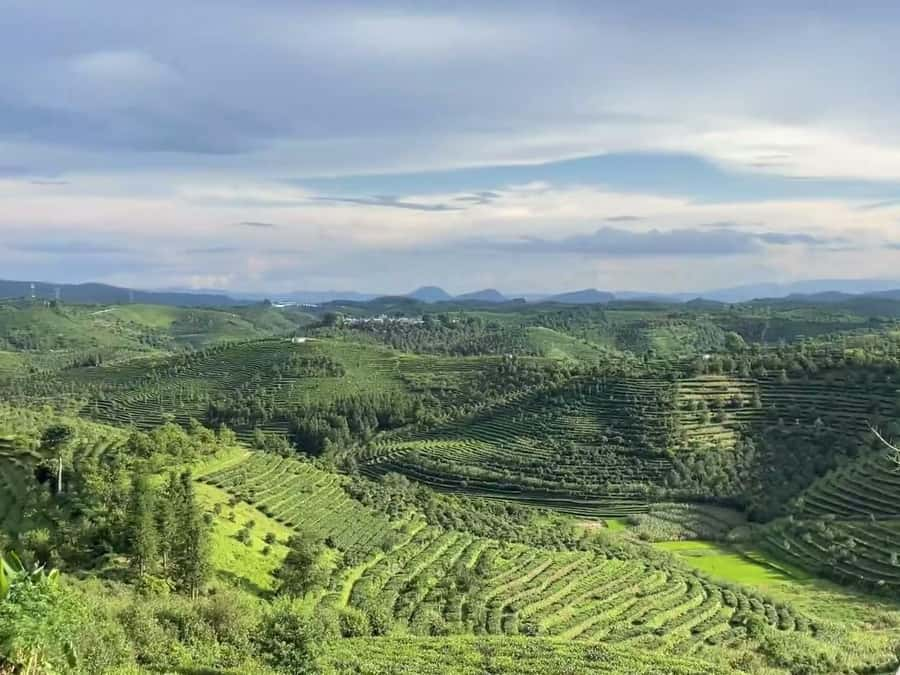
Review · CHINA
Puer Tea Picking and Tasting | 6 Hour Morning Trip
Tea tastes better when you pick it yourself. This half-day outing pairs a scenic drive with a hands-on tea harvest and a close look at how Pu’er tea is made. I especially like the small group size, capped at six, and the chance to take home 300 grams of tea you helped pick and process. The main consideration is timing: the trip can last five to seven hours, and the tea work, tasting, and optional meal may feel rushed if you have a train or another fixed appointment.
You travel in a VW ID.4 when the group has up to three people, or a six-seat minivan for larger groups. The guide, Maxime, has earned particular praise for translating questions, explaining tea and coffee production, and helping visitors connect with local hosts. I also like that the plantation visit feels tied to working farms rather than built as a polished show for tourists.
Quick reasons to choose this tea outing
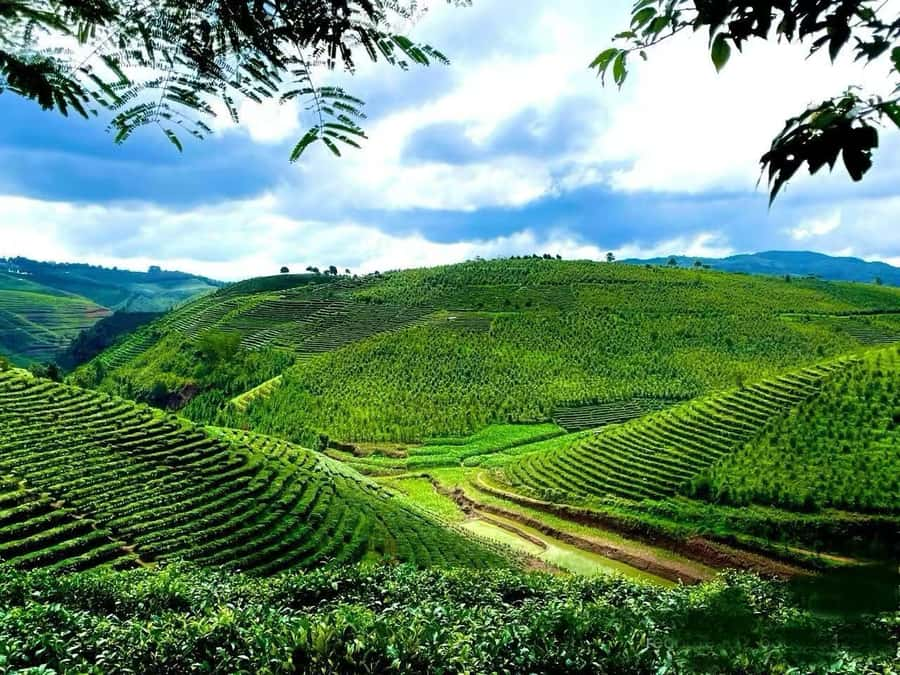
- You pick and process your own tea: The 300 grams you work with become a practical souvenir, not just a packet bought at the end.
- The farm visit explains the full chain: You see withering, rolling, drying, and other steps between leaf and cup.
- Tea tasting comes after the field visit: The flavors make more sense once you have seen the plants and production work.
- Maxime can bridge language gaps: English, French, German, and Italian guiding is available, with translation help at the farm.
- Small groups keep the visit personal: The limit is six participants, with transport suited to the group size.
- A local meal may be available: Lunch costs from 60 yuan per person according to the activity details, though the inclusion information is not fully consistent, so confirm before booking.
The drive from Jinghong or Pu’er sets the pace
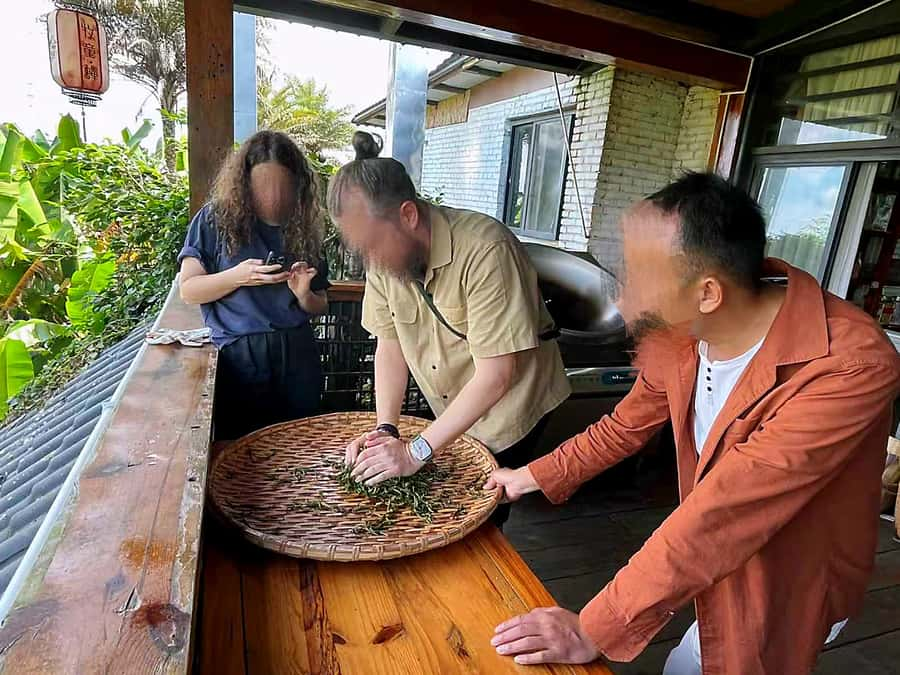
The trip begins with pickup in Jinghong or Pu’er. From Jinghong, you ride toward the Pu’er tea-growing area through green Yunnan scenery. The drive is part of the experience, not just a transfer. It gives you a quiet transition from town to farm, with fields and rural views replacing traffic and shopfronts.
For up to three people, the vehicle is a VW ID.4. Larger groups use a comfortable six-seat minivan. This is a useful detail for couples, solo visitors, and small families because you are not being placed on a large coach with a crowd.
The trip is listed as five to seven hours. That range matters. A short version may focus on the tea plantation, picking, processing, and tasting. A longer visit can allow more time for questions, food, and conversation at the farm. If you need to catch a train, tell the guide before setting out and leave a generous buffer.
Maxime has been praised for being flexible with late bookings and for taking photos during the day. His value is not only in presenting facts. He can help you ask questions of the plantation owner, explain local answers, and keep the visit moving without making it feel hurried.
More Food and Drink Tours in China:
- Tea Tasting and Pairing Concept Workshop
★ 5.0 · 57 reviews - Biking Real Shanghai& Tea Tasting Experience
★ 4.5 · 45 reviews - Private Shanghai City and Zhujiajiao Combo Tour with Boating, Tea Tasting, Lunch
★ 5.0 · 15 reviews
Walking through the Pu’er tea fields
At the plantation, you first walk among the tea plants and learn why Pu’er tea matters in this part of China. The guide and local farm staff explain the plants, the picking process, and the place tea holds in local life.
This is where comfortable shoes earn their keep. You are visiting a working plantation, not strolling through a paved garden. The information provided does not describe the exact trail or terrain, so sensible footwear is the safe choice.
The appeal is simple: you see the leaves before they become a drink. That changes the tea tasting later. You begin to notice that tea is not one uniform product. Picking methods, processing, age, and brewing all affect what ends up in the cup.
The plantation visit also gives the day a welcome sense of place. You are not simply buying Pu’er in a shop and hearing a short sales pitch. You are seeing the plants, meeting people connected to the farm, and learning how the work is done.
Picking leaves with local guidance
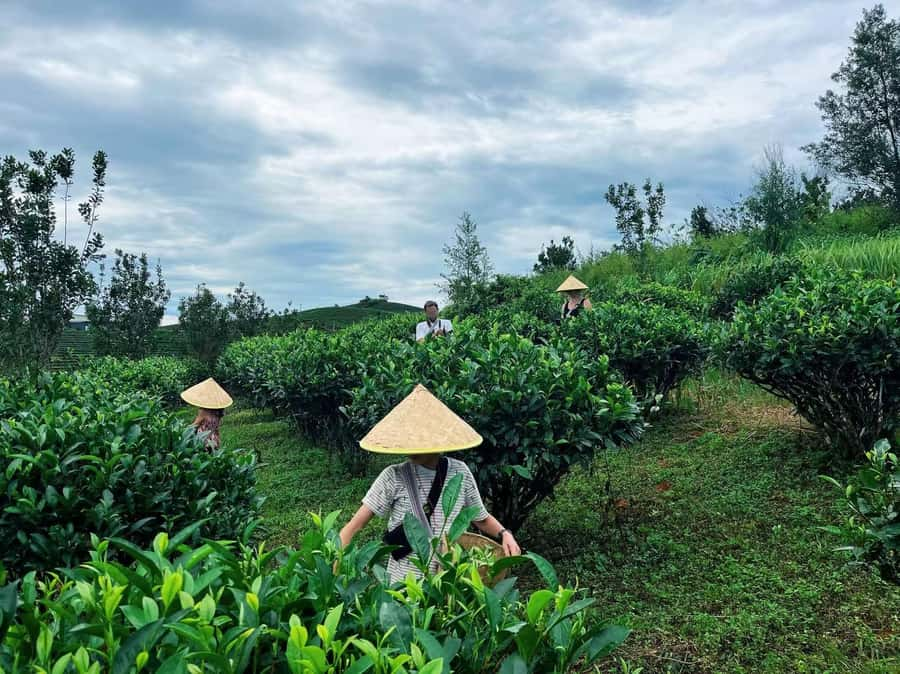
The picking session is the most active part of the morning. Local experts show you how to select leaves, and you then try the work yourself. It is not a long physical challenge, but it does require attention and a little patience.
Picking tea looks easy until you try to choose leaves carefully and consistently. That small task helps you understand why good tea depends on handwork and timing. You also gain a better feel for the difference between casually gathering leaves and selecting material for production.
The best part is that your effort continues into the next stage. You are not picking a few leaves only for a photograph. The activity includes 300 grams of Pu’er tea picked and processed by visitors. You can take that tea home as a souvenir.
That amount is large enough to share or enjoy over time, and it gives the souvenir a personal link to the farm. It is also more meaningful than a generic tea box purchased at a shop, although you should not expect the process to turn you into a professional tea maker in one morning.
Seeing how fresh leaves become Pu’er
After picking, you visit the processing area at the farm. The production steps include withering, rolling, and drying. You can watch the artisans work and try some of the steps yourself.
This section gives the trip its practical value. Tea tasting without production context can become a blur of unfamiliar names and flavors. Here, you can connect the cup to physical actions: leaves lose moisture, rolling changes their shape, and drying helps create the finished tea.
The activity information describes freshly processed Pu’er, while the tasting can cover several types. Specific teas served may vary, but past tasting sessions have included aged tea, raw tea, candy tea, and red tea. That range helps show how broad the local tea tradition can be.
Do not expect a formal factory tour with every technical measurement explained. The strength of this stop is the direct contact with a working farm and local host. If you have many questions, Maxime can help translate them, which is especially useful when asking about processing, age, or brewing.
More Morning Experiences in China:
- 3-hour Morning/Afternoon Tea Tasting on Maliandao Street & Dimsum
★ 5.0 · 7 reviews - Full-day Tour: Spectacular Sunrise, Tea Plantation & Sunset
★ 5.0 · 3 reviews - Great Ocean Road Tour Plus Koalas, Forest Walk and Morning Tea
★ 4.5 · 1,068 reviews - Great Ocean Road, 12 Apostles, Rainforest & Morning Tea-Melbourne
★ 5.0 · 568 reviews
Tasting tea after seeing the work
The tasting session is the payoff. You sample teas from the farm and learn how different varieties and brewing methods change the flavor. Several rounds may be offered, allowing you to compare more than one tea rather than making a decision from a single cup.
I like the order of the experience. First you see the field. Then you handle leaves and observe processing. Only after that do you taste the result. The aroma and flavor have a clearer meaning because you have seen where the tea began.
This is also the point when you can decide if you want to buy additional tea. The farm is described as low-pressure, and a 20 percent discount on tea purchases has been offered in some visits. Treat that discount as something to confirm rather than a guaranteed benefit.
You should still approach the buying portion with a plan. Taste first, ask about age and processing, and buy only what you genuinely like. The included 300 grams already gives you tea to take home, so you do not need to purchase more to feel that you received the full experience.
The optional Dai meal and possible coffee connection
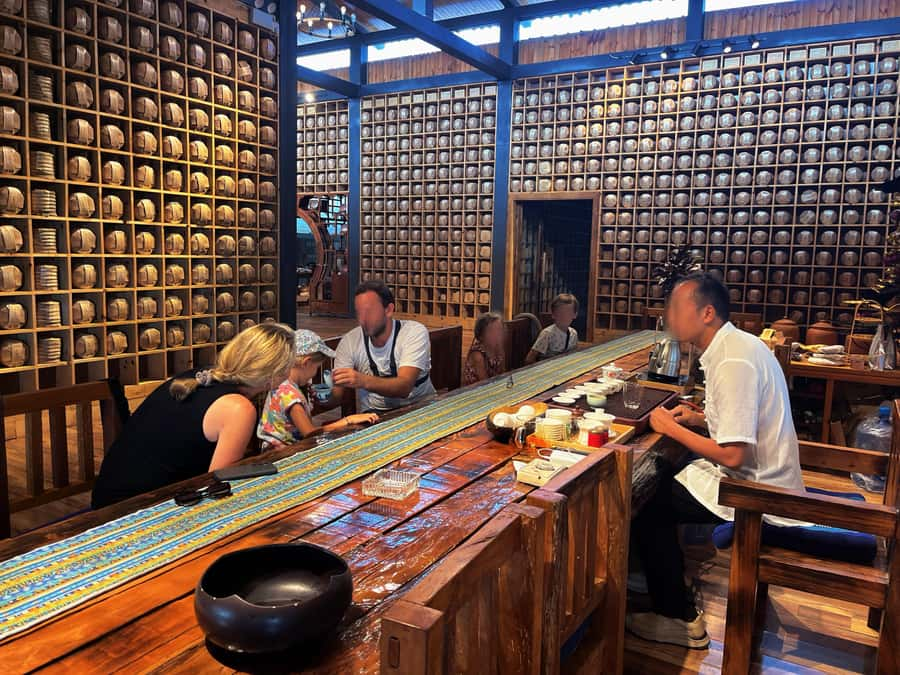
A local lunch can be arranged at the plantation or farm for from 60 yuan per person. The meal features local specialties, and the food is one of the strongest additions to the day. A meal made at the farm gives you time to slow down, ask more questions, and taste Yunnan beyond tea.
Dai food has also been part of extended visits connected with nearby coffee production. Some outings have included a coffee plantation south of Pu’er, coffee tasting, and a drive through an area known for coffee cultivation. That sounds appealing if you are interested in both crops, but the core experience here is the tea plantation, so confirm whether a coffee stop is part of your booked version.
There is a small contradiction in the information provided: one section lists lunch as included, while the detailed plan calls it optional at 60 yuan per person. Ask for the current lunch arrangement before paying. That is a minor planning point, but it prevents an awkward moment at the table.
What the $82 price really covers
At $82 per person, this is not the cheapest way to taste tea in Yunnan. You are paying for private or small-group transport, a guide, plantation access, local interpretation, tasting, hands-on work, and the 300 grams of tea you process.
The value improves if you are starting in Jinghong or Pu’er and would otherwise need to arrange transport to a rural plantation. Pickup and drop-off remove the need to negotiate a taxi, find the farm, or manage transport after tasting tea. The small group limit also gives you more room to ask questions.
For a casual tea drinker who only wants a cup and a quick photo, the price may feel high. For someone who wants to understand Pu’er from leaf to cup, the cost is easier to justify. The personal guide, farm contact, and take-home tea make it more than a standard sightseeing transfer.
Lunch may or may not be included, so budget for the possible 60 yuan charge. Extra gifts and souvenirs are not included, and any additional tea purchase is your choice.
Who will enjoy this most
This outing suits tea lovers, curious food visitors, photographers, and anyone who prefers meeting local producers to visiting a large attraction. It is also a good option for solo visitors because the small group format and guide support make the rural visit easier to manage.
You do not need advanced tea knowledge. Beginners can learn the basic stages, while experienced tea drinkers can ask more detailed questions during the tasting and processing visit. The guide can help in English, French, German, or Italian.
Families with children may find the picking and farm setting appealing, but the activity is not suitable for babies under one year. It is also listed as unsuitable for people over 70, likely because of the farm walking and hands-on work. If you are near that age limit or have mobility concerns, ask about the exact conditions before booking.
Pets are not allowed. Comfortable shoes are the main item to bring.
A few practical cautions before you book
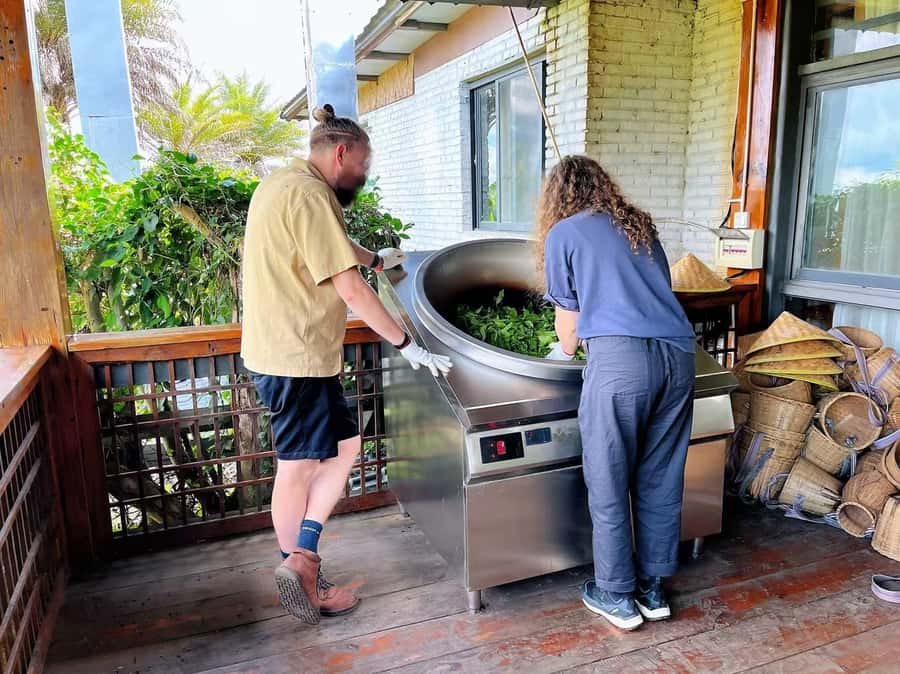
Allow the full five to seven hours, especially if you want lunch and time for questions. The plantation visit is meant to be relaxed, and rushing from the fields to the tasting would undercut the best part of the experience.
If you have a train or flight afterward, tell Maxime when you book. One visitor had less time than desired because of a train departure, and the clear lesson is to protect your schedule. This is a rural outing, not a timed museum visit.
The experience is strongest when you participate. If you sit back through the picking and processing, you lose much of what makes this trip different from a regular tea tasting. Wear shoes you can use comfortably outdoors and be ready to handle leaves.
Free cancellation is available up to 24 hours before departure, and you can reserve while paying later. Those policies help if your route through Yunnan is still changing, but they do not remove the need to confirm the pickup point, lunch cost, and exact duration.
Should you book the Pu’er tea experience?
Book it if you want tea explained at its source, enjoy meeting local producers, and value a guide who can translate more than words. The pick, process, taste, and take-home tea sequence gives the morning a clear purpose, while the small vehicle and six-person limit keep it personal.
Skip it if you want a fast city activity, dislike farm walking, or have a strict departure time. Also confirm whether lunch and any coffee stop are included in your version. For tea drinkers and curious visitors based in Jinghong or Pu’er, though, this is a well-priced way to turn a famous local product into a real experience rather than just another purchase.
FAQ
Where does the tea plantation trip start?
Pickup is provided from Jinghong or Pu’er. Return transport to Jinghong or Pu’er is also included according to the activity details.
How long does the experience last?
The stated duration is five to seven hours. The exact length can depend on the starting time, time spent at the plantation, lunch, and the pace of the group.
What vehicle is used?
Groups of up to three people travel in a VW ID.4. Groups of more than three use a comfortable six-seat minivan.
How many people can join?
The activity is a small-group tour limited to six participants.
Which languages are available?
Live guiding is available in English, French, German, and Italian.
Do I get to take tea home?
Yes. The activity includes 300 grams of Pu’er tea picked and processed by the visitors.
Is lunch included?
The information gives two versions: one says lunch is included, while the detailed plan describes it as optional from 60 yuan per person. Confirm the current arrangement before booking.
What should I bring?
Bring comfortable shoes for walking around the tea plantation and farm. Pets are not allowed.
Just added around China
- Full-day Tour: Spectacular Sunrise, Tea Plantation & Sunset★ 5.0 · 3 reviews
- Chinese Tea Ceremony Experience★ 5.0 · 3 reviews
- Unlock Chinese Tea: Culture, Science, Tasting & Hands-on Brewing★ 5.0 · 12 reviews
- Shanghai Mahjong Experience in Local Tea Bar★ 5.0 · 4 reviews
- Private Tour Hangzhou West Lake and Tea Fields Discovery★ 5.0 · 3 reviews
- Half-Day Hangzhou Jiuxi Stream and Tea Plantation Experience★ 5.0 · 2 reviews
- Hangzhou West Lake and Tea Plantation Half Day Tour★ 5.0 · 4 reviews
- Private Hangzhou Day Tour to West Lake, Lingyin Temple, Tea Village, Old Pagoda★ 5.0 · 17 reviews
Food & Drink, compared.

Volcano, Tea/Rice Fields, Hot Spring, Local Food
Read our review →
Private Tea Ceremony and Sake Tasting in Kyoto Samurai House
Read our review →
SF’s Chinatown: Tea & Dim Sum Food Tour – Includes full meal, 3hr
Read our review →
Twinings 2-Hour Tea Tasting Masterclass in London
Read our review →

Cairo Food Tour in local places & Egyptian Mint Tea
Read our review →
Charleston: Wadmalaw Island Wine Tasting and Tea Garden Trip
Read our review →
Browse the lists this tour appears in