
Review · CHENGDU
Chengdu: Sichuan Opera Show ShufengYayun & Covered Bowl Tea
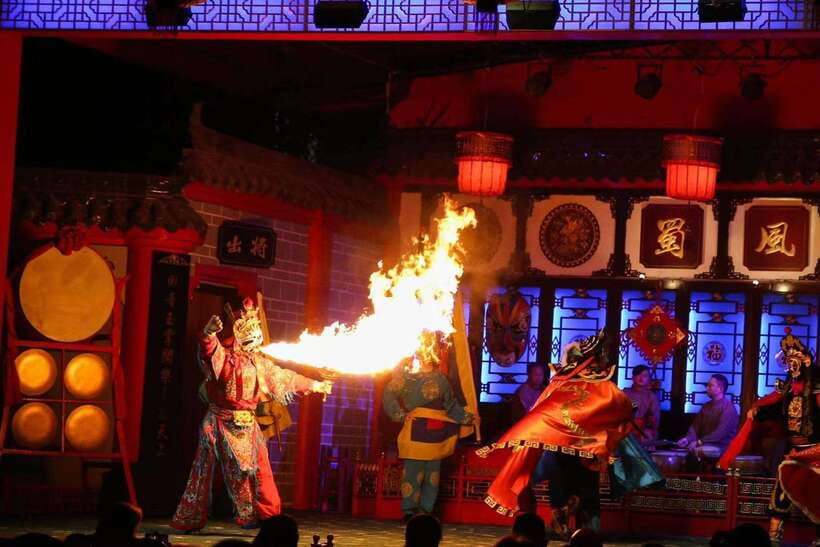
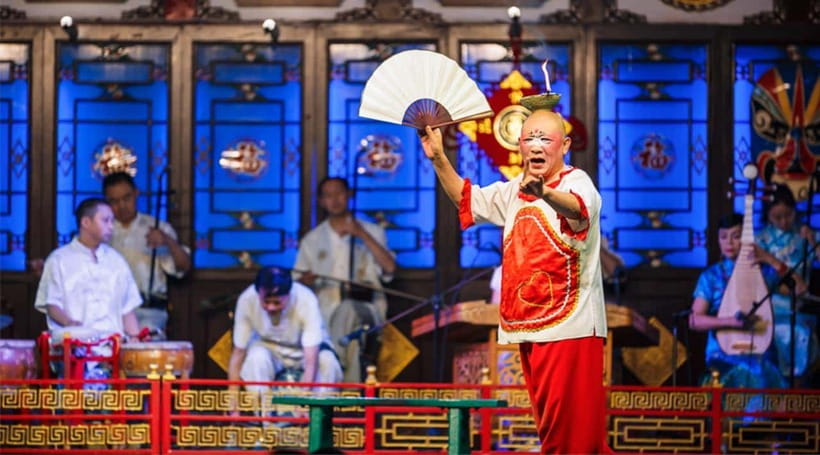
Face-changing starts the evening with a jolt. The Shufeng Yayun show gives you Sichuan Opera in a compact 80-minute program, with covered bowl tea, folk music, puppets, shadow play, fire-breathing, and comic stage traditions. I like the clear mix of performance and local custom, and I like that you can sit with a lidded bowl of tea while the show unfolds.
The main drawback is that the seating is randomly assigned within your selected section, so you cannot count on the best view in that price band. The costume option is also for trying on only unless you pay extra for makeup and a professional photo session.
Key points to know before booking
- Face-changing and fire-breathing: The final opera segment brings two of Sichuan Opera’s most famous stage skills together.
- Covered bowl tea included: Every ticket category includes one cup of gaiwan tea and a plate of sunflower seeds per table.
- A 20:00 start: Arrive by 19:45 so you have time to collect your ticket and find the Old Theater.
- Several art forms in one show: Expect drums, gongs, huqin strings, folk music, puppets, selected opera scenes, hand shadows, and rolling lights.
- Extra benefits depend on your section: Higher ticket categories can include a costume try-on, massage, ear cleaning, dessert, fruit, or a souvenir.
- A historic Chengdu setting: The theater is near Qingyang Palace on Qintai Ancient Path, with Du Fu Thatched Cottage and Wuhou Shrine nearby.
Why this show works for a first evening in Chengdu
Sichuan Opera can seem hard to approach if you do not speak Chinese. Shufeng Yayun solves that problem by presenting a series of short acts instead of asking you to follow one long plot. You can enjoy the sound, movement, costumes, stage tricks, and comic timing without understanding every line.
That format is useful after a long day of sightseeing. You sit down, order or receive your tea, and let the program change pace for you. A loud opening drum performance grabs attention, while the quieter huqin and folk music sections give your ears a rest before the opera scenes return.
The show is held at Shufeng Yayun, a long-established folk opera venue founded in 1998. It sits among old buildings near Qingyang Palace, a major Taoist temple, on Qintai Ancient Path. The setting gives the evening a stronger sense of place than a modern theater on the edge of town.
The venue is also close to two major Chengdu sights: Du Fu Thatched Cottage and Wuhou Shrine. You do not need to combine all three in one outing, but the location makes the opera a practical evening choice after exploring this part of the city.
More Shows in China:
- 3-Hour Private Hutong Walking Tour with Drum Show at Drum Tower and Tea Tasting
★ 5.0 · 3 reviews - Samurai Show, Tea Ceremony, Japanese Traditional Activities
★ 5.0 · 56 reviews - Kyoto: Wazuma Magic Show & Tea Ceremony
★ 4.8 · 29 reviews
What the 80-minute program includes
The exact order can change, but the planned program moves through several forms of Sichuan and Chinese folk entertainment. Here is what each section adds.
Opening drums and gongs
The show begins with Nao Tai, an opening drum and gong performance. This is not a gentle introduction. The percussion sets the mood, marks the start of the theater event, and gives the audience a taste of the bold stage style that follows.
If you are seated close to the stage, the volume may feel strong. That is part of the effect, but visitors sensitive to loud sounds should keep it in mind.
A one-act play
The one-act play provides a small dramatic scene before the program shifts to music and visual acts. Since the show is designed for both Chinese and international audiences, you can follow the physical action even if you do not understand the spoken language.
Do not expect a full-length opera story with extensive character development. This is a sampler, built to show different skills in quick succession.
A few more tea experiences around China worth a look
- One-Day Hangzhou Dragon Well Tea Culture & West Lake Private Tour
★ 5.0 · 98 reviews - Traditional Chinese Tea Ceremony Experience
★ 4.7 · 74 reviews - Beijing Culture: Tea Ceremony, Heritage Instrument & Calligraphy
★ 5.0 · 57 reviews - Tea Tasting and Pairing Concept Workshop
★ 5.0 · 57 reviews
Huqin music
The huqin is a traditional Chinese string instrument with a distinctive bowed sound. This part slows the evening down and lets you hear an instrument that might otherwise be lost in the larger opera production.
It is a good contrast to the percussion and stage comedy. If you enjoy live music, this may be one of the more rewarding sections because it presents a Chinese instrument directly rather than using it only as background accompaniment.
Folk music and penna
The folk music section, listed as Penna, adds another change of pace. The program is designed to keep moving, so you will not spend the entire 80 minutes watching the same style of performance.
That variety is one of the show’s strongest features. You get a short introduction to several performance traditions in one sitting, rather than paying for a single opera scene that may require more cultural context.
Puppetry
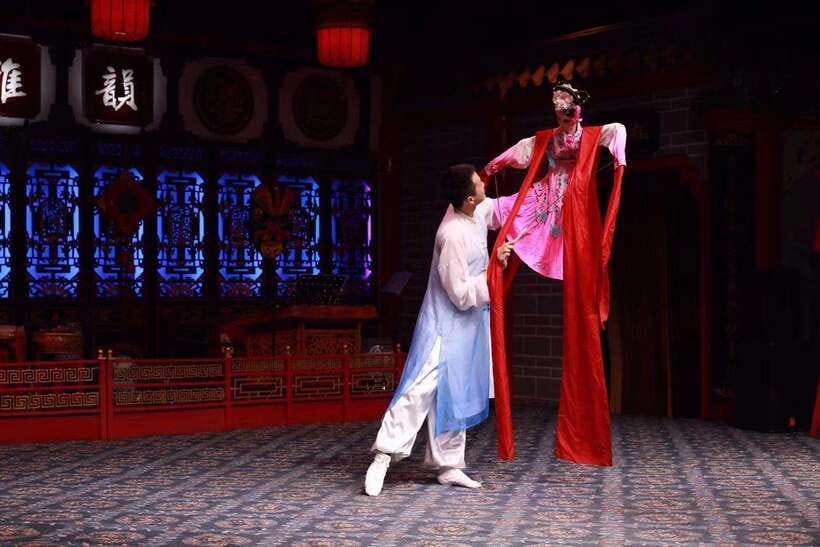
The puppet show brings a more playful mood to the theater. Puppetry is especially useful for families and for anyone who wants visual entertainment that does not depend on translation.
The segment also helps explain why this is better viewed as a folk arts program than as a strict opera recital. Sichuan Opera is the main attraction, but the evening makes room for several related forms of Chinese stage entertainment.
Selected Sichuan Opera scenes
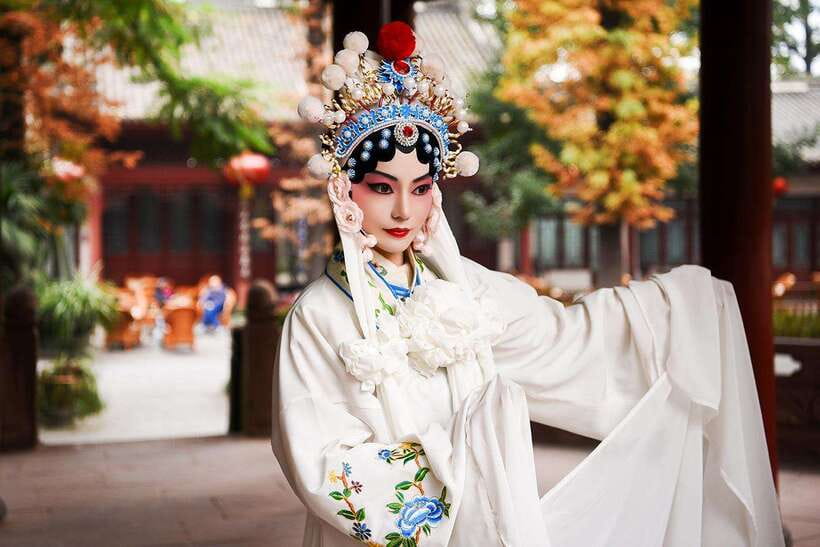
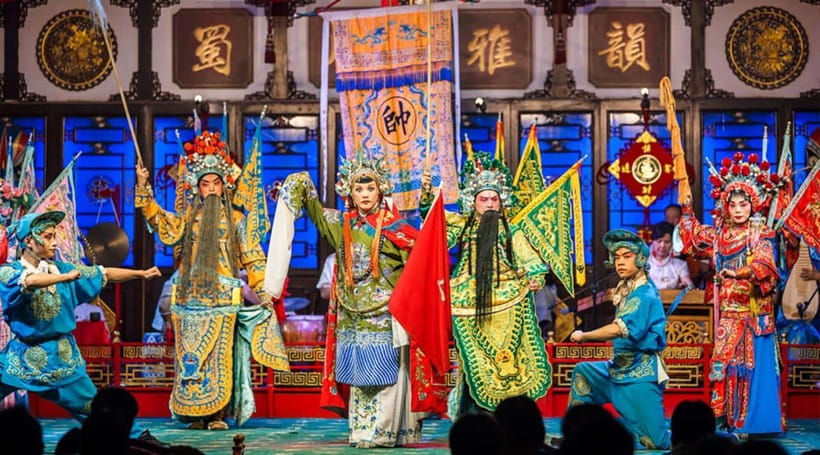
The opera scenes are the core of the evening. Expect stylized movement, dramatic gestures, strong costumes, and a heightened acting style rather than naturalistic theater.
This is where the covered bowl tea becomes part of the setting. You are not simply watching a stage show in silence. You are taking part in a familiar Chengdu pastime while performers present local theater traditions in front of you.
Hand shadow play
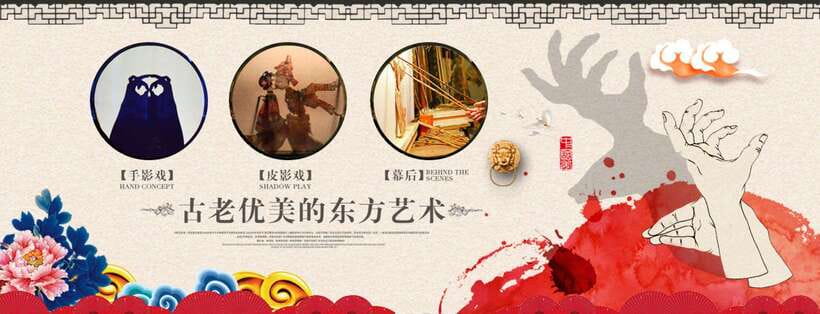
The hand shadow act uses controlled hand shapes and light to create figures and scenes. It is a small-scale performance compared with fire-breathing or face-changing, but it adds a clever visual break.
I would treat it as a charming interlude rather than the main reason to book the ticket. Its value is in the contrast. The program keeps shifting from large, noisy stage effects to delicate hand skill.
Rolling lights
Rolling lights add another traditional stage trick. The precise details can vary with the night’s program, but the act belongs to the show’s sequence of visual demonstrations.
As with the hand shadows, the appeal is seeing several forms of Chinese performance in one place. You may like some sections more than others, but the pace helps prevent the evening from feeling repetitive.
Fire-breathing and face-changing
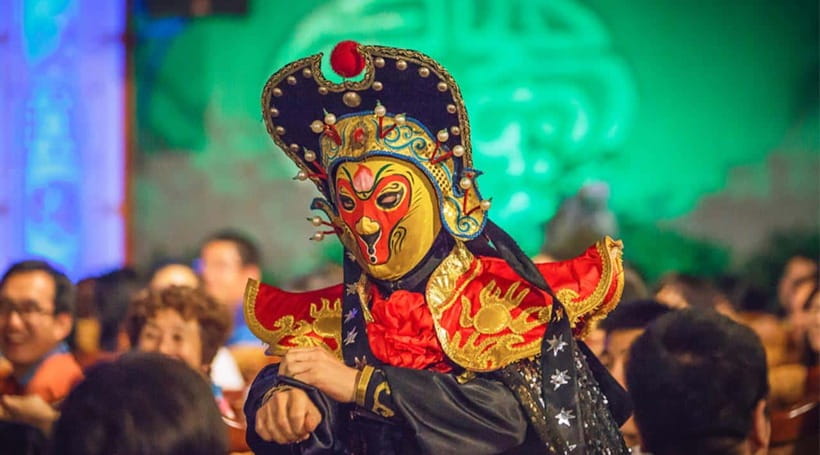
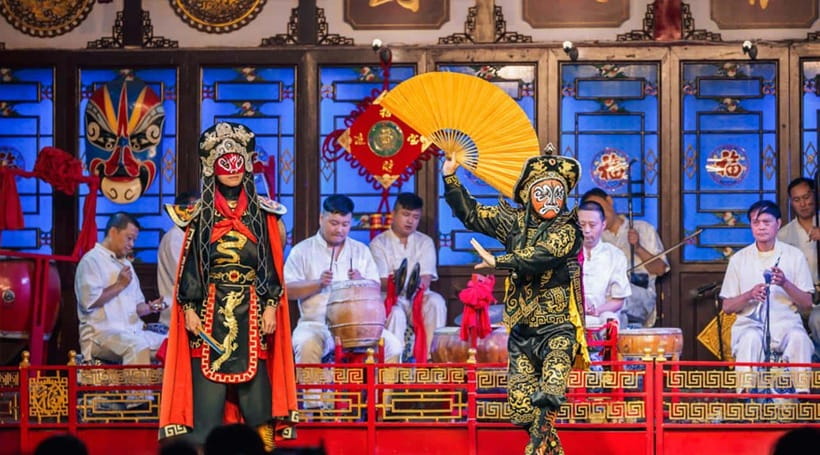
The final portion brings the biggest crowd-pleasers. Fire-breathing has an immediate theatrical impact, while face-changing, known in Chinese as bian lian, is the skill most closely linked with Sichuan Opera for many international visitors.
The performers change painted masks with startling speed. The technique is traditionally guarded, and the show presents it as a polished stage skill rather than explaining every method. You may not understand how the change happens, but you will understand why it has become the signature image of Sichuan Opera.
A practical point: the program and order can change, so do not assume every act will appear in exactly the same sequence listed in the advance information.
Covered bowl tea, sunflower seeds, and the Chengdu rhythm
Each ticket includes one cup of gaiwan tea, also called covered bowl tea, plus a plate of sunflower seeds for each table. The tea service is not just a free drink added to the ticket. It gives you a small taste of ordinary Sichuan social life.
A gaiwan has three parts: a bowl, a lid, and a saucer. The lid helps hold in the heat, and you can gently press and turn it to control the tea leaves and strength. If you have not used one before, watch the way local tea drinkers handle it, and take small sips.
Do not expect a formal tea ceremony with a long explanation. The tea is there to accompany the show. You may also buy additional food and drinks from the on-site menu, but those purchases are not included in the ticket price.
The sunflower seeds fit the relaxed theater setting. They make the evening feel less like a formal concert and more like an old local entertainment house where people come to sit, talk, sip tea, and watch performers.
Choosing between the red, green, and blue seating areas
The ticket categories are divided by seating zones shown on the venue seating chart:
- Yipin, the red section: Includes covered bowl tea, sunflower seeds, and one added benefit. Depending on availability, that may be a premium costume try-on, fruit platter, or massage and ear cleaning with a dessert.
- Erpin, the green section: Includes covered bowl tea, sunflower seeds, and one choice such as a massage, ear cleaning, dessert, or souvenir.
- Sanpin, the blue section: Includes the same basic tea and snack package, with one choice from massage, ear cleaning, dessert, or souvenir.
The seats are randomly assigned within the selected area. That matters more than the extra gift if your main priority is seeing the performers clearly. If you want to spend less and mainly care about the show itself, the lower section may be sensible. If the added service or costume try-on appeals to you, the higher section can offer better overall value.
The costume benefit is easy to misunderstand. It is a try-on experience, not a complete transformation into an opera performer. Makeup, hair styling, a custom background, and professional photography cost extra.
If you want that full photo package, arrive at least one hour before the show. The additional charge is confirmed and paid directly at the venue.
Is $34 good value for this Chengdu evening?
At $34 per person, the ticket is not the cheapest way to spend an evening in Chengdu. It is also more than the price of simply watching a free public performance or visiting a tea house without a stage program.
The value comes from combining several things in one short outing:
- An 80-minute live performance
- A seat in a designated theater section
- One cup of covered bowl tea
- Sunflower seeds for the table
- Access to multiple traditional performance styles
- A possible massage, dessert, souvenir, fruit plate, ear cleaning, or costume try-on, depending on the ticket
The strongest value is for first-time visitors who want a simple introduction to Sichuan Opera without arranging several separate activities. You get the famous face-changing performance, but also see music, puppetry, shadow play, and other stage traditions.
The price is less attractive if you only want face-changing. In that case, the rest of the program may feel like supporting material. I would book it when you want a fuller cultural evening, not just a quick theatrical trick.
Getting to the theater without confusion
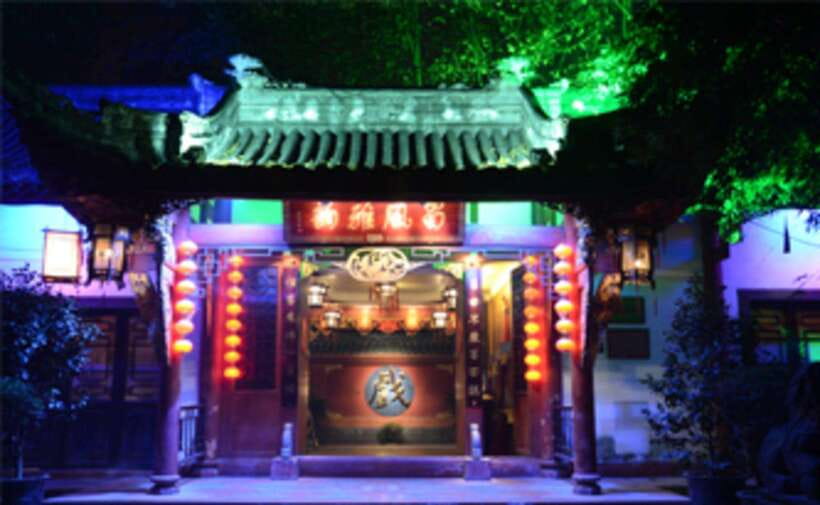
Ticket collection takes place at the ticket booth at the entrance to the Municipal Cultural Park, located in the middle of Qintai Road. You enter your phone number at the booth to obtain the ticket and choose your seat within the available section.
After collecting the ticket, walk to the Old Theater. It is about a one-minute walk from the booth. The two locations are close, but do not arrive at the theater entrance expecting to skip the collection step.
The start time is 20:00. Arrive at least 15 minutes early, preferably around 19:45. This gives you time to find the park entrance, collect the ticket, select or confirm your seat, and follow staff directions to the theater.
Check your email before leaving for the address, transportation instructions, and ticket collection details. On-site staff can help guide you to your seat, and assistance is available in Chinese and English.
The activity is wheelchair accessible, and a small-group option is available. Hotel pickup and drop-off from central Chengdu are not included unless you specifically select that option.
Who will enjoy Shufeng Yayun most?
I would recommend this show to you if you want:
- A first look at Sichuan Opera without needing Chinese language skills
- A relaxed evening after visiting Chengdu’s daytime sights
- Traditional Chinese stage arts in one compact program
- A family-friendly performance with visual acts and quick changes
- A chance to drink gaiwan tea while watching live theater
- A cultural activity that lasts less than an hour and a half
It is also a good choice if you have only a short stay in Chengdu. You do not need to commit to a full night at a theater, and the program gives you several memorable images in a short time.
You may want another type of performance if you prefer a serious, full-length opera with a single story. This show is built as a varied program, so some acts may feel brief. The extra services can also seem more tourist-oriented than the opera itself, especially if you choose a massage or souvenir rather than focusing on the theater.
The balance is generally good. The evening is packaged for visitors, but the art forms, tea style, venue, and connection to local Chengdu culture give it more substance than a generic stage show.
Final verdict: should you book it?
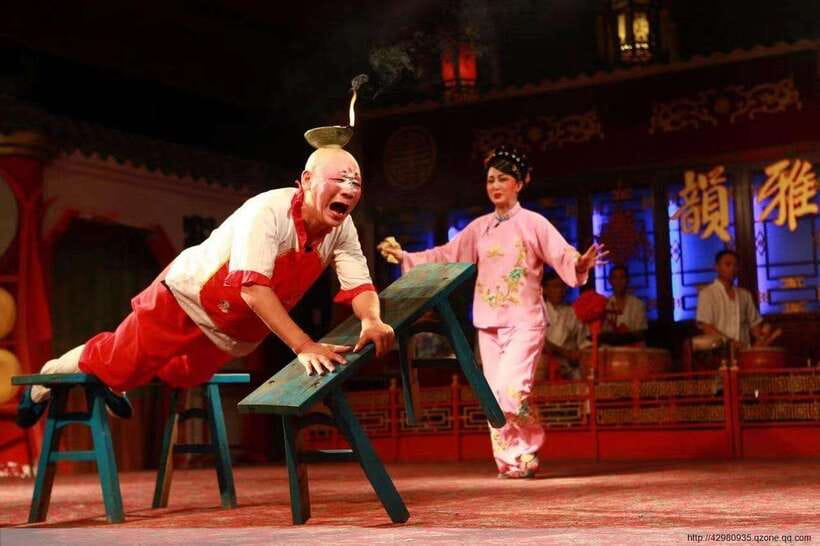
Book Shufeng Yayun if you want a convenient, visually exciting introduction to Sichuan Opera, especially face-changing and fire-breathing. The covered bowl tea, sunflower seeds, and historic setting make the evening feel connected to Chengdu rather than simply placed in a foreign theater.
Choose your ticket section based on your priorities. Pay more for the costume try-on or added service only if those extras matter to you. If the performance is your main goal, remember that seating is random within each colored area and arrive early enough to collect your ticket without stress.
At $34, this is a fair cultural outing for visitors who value variety and ease. It is less suitable for anyone seeking a long, serious opera production. For most first-time visitors to Chengdu, the 80-minute format offers a lively introduction without taking over the whole evening.
FAQ
How long does the Sichuan Opera show last?
The performance lasts approximately 80 minutes.
What time does the show start?
The show starts at 20:00.
How early should I arrive?
Arrive 15 minutes before the performance. Around 19:45 gives you time to collect your ticket and find the Old Theater.
Where do I collect the ticket?
Collect the ticket at the booth at the entrance of the Municipal Cultural Park on Qintai Road. You enter your phone number there and choose your seat within the available section.
How far is the theater from the ticket booth?
The Old Theater is about a one-minute walk from the ticket booth.
Is tea included in the ticket?
Yes. Each ticket category includes one cup of gaiwan, or covered bowl, tea.
Are snacks included?
A plate of sunflower seeds is included for each table.
Can I wear an opera costume?
The Yipin ticket can include a premium costume try-on. The included costume benefit is for trying on only. Makeup, hair styling, a professional photographer, a customized background, and edited photographs cost extra.
Can I buy more food and drinks?
Yes. Additional food and beverages are available from the on-site menu, but they are not included in the ticket.
Can I cancel the booking?
You can cancel up to 24 hours in advance for a full refund. The activity also offers reserve now and pay later.
Is the venue wheelchair accessible?
Yes, the activity is listed as wheelchair accessible.
What languages are available?
Host and greeter assistance is available in Chinese and English.
Just added around China
- Full-day Tour: Spectacular Sunrise, Tea Plantation & Sunset★ 5.0 · 3 reviews
- Chinese Tea Ceremony Experience★ 5.0 · 3 reviews
- Unlock Chinese Tea: Culture, Science, Tasting & Hands-on Brewing★ 5.0 · 12 reviews
- Shanghai Mahjong Experience in Local Tea Bar★ 5.0 · 4 reviews
- Private Tour Hangzhou West Lake and Tea Fields Discovery★ 5.0 · 3 reviews
- Half-Day Hangzhou Jiuxi Stream and Tea Plantation Experience★ 5.0 · 2 reviews
- Hangzhou West Lake and Tea Plantation Half Day Tour★ 5.0 · 4 reviews
- Private Hangzhou Day Tour to West Lake, Lingyin Temple, Tea Village, Old Pagoda★ 5.0 · 17 reviews
Show, compared.
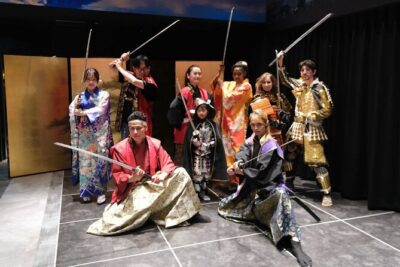
Samurai Show, Tea Ceremony, Japanese Traditional Activities
Read our review →
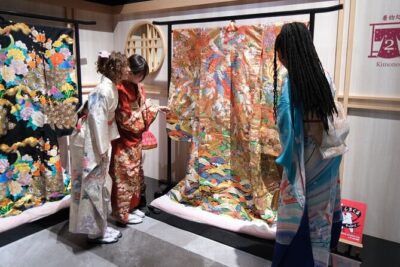
Premium Kimono Dressing, Tea Ceremony, Calligraphy, Samurai show
Read our review →
Agadir/Taghazout: Sandboarding & Sunset Tea with Fire Show
Read our review →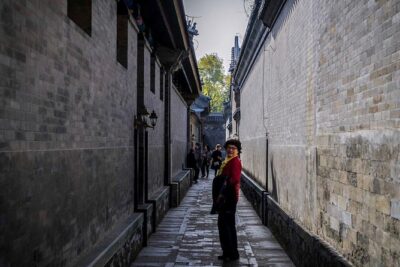
3-Hour Private Hutong Walking Tour with Drum Show at Drum Tower and Tea Tasting
Read our review →Browse the lists this tour appears in