
Review · SHANGHAI
Afternoon Tea and Dessert Tour on the Huaihai Road in Shanghai
Tea can tell you a lot about Shanghai. This three-hour walk along Huaihai Road links local pastry shops, a tea house, and a Cantonese dessert restaurant into one easy afternoon. I like the small-group format and the chance to taste several teas while learning how cups, water temperatures, and serving rituals work.
I also like the mix of sweet stops rather than a single meal. Mooncakes, pu-erh, jasmine tea, milk pudding, mango purée, and almond tofu give you a broad taste of Chinese food culture. The main drawback is that the tour involves walking and standing, and anyone wanting a full savory food tour may find the emphasis on tea and desserts a bit narrow.
Key points at a glance
- Two mooncake stops: Compare pastries with sweet and savory fillings and learn why their round shape represents family reunion.
- A real tea ceremony: Taste pu-erh, ginseng oolong, jasmine, and Fujian black tea while learning about Chinese tea etiquette.
- A relaxed pace: The route takes about three hours, with roughly 45 minutes for mooncakes, one hour for tea, and 45 minutes for Cantonese desserts.
- Three distinct Shanghai areas: The experience connects Huaihai Road, Xintiandi, and the Former French Concession.
- Personal guiding matters: Guide Jim has been praised for his enthusiasm and for explaining tea preparation in a clear, engaging way.
- Practical format: Meet at 2:00 p.m. at 333 Huai Hai Zhong Lu, with no hotel pickup or drop-off included.
Why this afternoon makes sense in Shanghai
Shanghai can feel like a city of grand avenues, sleek shops, and fast-moving crowds. This experience slows things down through food and tea. Instead of racing between major sights, you spend time learning why a pastry is shaped a certain way or why one tea is brewed with cooler water than another.
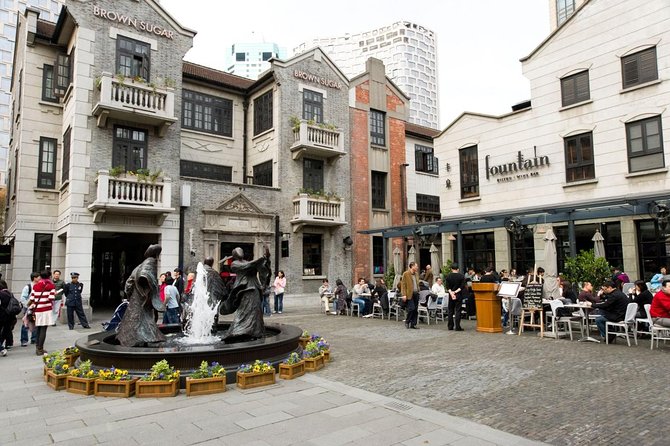
The route begins on Huaihai Road, one of central Shanghai’s main shopping and food streets. That setting gives the tour a useful urban backdrop. You are not tasting sweets in isolation. You are walking through one of the city’s popular commercial areas and seeing how tea houses, bakeries, restaurants, and retail streets fit together.
The format suits you if you like guided food experiences with cultural context. The guide does more than point out a shop and hand you a sample. You learn about tea varieties from different parts of China, the place of tea in daily life, and the way tea drinking became popular in the West during the 1800s.
At $82 per person, the price is not low for three hours of food tasting. Still, it includes a local guide, mooncakes, the tea ceremony, several teas, and multiple Cantonese desserts. I see the value in the teaching and in the number of stops, especially if you would otherwise have trouble knowing which pastries or teas to order on your own.
More Afternoon Tea in China:
- Shanghai 3-Hour Afternoon Tea Tasting and Dessert Tour
★ 4.9 · 15 reviews - 3-hour Morning/Afternoon Tea Tasting on Maliandao Street & Dimsum
★ 5.0 · 7 reviews - Classic Afternoon Tea Voyage in Hong Kong for 4 Pax
★ 4.0 · 4 reviews
Starting on Huaihai Road with mooncakes
Meet at 2:00 p.m. at 333 Huai Hai Zhong Lu in Huangpu District. The first part lasts about 45 minutes and takes you to two local pastry shops.
Mooncakes are the right opening for this tour because they carry both culinary and social meaning. These round pastries are closely linked with the Mid-Autumn Festival, when families traditionally gather and look at the moon. Their shape suggests reunion, and they are commonly served with tea.
You sample several varieties at two different shops. The fillings may be sweet or savory, so the experience is not simply a sugar hit. The pastry can be delicate, dense, rich, or crumbly depending on the style. Tasting at two shops gives you a better sense of how these cakes can differ.
This is also one of the most useful parts for anyone unfamiliar with Chinese pastries. A bakery display can be hard to read when you do not know the fillings, textures, or regional styles. With a guide beside you, you can ask questions and understand what you are eating instead of choosing by appearance alone.
The limitation is time. Forty-five minutes allows for sampling and explanation, but not a long survey of every pastry on Huaihai Road. You should think of this as an introduction to mooncakes, not a dedicated bakery crawl.
I would also avoid arriving hungry enough to expect a full lunch. The tour focuses on tasting portions and sweets. It is better suited to a late afternoon appetite than to someone seeking a substantial meal.
The tea ceremony near Xintiandi
The tour then moves to a tea house near Xintiandi for about an hour. This is the central cultural portion of the experience.
You taste several varieties, including pu-erh, ginseng oolong, jasmine tea, and black tea from Fujian. Each gives you a different way to think about tea. Pu-erh is often associated with a deeper, earthy character, while jasmine tea brings floral fragrance. Oolong sits in its own broad category, and the ginseng version adds another layer of flavor. Fujian black tea introduces a different style again.
The guide explains traditional tea etiquette and the purpose of differently sized cups. Water temperature matters too. Some teas need hotter water, while others are better treated with more care. The point is not to memorize rules. It is to understand why the same leaves can taste different depending on how they are prepared.
A particularly good part of the ceremony is watching the flavor change through repeated rinses and refills. Guide Jim has been praised for showing how several kinds of tea develop across the session. That makes the tasting active rather than passive. You are not simply drinking four cups and moving on. You can compare the changes from one pour to the next.
The tea house also offers a chance to sit down. After walking along Huaihai Road, that pause matters. The hour gives the tour a calmer rhythm and prevents the afternoon from becoming a chain of quick samples.
If you already know a great deal about Chinese tea, some of the explanation may cover familiar ground. For most people, though, the ceremony adds context that is hard to pick up from a café visit. You learn how tea is prepared and served, not just what it tastes like.
The tour also connects tea with wider cultural history. You hear about China’s long relationship with tea and how tea drinking gained favor in the West during the 1800s. That background helps explain why tea is not treated as an afterthought here. It is the thread tying the pastry and dessert stops together.
Finishing with Cantonese cold desserts
The final stop is a Cantonese dessert restaurant in the Former French Concession area. You spend about 45 minutes trying several cold sweets.
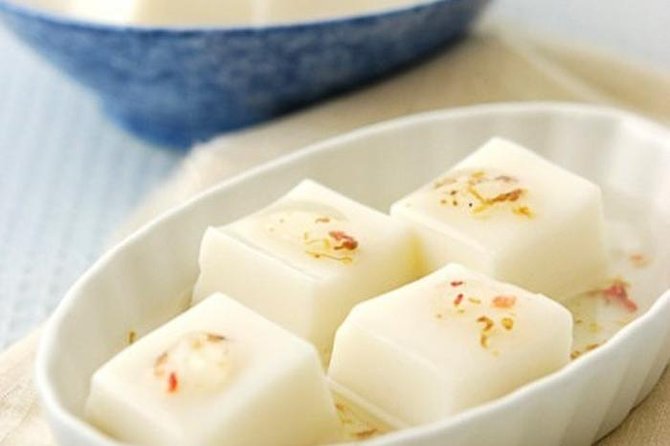
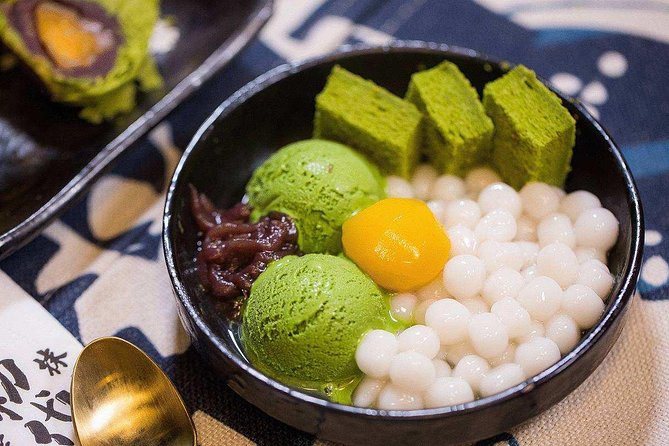
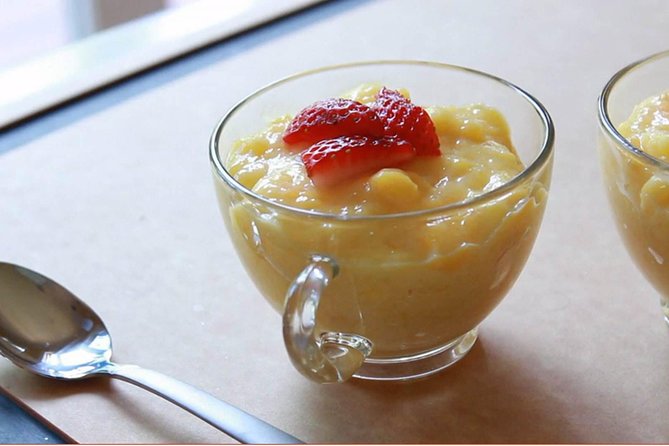
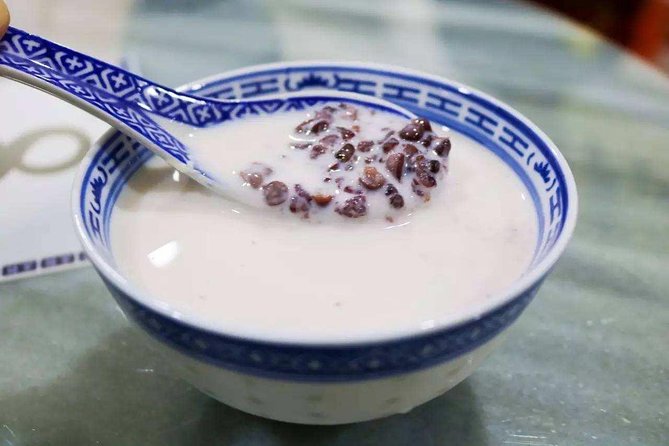
The selection includes milk pudding with purple sticky rice, jellied mousse cake, papaya, mango purée, and almond tofu. This is a different experience from the mooncakes. The pastries at the beginning are compact and filling, while these desserts tend to be softer, cooler, and more spoon-friendly.
Milk pudding with purple sticky rice combines creamy texture with the chew of sticky rice. Mango purée supplies fruit and sweetness, while almond tofu offers a smoother, more delicate finish. Papaya adds another fruit element. The range gives you a useful look at Cantonese dessert traditions without requiring you to order several full dishes on your own.
I like this ending because it keeps the afternoon varied. You move from baked pastries to brewed tea, then to chilled sweets. The progression also makes practical sense: the tea ceremony is the longest sitting portion, and the dessert stop closes with a lighter tasting session.
Still, the final stop may not suit every palate. Several dishes are sweet and soft, and the tour does not promise a savory course. If you prefer crisp pastries, salty snacks, or a proper meal, you may want to eat separately before or after the tour.
The experience ends in the area after the guide departs. Since no hotel transportation is included, check your next destination before booking. The end point is listed in the French Concession area of Xuhui District, while the meeting point is in central Shanghai.
A few more tea experiences around China worth a look
- One-Day Hangzhou Dragon Well Tea Culture & West Lake Private Tour
★ 5.0 · 98 reviews - Traditional Chinese Tea Ceremony Experience
★ 4.7 · 74 reviews - Beijing Culture: Tea Ceremony, Heritage Instrument & Calligraphy
★ 5.0 · 57 reviews - Tea Tasting and Pairing Concept Workshop
★ 5.0 · 57 reviews
What the small group changes
The experience is designed for a small group of 10 or fewer, and no booking can include more than 10 people. The general activity information also gives a maximum of 15 participants, so the exact group size may vary under operating conditions. I would expect the usual format to feel fairly intimate, but you should not assume the group will always be tiny.
A smaller group helps in three ways. First, you can hear the guide during the street walk. Second, you have a better chance to ask questions at the tea house. Third, tasting portions and seating are easier to manage than they would be with a large crowd.
The small format is especially useful during the tea ceremony. Tea preparation involves small cups, repeated pours, and details that can be missed from across a room. A compact group gives you a better view of what the tea master is doing.
Guide quality is another important part of the value. Jim has received especially warm praise for his enthusiasm, clear explanations, and ability to show aspects of Shanghai that you might not find on your own. The guide is not just providing directions between food stops. The best version of this tour depends on the person making the connections between tea, pastry, and local life.
Timing, walking, and what to wear
The tour begins at 2:00 p.m. and lasts about three hours. That timing works well if you want a break between sightseeing and dinner. It also gives you daylight for the Huaihai Road walk, though the exact feel of the streets can vary with weather and season.
Wear comfortable walking shoes. The itinerary includes a street walk between stops, and you may spend time standing in pastry shops or during parts of the tea experience. The tour operates in all weather, so bring suitable clothing for rain, heat, or cooler conditions.
The meeting point is near public transportation, which makes it practical for anyone staying in central Shanghai. Hotel pickup and drop-off are not included. You need to reach Huai Hai Zhong Lu yourself and arrange your own onward transportation after the tour.
Most people can participate, but mobility and stamina still matter. The tour is not presented as strenuous, yet it is not a fully seated tasting either. Children must be accompanied by an adult, and children under age three can join free.
Tell the operator about dietary requirements when booking. The supplied information does not promise substitutions, so you should not assume every ingredient can be changed. That is particularly important when the tasting includes pastries, milk pudding, sticky rice, mousse cake, and nut-related flavors such as almond tofu.
Is $82 a fair price?
I would judge the price by what you want from the afternoon. If you only want a few desserts, $82 may feel high. You could likely buy individual sweets and tea for less, though you would lose the explanations, route planning, tea ceremony, and guided comparisons.
The value improves if you are new to Chinese tea or unsure how to approach Shanghai’s pastry shops. The guide turns a series of purchases into a lesson. You taste mooncakes at two shops, sample several tea styles, watch traditional preparation, and finish with a range of Cantonese desserts.
The experience also saves you from making several decisions in an unfamiliar city. You do not need to work out which mooncakes to choose, which tea house to trust, or how to order a selection of cold desserts. That convenience has real value during a short stay.
I would not book it as your only food experience in Shanghai. It has almost no focus on savory dishes, and the portions are designed for sampling. Pair it with a separate dinner or a food tour that covers noodles, dumplings, or street snacks.
Who will enjoy this experience most?
I would recommend it to you if you enjoy food with a story attached. It works particularly well for first-time visitors who want an approachable introduction to tea culture without committing to a full-day cultural program.
Tea drinkers will get the most from the ceremony, especially if you enjoy comparing preparation methods and seeing flavor changes over several refills. Anyone curious about Chinese festivals will also appreciate the mooncake explanation and the link to Mid-Autumn family gatherings.
The tour is a good fit for couples, small groups of friends, and families with older children. It can also work for solo visitors because the small group creates a natural setting for conversation, though the experience is not built around solo dining.
I would think twice if you dislike sweet foods, have strict dietary needs that require guaranteed substitutions, or want a high-energy sightseeing tour. This is a gentle afternoon focused on tasting, sitting, walking, and listening.
Free cancellation is available if you cancel at least 24 hours before the start time. Changes made inside that window are not accepted, and the amount paid is not refunded for a late cancellation.
Should you book the Huaihai Road tea and dessert tour?
Book it if you want a calm, well-structured afternoon that explains why tea matters in China. The strongest parts are the tea ceremony, the comparison of several tea varieties, and the chance to taste mooncakes and Cantonese desserts in one outing.
Guide Jim’s enthusiasm appears to be a real part of the experience, and a good guide makes the tea lesson much more memorable. Just arrive ready to walk, keep room for sweets rather than a full meal, and treat the $82 price as payment for guidance and cultural context as much as for food.
Skip it if your priority is savory Shanghai cuisine or independent bakery hunting. For everyone else, this is a pleasant way to slow down, taste widely, and see central Shanghai through its tea table.
FAQ
Where does the tour begin?
The tour begins at 2:00 p.m. at 333 Huai Hai Zhong Lu, Huang Pu Qu, Shanghai, China, 200021.
How long does the experience last?
The tour lasts approximately three hours.
How large is the group?
The tour is intended for a small group of 10 or fewer. The activity information also lists a maximum of 15 participants.
What food and drinks are included?
The experience includes mooncakes from two pastry shops, an afternoon tea and tea ceremony, several Chinese teas, and Cantonese desserts such as milk pudding with purple sticky rice, jellied mousse cake, papaya, mango purée, and almond tofu.
Is hotel transportation included?
No. Hotel pickup and drop-off are not included.
Can children join the tour?
Yes. Children must be accompanied by an adult, and children under three years old can join free.
What happens if I need to cancel?
You can receive a full refund if you cancel at least 24 hours before the experience begins. Cancellations or changes made less than 24 hours before the start time are not accepted for a refund.
Just added around China
- Full-day Tour: Spectacular Sunrise, Tea Plantation & Sunset★ 5.0 · 3 reviews
- Chinese Tea Ceremony Experience★ 5.0 · 3 reviews
- Unlock Chinese Tea: Culture, Science, Tasting & Hands-on Brewing★ 5.0 · 12 reviews
- Shanghai Mahjong Experience in Local Tea Bar★ 5.0 · 4 reviews
- Private Tour Hangzhou West Lake and Tea Fields Discovery★ 5.0 · 3 reviews
- Half-Day Hangzhou Jiuxi Stream and Tea Plantation Experience★ 5.0 · 2 reviews
- Hangzhou West Lake and Tea Plantation Half Day Tour★ 5.0 · 4 reviews
- Private Hangzhou Day Tour to West Lake, Lingyin Temple, Tea Village, Old Pagoda★ 5.0 · 17 reviews
Afternoon Tea Experiences, compared.


Afternoon Tea Bus Tour – 1960s Routemaster Bus
Read our review →


Browse the lists this tour appears in