
Review · CHINA
Chongqing 1941 theatre: Tea Art Performance with Folk Art
Tea, tricks, and a very long teapot. Chongqing 1941 offers a compact introduction to Chinese folk entertainment, pairing a covered bowl of tea and a small snack with singing, opera, magic, kung fu, storytelling, and tea artistry. I especially like the 1.2-meter long-mouth teapot and the chance to see several traditional forms in one indoor show.
I also like the friendly, interactive setting. A front-row seat may bring you close to the performers, and there is an opportunity for a photograph afterward. The main drawback is value: at $31 for only 45 minutes, the show may feel costly, particularly since one booking note says the ticket can be much cheaper at the venue.
Key points to know before booking
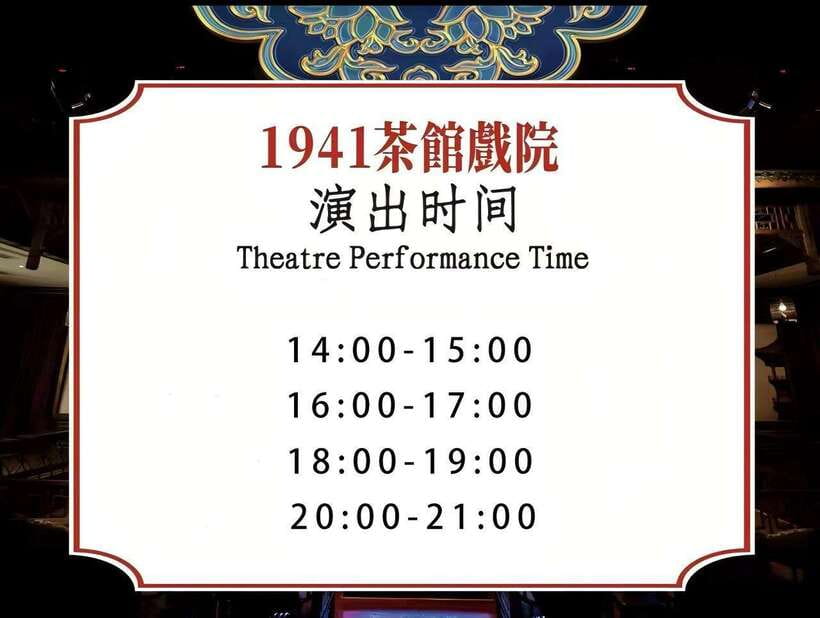
- Five traditional entertainment styles in 45 minutes: Expect a fast sequence of folk music, opera, magic, customs, and storytelling rather than one long dramatic production.
- The long-mouth teapot is the visual highlight: Tea artisans perform with a teapot about 1.2 meters long, making the tea service part theatrical skill and part spectacle.
- Tea and snacks are included: You receive covered bowl tea and a special snack, described in practice as nuts and similar small bites.
- The show is easy to enjoy without Chinese: The singing and spoken storytelling are in Chinese, but the physical comedy, music, magic, and visual acts remain accessible.
- Arrive early for tea and a good seat: You are asked to arrive 30 minutes before the start. Late arrivals do not receive the tea.
- The venue is indoors and wheelchair accessible: The meeting point is at the Yutian building garage entrance, beside the time elevator to the eighth floor.
What Chongqing 1941 gives you in 45 minutes
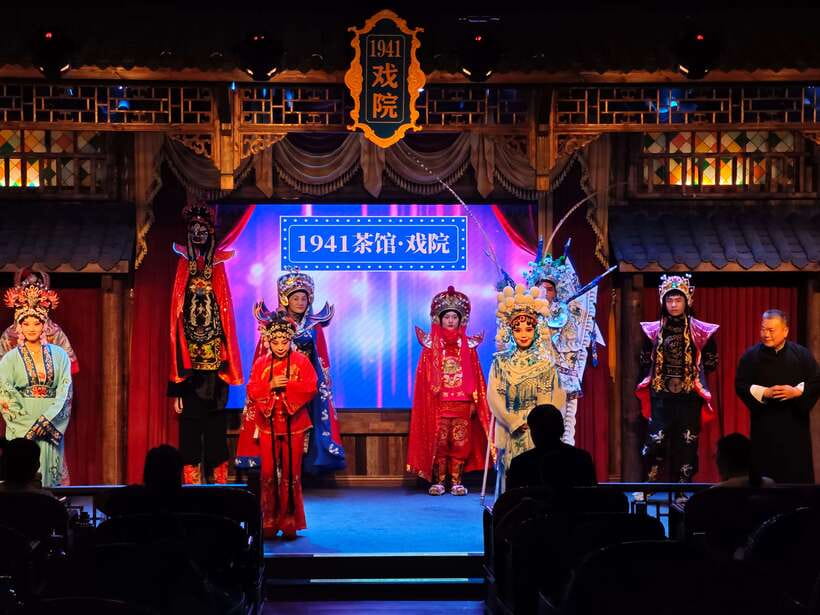
This is not a full evening of Sichuan opera or a long cultural lecture. It is a short sampler of traditional Chinese stage arts, built for visitors who want several different acts without giving up half a day.
The format works like a small variety show. You settle in with tea, watch one performance, and then the mood changes: a song may give way to opera, a folk instrument to a magic act, and a tea ceremony to a comic or physical display. That pace keeps the 45 minutes moving.
I see the show as a useful first meeting with Chinese folk performance. You do not need prior knowledge to understand the basic appeal. Bright stage action, music, unusual props, athletic movement, and audience interaction carry much of the meaning.
At the same time, the short length limits depth. You will see pieces of several art forms, not a full explanation of any one of them. If you already know Sichuan opera and want a serious, extended performance, this may feel more like an introduction than a complete cultural evening.
A few more tea experiences around China worth a look
- One-Day Hangzhou Dragon Well Tea Culture & West Lake Private Tour
★ 5.0 · 98 reviews - Traditional Chinese Tea Ceremony Experience
★ 4.7 · 74 reviews - Beijing Culture: Tea Ceremony, Heritage Instrument & Calligraphy
★ 5.0 · 57 reviews
Finding the theatre at Yutian Building
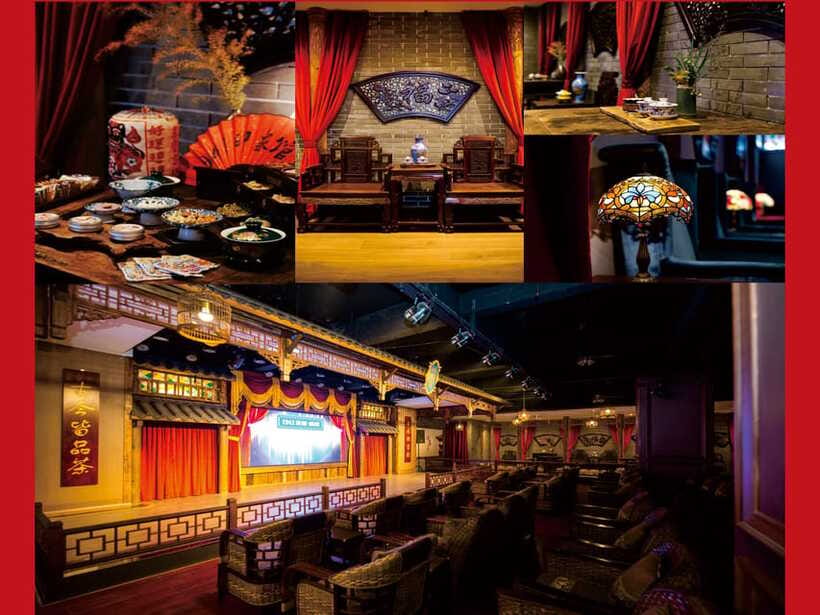
The meeting point is the Yutian building garage entrance next to the time elevator to the eighth floor. That wording matters because this is not simply a street-side theatre entrance with a large sign waiting to guide you.
I would plan to arrive 30 minutes early, as requested. Give yourself time to locate the building, identify the garage entrance, and find the elevator. The host or greeter speaks Chinese, so having the venue name and meeting instructions ready on your phone should help.
The activity is indoors, which makes it a practical choice on a rainy day or when Chongqing’s streets feel tiring. It also gives you a scheduled cultural stop that does not depend on the weather.
Wheelchair access is available. Still, the meeting point includes a garage entrance and an elevator, so you may want to arrive early enough to confirm the route without rushing.
Starting with covered bowl tea and a snack
The show includes a covered bowl of tea, known as gaiwan tea, and a special snack for each person. The tea is not just a drink before the performance. It sets the tone for a traditional Chinese tea experience and gives the opening moments a calmer rhythm before the stage acts begin.
A gaiwan is a lidded bowl used for brewing and drinking tea. You can use the lid to hold back the leaves as you sip. The performance does not appear to be a formal tea lesson, so do not book this expecting a long explanation of tea varieties or brewing methods. Instead, treat the tea as part of the setting and the artistic presentation.
The snack is small rather than a meal. One description identifies the food as nuts and similar bites. I would eat beforehand if you are hungry. This is a pleasant accompaniment, not dinner.
Arriving late has a direct consequence: the tea will not be provided. That is another reason to take the 30-minute arrival request seriously. You are paying for a combined tea and performance experience, so missing the opening service reduces part of what makes the ticket distinctive.
The long-mouth teapot performance
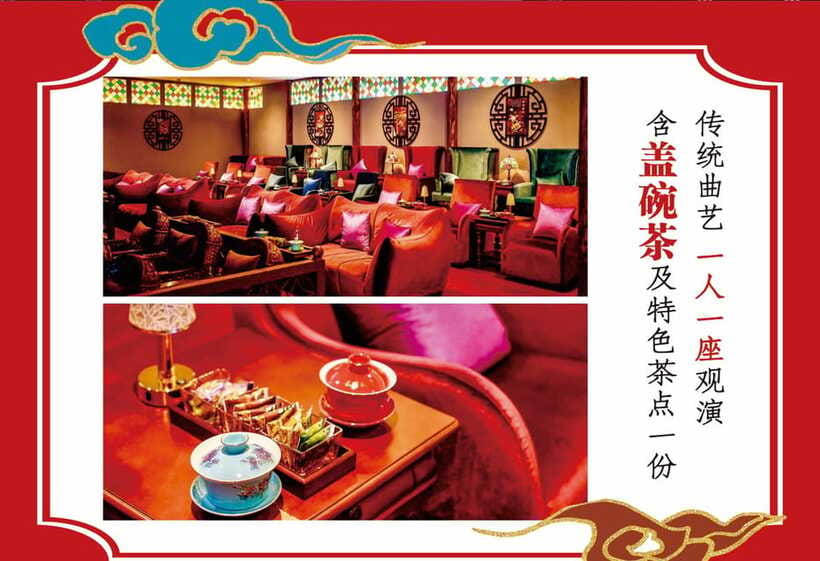
The long-mouth pot tea art is likely to be the most memorable image of the program. The teapot is about 1.2 meters long, turning an everyday act into a feat of control and presentation.
Tea artisans use the extended spout as part of the choreography. The appeal is visual. You watch the performer handle an oversized object with precision while serving or presenting tea from a distance. Even if you do not understand the spoken language, the physical skill is clear.
This act also helps explain why tea remains important in Chinese performing traditions. Tea service can be polite, practical, decorative, and theatrical at the same time. Here, it is presented as folk entertainment rather than as a quiet tea-house ritual.
The long teapot is not a reason by itself to expect an elaborate tea ceremony. It is one segment in a varied program. Still, it gives the show a distinct image that you are unlikely to get from a standard stage concert.
Same place, a different pot:
- Tea Tasting and Pairing Concept Workshop
★ 5.0 · 57 reviews - Biking Real Shanghai& Tea Tasting Experience
★ 4.5 · 45 reviews - Authentic Hangzhou Longjing Tea Culture Experience Tour
★ 5.0 · 32 reviews - Tea Village in lost Town and Buddha 1 day tour
★ 5.0 · 32 reviews
Sichuan drama, kung fu, and changing faces
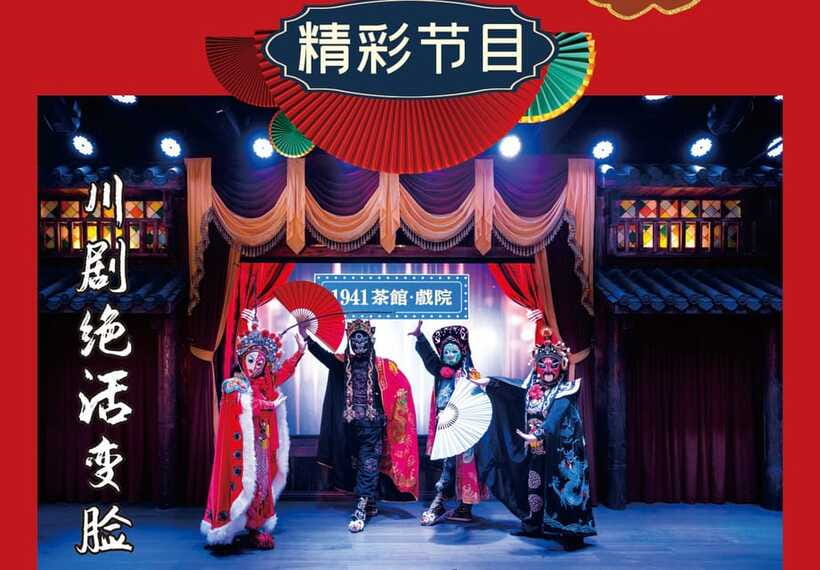
The program includes a performance of the Sichuan drama Human Good with kung fu. The exact staging can vary, but you can expect a blend of dramatic acting and physical movement rather than a simple spoken play.
Kung fu adds immediate visual energy. It gives the act a physical language that works even when you do not understand Chinese. The dramatic material may be harder to follow, but the movement, timing, and stage presence remain accessible.
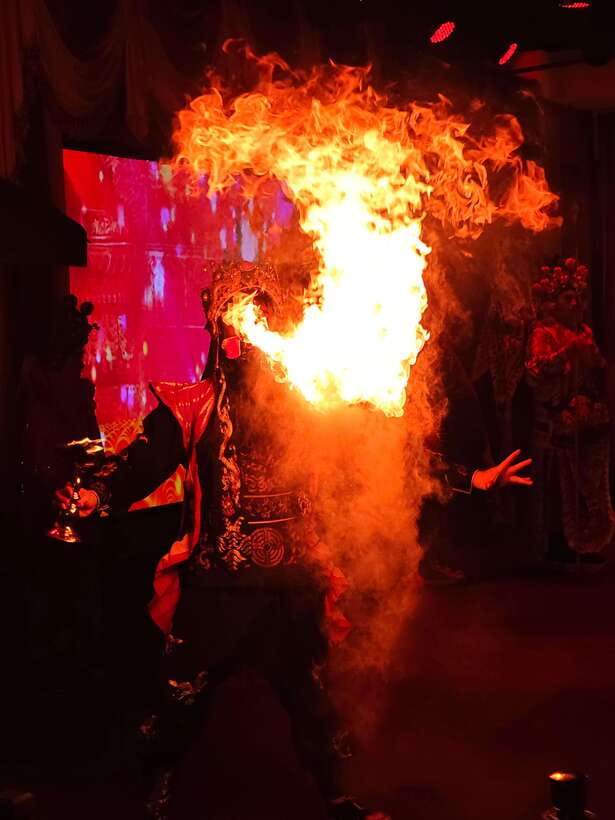
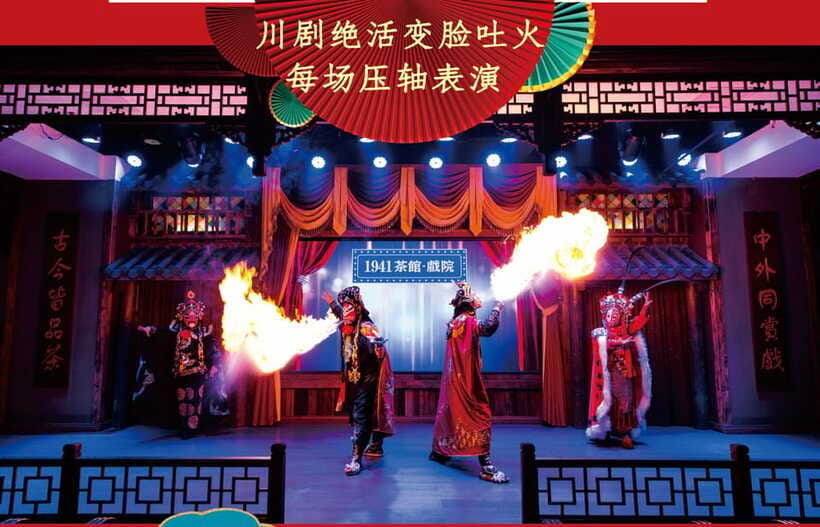
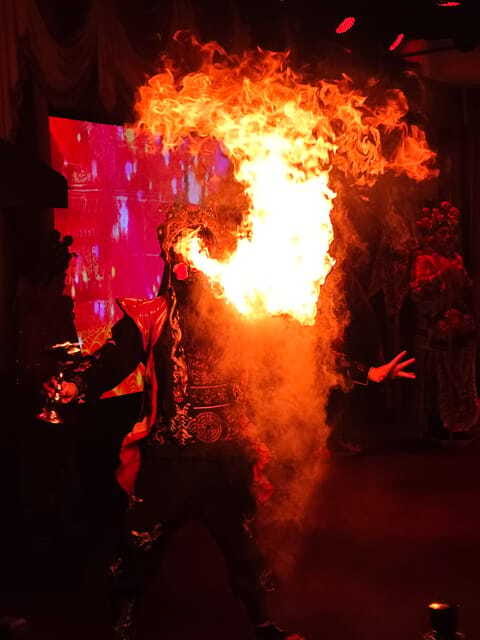
The performance also includes unpredictable facial makeup, commonly associated with Sichuan opera traditions. The quick change of painted faces is one of the most striking forms of Chinese stage magic. The effect depends on speed, costume, gesture, and surprise.
Audience proximity can make this section especially fun. A front-row seat may put you close enough to interact with the performers. One particularly memorable possibility is being allowed to touch the face of a face-changing performer, although that is not guaranteed.
That uncertainty is part of the charm, but it is also wise to keep expectations sensible. You are not promised a front-row place or personal contact. The experience includes audience interaction, yet the exact level depends on seating and the flow of the show.
Pipa music and the money board
The pipa performance brings a quieter, more musical change of pace. The pipa is a traditional Chinese lute with a clear, resonant sound. Its plucked notes can feel delicate one moment and forceful the next.
The program describes the music as beautiful and sonorous, with interwoven sound. That makes it a useful contrast to the physical comedy and stage tricks. You get a chance to hear an instrument associated with Chinese musical tradition rather than only watching visual spectacle.
Another act uses the quyi money board, combining singing and storytelling. Quyi refers broadly to Chinese narrative performance traditions, where voice, rhythm, gesture, and text work together. The money board adds a percussive element and helps mark the rhythm of the story.
This will be easier to appreciate if you focus on delivery rather than plot. Since the performance is in Chinese, you may not catch every line. Even so, the cadence, gestures, repeated patterns, and instrument sounds provide a clear sense of how oral storytelling works on stage.
For many international visitors, this section may be less immediately understandable than kung fu or magic. It is still valuable because it shows that Chinese folk performance is not only about acrobatics and visual surprises. Storytelling and musical rhythm have an important place too.
Magic, folk customs, and a quick change of mood
The wider program includes traditional music, opera, magic, and folk customs. These sections give the show its variety and help explain the strong response from people who enjoy a broad mix of acts.
Magic does not depend heavily on language. Folk customs may be more difficult to interpret without context, but they offer glimpses of traditional entertainment beyond the better-known opera and tea displays.
You should expect a compact potpourri rather than a carefully developed story. That is both the strength and weakness of the format. The variety prevents boredom, but it can also make the show feel simple if you prefer a single, polished production with a strong narrative.
The small scale may add to the charm. A less crowded audience can create a more personal room, especially if you sit near the front. It can also make the energy feel uneven if attendance is low. The performers still put on the acts, but a nearly empty room naturally feels less exciting than a full theatre.
Seating, interaction, and the photo afterward
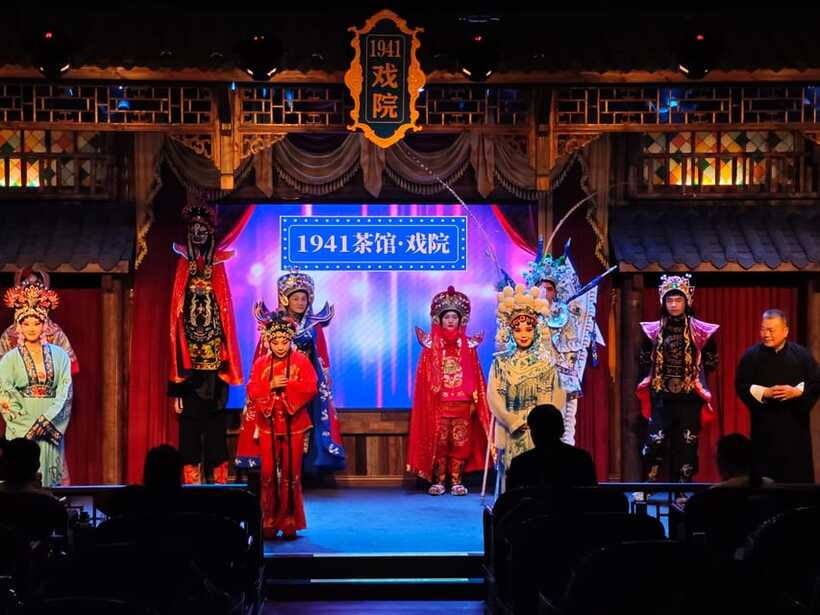
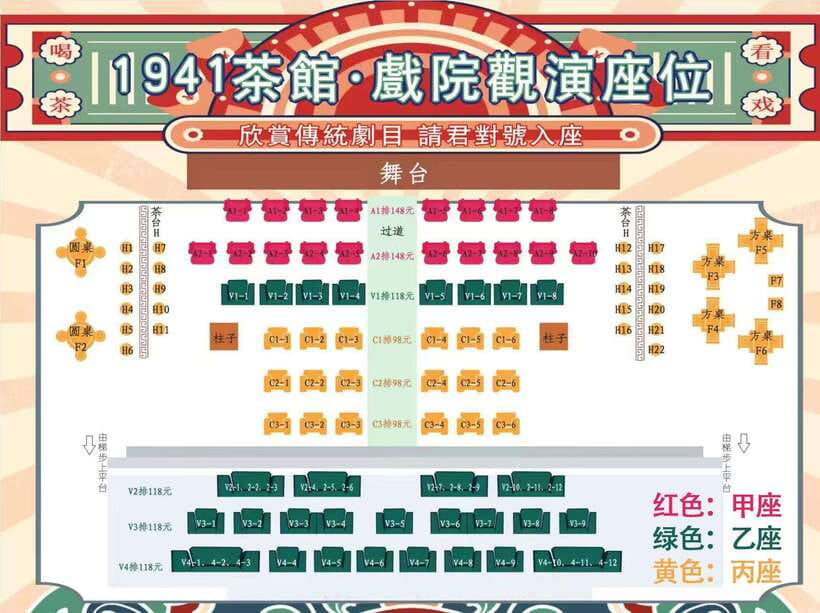
The seating arrangement can affect your impression of the show. A front-row position may bring frequent interaction with the performers and put facial expressions, props, and tea movements close to you.
You should not assume that booking guarantees the first row. The show is better approached as an intimate stage presentation where audience contact may happen, rather than as a fixed interactive package.
After the performance, you are invited to take a photograph with the performers. This is a worthwhile extra if you enjoy collecting personal reminders of cultural shows. It also gives the experience a friendly ending instead of simply sending you out when the last act finishes.
The photograph is not a major part of the 45-minute program, but it adds value for families and first-time visitors. If you want one, be ready to take it after the show rather than leaving immediately.
Is $31 a fair price?
At $31 per person, the value depends on what you want from the visit. You receive a 45-minute performance, covered bowl tea, a small snack, and a mixture of traditional acts. For someone with limited time, that can be a convenient cultural introduction.
The strongest value comes from the variety. A single ticket covers tea art, pipa music, storytelling, opera, kung fu, magic, and facial makeup performance. You do not need to arrange separate visits or commit to a long evening.
The weak point is duration. Forty-five minutes passes quickly, and the show may feel expensive if you measure the ticket only by minutes on stage. One booking experience specifically advised buying at the location because it could be about $45 cheaper. That figure does not match the listed $31 price, so I would treat it as a warning to compare the direct venue price rather than as a guaranteed saving.
If you book online, the option to reserve now and pay later gives you some flexibility. Free cancellation is available up to 24 hours before the activity for a full refund. Those terms are useful if your Chongqing schedule is still changing, but they do not solve the basic price question.
I would pay $31 if the performance fits neatly into your plans and you value the convenience of a prearranged cultural stop. I would compare prices first if you are already near the theatre or trying to keep your Chongqing entertainment budget low.
Who will enjoy this show most?
This experience suits you if you want a short, indoors cultural activity with plenty of visual action. It is a good match for first-time visitors who want a quick introduction to Chinese folk arts without spending several hours at a formal opera.
Families may appreciate the changing pace. Children who lose interest during singing may reengage during kung fu, magic, or face changing. The tea service and snack also give the event a clear beginning before the stage acts start.
It can work for couples and solo visitors too, especially if you enjoy traditional music and do not need every spoken detail translated. The show is also a practical choice for a rainy afternoon because it takes place indoors.
I would be more cautious if you want a large-scale theatre production, English commentary, a full meal, or a long tea lesson. The host language is Chinese, and there is no indication of translation. Much of the visual action is easy to follow, but the storytelling and cultural meaning will not always be fully clear.
Practical verdict for Chongqing 1941
I would book this show if you want a compact sampler of Chinese performance traditions and you are comfortable with a simple, fast-moving production. The tea art, long teapot, face changing, and front-row interaction give it several memorable features, while the pipa and money board add musical variety.
I would first check the direct venue price, since the ticket cost is the main concern. If the local price is substantially lower, buying there may make better sense. If online convenience, flexible cancellation, and a fixed plan matter more, $31 can still be reasonable for a short cultural stop.
The best approach is to arrive early, eat before you go, and keep your expectations focused on variety rather than depth. Do that, and Chongqing 1941 can be an enjoyable 45-minute window into tea, music, opera, magic, and folk stage traditions.
FAQ
How long does the Chongqing 1941 performance last?
The activity lasts 45 minutes.
What is included in the ticket?
The ticket includes one traditional performance ticket, one covered bowl of tea, and one special snack per person.
What kind of snack is provided?
The snack is described as nuts and similar small bites. It is not intended to replace a meal.
Will I receive tea if I arrive late?
No. Tea will not be provided if you arrive late, so arriving 30 minutes before the activity is recommended.
Where is the meeting point?
Meet at the Yutian building garage entrance next to the time elevator that goes to the eighth floor.
What language is used during the activity?
The host or greeter and the activity language are Chinese.
Is the activity indoors?
Yes. The performance takes place indoors.
Is the venue wheelchair accessible?
Yes, the activity is listed as wheelchair accessible.
Can I cancel the booking for a refund?
You can cancel up to 24 hours in advance for a full refund. You can also reserve now and pay later, depending on the booking terms available to you.
Just added around China
- Full-day Tour: Spectacular Sunrise, Tea Plantation & Sunset★ 5.0 · 3 reviews
- Unlock Chinese Tea: Culture, Science, Tasting & Hands-on Brewing★ 5.0 · 12 reviews
- Shanghai Mahjong Experience in Local Tea Bar★ 5.0 · 4 reviews
- Chinese Tea Ceremony Experience★ 5.0 · 3 reviews
- Private Tour Hangzhou West Lake and Tea Fields Discovery★ 5.0 · 3 reviews
- Half-Day Hangzhou Jiuxi Stream and Tea Plantation Experience★ 5.0 · 2 reviews
- Hangzhou West Lake and Tea Plantation Half Day Tour★ 5.0 · 4 reviews
- Private Hangzhou Day Tour to West Lake, Lingyin Temple, Tea Village, Old Pagoda★ 5.0 · 17 reviews
China Tea Tours, compared.

One-Day Hangzhou Dragon Well Tea Culture & West Lake Private Tour
Read our review →
Beijing Culture: Tea Ceremony, Heritage Instrument & Calligraphy
Read our review →


Chinese Tea ceremony in Beijing Hutong courtyard
Read our review →Browse the lists this tour appears in