
Review · SOUTH KOREA
Boseong Tour : Green Tea Field, Mountain & Lake Trail (Private)
Tea fields cover the hills here. This private day trip from Gwangju combines Daehan Dawon’s sweeping tea plantations with a gentle lake walk, Korean tea culture, and a short mountain hike. I like the mix of famous sights and quieter stops, especially the tea ceremony and Haepyeong Lake Trail. I also like that lunch, private transport, tea ice cream, and a vinegar drink are included.
The main drawback is the long day. You spend about 10 hours on the road and at the stops, with roughly 70 minutes each way between Gwangju and Boseong. The mountain portion also calls for moderate fitness, and the weather can affect the schedule.
Key points at a glance
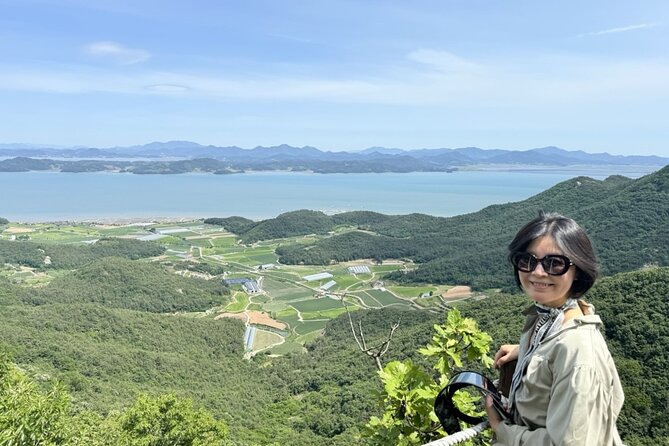
- Daehan Dawon tea plantation: Walk uphill through one of Boseong’s most famous tea-growing areas to a lookout with layered views over the tea-covered slopes.
- Korean tea ceremony: The Tea Museum includes a hands-on class, green tea tasting, and an introduction to cultivation, production, and Korean tea customs.
- Local food included: Lunch features grilled pork patties mixed with green tea powder, with cockle bibimbap or Italian pasta available as alternatives.
- Haepyeong Lake Trail: The 3.9-kilometer route passes cedar, bamboo, maple, and cherry trees, along with stone towers and a forest setting.
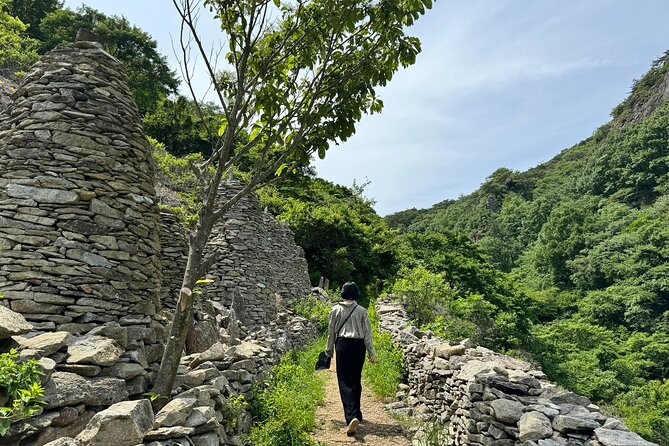
- Mt. Obongsan’s cart trail: A short hike follows an old route once used to move flat ondol-heating stones from the mountain.
- Personal service: The tour is private, and guide Veronica is praised for her friendly manner, clear English, flexibility, and care with local food and culture.
Why Boseong makes a strong day trip from Gwangju
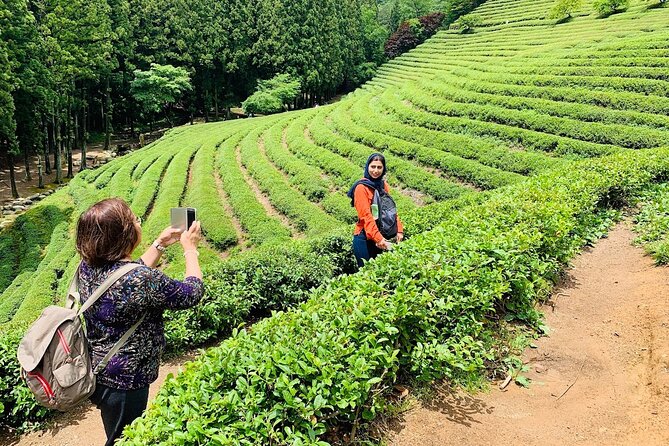
Boseong is known as Korea’s green tea capital, and the reason becomes clear as soon as the tea plantations come into view. Tea bushes cover the rounded hills in neat rows, creating one of the most recognizable rural scenes in South Korea.
This outing works well because it does not stop at the tea fields and send you straight back to Gwangju. You also get a meal, a museum visit, a tea lesson, a lake walk, and a mountain route with a strong connection to local building traditions.
The drive from Gwangju takes about 70 minutes. That is not a quick transfer, but private transport makes the day much easier than trying to connect several rural sites by bus. You can also adjust the pace with your guide, which matters on a 10-hour schedule.
Guide Veronica receives especially warm praise for her friendly and dependable service. She speaks English well, explains Korean history clearly, and has adjusted the day around interests such as local food. For a private tour, that personal attention is an important part of the value.
More Green Tea Tours in the world:
- Experience all of Japanese culture and Japanese food experience classes “origami, udon, Japanese food, green tea, calligraphy” in 4 hours
★ 5.0 · 105 reviews - Uji: Green Tea Tour with Byodoin and Koshoji Temple Visits
★ 4.8 · 72 reviews - Scenic Green Tea Fields of Hidden Kyoto & Local Tea Exp (Private)
★ 5.0 · 32 reviews
Walking through Daehan Dawon’s tea-covered hills
Your first major stop is Boseong Green Tea Field, also called Daehan Dawon. You have about two hours here, with admission included.
The walk follows plantation paths toward an upper viewing point. The route is not simply a photo stop beside a few tea bushes. You move through a large working tea farm, with the rows climbing the hills and the views opening out as you gain height.
I like this part because it gives you time to appreciate the scale of Boseong’s tea production. The fresh air, orderly rows, and rolling slopes create a calm start to the day. The tea fields remain green throughout the year, so the basic appeal is not limited to one short season.
You should expect some uphill walking. The tour description does not give a precise distance or grade, so anyone with mobility concerns should ask the operator before booking. The schedule allows two hours, which should give you time to walk, pause for photos, and enjoy the lookout without treating the stop as a race.
The visit ends with green tea ice cream. It is a small touch, but it ties the stop to Boseong’s main crop and gives you something more memorable than a standard snack.
Lunch in Boseong-eup and a taste of local food
Lunch takes about one hour and 10 minutes at a local restaurant in Boseong-eup. The included main option is a grilled pork patty prepared with green tea powder and served with rice.
This is one of the tour’s practical strengths. You do not need to find a restaurant during a tightly timed rural day, and the meal offers a local specialty rather than a generic fast-food break. Green tea powder in the pork patty connects the food to the region without turning the meal into a tea tasting gimmick.
The menu can be changed to cockle bibimbap, another local specialty. Vegetarians can request steamed rice wrapped in a lotus leaf or Italian pasta, according to the tour details. It is wise to state your preference when booking or before departure, since rural meal options can be limited once the day is underway.
Lunch is included in the price, along with the other listed food and drink stops. Alcoholic beverages are not included.
Learning Korean tea customs at the Tea Museum
The Korea Tea Museum explains the path from tea cultivation to production through graphic panels, images, and dioramas. You have about one hour and 10 minutes here, and admission is included.
The museum adds useful context after Daehan Dawon. At the plantation, you see the crop. Here, you get a clearer picture of how tea is made and how it fits Korean culture.
The strongest part is the tea ceremony class. You learn how Korean tea is prepared and served, then take part in a tea tasting. This hands-on element gives the stop more purpose than simply walking around display cases.
I would pay close attention to the pace here. The day contains several outdoor stops, and the museum provides a welcome change from walking. It is also a good setting for questions about Korean tea customs, particularly with a guide such as Veronica, who is praised for explaining Korean history and culture in English.
A few more tea experiences around the world worth a look
- Kyoto: Tea Ceremony in a Traditional Tea House in Kiyomizu
★ 4.9 · 3,519 reviews - London: Afternoon Tea Cruise on the River Thames
★ 4.4 · 3,274 reviews - Kyoto: Tea Ceremony Ju-An at Jotokuji Temple
★ 4.9 · 3,207 reviews - Afternoon Tea Bus Tour in Dublin
★ 5.0 · 2,791 reviews
A short Nokcha-ro viewpoint stop
The 20-minute stop at Nokcha-ro is brief but well chosen. You pause at a viewpoint where a lake and tea plantations appear together.
This is a good place to rest after the plantation walk and before the longer transfer to Haepyeong Lake. Since there is no admission charge, the stop adds scenery without adding another ticket or a complicated visit.
Do not expect a full attraction here. Twenty minutes is enough for a view, a few photographs, and a break. The value is in the combination of water and tea fields, which gives you a different angle on Boseong than Daehan Dawon alone.
The drive from the Tea Museum to Haepyeong Lake takes about 40 minutes. That transfer is worth remembering when you judge the pace of the day. The tour covers a wide area, and its variety comes with time in the vehicle.
Haepyeong Lake’s 3.9-kilometer forest walk
Haepyeong Lake Trail is one of the quieter parts of the experience. The route measures 3.9 kilometers, or about 2.4 miles, and follows the lakeside through a mix of trees and planted features.
You can expect cedar, bamboo, maple, and cherry trees, along with stone towers. The setting offers a calm contrast to the more famous tea plantation. Instead of viewing the countryside from a lookout, you move at ground level beside the water and through the forest.
The route is described as easy, but the total distance still matters. Combined with Daehan Dawon and the mountain walk, it creates a fairly active afternoon. Wear shoes suitable for walking and bring the level of stamina you would normally want for several hours outdoors.
The trail connects with Choroo Vinegar Park, where naturally fermented grain vinegar is produced. There is a café with specially made vinegar drinks, and one beverage is included. This is a distinctive stop because it introduces a local product that most first-time visitors would not encounter on a standard Boseong outing.
You should think of the vinegar drink as part of the regional food experience, not as a familiar soft drink. The stop also gives you another chance to sit down, enjoy the view, and break up the walking.
Mt. Obongsan and the old ondol stone route
The final outdoor section takes you onto Mt. Obongsan near the lake. The mountain has a practical and cultural story: its flat stones were quarried for gudeuljang, the stone used in ondol underfloor heating systems in traditional Korean homes.
Quarrying took place actively from the 1940s through the 1980s, and the area once supplied about 70 percent of Korea’s gudeuljang production. That fact changes the way you see the old cart route. It is not just a forest path. It reflects how stone moved from a mountain site into homes across the country.
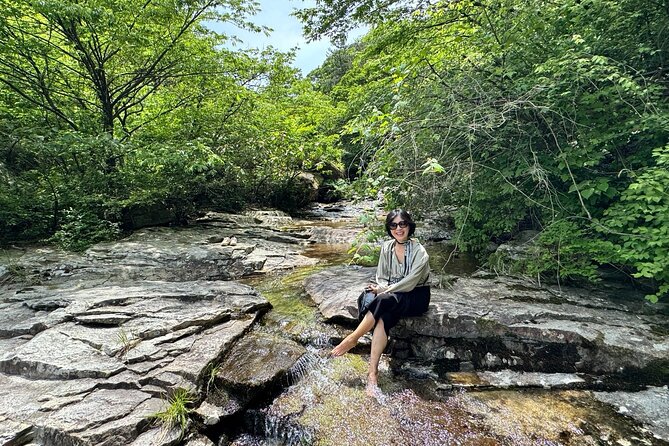
Carts pulled by cows carried the quarried stones toward the ground, and part of that route remains preserved. You can hike for about 15 minutes to a waterfall or about 40 minutes to the peak. The route includes rocky sections, rock formations, stone pagodas, and waterfalls.
This is the part of the tour most likely to test your legs. The tour asks for moderate physical fitness, and that guidance should be taken seriously. You can choose the shorter waterfall walk rather than the peak if you want the mountain’s story and scenery without committing to the longer climb.
The mountain section is a strong finish because it adds local industry and traditional housing to a day that could otherwise be only about scenery. It also gives you a chance to see a less polished side of Boseong.
What the private format adds
A private tour makes the long schedule more manageable. Your group is the only group participating, so you do not need to wait for strangers at each stop or follow a fixed pace that suits nobody.
That flexibility is especially useful at Daehan Dawon and Mt. Obongsan. You may want more time for photographs at the tea fields, a shorter mountain walk, or extra attention to Korean food at lunch. The guide can respond to those preferences more easily than a large group tour can.
The private format also matters for solo visitors. One solo guest described Veronica as an excellent guide and praised her understanding of Gwangju and the surrounding area. At $190 per person, the cost is high for one person, but the price includes private transport, all listed fees and taxes, lunch, tea ice cream, the tea ceremony and tasting, and the vinegar beverage.
For two or more people, the cost is easier to assess because group discounts are available. The value comes less from any single admission ticket and more from having transport, planning, meals, and a personal guide handled for a full day in a rural area.
The tour is often reserved well ahead, with an average booking time of 62 days. That suggests you should plan early if your Gwangju dates are fixed, particularly if you want a specific day or need a food adjustment.
Timing, weather, and practical planning
The start time is 9:30 a.m., and the full experience lasts about 10 hours. The return drive from Haepyeong Lake to Gwangju takes about 70 minutes, so you should expect to arrive back in the evening.
This is a full day rather than a relaxed half-day outing. I would avoid pairing it with another major activity in Gwangju that same night. The schedule includes several stops, two significant walking sections, and three long road transfers.
Good weather is important. The tour can be canceled in poor weather, with the choice of another date or a full refund. If you cancel yourself, you need to do so at least 24 hours before the start time for a full refund. Changes or cancellations inside that window are not accepted.
Bring walking shoes and clothing suitable for changing outdoor conditions. The information provided does not specify a dress code or equipment list, so keep your packing simple and practical.
Service animals are allowed, and the experience is near public transportation, though private pickup is offered. Confirmation is provided when you book.
Who will get the most from this Boseong tour?
I would recommend this day to you if you want more than a quick photograph at a tea plantation. The tour suits people who enjoy local food, light-to-moderate walking, Korean culture, and countryside scenery in one package.
It is also a good choice if you are staying in Gwangju and do not want to arrange several rural connections yourself. Families, couples, and solo visitors can all benefit from the private format, though the price per person is most attractive when shared among several people.
You may want to reconsider if you dislike long drives, prefer a slow schedule with only one main attraction, or are unable to manage uneven paths and uphill walking. The lake route is easy, but the full day still demands steady movement.
Should you book it?
Book this tour if you want Boseong presented as a complete region rather than a single tea-field photo stop. The best features are the private guide service, the tea ceremony, the included local meal, and the combination of lake and mountain scenery.
At $190 per person, it is not a budget excursion, especially for a solo visitor. Yet the price covers transport, admissions, food, tastings, and a full day with an English-speaking guide. If Veronica is available, her friendly and flexible approach may be the difference between a well-run outing and a merely functional one.
Choose it for variety, local context, and convenience. Skip it if your priority is the cheapest possible trip or a short visit focused only on tea fields.
FAQ
Where does the Boseong tour start?
The tour starts from Gwangju Metropolitan City, with pickup offered. The scheduled start time is 9:30 a.m.
How long does the tour last?
The experience lasts approximately 10 hours.
How long is the drive from Gwangju to Boseong?
The drive from Gwangju to Boseong takes about 70 minutes.
Is transportation private?
Yes. Private transportation is included, and only your group participates in the activity.
Is lunch included?
Yes. Lunch is included. The standard meal is grilled pork patties with green tea powder and rice. Cockle bibimbap or Italian pasta can be requested, and a vegetarian option of rice wrapped in a lotus leaf is also available.
What is included besides lunch?
The price includes admissions and taxes, green tea ice cream, a Korean tea ceremony class with green tea tasting, and a rice vinegar beverage. Alcoholic beverages are not included.
How long is the Haepyeong Lake Trail?
The Haepyeong Lake Trail is 3.9 kilometers, or about 2.4 miles.
Can I choose a shorter hike on Mt. Obongsan?
Yes. You can hike about 15 minutes to the waterfall or about 40 minutes to the peak. The tour recommends a moderate level of physical fitness.
What happens if the weather is poor?
If poor weather causes the tour to be canceled, you can choose a different date or receive a full refund.
Just added around the world
- Yogyakarta: Prambanan Tour, Sukuh Temple & Tea Plantation★ 5.0 · 3 reviews
- Yokohama : Tea Ceremony with Sweets and Souvenir★ 5.0 · 5 reviews
- York: Private Horse-Drawn Carriage Ride and Afternoon Tea★ 5.0 · 3 reviews
- Walking Tour: Yanaka,Nezu& Sendagi: Tea Ceremony & Old Tokyo★ 5.0 · 3 reviews
- Washington, D.C.: Tea Around Town Bus Tour with Landmarks★ 3.4 · 7 reviews
- Wadi Rum: 2-Hour Jeep Tour with Bedouin Tea★ 5.0 · 11 reviews
- Visit local home for music and tea ceremony near Disney★ 4.9 · 13 reviews
- Volcano, Hot Spring, Mud Bath & Tea plantation all included★ 5.0 · 5 reviews
Green Tea Tours, compared.
Green Tea Tour with Byodoin and Koshoji Temple Visits
Read our review →
Scenic Green Tea Fields of Hidden Kyoto & Local Tea Exp (Private)
Read our review →
Osaka; Japanese Tea ceremony experience, Macha and Sencha
Read our review →
Slow Cycling Tour at Uji’s Matcha Green Tea Fields and Heritage
Read our review →
Sencha-do the Japanese Tea Ceremony Workshop in Kyoto
Read our review →Browse the lists this tour appears in