
Review · CHENGDU
Half-day Private Mahjong course in Local Tea House
Start with spices, finish with mahjong. This three to four-hour private experience takes you beyond Chengdu’s usual sights, pairing a local food market with patient instruction in one of China’s best-known games. I especially like the chance to see an ordinary neighborhood and the personal format, which gives you time to ask questions without a large group pressing on.
The hotel pickup and drop-off make this a useful half-day choice when your schedule is tight. I also like that the experience includes tea, snacks, food tasting, and bottled water rather than treating the game as a stand-alone lesson. The main consideration is that the market visit and mahjong class are fairly focused activities, so you should book this for local contact and culture, not for a broad sightseeing tour of Chengdu.
Key points at a glance
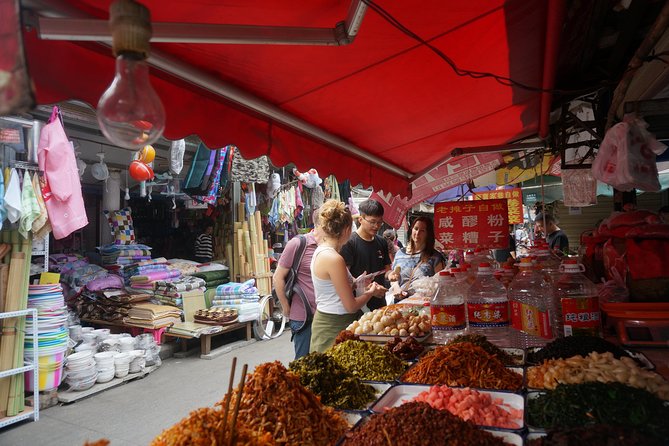
- A real Sichuan food stop: Walk through a local spice market and learn about the ingredients used in regional cooking.
- A private mahjong lesson: Your group plays with an English-speaking guide in a Chinese-style room.
- A useful half-day plan: The activity lasts about three hours, with the full duration listed as roughly three to four hours.
- Local rather than polished: The experience takes you into a less touristed area of Chengdu and a neighborhood tea house.
- Good for solo visitors: One solo booking was handled as a one-to-one experience, with the guide adapting the game and instruction.
- Easy transport: Hotel pickup and drop-off are offered, though the stated meeting point is Zhangjia Alley in Jinniu District.
Why this Chengdu experience feels different
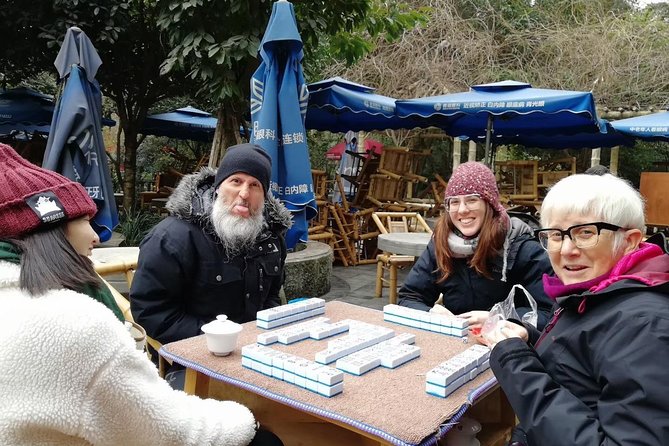
Chengdu is famous for pandas, fiery hot pot, and a famously relaxed tea-house culture. This experience links two less formal parts of daily life: shopping for cooking ingredients and sitting down for mahjong. You are not simply shown a landmark and sent on your way. You get a small look at what people buy, eat, and do in their free time.
The setting matters. The activity takes place in a local neighborhood rather than a major sightseeing zone. One of the strongest parts of the experience is the chance to see a less touristed side of Chengdu, where the market and tea house are part of the area’s normal rhythm.
That local focus also means you should keep your expectations sensible. This is not a grand food tour with a long list of tastings, and it is not a full city tour. The food component centers on Sichuan spices and ingredients, while the main lesson is mahjong. For me, that narrow focus is a strength if you want one memorable cultural activity. It is less suitable if you want to cover many Chengdu attractions in one afternoon.
More Half-Day Trips in China:
- Half-Day Hangzhou Yunxi Bamboo Forest and Tea Plantation Experience
★ 5.0 · 22 reviews - Half-day Tour: Largest Tea Plantation & Amazing Xianggong Hill
★ 5.0 · 9 reviews - Half-Day Hangzhou Private Tour with Green Tea Village and Lingyin Temple
★ 5.0 · 3 reviews
Starting at the Sichuan spice market
The first stop is the local market visit connected with Chilli Cool’s Kitchen. Here, you look at the spices and ingredients used in Sichuan cooking and learn how they fit into the local food culture. Sichuan cuisine is often reduced to heat, but a market helps you see that the flavor comes from a mix of ingredients rather than chili alone.
Your guide explains the items as you walk. The information is meant to be practical and approachable, especially if you are curious about what goes into the dishes you eat in Chengdu. You may find this part most useful after, or before, a meal in the city because it gives you more context for the flavors on your plate.
Food tasting is included, along with snacks and tea or coffee. The available information does not promise a full meal, so arrive expecting small tastes rather than lunch. That distinction is important when planning your day.
I like the market stop because it gives the mahjong lesson a stronger local setting. You first see ingredients linked to Sichuan cooking, then move to a room where a traditional pastime is explained. The two parts work well together without feeling like unrelated activities.
The market may not appeal as much if you prefer quiet museum rooms or carefully arranged food displays. A local market is chosen for its everyday character, not for a polished presentation. You should be ready for a straightforward visit focused on ingredients, neighborhood life, and explanation from the guide.
Learning mahjong in a Chinese-style room
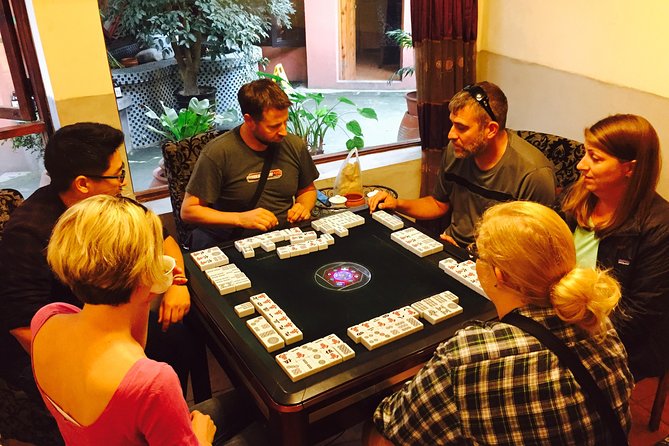
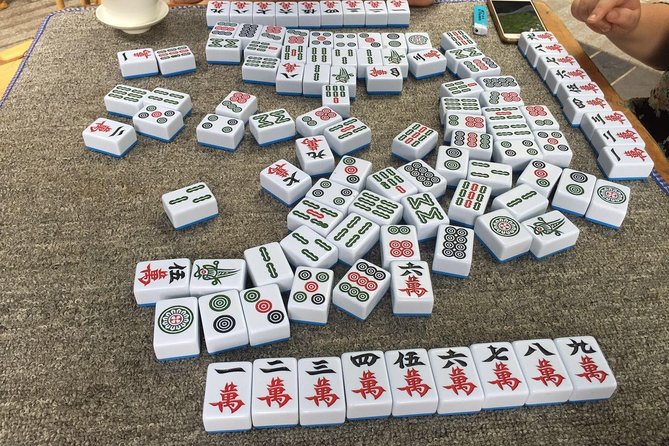
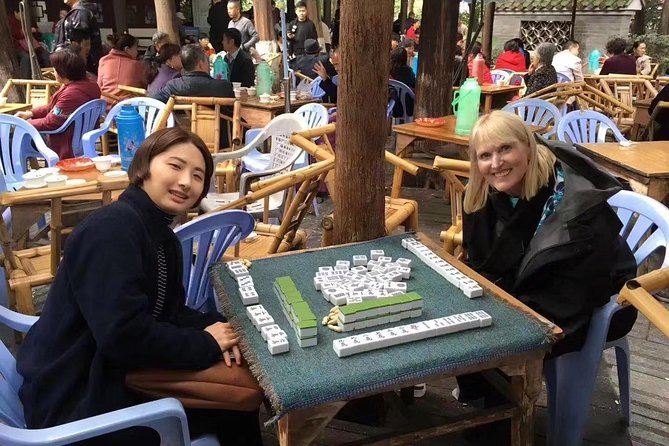
After the market, you head to a cozy room with Chinese characteristics for the main lesson. The class is led in English, and the rules are taught in an easy way before you begin playing. That is welcome because mahjong can look complicated when you first see the tiles, patterns, and rapid movements.
The game is often compared to gin rummy, but it has its own rules and habits. The point of this lesson is not just to watch a local game. You get a chance to handle the tiles, understand the basic structure, and test what you have learned.
Your guide also plays with you. That makes the class feel more like a shared activity than a lecture. If you are new to mahjong, expect some time for the rules to settle in. The lesson is described as a three-hour course, but the full experience is generally listed at three to four hours, allowing room for the market, refreshments, teaching, and play.
A useful detail for solo visitors is that the format can be adapted. One solo participant had a one-to-one experience with Lance and still received instruction and a chance to learn the game. Mahjong is commonly played with four people, so solo bookings may not produce the same table dynamic as a full group. Still, the private structure means you are not left out simply because you arrive alone.
If you already play mahjong, you may find the introductory explanations familiar. Even so, playing with a local guide can add value because you can ask about the way the game is enjoyed in Chengdu. If you are completely new, the relaxed teaching style should be a better fit than trying to learn from a fast local table with no explanation.
Tea, snacks, and the pace of the afternoon
Tea is not an afterthought here. The class takes place in a tea-house setting, and afternoon tea, coffee or tea, bottled water, and snacks are included. These simple extras help make the lesson feel like an afternoon activity rather than a rushed appointment.
You also get food tasting connected with the experience. The supplied details do not specify every item, so I would not book this expecting a fixed menu. Think of the refreshments as part of the cultural setting and a pleasant break during the class.
The pace should suit people who like to stop and talk. Your guide can explain the market items, answer questions, and help you work through the rules. This is not designed as a quick photo stop followed by a scripted demonstration.
That slower pace is one of the best reasons to book privately. You can focus on the parts that interest you. If Sichuan ingredients fascinate you, ask more at the market. If the tiles are confusing, spend more time on the basic rules before playing.
A few more tea experiences around China worth a look
- One-Day Hangzhou Dragon Well Tea Culture & West Lake Private Tour
★ 5.0 · 98 reviews - Traditional Chinese Tea Ceremony Experience
★ 4.7 · 74 reviews - Tea Tasting and Pairing Concept Workshop
★ 5.0 · 57 reviews - Beijing Culture: Tea Ceremony, Heritage Instrument & Calligraphy
★ 5.0 · 57 reviews
What the private format really gives you
This is a private activity, meaning only your group participates. That affects the experience in several useful ways. You do not have to keep pace with a busload of people, and you can ask questions without holding up a large party.
The private arrangement is especially helpful for families, couples, and small groups with different levels of interest. A child may enjoy the colorful tiles while an adult asks about Sichuan food. Children must be accompanied by an adult, and the minimum age is five.
Private does not mean highly formal. The strongest descriptions of the experience point to a friendly guide who shows you the neighborhood and teaches with patience. Lance is specifically named in the provided material, and his role appears to combine transport coordination, local orientation, market guidance, and mahjong instruction.
A practical tip is to pay attention to pickup communication. The operator contacted one booking soon after reservation to clarify the hotel location. Since the experience offers hotel pickup and drop-off, make sure your accommodation details are clear when you book.
Price and value at $60 per person
At $60 per person, this is not the cheapest way to spend three hours in Chengdu. You can visit a market or drink tea for less on your own. The price becomes easier to justify when you add the private guide, transport, English instruction, food tasting, drinks, snacks, and the chance to play mahjong in a local setting.
The value is strongest for first-time visitors who want help crossing the gap between observing local life and taking part in it. A market can be confusing without language support. Mahjong can be almost impossible to follow without someone explaining the rules. This experience handles both problems in one booking.
The price also makes more sense for a small private group than for a solo budget traveler. A solo visitor receives personal attention, but pays the full per-person rate. Group discounts are offered, so the cost may work better when several people book together.
I would compare this with the price of a private food walk and a separate cultural class in Chengdu. It combines elements of both, though it does not provide a full meal or a broad list of city sights. You are paying for access, explanation, and a personal introduction rather than quantity.
Getting there and planning your time
The stated start point is Zhangjia Alley in Jinniu District, Chengdu, Sichuan, with the postal code 610083. The experience is also described as offering hotel pickup and drop-off, so confirm the exact arrangement for your accommodation after booking.
The activity ends back at the meeting point according to the supplied details. Because pickup and drop-off are also advertised, it is sensible to clarify whether your hotel return is included for your booking or whether you should plan to return to Zhangjia Alley.
The experience is near public transportation, which gives you another option if hotel pickup does not suit your schedule. Confirmation is received at booking, and the operator may contact you to check your hotel location.
I would allow a little flexibility around the three-hour estimate. The activity is described as lasting three to four hours, and the market, teaching, play, and refreshments all take time. Avoid scheduling a tight appointment immediately afterward.
Cancellation is free up to 24 hours before the local start time. Inside that window, the payment is not refunded and changes are not accepted. That is a reasonable policy, but check your Chengdu schedule before committing.
Who will enjoy this most
I recommend this experience if you want:
- A local activity away from the main sightseeing circuit
- A gentle introduction to mahjong
- A private guide who can explain food and customs in English
- A cultural stop that fits into half a day
- An activity suitable for a couple, family, or small group
- A way to meet local life without planning market transport and instruction yourself
It is also a good choice for a solo visitor who would rather have a guided encounter than spend an afternoon sightseeing alone. The one-to-one format can feel personal, though you should remember that a solo booking may not create a full four-person mahjong table.
I would choose something else if you want a full Chengdu food tour, a major landmark itinerary, or a serious mahjong tournament. The class is designed for learning and enjoyment, not expert competition. The market visit is an introduction to ingredients, not a long culinary workshop.
How this compares with a standard Chengdu afternoon
A typical city sightseeing plan might take you from one major attraction to another. This experience asks you to slow down and pay attention to smaller details: what is sold at a local market, how Sichuan cooking begins, and how people spend time around a tea table.
That makes it a useful companion to Chengdu’s bigger sights. You can spend another part of your trip with pandas or city landmarks, then use this half-day to see a more ordinary side of the city. The contrast is part of the appeal.
The activity also gives you something to do, not just something to see. You taste, ask questions, handle mahjong tiles, and play. For many visitors, that creates a stronger memory than another quick stop for photographs.
The tradeoff is simple. You exchange breadth for contact. You will not see many famous attractions, but you may leave with a better sense of how food and leisure fit into local life.
Final verdict: should you book it?
Book this if you want a friendly, private introduction to Chengdu through two specific local traditions: Sichuan ingredients and mahjong. The combination is unusual, the guide-led format removes much of the language barrier, and hotel pickup can save time.
I especially recommend it for first-time visitors, solo participants, couples, families with older children, and anyone who enjoys learning by doing. The strongest reasons to pass are a tight budget, a desire for a full meal, or a preference for major sights over neighborhood activities.
At $60 per person, the value depends on how much you want personal instruction and local context. If that sounds more appealing than another standard sightseeing loop, this is a smart half-day choice.
FAQ
How long does the mahjong and spice market experience last?
The activity lasts about three hours, with the overall duration listed as approximately three to four hours.
What does the experience include?
It includes a professional guide, hotel pickup and drop-off, afternoon tea, bottled water, food tasting, snacks, and coffee or tea.
Is the activity private?
Yes. Only your group participates in the private tour or activity.
Can a solo person book this experience?
Yes. A solo booking has been handled as a one-to-one experience with the guide. Mahjong is normally played with four people, but the instruction can be adapted.
What is the minimum age?
The minimum age is five. Children must be accompanied by an adult.
Where does the experience start?
The stated meeting point is Zhangjia Alley in Jinniu District, Chengdu, Sichuan, China, 610083. Hotel pickup is offered, so confirm the pickup details for your accommodation after booking.
Just added around China
- Full-day Tour: Spectacular Sunrise, Tea Plantation & Sunset★ 5.0 · 3 reviews
- Chinese Tea Ceremony Experience★ 5.0 · 3 reviews
- Unlock Chinese Tea: Culture, Science, Tasting & Hands-on Brewing★ 5.0 · 12 reviews
- Shanghai Mahjong Experience in Local Tea Bar★ 5.0 · 4 reviews
- Private Tour Hangzhou West Lake and Tea Fields Discovery★ 5.0 · 3 reviews
- Half-Day Hangzhou Jiuxi Stream and Tea Plantation Experience★ 5.0 · 2 reviews
- Hangzhou West Lake and Tea Plantation Half Day Tour★ 5.0 · 4 reviews
- Private Hangzhou Day Tour to West Lake, Lingyin Temple, Tea Village, Old Pagoda★ 5.0 · 17 reviews
Chengdu Tea Tours, compared.
Leshan Buddha + Panda Base or Old Tea House Private Day Tour
Read our review →
Sichuan Opera Show ShufengYayun & Covered Bowl Tea
Read our review →
Experience Chengdu: Private Tea-Making Day Tour of Mengdingshan Tea Plantation
Read our review →
Three-Hour Private Chengdu Tea Wholesale Market Tour
Read our review →
One-Day Leshan Giant Buddha and Tea Terrace Tour In Lost Town
Read our review →
Exploring Tibetan Tea· 2DAYS Sichuan Last Primitive Ancient Town
Read our review →
Half-day Private Kungfu Tea course in Local Tea House
Read our review →Browse the lists this tour appears in