
Review · SOUTH KOREA
Korean Green Tea Tour – from Boseong to Gangjin (Private)
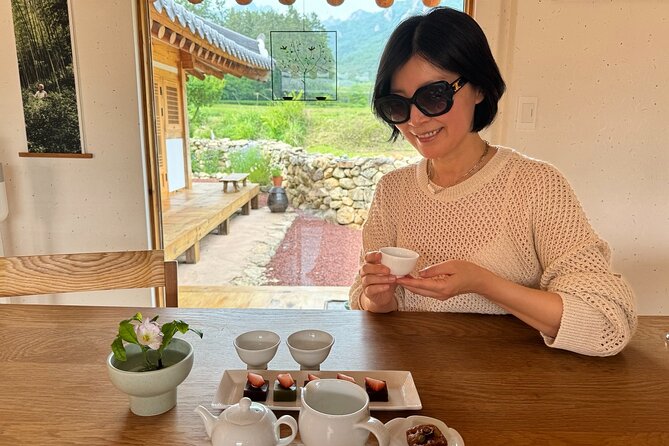
Green hills, old tea, and one excellent day. This private tour links Boseong’s famous fields with Gangjin’s quieter tea traditions, giving you more than a pretty farm visit. I especially like the mix of three tea styles and the chance to see places that are difficult to connect without a car. The tour also includes a Korean tea ceremony, matcha affogato, and a historic rice cake tea.
The main drawback is the long day. You will spend about nine to ten hours on the road and at the sites, with roughly 70 minutes from Gwangju to Boseong, 50 minutes between Boseong and Gangjin, and another 70 minutes back. Lunch is not included, and the day works best in good weather.
Key points to know before booking
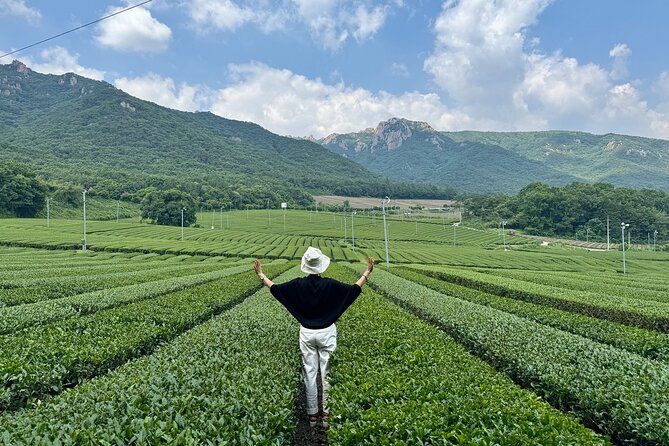
- Three forms of Korean tea: Taste leaf tea, powdered tea, and rice cake tea, each tied to a different part of the route.
- Boseong’s classic tea hills: Daehan Dawon and Nokcha-ro provide the broad green views most people picture when they think of Korean tea country.
- Gangjin adds depth: Baegundong Hermitage Garden and Baegun Tea House connect tea with Joseon-era gardens, local figures, and a 200-year-old tea tradition.
- A private ride from Gwangju: Your group travels alone, which makes the long route easier to manage and allows some flexibility.
- Strong guide element: Veronica and Vicky are praised for clear explanations, local suggestions, and warm company.
- Good value for tea lovers: At $195 per person, the price includes private transportation, admissions, tea activities, taxes, and several tastings, but not lunch.
Why this Boseong and Gangjin tea route works
Boseong is the famous name here. Its tea farms cover rounded hills in South Jeolla Province, where the soil and climate suit green tea production. The fields are the postcard part of the day: neat rows climb and curve across the slopes, making the first stop both scenic and easy to appreciate.
Gangjin gives the day a different character. It is less familiar to foreign visitors, yet its tea culture reaches back more than 1,000 years. The contrast matters. In Boseong, you see a major tea-growing center with museums, famous viewpoints, and established visitor facilities. In Gangjin, you encounter gardens, old tea customs, and the story of Korea’s first tea brand.
I like this pairing because it avoids making the day a simple photo stop. You get the big views, but you also learn how tea was made, served, traded, and remembered. The three tea forms provide a useful thread through the route.
This is a private experience beginning from Gwangju Metropolitan City at 9:30 am. Your group has its own vehicle, and only your party participates. That is a major advantage on a route with several stops and a fair amount of driving.
More Green Tea Tours in the world:
- Experience all of Japanese culture and Japanese food experience classes “origami, udon, Japanese food, green tea, calligraphy” in 4 hours
★ 5.0 · 105 reviews - Uji: Green Tea Tour with Byodoin and Koshoji Temple Visits
★ 4.8 · 72 reviews - Scenic Green Tea Fields of Hidden Kyoto & Local Tea Exp (Private)
★ 5.0 · 32 reviews
Daehan Dawon gives you the famous Boseong view
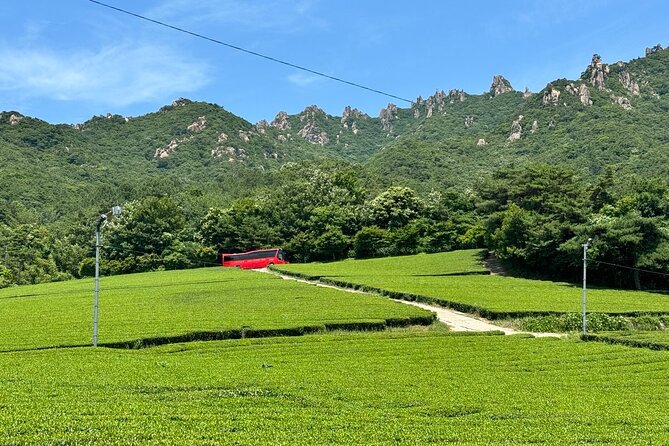
The first major stop is Boseong Green Tea Field Daehan Dawon, with about 90 minutes to explore. Admission is included, so you can concentrate on the paths, slopes, and views rather than sorting out separate tickets.
Boseong’s tea is grown organically, and the farm’s broad hills give you the clearest visual introduction to the region. You will see tea planted in orderly rows over rolling ground, with the shape of the hills doing much of the work. It is a place for walking slowly, taking photographs, and getting your first sense of how much land tea farming covers here.
The time allowance is sensible for a first look, though it is not generous if you want a long walk through every section. Wear shoes suited to sloped paths, since the main appeal is seeing the fields from different levels rather than staying on a flat platform.
This is likely to be the busiest-feeling stop of the day simply because Boseong is well known. The private vehicle and guide help keep the visit efficient, especially if you are trying to see several sites before evening.
Lunch in Boseong keeps the meal local
The group stops in Boseong-eup for about an hour. Lunch is not included, and you choose your dish and pay at the restaurant.
The suggested local choices include stir-fried nakji, Korean octopus, along with other popular town dishes. This arrangement gives you some choice and keeps the meal separate from the tour price, but you should budget extra money for it. If you have a strong preference for seafood or a particular Korean dish, tell your guide early so the stop can suit you.
An hour is enough for a straightforward meal, not a long restaurant outing. That fits the pace of the day. You have several more tea sites ahead, and lingering too long here would squeeze the later stops.
One useful benefit of a local guide is help with choosing food. Veronica is praised for finding good restaurants and introducing people to dishes they might not have selected on their own. Vicky is also praised for clear explanations and for going beyond the basic sightseeing schedule.
The Korea Tea Museum explains what is in your cup
The Korea Tea Museum receives about an hour of the day and includes admission. This is where the tour moves from scenery to practical background.
The museum explains the tea plant and the six kinds of tea that can be produced from it. It also covers Korean tea production and the history of tea drinking in Korea. That context makes the tastings more useful because you are not simply trying several green tea products without knowing how they differ.
The museum is especially helpful if your knowledge of tea begins and ends with matcha. Korean tea has its own methods and customs, and this stop gives you a framework for understanding them. You can connect the museum’s explanation of leaves and processing with the powdered tea and rice cake tea served later.
I would treat this as an important learning stop, not a filler between fields. The day has a simple theme, and the museum gives that theme structure.
A few more tea experiences around the world worth a look
- Kyoto: Tea Ceremony in a Traditional Tea House in Kiyomizu
★ 4.9 · 3,519 reviews - London: Afternoon Tea Cruise on the River Thames
★ 4.4 · 3,274 reviews - Kyoto: Tea Ceremony Ju-An at Jotokuji Temple
★ 4.9 · 3,207 reviews - Afternoon Tea Bus Tour in Dublin
★ 5.0 · 2,791 reviews
Nokcha-ro brings another angle on Boseong
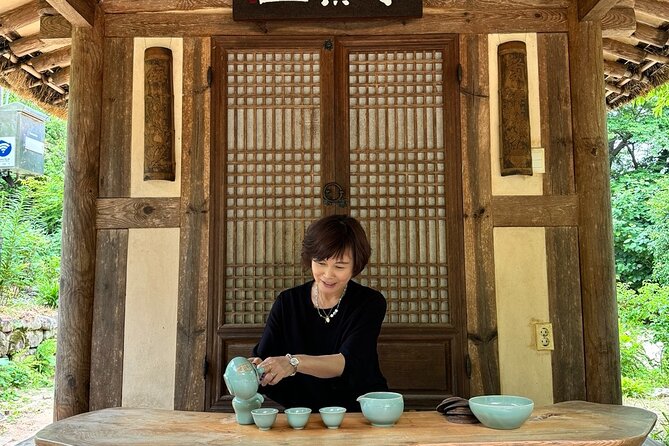
After the museum, the route continues to Nokcha-ro for about 40 minutes. The Choroknip tea farm, operated by Boseong Jeda, is known for its viewpoint over the fields.
The tea house terrace is the key feature. From there, you can look across the rolling rows below while enjoying the setting at a more relaxed pace. Daehan Dawon gives you the famous large-scale farm experience. Nokcha-ro gives you a viewpoint and tea-house setting, so the two visits do not feel identical.
The included matcha affogato is served here or during the Boseong portion of the day. It combines powdered green tea with green tea ice cream, making it a pleasant treat rather than a formal tasting. If you like matcha desserts, this is one of the easiest parts of the experience to enjoy without much explanation.
Forty minutes passes quickly. Think of this stop as a scenic pause, not a full farm walk. It is valuable because the view from the terrace gives you a different scale and angle on Boseong’s tea country.
Gangjin Dawon shifts the mood
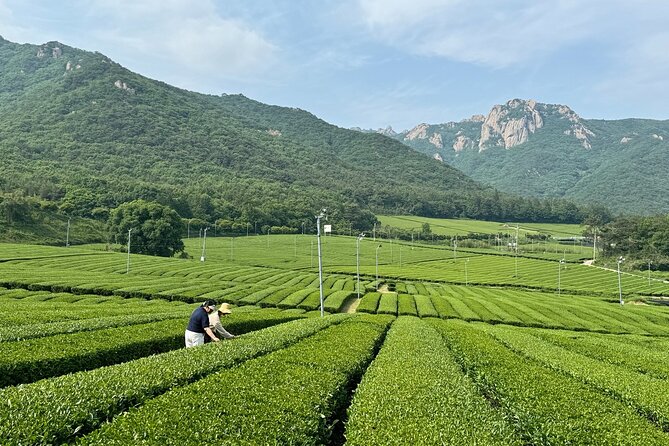
The journey from Boseong to Gangjin takes around 50 minutes. That drive is one reason this tour is difficult to reproduce comfortably by public transportation in a single day.
Gangjin Tea Field sits at the foot of Mount Wolchulsan and has been cultivated for green tea production by Osulloc since 1980. The modern farming story here is fairly recent, but the area’s tea culture reaches much further back.
You have about 30 minutes at Gangjin Dawon. That is enough to take in the setting and understand the connection between the current tea fields and the older local tradition. It is a shorter stop, so do not expect a long hike or an extensive farm visit.
For me, this is where the route becomes more distinctive. Boseong is the place many people already know from photographs. Gangjin adds a sense of discovery without requiring you to give up the green fields that drew you here in the first place.
Baegundong Hermitage Garden connects tea with place
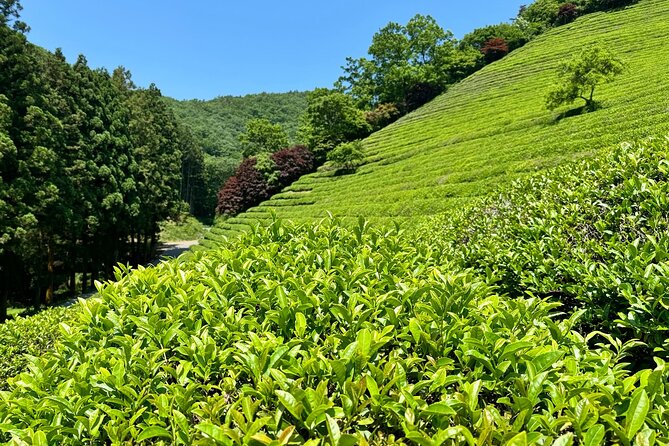
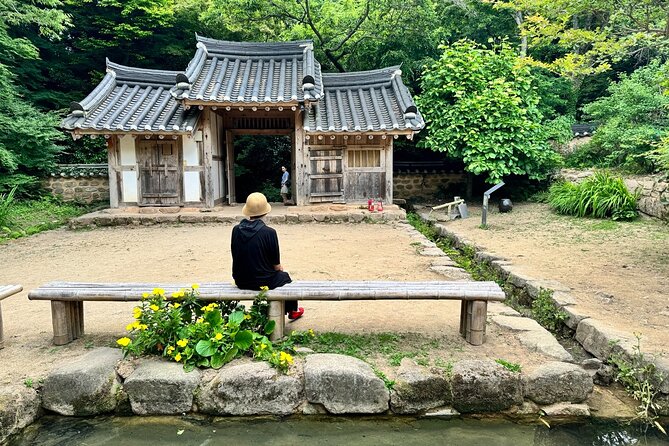
Baegundong Hermitage Garden was built in the late 17th century during the Joseon Dynasty. You have about 40 minutes to see this private garden, which was designed to work in harmony with its natural surroundings.
The garden matters because it shows tea culture in a setting shaped by quiet observation and careful design. Instead of focusing only on growing and selling tea, the stop points to the spaces where tea, study, gardens, and conversation came together.
Do not expect a large palace complex. The value is in the relationship between the garden and its surroundings, not in the size of the site. The shorter visit also means you will want to listen closely as your guide explains what makes the garden important.
This is a strong reason to choose the full Boseong to Gangjin route rather than a simple Boseong farm outing. The garden gives the day cultural depth without turning it into a museum-only experience.
Baegun Tea House brings the oldest tea story to life
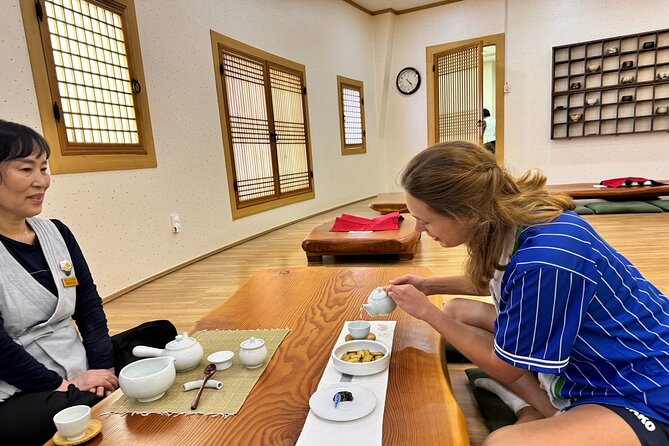
The final tea stop is Seongjeon-myeon, where Baegun Tea House honors Baegun Okpan Tea, described as Korea’s first tea brand. The brand was created in the 1920s by Lee Han-young, a descendant of one of Jeong Yak-yong’s disciples.
You have about 40 minutes here. The stop includes historical rice cake tea, a form of tea with a 200-year-old tradition in Gangjin. Rather than loose leaves served in a modern cup, this part of the day connects tea with an older local method and a specific community tradition.
This is the most unusual tasting on the route. The leaf tea at the fields and the powdered tea in the matcha affogato are familiar entry points. Rice cake tea is less expected, and it gives the day a clear ending.
The story of Baegun Okpan Tea also helps explain why Gangjin deserves attention. The town is not simply an extra stop after Boseong. It has its own place in Korean tea culture, with local people and businesses preserving traditions that are easy to miss on a standard South Korea itinerary.
The tea ceremony makes the day more than sightseeing
The Korean tea ceremony in Boseong is included, along with the matcha affogato and historical rice cake tea. This combination makes the experience feel hands-on rather than purely observational.
A ceremony gives you a chance to slow down and see how tea is prepared and presented. The museum explains production. The farms show cultivation. The ceremony adds the human ritual around drinking tea.
The experience is likely to suit you if you enjoy learning through taste and demonstration. It may be less appealing if you want a fast route focused only on scenic photographs. The day asks you to give attention to small details, not just collect viewpoints.
The guide is a major part of the value here. Veronica is praised for explaining tea production and tasting while also sharing her connection to Gwangju and the region. Vicky is praised for detailed tea knowledge and for making the day feel personal. Guide availability can vary, but the experience clearly depends on having someone who can explain the meaning behind each stop.
Is $195 per person fair value?
At $195 per person, this is not a budget day trip. It is also not just an admission ticket package. The price includes private transportation, all fees and taxes, the Korean tea ceremony, matcha affogato, and historical rice cake tea.
The transport is the biggest practical value. The route covers Gwangju to Boseong, Boseong to Gangjin, and Gangjin back to Gwangju. Those drives total about three hours and 10 minutes, before counting local movement between stops. A private vehicle removes the need to coordinate several regional connections.
The private format matters most if your group wants comfort and a guide focused only on you. It can also help if you have questions, want restaurant advice, or need assistance with other transport problems. One person described the guide as helping with travel solutions beyond the scheduled tour, which suggests useful local support on a complicated day.
Lunch and alcoholic drinks are extra, and travel insurance is not included. Keep those costs in mind when comparing the total price with a self-guided outing.
You may find better value elsewhere if you only want to photograph one tea field. You get stronger value here if you want the full story, several tea types, private driving, and access to Gangjin sites that are less straightforward to connect independently.
Who will enjoy this private tea tour?
I would recommend it most to:
- Tea drinkers who want more than a café tasting
- Visitors staying in Gwangju who want a full day in South Jeolla Province
- Couples, families, or small groups who value a private vehicle
- People who enjoy gardens, food, local traditions, and scenic walks
- First-time visitors who want help finding restaurants and regional sites
- Anyone curious about the difference between leaf tea, powdered tea, and rice cake tea
The day may not suit you if you dislike long drives, need a relaxed schedule with lots of free time, or want a purely physical outdoor hike. The stops are varied, but the route is full and the schedule is structured.
Most people can participate, service animals are allowed, and the tour is near public transportation. The experience requires good weather, so a poor forecast can affect the date.
Should you book the Boseong to Gangjin tea tour?
Book it if you want to understand Korean tea through scenery, taste, ritual, and local stories. The strongest parts are the private transport, the excellent guide element, Boseong’s sweeping tea hills, and Gangjin’s older tea traditions.
Skip it if you only want a quick farm visit or if nine to ten hours on the road sounds tiring. For everyone else, this is a well-shaped day from Gwangju, especially when you want something more personal than a standard sightseeing loop.
I would choose this tour over a self-guided trip if tea is a serious interest. The farms are easy to admire on your own, but the ceremony, museum, rice cake tea, and Gangjin history become far more meaningful when someone explains how the pieces fit together.
FAQ
Where does the tour start?
The tour starts from Gwangju Metropolitan City at 9:30 am.
How long does the tour last?
The experience lasts approximately nine to ten hours.
Is this a private tour?
Yes. Only your group participates, and private transportation is provided.
How long is the drive from Gwangju to Boseong?
Travel time from Gwangju to Boseong is around 70 minutes.
Is lunch included?
No. Lunch is not included. You choose a local restaurant and pay for your meal there.
What is included in the price?
The price includes private transportation, all fees and taxes, a Korean tea ceremony in Boseong, matcha affogato, and historical rice cake tea in Gangjin.
Can the tour be canceled because of weather?
Yes. The experience requires good weather. If poor weather causes cancellation, you will be offered a different date or a full refund. You can also cancel up to 24 hours before the start time for a full refund.
Just added around the world
- Yogyakarta: Prambanan Tour, Sukuh Temple & Tea Plantation★ 5.0 · 3 reviews
- Yokohama : Tea Ceremony with Sweets and Souvenir★ 5.0 · 5 reviews
- York: Private Horse-Drawn Carriage Ride and Afternoon Tea★ 5.0 · 3 reviews
- Wadi Rum: 2-Hour Jeep Tour with Bedouin Tea★ 5.0 · 11 reviews
- Walking Tour: Yanaka,Nezu& Sendagi: Tea Ceremony & Old Tokyo★ 5.0 · 3 reviews
- Washington, D.C.: Tea Around Town Bus Tour with Landmarks★ 3.4 · 7 reviews
- Visit local home for music and tea ceremony near Disney★ 4.9 · 13 reviews
- Volcano, Hot Spring, Mud Bath & Tea plantation all included★ 5.0 · 5 reviews
Green Tea Tours, compared.
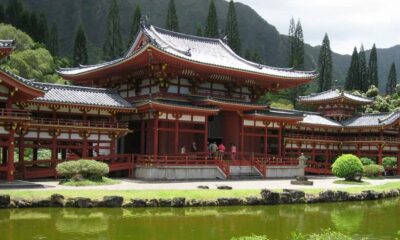
Green Tea Tour with Byodoin and Koshoji Temple Visits
Read our review →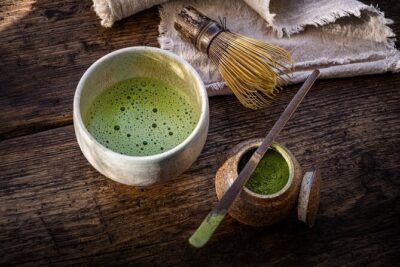
Scenic Green Tea Fields of Hidden Kyoto & Local Tea Exp (Private)
Read our review →
Osaka; Japanese Tea ceremony experience, Macha and Sencha
Read our review →
Slow Cycling Tour at Uji’s Matcha Green Tea Fields and Heritage
Read our review →
Sencha-do the Japanese Tea Ceremony Workshop in Kyoto
Read our review →Browse the lists this tour appears in