
Review · ESSAOUIRA
Visit the Oasis & Tea at the basket maker.
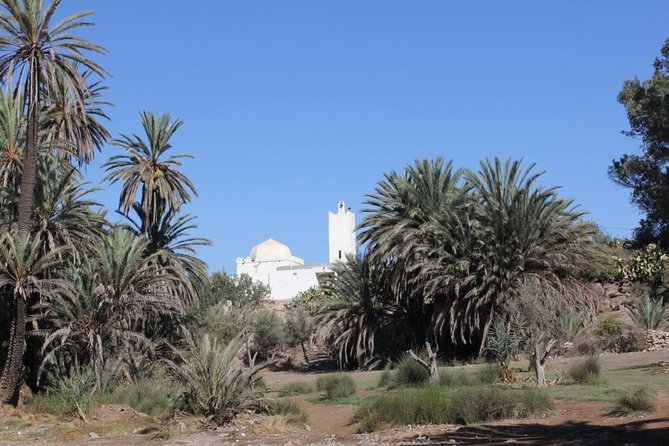
Slow down outside Essaouira. This half-day outing takes you to Ain el Hajar, an oasis shaped by springs, olive trees, gardens, and traditional crafts. I like the walk through working farmland, and I like that the morning ends with tea in a family basket-making workshop rather than at a standard tourist stop. The main consideration is that this is a rural walk, so you should be comfortable spending time outdoors and carrying your own water.
You meet at 9:00 a.m. at Labo Abdelkrim Khatabi d’Analyses Médicales on Rue Oued El Makhazine in Essaouira, then return to the same point after about four hours. Private transport is included, and the group can have up to 12 people. The price is $47.12 per person, which feels fair if you value local contact and transport more than a long list of formal attractions.
Key points to know before booking
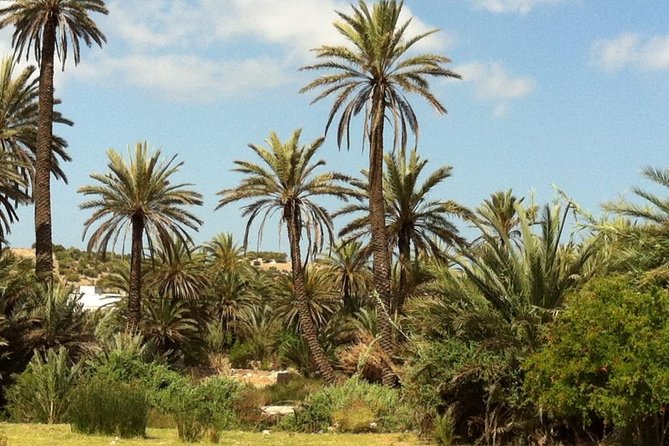
- Ain el Hajar begins at a spring: Water from the spring feeds the surrounding area and helps support gardens and agriculture.
- The walk starts beside a huge argan tree: It is described locally as possibly the biggest argan tree in the region.
- Olive trees now shape the oasis: Palm trees once dominated the area, but many have been replaced by olives.
- A saint’s mausoleum is part of the route: You walk toward the mausoleum of Sidi Bourahmoune, adding a religious and cultural stop to the countryside walk.
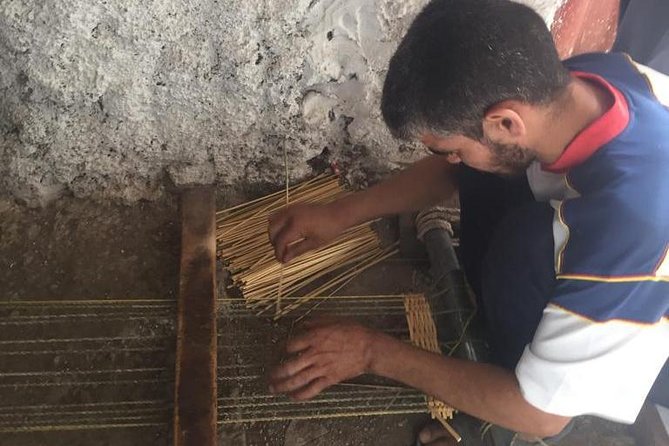
- Tea is served at a family workshop: A basket maker demonstrates rush weaving, then welcomes you with traditional Moroccan tea.
- Naima made a strong impression: A previous outing led by guide Naima was praised for her kindness and clear answers to questions.
Leaving Essaouira for Ain el Hajar
The morning starts in Essaouira at 9:00 a.m. The meeting point is Labo Abdelkrim Khatabi d’Analyses Médicales, at 287 Rue Oued El Makhazine. Since transport is provided and the activity returns to that same location, you do not need to arrange a separate taxi for the way back.
That simple start matters in Essaouira, where a countryside outing can otherwise require finding a driver, agreeing on a fare, and working out a remote pickup. Here, the transport is built into the experience. You should still arrive early enough to locate the meeting point without rushing.
The outing lasts about four hours, though the listed walk at Ain Lahjar accounts for roughly two hours. The remaining time is likely used for transport, pauses, the mausoleum, the viewpoint, and the basket maker’s workshop. The exact pace can depend on the group and the weather.
The group size is capped at 12 people. That is not a private walk, but it is small enough for the guide to answer questions and keep the visit from feeling like a procession. If you prefer a completely personal schedule, this may feel structured. If you want company without a large coach group, the size is sensible.
More Afternoon Tea in Morocco:
- Argan Forest, tea time at a Berbers family & Visit of an Argan cooperative.
★ 5.0 · 21 reviews - London: Afternoon Tea Cruise on the River Thames
★ 4.4 · 3,274 reviews - Afternoon Tea Bus Tour in Dublin
★ 5.0 · 2,791 reviews
The huge argan tree at the start
The walk begins near what is said to be the biggest argan tree in the region. The wording matters: it is an appealing local claim, not a formal measurement you should treat as a scientific record. Still, it gives the outing a memorable first point and brings attention to one of southwestern Morocco’s best-known trees.
Argan trees are closely tied to the countryside around Essaouira. Here, the tree is not presented as a product display or a quick roadside photo stop. It introduces the setting you are about to walk through, where agriculture, trees, water, and small rural industries are linked.
From there, you cross fields and gardens toward the mausoleum of Sidi Bourahmoune. The route is valuable because it shows the oasis as a working place. You are not simply looking at scenery from a vehicle. You are walking through an area shaped by farming and irrigation.
The supplied details do not give the distance, trail surface, or amount of uphill walking. For that reason, you should not book this expecting a precisely measured hiking route. It is better understood as a guided countryside walk with cultural stops.
How the spring keeps Ain el Hajar alive
Ain el Hajar is organized around a spring that brings water to the surrounding region. That water source explains why the area can support both trees and market gardens in a relatively dry part of Morocco.
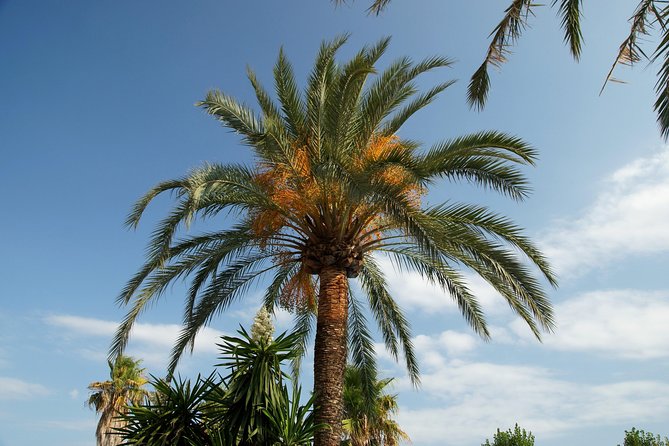
The oasis once had many palm trees. Over time, olive trees gradually replaced them, while irrigation systems were added to help grow vegetables and other market produce. This change gives the walk a useful human story: the place you see today is not frozen in an old postcard image. It has adapted to the needs of local farming families.
I like this part of the outing because the guide can connect ordinary details to the larger setting. An irrigation channel, a garden plot, or an olive grove becomes easier to understand when you know that the spring supports the whole area.
You may also notice the contrast between the oasis and the dry surroundings. The supplied information does not promise a particular season or crop, so the exact appearance of the gardens can vary. Still, the combination of water, olive trees, palms, and market gardening gives the route more substance than a simple nature walk.
Walking to Sidi Bourahmoune’s mausoleum
The path continues toward the mausoleum of Saint Sidi Bourahmoune. This adds a spiritual element to the morning, but the experience is not described as a formal religious tour. Think of it as a respectful stop connected to the local setting.
A mausoleum, or shrine, can tell you something about how a community remembers an important religious figure. The value here is less about checking off an attraction and more about seeing how a rural place combines farming, faith, and daily life.
Your guide is important at this point. A good explanation can help you understand why the site matters without turning the visit into a lecture. Naima received special praise for her kindness and for answering questions clearly, so asking about the saint, the site, and local customs should be worthwhile if she leads your outing.
Dress and behavior should be respectful around the mausoleum. The supplied details do not list a required dress code, so I would simply choose practical clothing that is not overly revealing and follow the guide’s instructions at the site.
A few more tea experiences around Morocco worth a look
- Around Marrakech: Camel Ride in Palm Groves including Tea
★ 4.4 · 1,245 reviews - Marrakech: Pottery Workshop with Moroccan Tea
★ 4.8 · 756 reviews - Marrakech: Medina by Night Walking Tour with Moroccan Tea
★ 4.6 · 586 reviews - Tangier: Sunset, Tea, Sweets, Camel Ride, and Hercules Caves
★ 4.9 · 575 reviews
The viewpoint and the olive oil connection
After the mausoleum, the route reaches a viewpoint over the oasis, extending toward the spring. This is one of the stronger moments of the walk because it lets you understand the area as a whole.
From ground level, you see separate pieces: gardens, trees, paths, and irrigation. From above, those pieces make more sense. You can see how the water source relates to the cultivated land and why the oasis has remained important.
There is also a chance of meeting a stone mason carving stones used as millstones for olive oil extraction. The wording is important: you might encounter one, but it is not guaranteed. If the mason is working during your visit, this could be one of the most interesting parts of the morning because it connects the olive groves to an older method of processing oil.
That possible stop also shows why a guided visit can be more useful than simply hiring transport to the oasis. A driver can take you to a viewpoint. A guide can point out a craft, explain what the stone is used for, and help you notice the work taking place around you.
Tea and rush weaving at the family workshop
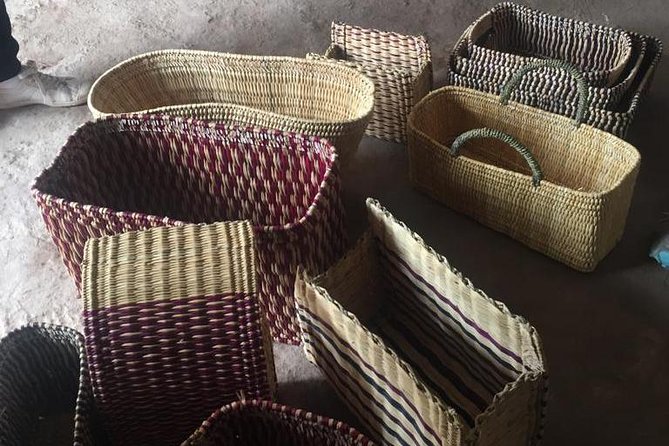
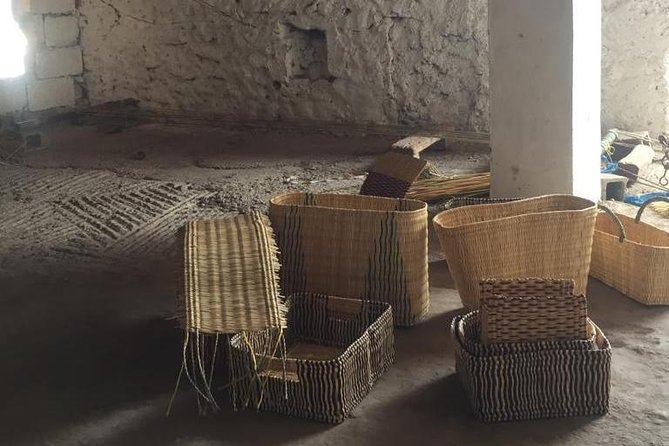
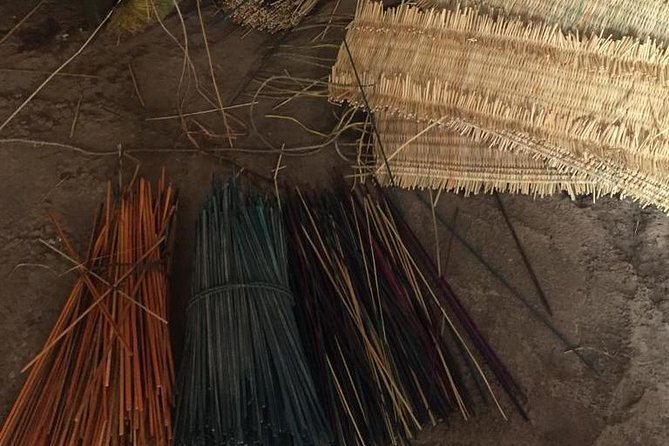
The final stop is with a basket maker who works with rush. This is a family business, and the visit includes a look at how the material is woven into baskets and other practical items.
The craft demonstration is modest in scale, which is part of its appeal. You are not being taken to a large showroom built around a sales pitch. You are visiting a family workshop and seeing a skill carried out by hand. The supplied information does not say that buying something is required, so you can focus on the process and the hospitality.
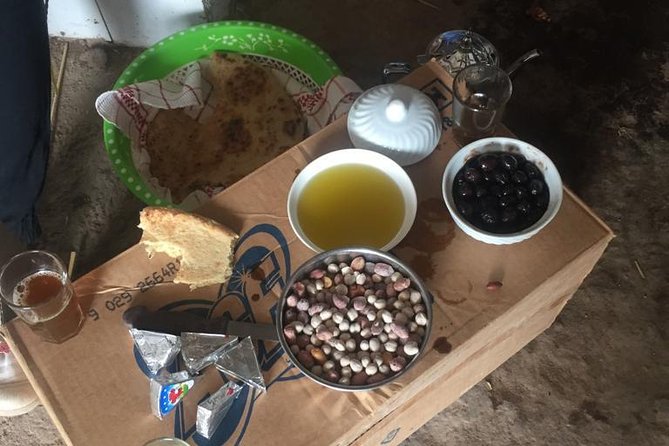
Tea follows the demonstration. Traditional Moroccan tea is served at the workshop, in keeping with the country’s well-known welcome for visitors. This is the social heart of the morning. After walking through fields, visiting a mausoleum, and looking across the oasis, you sit with a local family in a setting tied to their work.
A previous visit led by Naima included tea with a Berber family, along with a warm welcome. That detail helps set expectations: the tea stop is meant to be personal and hospitable, not merely a refreshment break.
Tea is included, but bottled water is not. Bring your own bottle, especially because the activity lasts around four hours and includes outdoor walking. The supplied details do not say whether water is available for purchase along the route, so it is wiser not to count on it.
What the $47.12 price buys you
At $47.12 per person, this is not the cheapest way to see rural Morocco. You are paying for a guided visit, private transportation, the walk, and tea at the basket maker. The value improves if you would otherwise need to arrange a car and guide separately.
The price also supports a slower type of sightseeing. You spend time in an agricultural area, meet a craft worker, and share tea with a family. Those moments can be more memorable than a quick stop at a major attraction, although they are harder to measure than entrance tickets and formal exhibits.
I would compare this outing with the cost and effort of arranging a private countryside transfer from Essaouira. If you already have transport and a trusted guide, you may find the price less compelling. If you want a ready-made morning with transport included, it is easier to justify.
The rating is 4.8 from eight reviews, a small sample but a positive one. The strongest praise centers on the argan-forest walk, the family tea visit, and Naima’s kindness and ability to answer questions. Those are the parts I would treat as the real reason to book.
Who will enjoy this morning most
This experience suits you if you like rural walks, local crafts, and direct contact with residents. It is a good choice for someone who has already explored Essaouira’s medina and wants to see how the surrounding countryside works.
It also fits visitors who prefer a half-day outing rather than a full-day excursion. You leave in the morning, return to the same meeting point, and still have much of the day available in Essaouira.
You should think twice if you want a tightly scheduled sightseeing tour with many formal monuments. Only one main destination is listed, and much of the value comes from the walk itself, the spring, the gardens, the viewpoint, and the family workshop.
The activity is listed as suitable for most people, with service animals allowed and public transportation nearby. The exact walking conditions are not provided, so anyone concerned about mobility should ask the provider before booking. Good weather is required, and poor conditions can lead to a different date or a refund.
Practical details that matter
Confirmation arrives when you book. The activity starts at 9:00 a.m., ends back at the meeting point, and accepts a maximum of 12 participants. It is booked an average of 26 days ahead, so reserving early is sensible if your schedule is fixed.
Free cancellation is available until 24 hours before the start time. A cancellation made less than 24 hours before departure is not refundable, and changes are not accepted inside that same window.
The provider also requires a minimum number of participants. If that minimum is not reached, you can choose another date or experience, or receive a full refund. Poor weather is handled in the same basic way.
Bring bottled water, comfortable clothes, and shoes suitable for walking across fields and gardens. Since the route includes a shrine and a family home, modest clothing and a respectful attitude are good choices.
Should you book the Ain el Hajar outing?
Book it if you want to see a quieter side of Essaouira and value the human parts of travel: a spring-fed oasis, a family craft, a shared glass of tea, and a guide who can explain what you are seeing. The walk is the main event, not a backdrop between vehicle stops.
Skip it if your priority is a major monument, a guaranteed artisan demonstration, or a detailed hiking specification. The stone mason may not be working when you arrive, and the exact route details are limited.
For most visitors with a free morning, the balance is good. The outing offers transport, a small group, a countryside walk, and a genuine family welcome for $47.12. Just bring water, allow for changing weather, and book early if you hope to join a particular date or guide such as Naima.
FAQ
Where does the experience start?
It starts at Labo Abdelkrim Khatabi d’Analyses Médicales, 287 Rue Oued El Makhazine, Essaouira 44000, Morocco.
What time does the tour begin?
The start time is 9:00 a.m.
How long does the experience last?
The experience lasts approximately four hours. The main visit at Ain Lahjar is listed as two hours.
Is transportation included?
Yes. Private transportation is included, and the activity ends back at the original meeting point.
Is bottled water included?
No. Bottled water is not included, so you should bring your own.
How many people can join the activity?
The maximum group size is 12 people.
What happens if the weather is poor or the minimum group size is not reached?
You will be offered a different date or experience, or a full refund. Free cancellation is also available if you cancel at least 24 hours before the start time.
Just added around Morocco
- Desert Sunset Camel Ride With Free Tea in The Desert Camp★ 5.0 · 3 reviews
- Private Quad Biking Safari In The Palm Grove Of Marrakech And Berber Home Tea★ 5.0 · 3 reviews
- Sunset Sandboarding & Mint Tea in Timlaline Dunes★ 5.0 · 5 reviews
- Agadir Quad ATV Adventure Tour with Berber Tea Experience★ 5.0 · 18 reviews
- Marrakech: Agafay Desert Quad Bike, with Pool swim Lunch Tea★ 5.0 · 5 reviews
- Fez Outdoor Adventure: Quad Ride, Camel Photo & Mint Tea★ 5.0 · 2 reviews
- Agadir/Taghazout: Sandboarding & Sunset Tea with Fire Show★ 5.0 · 6 reviews
- Argan Forest, tea time at a Berbers family & Visit of an Argan cooperative.★ 5.0 · 21 reviews
Afternoon Tea Experiences, compared.



Afternoon Tea Bus Tour – 1960s Routemaster Bus
Read our review →




Browse the lists this tour appears in