
Review · ESSAOUIRA
Argan Forest, tea time at a Berbers family & Visit of an Argan cooperative.
Morocco’s argan country rewards slow walking. This three-and-a-half-hour outing pairs an easy forest ramble with tea at a Berber family farm and a visit to a women’s argan-oil cooperative. I especially like the clear focus on local life and the chance to see how the famous oil is made, not just buy a bottle in a shop. I also like that the walk is gentle enough for most people, with guides such as Naima, Faisal, and Malika praised for their patience and helpful explanations.
The main consideration is that this is more of a leisurely cultural outing than a serious hike. The forest walk may feel too mild if you want a demanding trek, and the tour depends on good weather and a minimum group size. At $52.27 per person, the value rests on the personal guiding, private transportation, tea visit, and cultural context rather than on a long list of formal attractions.
Key points at a glance
- Argan forest walk: Learn how argan trees grow, mature, and support products used for food and cosmetics.
- Berber family tea visit: Share Moroccan tea at a farm and experience a more personal side of rural life.
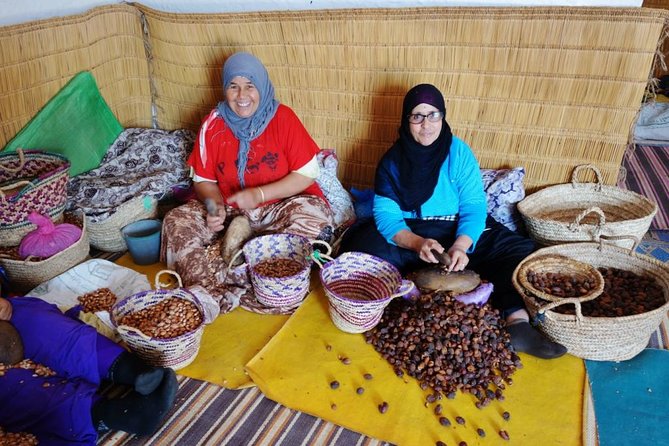
- Women’s cooperative: See the traditional process behind argan oil at Cooperative Marjana.
- Small group size: The outing is limited to 12 people, which should allow room for questions.
- Historic village stop: Walk through a village with a marabout, or saint’s temple, containing elements dating to the 16th century.
- Simple logistics: The tour starts and ends at 287 Rue Oued El Makhazine in Essaouira and includes private transportation.
Why the argan forest matters near Essaouira
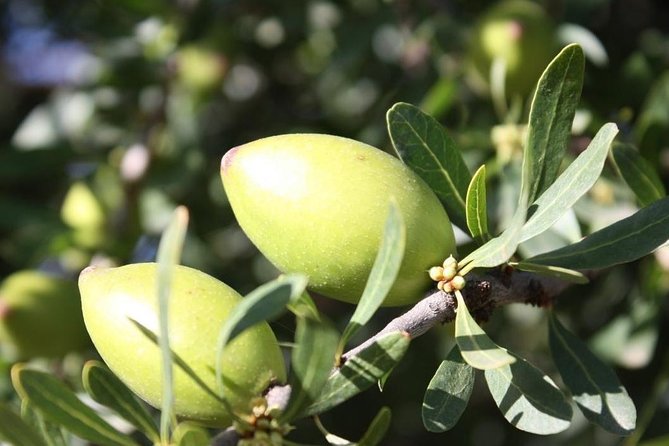
Argan trees are native to southwestern Morocco, and the Essaouira region is closely tied to them. This is not simply a walk past attractive trees. The guide explains the tree’s life cycle, from its early stages through maturity, and shows how the fruit and tree support a range of products.
That context gives the outing its purpose. You are not just looking at a local plant. You are learning why argan trees matter to the area’s ecology, economy, and traditions. The guide also explains the benefits for local culture, helping connect the forest to the people who work with its products.
I like this approach because it gives you a better way to understand argan oil. In Essaouira, argan products are everywhere, from food to skin-care items. Seeing the source and learning about the process makes the bottles and jars in town less anonymous.
The setting also suits people who prefer a gentle pace. The walk is described as relatively easy, so you can focus on the trees, the explanations, and the village rather than worrying about a difficult route. Still, you should think of it as a country walk, not a fully developed city attraction. The available information does not give a precise distance, trail surface, or elevation change, so anyone with specific mobility concerns should ask before booking.
More Afternoon Tea in Morocco:
- Visit the Oasis & Tea at the basket maker.
★ 5.0 · 8 reviews - London: Afternoon Tea Cruise on the River Thames
★ 4.4 · 3,274 reviews - Afternoon Tea Bus Tour in Dublin
★ 5.0 · 2,791 reviews
Walking beneath the argan trees
The forest section is the heart of the outing. As you walk, your guide talks through the different stages of an argan tree’s life and explains the many products made from the tree and its fruit. This creates a useful rhythm: walk, listen, look closely, and ask questions.
Naima received especially warm praise for her explanations of the argan forest, local culture, and daily life in Morocco. Faisal was also praised for being patient with questions and for making the morning easy to follow. Malika guided a private couple on one outing and was described as friendly and clear in her explanations.
Those details matter because the guide shapes the quality of a tour like this. A forest by itself can be pleasant, but the meaning comes from someone who can explain what you are seeing. The guide can also make the visit more flexible by answering questions beyond the trees, including topics connected to life in Morocco.
You should not expect a strenuous walk or a wilderness expedition. The attraction is the combination of nature and interpretation. I would recommend comfortable walking shoes, sun protection, and water. Bottled water is not included, so bring your own.
The village and its 16th-century marabout
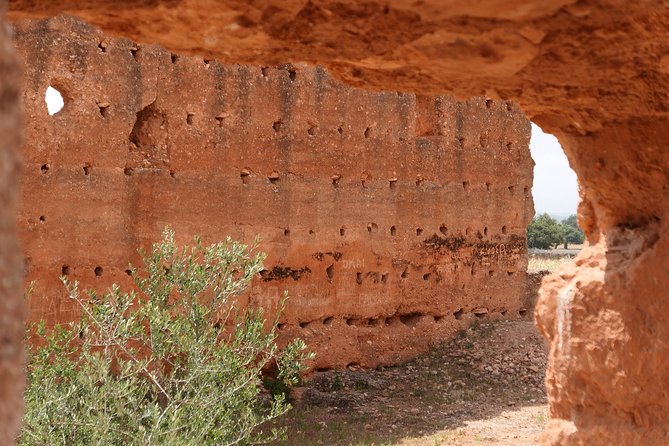
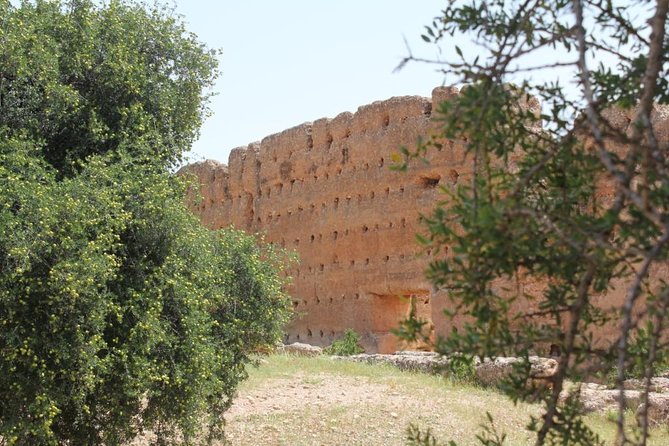
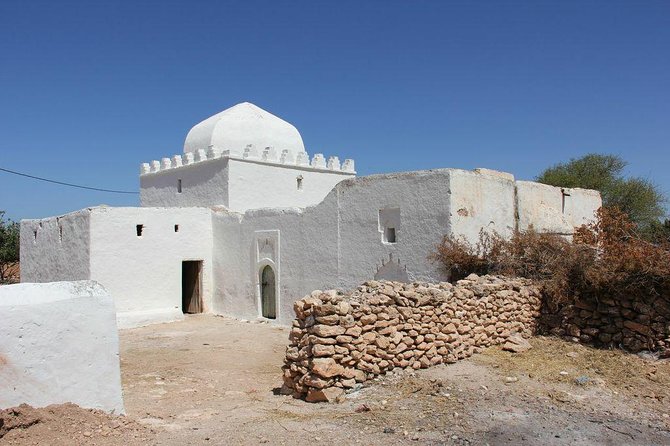
The route passes through a small village with a marabout, a saint’s temple. Parts of the site date back to the 16th century, adding an architectural and cultural note to the walk.
The supplied details do not promise a long historical talk or a formal interior visit, so it is best to treat this as a brief village stop rather than a major monument. Its value is in seeing how a rural community’s religious and historic places fit into the route.
This is also where a good guide can add the most. The guide may explain what a marabout means in Moroccan culture and point out details you might otherwise walk past. Since the tour is limited to a maximum of 12 people, you should have a better chance of hearing those explanations than on a large coach excursion.
Tea with a Berber family on the farm
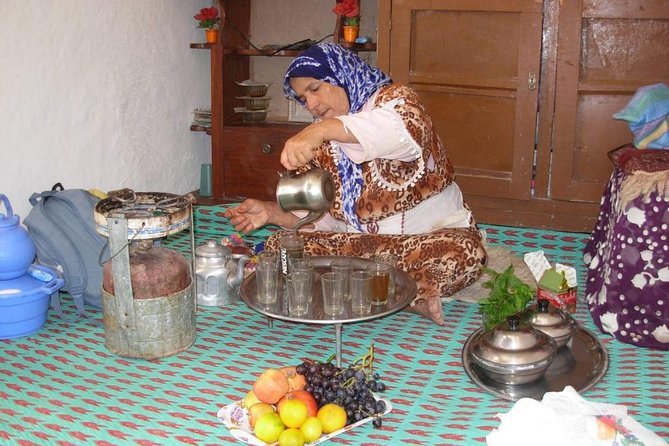
Tea time is the most personal part of the outing. At a Berber family farm, you are served Moroccan tea and get a look at traditional hospitality in a rural setting.
The tea is included, along with coffee and/or tea listed among the tour inclusions. The visit is not presented as a staged performance. Instead, it is meant to give you time with a local family and a chance to see a different side of the region beyond Essaouira’s medina and coast.
I like this pause in the itinerary. After walking through the forest, sitting down for tea gives the morning a human center. You can ask questions, listen to your guide, and connect the argan tree to everyday life.
Keep your expectations sensible. The information does not specify how long the tea visit lasts, what food is served, or which family hosts each departure. Tea is the confirmed inclusion, so do not assume that a full meal or cooking demonstration is part of the outing.
A few more tea experiences around Morocco worth a look
- Around Marrakech: Camel Ride in Palm Groves including Tea
★ 4.4 · 1,245 reviews - Marrakech: Pottery Workshop with Moroccan Tea
★ 4.8 · 756 reviews - Marrakech: Medina by Night Walking Tour with Moroccan Tea
★ 4.6 · 586 reviews - Tangier: Sunset, Tea, Sweets, Camel Ride, and Hercules Caves
★ 4.9 · 575 reviews
Inside Cooperative Marjana
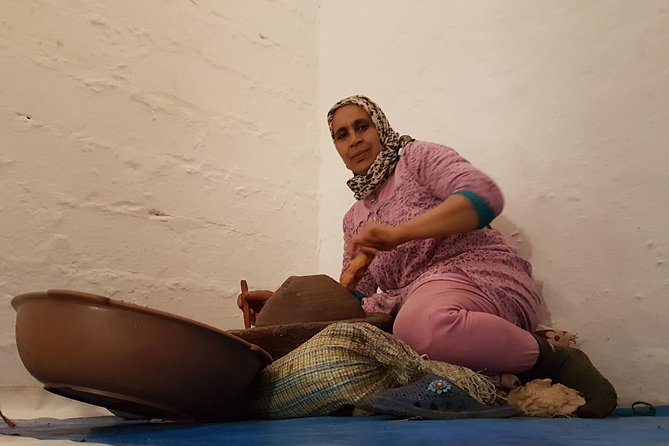
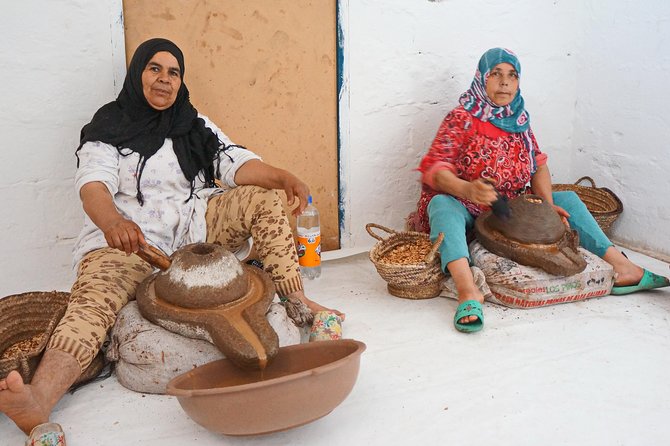
The final main stop is Cooperative Marjana, an argan-oil cooperative. Here, you learn how the famous oil is made and see the work associated with turning argan fruit into products.
The cooperative is run by women, which gives the visit an important social and economic dimension. You are learning about more than a souvenir. The cooperative represents local skills and the role of argan products in community life.
The experience includes both edible and cosmetic argan products. That distinction is useful, since argan oil for cooking and argan oil used in cosmetics are not simply interchangeable products. The guide can explain how the tree and fruit lead to different goods, while the cooperative gives you a chance to understand the work behind them.
A cooperative visit can sometimes feel like a shopping stop, so approach this part with open eyes. The information provided confirms that you will discover the production process, but it does not promise a purchase discount, tasting menu, or specific amount of demonstration time. You can enjoy the educational side without feeling obliged to buy anything.
The 30-minute duration listed for the cooperative stop makes sense as a focused visit. It is long enough to learn the basic process, but probably not long enough for an extended workshop.
What $52.27 buys you
At $52.27 per person, this is not the cheapest way to spend a morning near Essaouira. It can still be good value if you want several elements combined: private transportation, an experienced guide, the argan forest walk, tea with a Berber family, and the women’s cooperative.
You are paying for interpretation and access as much as transport. A self-guided walk might cost less, but it would not give you the same explanation of the tree’s life cycle, the local cultural setting, or the traditional production process.
The price makes the most sense for visitors who have limited time in Essaouira and want one organized outing beyond the city. It also suits people who enjoy asking questions. Past guide experiences with Naima and Faisal suggest that patient explanations are one of the strongest parts of the tour.
The value is weaker if you are mainly seeking a long hike, dramatic mountain scenery, or a full-day rural adventure. The walk is relatively easy and lasts about three and a half hours, so the day remains light rather than demanding.
Timing, transport, and group size
The tour begins at Labo Abdelkrim Khatabi d’Analyses Médicales, 287 Rue Oued El Makhazine, Essaouira 44000, Morocco. It ends back at the same meeting point. Private transportation is included, which helps link the town meeting point with the rural portions of the outing.
The activity uses a mobile ticket, and confirmation is provided at booking. Pickup details have been described as clear and timely, but you should still check the exact meeting instructions before setting out.
The maximum group size is 12 people. That is small enough to keep the walk from feeling like a procession and should make conversation with the guide easier. On some departures, the group may be much smaller. One reported outing took place with only a couple, though you should not assume every departure will be private.
Most people can take part, and service animals are allowed. The tour is weather dependent, which is important for an outdoor walk. If poor weather cancels the activity, you can choose another date or receive a full refund. The same applies if the minimum number of participants is not reached.
For a full refund, cancel at least 24 hours before the start time. Changes or cancellations inside that window are not accepted for a refund.
Who will enjoy this Essaouira outing
I would choose this experience if you want a manageable half-day outside the city with a strong local focus. It works especially well for:
- Couples looking for a calm shared activity
- Families and older adults who prefer an easy walk
- Visitors interested in food, cosmetics, farming, and local production
- First-time visitors who want a guide to explain rural Morocco
- People who enjoy small groups and time for questions
It may not suit you if your priority is a challenging trek, a long sightseeing day, or a detailed archaeological tour. The marabout is an interesting stop, but this is not primarily a history excursion. The cooperative is educational, but it also has a commercial setting, so shoppers and non-shoppers may have different reactions.
The tour is also a good choice if you have already seen Essaouira’s main streets and want a change of pace. You trade the medina’s shops and sea views for trees, village paths, tea, and local production.
My practical advice before booking
Bring bottled water because it is not included. Wear shoes suitable for an easy rural walk, and plan for outdoor conditions even though the route is not described as difficult.
Keep the meeting point details saved on your phone. Since the tour returns there, you do not need to arrange a separate end location. The mobile ticket also makes it easier to keep your confirmation available without printing anything.
Try to ask your guide about both kinds of argan oil, edible and cosmetic. That is one of the most useful distinctions on the tour. Also ask about the tree’s life cycle and how the cooperative fits into local economic life. Guides such as Naima, Faisal, and Malika have been praised for answering questions, so this is an outing where curiosity pays off.
The tour is often booked about 21 days ahead. That does not guarantee it will sell out, but it is a useful reason to reserve early if your Essaouira dates are fixed.
Should you book it?
Book this outing if you want an easy walk with real local context, not a demanding hike. The best parts are the guide-led argan forest visit, tea with a Berber family, and the women’s cooperative, with private transportation tying the morning together.
At $52.27, I consider it fair value for a small-group cultural experience that reaches beyond the usual Essaouira center. Skip it if you want strenuous walking or a major monument. Choose it if you want to understand why argan trees matter to this region and meet the people connected to them.
FAQ
How long does the argan forest and tea experience last?
The experience lasts approximately 3 hours and 30 minutes.
Where does the tour start?
It starts at Labo Abdelkrim Khatabi d’Analyses Médicales, 287 Rue Oued El Makhazine, Essaouira 44000, Morocco.
Where does the tour end?
The activity ends back at the same meeting point in Essaouira.
Is transportation included?
Yes. Private transportation is included.
Is tea included?
Yes. Tea at a Berber family farm is included, along with Moroccan tea. Coffee and/or tea are also listed among the inclusions.
Is bottled water included?
No. Bottled water is not included, so you should bring your own.
How many people can join the tour?
The activity has a maximum of 12 participants. Most people can participate, and service animals are allowed.
Just added around Morocco
- Private Quad Biking Safari In The Palm Grove Of Marrakech And Berber Home Tea★ 5.0 · 3 reviews
- Desert Sunset Camel Ride With Free Tea in The Desert Camp★ 5.0 · 3 reviews
- Sunset Sandboarding & Mint Tea in Timlaline Dunes★ 5.0 · 5 reviews
- Agadir Quad ATV Adventure Tour with Berber Tea Experience★ 5.0 · 18 reviews
- Marrakech: Agafay Desert Quad Bike, with Pool swim Lunch Tea★ 5.0 · 5 reviews
- Fez Outdoor Adventure: Quad Ride, Camel Photo & Mint Tea★ 5.0 · 2 reviews
- Agadir/Taghazout: Sandboarding & Sunset Tea with Fire Show★ 5.0 · 6 reviews
- Walk to the cascade and marabout of Sidi Mbark & for a tea to Kaouki★ 5.0 · 14 reviews
Afternoon Tea Experiences, compared.



Afternoon Tea Bus Tour – 1960s Routemaster Bus
Read our review →



Browse the lists this tour appears in