
Review · TAIPEI
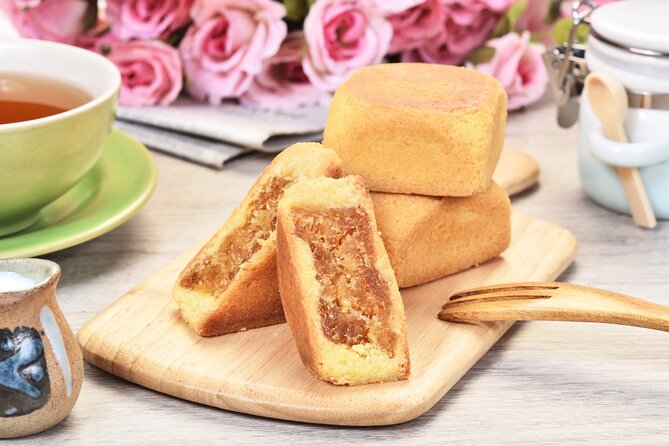
Pineapple Pastry with Egg Yolk, Longan Cake, High Mountain Oolong Tea. Taiwan Traditional Dessert Experience-D (Taipei Cooking Class)
Sweet things tell you plenty about a place. This Taipei class turns three Taiwanese favorites into a hands-on afternoon, with pineapple pastries, longan cake, and high-mountain oolong tea. I like the small group size of 10, and I like that you can take home the pastries you make. The main drawback is the limited schedule: the class runs only on Mondays from 2:30 to 5 p.m.
The menu also gives you more than a standard baking lesson. You learn why salted egg yolk balances pineapple pastry, how longan fits into older Taiwanese dessert traditions, and why tea from Taiwan’s high mountains is prized. At $70 per person, the price is not a bargain class, but the instruction, tasting, recipe, and take-home food make it a reasonable choice for visitors who want an active cultural experience rather than another quick snack stop.
Key points to know before booking

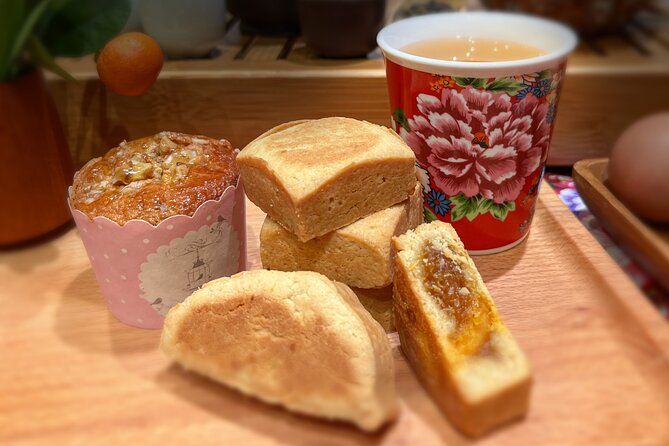
- Three Taiwanese specialties in one class: Prepare pineapple filling, pineapple pastry with salted egg yolk, and traditional longan cake, then pair them with high-mountain oolong tea.
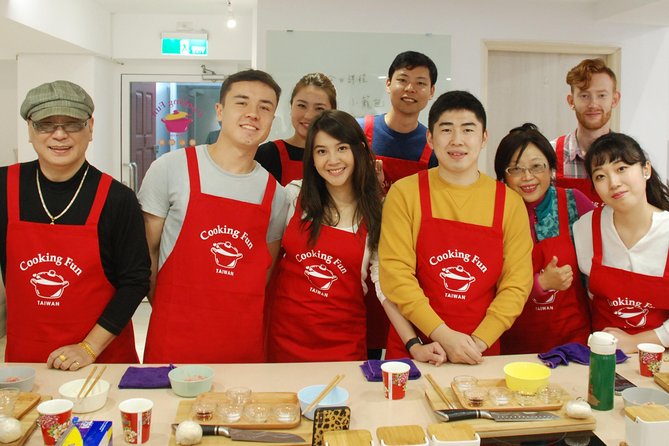
- A small class of up to 10 people: The group limit should allow for direct help while keeping the kitchen social rather than crowded.
- Held every Monday from 2:30 to 5 p.m.: Plan your Taipei schedule around this fixed afternoon time.
- Teaching is available in three languages: Instruction is offered in Chinese, English, and Japanese.
- You can bring your pineapple pastries home: This makes the class useful for sharing Taiwanese flavors with family and friends later.
- Recipe provided after the class: Give the names of your partners when booking so the recipe can be prepared for your group.
Why this Taipei dessert class is worth your afternoon
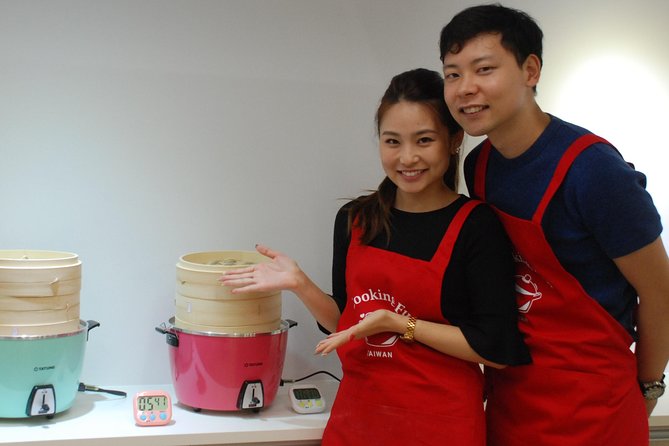
Taiwanese food is often introduced through night-market dishes, beef noodle soup, bubble tea, or dumplings. Those are worthwhile, but dessert offers another way into the culture. This class focuses on foods connected with gifting, family gatherings, tea drinking, and older home-style traditions.
I especially like the balance between making and tasting. You are not simply shown a finished pastry and sent on your way. You work with the pineapple filling, learn the pastry process, and handle a combination of sweet and salty flavors. The salted egg yolk is important here because it cuts through the sweetness of the pineapple and gives the pastry a fuller aroma.
The afternoon format also works well. From 2:30 to 5 p.m., you can enjoy the class after lunch without rushing out before dinner. Since the activity lasts about two and a half hours, it has enough time for instruction and preparation without taking over your entire day in Taipei.
There is one practical catch. Monday is the only available day. If your visit is short or your Monday schedule is already full, this class may be difficult to fit in. I would reserve it before building the rest of your Taipei plans, especially since it is booked an average of 16 days ahead.
More Chinese Tea Ceremonies in Taipei:
- Taiwanese Baking Class with Oolong Tea Tasting in Taipei
★ 5.0 · 4 reviews - One-Day Hangzhou Dragon Well Tea Culture & West Lake Private Tour
★ 5.0 · 98 reviews - Traditional Chinese Tea Ceremony Experience
★ 4.7 · 74 reviews
Arriving at CookingFun Taiwan on Guangfu South Road
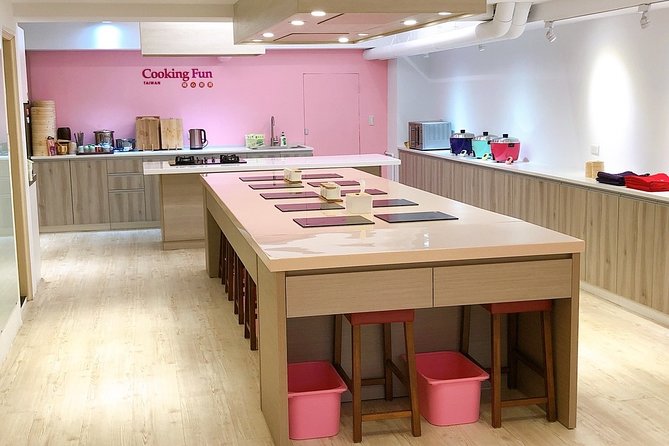
The class takes place at CookingFun Taiwan, at 2F, No. 5, Lane 290, Guangfu S. Road, in Taipei’s Da’an District. The listed meeting point is CookingFun Taiwan 暖心廚房, and the activity both starts and finishes there.
You should allow enough time to find the building and reach the second floor. The class begins at 2:30 p.m., so arriving early is sensible, particularly if you are navigating Taipei public transportation or are unfamiliar with lane addresses. The location is near public transportation, which helps, but the provided information does not specify a particular station or walking time.
This is a mobile-ticket experience, so you can keep your confirmation on your phone. Confirmation is provided when you book. The class is capped at 10 people, a useful limit for a practical kitchen activity where everyone needs room to work and a chance to follow the instructions.
The activity ends back at the meeting point. That makes planning easy: you do not need to arrange a separate pickup or wonder where the final tasting takes place.
Preparing pineapple pastry with salted egg yolk
The main event is Taiwan’s pineapple pastry, one of the country’s best-known souvenirs. These pastries are often bought in boxes for family, friends, and colleagues, so learning to make them adds meaning to something you may otherwise pick up at an airport or department store.
The class begins with preparing the pineapple filling. That step matters because the filling controls much of the pastry’s character. Pineapple brings fruitiness and sweetness, while the pastry shell provides a mellow, buttery base. The salted egg yolk adds an aromatic, savory note that keeps the dessert from tasting flat.
You will make pineapple pastry with the egg yolk included, rather than treating the yolk as an unrelated side ingredient. That combination is a useful lesson in Taiwanese flavor preferences: sweetness is often paired with salt, richness, or toasted aromas.
I like the souvenir value here. You can take the pineapple pastries you make back home to share with family and friends. The pastries are not just something eaten during the class. They become a small edible reminder of Taipei and a gift with a personal story behind it.
The information does not specify exactly how many pastries you make or how much time is devoted to each stage. You should therefore think of this as a guided introduction, not a professional pastry workshop. If you want advanced baking theory, commercial production techniques, or a long list of recipes, this may feel too focused. If you want to understand one iconic Taiwanese treat and make your own version, it fits well.
Making longan cake, an older Taiwanese sweet
The second dessert is longan cake. Longan, also known as Fuyuan, is connected with older Taiwanese dessert traditions and is described as a nourishing ingredient associated with warmth and blood circulation.
You do not need to treat those traditional descriptions as modern medical advice. Their value here is cultural. They explain why longan appears in Taiwanese food traditions and why the ingredient carries more meaning than simple sweetness.
Longan cake gives the class a different flavor direction from pineapple pastry. Pineapple pastry is fruity, buttery, and salty from the egg yolk. Longan cake brings the distinct taste of dried longan and a sense of an older, more traditional sweet. Preparing both lets you compare a famous modern souvenir with a dessert linked to Taiwan’s earlier food culture.
This is one of the strongest parts of the class for anyone interested in local traditions. You are not just making the most familiar Taiwanese pastry. You are also learning about a less widely known dessert that may be harder to understand from a bakery display alone.
The available details do not explain the exact ingredients, shaping method, or baking process for the longan cake. That means you should expect the class to explain the dish within its practical recipe rather than provide a full historical lecture. Still, the pairing gives the afternoon more depth than a single-item baking lesson.
More Tea and Sweets Making in Taipei:
- Matcha Making Class in Tokyo with Authentic Japanese Sweets Set
★ 5.0 · 744 reviews - Tangier: Sunset, Tea, Sweets, Camel Ride, and Hercules Caves
★ 4.9 · 575 reviews - Matcha Making Class in Osaka with Authentic Japanese Sweets Set
★ 5.0 · 509 reviews - Tokyo: Matcha Making Experience with Mochi Sweets in Asakusa
★ 4.9 · 388 reviews
Tasting high-mountain oolong from above 1,000 meters
Tea is not an afterthought here. The class includes oolong tea selected from Taiwan’s high mountains, at elevations above 1,000 meters.
Taiwan has many mountain regions surrounded by mist and clouds, with relatively short average sunshine. The course description connects these conditions with tea leaves that contain catechin and describes the resulting oolong as refreshing, aromatic, and naturally sweet.
The exact tea-growing area is not specified, so you should not expect a detailed plantation visit or a regional tasting flight. What you do get is a tea pairing designed to work with both desserts. The lightly refreshing character of oolong helps balance the richness of pastry, salted egg yolk, and longan.
I like this part because it slows the class down. Baking can become a race from one instruction to the next. Tea gives you a reason to pause, taste, and notice how Taiwanese sweets are traditionally enjoyed. The result is less about consuming a pile of sugar and more about creating a complete afternoon snack.
If you already enjoy Taiwanese tea, this pairing may be the highlight. If you are new to oolong, it gives you a clear starting point without requiring specialist knowledge.
Language support and the role of the instructor
Teaching is offered in Chinese, English, and Japanese. That makes the class practical for international visitors and reduces the chance that an important cooking step gets lost in translation.
One family specifically praised the instructor’s kindness and the translator’s help in bridging the language gap. The family also enjoyed working as a team. Those details matter because cooking classes depend heavily on clear demonstrations, patient corrections, and a friendly pace.
The available information does not give the instructor’s name, so I cannot point you toward a particular teacher. I can say that the class appears designed to support mixed-language groups rather than assume everyone speaks Chinese.
You should still mention your preferred language when making the reservation if that matters to you. The listed teaching languages are Chinese, English, and Japanese, but the exact arrangement of instructors or translation support is not explained.
What the two-and-a-half-hour schedule means
The class runs from 2:30 to 5 p.m., for an approximate duration of two hours and 30 minutes. That is long enough for a real activity, but compact enough to combine with other Taipei plans.
You will likely spend the session moving through preparation, instruction, dessert making, tea, and completion of the class. The exact order is not provided, so I would not plan a timed dinner reservation immediately after 5 p.m. The course should finish around then, but cooking activities can take a little longer when a group needs extra help.
The Monday schedule is the biggest planning issue. A fixed weekly class can be convenient if it matches your itinerary, but frustrating if it does not. Check the date carefully before booking, especially if you have only a few days in Taipei.
The experience requires a minimum number of participants. If that minimum is not reached, the provider may offer another date or experience, or a full refund. Poor weather can also lead to a new date or full refund, although weather is an unusual condition for an indoor cooking activity. Keep that policy in mind if your itinerary is tightly packed.
Is $70 a fair price?
At $70 per person, this class costs more than simply buying a pineapple cake and a cup of tea. That comparison is fair, but incomplete.
You are paying for a guided activity, three food elements, language support, a small group setting, the chance to make pineapple pastries yourself, and a recipe supplied after completion. You also receive something that a shop purchase cannot provide: an understanding of how the flavors fit together and why these foods matter in Taiwan.
The value improves if you plan to share the pastries later. A box of sweets bought at a shop is easy. Pastries made during your Taipei visit carry a personal connection, even if the finished result is not perfectly uniform.
The price is less attractive if you mainly want to eat Taiwanese desserts or if you dislike structured group activities. You could spend much less at a bakery or tea shop. This class makes sense for people who want to participate, ask questions, and leave with both food and a recipe.
Dietary needs, group size, and practical limits
Tell the provider in advance if you are vegetarian, have food allergies, or follow other dining restrictions. Do not wait until the class begins, since the request needs to be made when you reserve.
The maximum group size is 10 people. That is small enough to feel manageable, but it is still a shared class rather than a private lesson. If you want one-on-one instruction, confirm whether a private arrangement is available before booking, since no private option is stated.
Service animals are allowed. The experience is near public transportation, and the mobile ticket makes the entry process simple. Other accessibility details are not provided, so contact Cooking Fun Taiwan directly if you need specific information about stairs, seating, or kitchen access.
Free cancellation is available if you cancel at least 24 hours before the start time. Cancellations or changes made less than 24 hours in advance are not refunded or accepted. The cutoff uses Taipei local time, so check the clock carefully if you are booking from another country.
Who should book this Taipei cooking class?
I would recommend this experience to you if you want a hands-on introduction to Taiwanese dessert culture. It suits couples, families, and small groups who enjoy making food together and want something more personal than a souvenir purchase.
Families may particularly like the teamwork. The available feedback describes a family working well together, with the instructor helping them and a translator making communication easier. The class also gives you a take-home result, which adds value for people traveling with children or relatives.
It is also a good fit for tea drinkers, pastry fans, and visitors who want to learn about lesser-known Taiwanese sweets such as longan cake. The mix of familiar pineapple pastry and older longan traditions gives the class a useful range.
I would hesitate to recommend it if your Taipei visit does not include a Monday, if you need a fully private lesson, or if your only goal is a cheap dessert tasting. The fixed schedule and $70 price require a clear interest in the activity itself.
Should you book Taiwan Traditional Dessert Experience D?
Book it if you want to spend an afternoon making one of Taiwan’s most famous edible gifts, learning about a traditional longan dessert, and pairing both with high-mountain oolong. The small group limit, multilingual teaching, recipe, and take-home pastries make the experience feel purposeful rather than decorative.
Skip it if you are looking for an informal bakery stop or cannot spare a Monday afternoon. For the right visitor, though, this is a thoughtful way to connect Taiwanese food with family traditions, tea culture, and the simple pleasure of making something by hand.
FAQ
When is the Taiwan Traditional Dessert Experience D held?
The class is available every Monday from 2:30 p.m. to 5 p.m.
How long does the cooking class last?
The experience lasts approximately two hours and 30 minutes.
Where does the class take place?
It takes place at CookingFun Taiwan, 2F, No. 5, Lane 290, Guangfu S. Road, Taipei City 10694.
What desserts will I make?
You will make pineapple pastry with salted egg yolk and longan cake.
Is tea included?
Yes. The class includes high-mountain oolong tea selected from tea grown above 1,000 meters.
Can I take the pineapple pastries home?
Yes. You may take the pineapple pastries you make back home to share with family and friends.
What languages are used for teaching?
Teaching is available in Chinese, English, and Japanese.
Will I receive the recipes?
Yes. The recipe is provided after you complete the class. You should provide the names of your partners so the recipe can be prepared for your group.
How many people can join the class?
The maximum is 10 participants. The class also requires a minimum number of participants to operate.
More Cooking Classes in Taipei
- Xiao Long Bao, Beef Noodles & Boba Tea Cooking Class in Taipei
★ 5.0 · 159 reviews - Xiao Long Bao, Chicken vermicelli with mushroom and sesame oil, Tofu strips salad, Bubble milk tea. Taiwan Traditional Delicacies Experience-A (Taipei Cooking Class)
★ 5.0 · 79 reviews - Xiao Long Bao & Boba Tea Cooking Class in Taipei
★ 5.0 · 28 reviews - Xiao Long Bao, Pork thick soup, Bubble milk tea. Taiwan Traditional Light Meals Experience-B (Taipei Cooking Class)
★ 5.0 · 24 reviews
Just added around Taipei
- Xiao Long Bao, Chicken vermicelli with mushroom and sesame oil, Tofu strips salad, Bubble milk tea. Taiwan Traditional Delicacies Experience-A (Taipei Cooking Class)★ 5.0 · 8 reviews
- Xiao long bao, Pork thick soup, Bubble milk tea. (Taiwan Cooking Class)-B★ 5.0 · 18 reviews
- Street Food Cooking Class in Taipei : Gua Bao/Lu Rou Fan/Boba Tea★ 5.0 · 22 reviews
- Taiwan Traditional Delicacies Experience, Xiao Long Bao, Chicken vermicelli with mushroom and sesame oil, Tofu strips salad, Bubble milk tea.★ 5.0 · 6 reviews
- Xiao Long Bao, Chicken vermicelli with mushroom and sesame oil, Tofu strips salad, Bubble milk tea. Taiwan Traditional Delicacies Experience-A (Taipei Cooking Class)★ 5.0 · 5 reviews
- Taipei Fresh Market Tour and Colorful Bubble Tea Making★ 5.0 · 6 reviews
- Taiwanese Baking Class with Oolong Tea Tasting in Taipei★ 5.0 · 4 reviews
- Sip & Savor: Maokong Tea & Shenkeng Stinky Tofu Private Day Tour★ 4.5 · 9 reviews
Tea & Sweets Making, compared.
Matcha Making Class in Tokyo with Authentic Japanese Sweets Set
Read our review →
Sunset, Tea, Sweets, Camel Ride, and Hercules Caves
Read our review →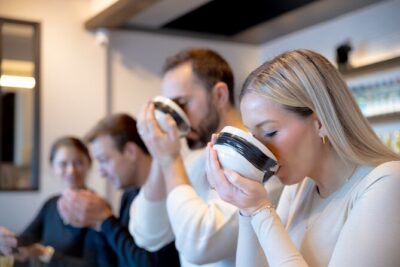
Matcha Making Class in Osaka with Authentic Japanese Sweets Set
Read our review →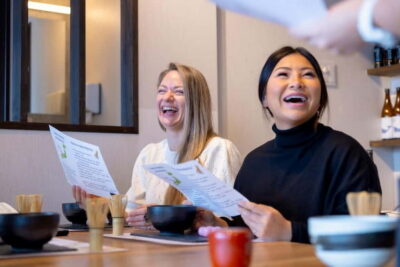
Matcha Making Experience with Mochi Sweets in Asakusa
Read our review →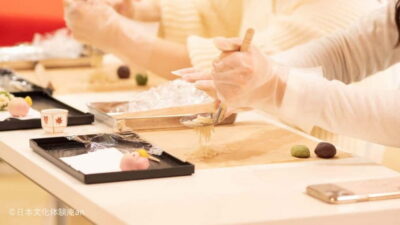
Japanese Traditional Sweets Making and Tea Ceremony
Read our review →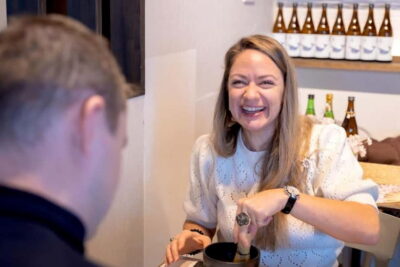
Make Traditional Nerikiri Sweets & Matcha experience in Shibuya
Read our review →
Japanese Traditional Sweets Making and Tea Ceremony
Read our review →Browse the lists this tour appears in