
Review · USA
Big Island Jungle Tour with Guava Green Tea
Art, farming, and rainforest living meet here. This two-hour visit to Paradise Unplugged gives you a close look at Jason and Nikki’s off-grid home in Fern Forest, along with hand-carved tikis, lava-rock sculptures, banana cultivation, and tropical plants. I especially like the chance to use a hammer and chisel to carve your own tiki and the friendly, hands-on way the hosts explain their work. The guava green tea at the end is a small but memorable finish.
I also like that this is not a standard bus tour with a quick photo stop. You spend time with the people who built and maintain the place, learning how they collect water, handle waste, grow food, and make art from local materials. The main consideration is physical comfort: the visit includes outdoor activity and hands-on work, so it may not suit anyone who has trouble walking or using basic tools.
Key points before you book
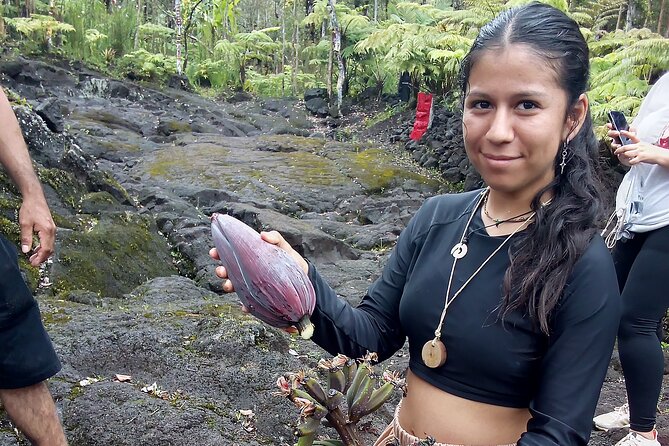
- More than 150 apple banana plants are part of the cultivation lesson, giving you a practical look at growing food in the rainforest.
- Mount Rastamore is one of the most unusual stops, a lava-rock sculpture that reflects the hosts’ playful approach to art.
- Jason and Nikki lead the experience personally, with time for conversation about local life and off-grid living.
- You can try several tasks yourself, including planting, sawing, chiseling, and a little axe work, depending on the visit.
- The Tiki Tea Bar closes the tour with banana green tea and guava green tea.
- Groups are limited to 10 people, which matters when you are handling tools or asking detailed questions.
A rainforest home built by hand
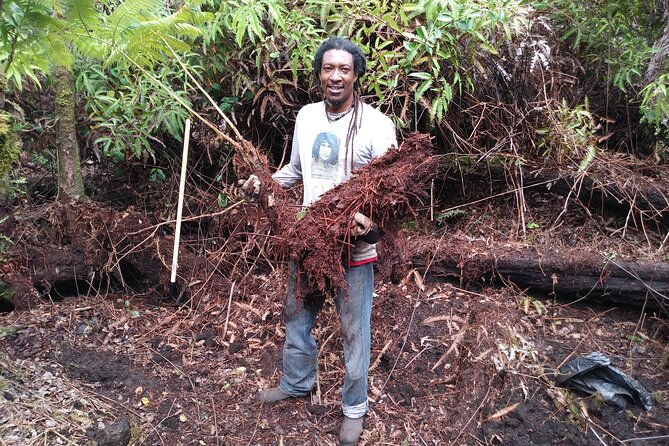
The experience begins at Jungle King Avenue in Fern Forest, on the Big Island’s eastern side. You meet at Paradise Unplugged, a private homestead and creative work area rather than a polished commercial attraction. That difference shapes the whole visit.
Jason and Nikki have cleared and developed their property with a strong focus on reuse. Their work includes carved wooden tikis, lava-rock figures, pallet structures, paintings, gardens, and systems designed for life away from standard utilities. You are not simply looking at finished objects. You are seeing the materials, methods, and daily choices behind them.
I find that setting valuable because it gives you a better sense of how people can adapt to the Big Island’s wet rainforest conditions. The tour connects art and practical living instead of treating them as separate subjects. A carving is not only decoration. A pallet is not just scrap wood. A banana plant is both a crop and part of a larger growing system.
The hosts also make time for conversation. Several parts of the visit can turn into an informal discussion about local life, food production, art, and the work involved in maintaining the property. If you enjoy meeting the people behind a place, this is one of the strongest reasons to choose this tour.
More Green Tea Tours in the USA:
- Experience all of Japanese culture and Japanese food experience classes “origami, udon, Japanese food, green tea, calligraphy” in 4 hours
★ 5.0 · 105 reviews - Uji: Green Tea Tour with Byodoin and Koshoji Temple Visits
★ 4.8 · 72 reviews - Scenic Green Tea Fields of Hidden Kyoto & Local Tea Exp (Private)
★ 5.0 · 32 reviews
Tiki carvings and Mount Rastamore
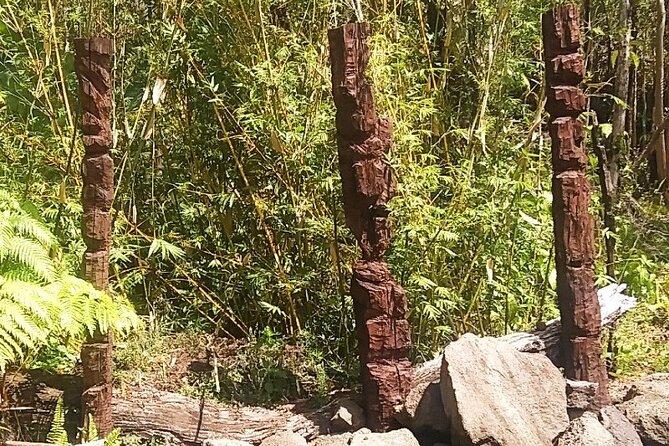
Your first close look is at the hand-carved tiki collection. Paradise Unplugged describes it as the largest collection of rainforest tikis in Hawaii, and the display sets the tone for the rest of the visit. These are not mass-produced souvenirs lined up in a shop. They are personal pieces made to fit the setting.
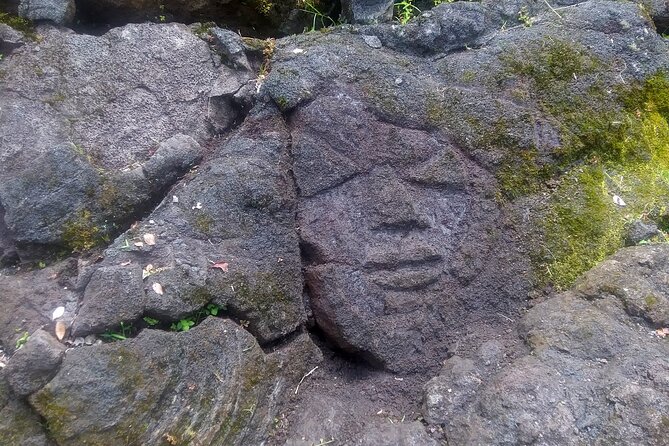
Jason is an artist, and his work includes both wooden tiki carvings and lava-rock sculpture. One of the key pieces is Mount Rastamore, a playful rock carving that gives you a clear idea of the imagination behind the property. The name itself hints at the humor involved, while the scale and material make it worth seeing in person.
This portion is best for anyone interested in folk art, sculpture, or creative reuse. You can look closely at how raw wood and volcanic rock become recognizable forms. You also get a better sense of the labor involved. The tour does not present the work as effortless. Cutting, shaping, and finishing these materials take time and physical energy.
The art collection may be less appealing if you prefer a formal gallery with labels, a set route, and polished interpretation. This is an active working property. Its appeal comes from the direct contact with the maker and the setting, not from museum-style presentation.
More than 300 hapuu ferns in the garden
The tropical garden is another important part of the visit. It includes more than 300 Hawaiian hapuu ferns, giving you a chance to see how plant life shapes the property. The ferns also help place the art in its surroundings. You are not moving through a blank outdoor workshop. You are walking through a rainforest garden where plants, stone, wood, and human projects share the same space.
The plant discussion extends beyond ferns. Jason and Nikki explain edible plants and the crops they grow, with a focus on making good use of the available ground. One review described the planting methods as especially interesting because the property does not have much topsoil. That is a useful detail for anyone curious about gardening in volcanic areas.
You may be offered the chance to plant crops yourself. This turns a plant talk into a short practical lesson. I like that approach because it makes the subject easier to remember. You are not just trying to identify a leaf. You are thinking about where a crop goes, how it is started, and how it fits into the rest of the garden.
The tour does not promise a formal botany class, and the exact plants or activities may vary. Still, the garden portion gives you useful context for the Big Island’s plant life and the work required to grow food in a wet rainforest setting.
How 150 apple banana plants become a crop
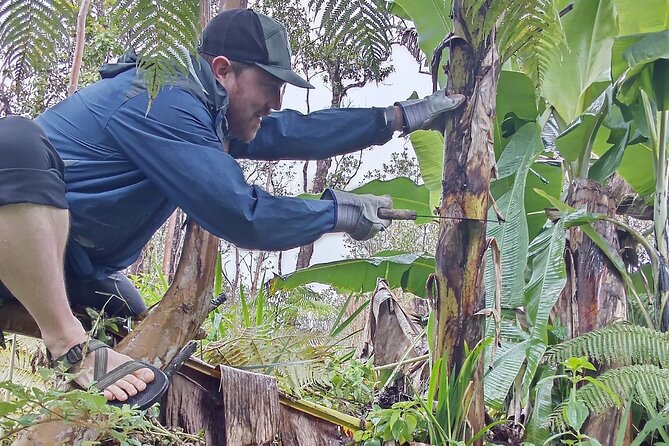
Bananas receive special attention during the tour. The property has more than 150 apple banana plants, and you learn about cultivation methods used to harvest them. Apple bananas are smaller and sweeter than the large bananas many people see in grocery stores, so the lesson has a direct connection to local food.
The value here is practical. You hear how the plants are managed, rather than simply seeing a row of trees and moving on. The tour also links banana cultivation with the hosts’ wider approach to making use of what they have. Food production, gardening, tea, and daily living all connect.
If you enjoy gardens, farming, or edible plants, this may be one of the most useful sections for you. It also gives families and curious children something concrete to focus on. Instead of a broad explanation about tropical plants, you get a specific crop with a clear purpose.
The banana theme returns at the Tiki Tea Bar. That gives the tour a satisfying thread from cultivation to drink. You see part of the growing process, then taste a tea connected to the property’s plants.
A few more tea experiences around the USA worth a look
- Tea Around Town: High Tea Experience and Tour of Washington DC
★ 4.0 · 154 reviews - SF’s Chinatown: Tea & Dim Sum Food Tour – Includes full meal, 3hr
★ 5.0 · 153 reviews - Tea Around Town® NYC: Mobile Tea Room Experience
★ 3.5 · 99 reviews - Charleston: Wadmalaw Island Wine Tasting and Tea Garden Trip
★ 4.9 · 94 reviews
Making art with a hammer and chisel
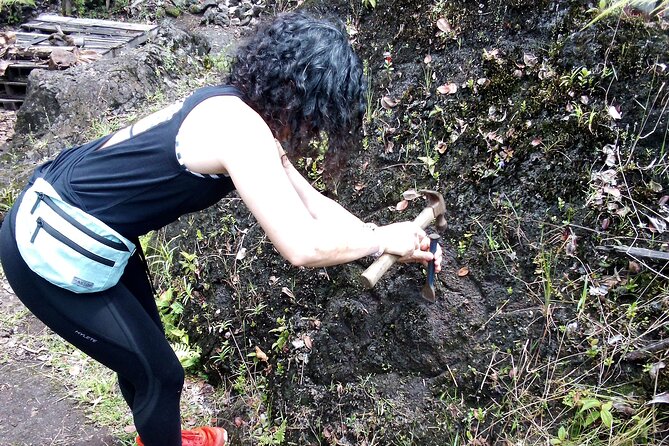
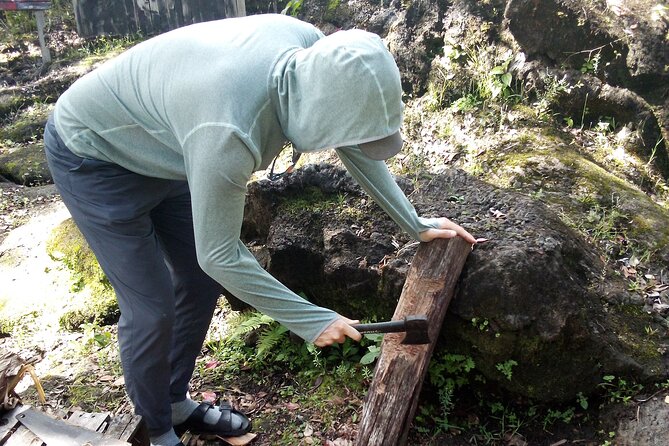
The hands-on carving activity is likely to be the most memorable part for many people. You have the chance to use a hammer and chisel to carve a tiki. This is not a promise that you will complete a museum piece in one sitting. It is a chance to feel the material and understand the basic effort behind the finished carvings.
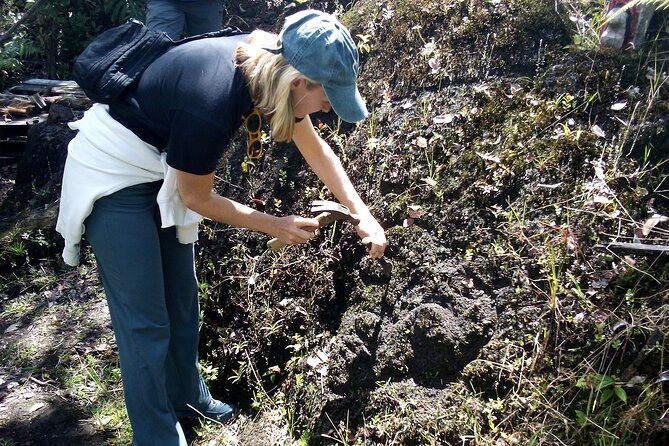
Past visitors have also had opportunities for sawing, planting, and a little axe work. The exact mix may depend on conditions and what is being worked on that day, so I would treat these as possible activities rather than a fixed checklist. The central promise is a participatory visit, not a show where you only watch.
You should be comfortable with basic outdoor work before booking. One review specifically cautioned that the experience is not ideal for someone with physical limitations, and that is fair advice. The tour is only about two hours, but walking, standing, and handling tools can still affect your comfort.
That said, the activity is not described as an extreme adventure. Most people can participate, and the group is capped at 10. A smaller group gives you more room to ask how the tools work and more time to try the activity without feeling rushed.
The Okina and off-grid living
The Okina is an off-grid structure made from recycled pallets. Here, Jason and Nikki explain parts of their daily system, including water catchment and composting toilets. These details may sound basic, but they are central to understanding how the property operates.
Water catchment matters because it shows how a home can collect and manage water without relying on the same setup you might use in a city. Composting toilets offer another look at resource use and waste. The tour treats these systems as practical parts of life rather than technical curiosities.
I appreciate this section because it adds substance to the visit. Without it, the property could feel like an outdoor art collection. With it, you see the connection between the sculptures, gardens, recycled materials, and the way the hosts live.
The Okina is also a good place to ask questions. If you are curious about off-grid systems, recycled building materials, or growing food with limited topsoil, this is your chance to ask directly. The tone is personal and conversational, based on the hosts’ own experience.
Do not expect a full construction workshop or a detailed engineering course. You get an introduction to the main ideas and a look at how those ideas are used at this particular property. That is enough to make the stop useful without turning a short tour into a technical seminar.
Outdoor art beyond the tikis
The visit includes an outdoor art gallery with the hosts’ latest exhibition. Jason’s work also includes pallet paintings inspired by a New York artist, adding another side to his creative work. This section helps show that the property is not focused on one form of carving alone.
The outdoor setting changes how you see the pieces. Art is placed among plants, stone, wood, and working areas, so the garden becomes part of the display. That arrangement may appeal to you if you like art that feels connected to its surroundings.
At the same time, the presentation is informal. You should not expect climate control, formal gallery lighting, or a printed museum guide. The reward is the chance to speak with the person who made the work and hear how the property has developed over time.
For me, the art gallery works best when viewed alongside the carving lesson and off-grid discussion. Each part explains something about the others. The sculptures show what the hosts make, the tool activity shows some of how it is made, and the recycled structures show how the same practical attitude shapes the property.
Banana green tea and guava green tea
The tour finishes at the Tiki Tea Bar with samples of banana green tea and guava green tea. This is a simple ending, but it gives the visit a clear finish after the walking, garden talk, and hands-on work.
A past description of the tasting found the banana tea lighter and smoother than standard green tea, while the guava leaf tea had a flavor closer to green tea. Taste will vary from person to person, but the point is not a formal tea tasting. It is an introduction to how plants from the property can become part of a drink.
The tea also reinforces the main theme of the experience: using local materials thoughtfully. You have seen bananas as a crop, plants as part of the garden, and recycled materials as part of the buildings and art. At the end, those ideas show up in a small cup.
Coffee and tea are included, but the information provided does not promise a meal or a larger food service. Plan to eat before or after if you need more than a sample drink.
What the $75 price gets you
At $75 per person, this is not the cheapest way to spend two hours on the Big Island. Its value depends on what you want from a tour.
If you want a major sightseeing stop, a long rainforest hike, or a scenic drive, this may not be the right use of your money. The experience is centered on one property, its hosts, and their work. There is no private transportation included, so you also need to arrange your own way to Jungle King Avenue.
If you like personal contact, art, gardening, and practical ideas about off-grid living, the price is easier to justify. You receive a small-group visit, direct time with Jason and Nikki, several demonstrations, a hands-on carving opportunity, and tea. A maximum of 10 people helps keep the visit more personal.
The tour is usually booked about 16 days ahead, which is a useful planning clue. If this experience fits your interests, I would not leave it until the last day of your Big Island stay. The free cancellation policy allows a full refund when you cancel at least 24 hours before the start time, while cancellations within 24 hours are not refunded.
Who should book this Big Island experience?
I would recommend it most strongly to you if you enjoy:
- Hand-made art and sculpture
- Tropical plants and food growing
- Local perspectives on life in Hawaii
- Recycled building methods and off-grid systems
- Small groups and direct conversation
- Short, hands-on outdoor activities
It is also a good choice if you have already seen some of the Big Island’s major sights and want something more personal. This is not a grand scenic excursion. It is a closer look at one couple’s creative way of living.
I would think twice if you want a polished attraction, a fully scheduled performance, or a tour built around dramatic views. You should also consider your comfort with walking, standing, and using tools. Most people can participate, but the hands-on parts are real activities, not just demonstrations.
Should you book the Jungle Tour?
Book it if you want to meet Jason and Nikki, see a large collection of rainforest tikis, learn about more than 150 apple banana plants, and try making something with your own hands. The combination of art, gardening, tea, and off-grid living gives the two hours a clear sense of purpose.
Skip it if your main goal is transportation, a long nature hike, or a conventional cultural attraction. The tour asks you to be open to an informal setting and a little physical work.
For the right person, $75 buys more than a look around. It buys time with people who have built a highly personal place from wood, lava rock, plants, pallets, and persistence. That is the real reason to go.
FAQ
How long is the Big Island Jungle Tour?
The experience lasts approximately two hours.
Where does the tour begin?
It begins at Jungle King Avenue, Fern Forest, Hawaii 96778, USA.
Where does the tour end?
The tour ends back at the meeting point.
Is transportation included?
No. Private transportation is not included, so you must arrange your own transportation to and from the meeting point.
How many people can join the tour?
The activity has a maximum of 10 participants.
What is included with the tour?
Coffee and tea are included, including samples at the Tiki Tea Bar. The tour also includes access to the property’s carvings, garden, banana cultivation areas, outdoor art gallery, off-grid structure, and the hands-on tiki carving opportunity.
Can I cancel for a full refund?
Yes. You can cancel at least 24 hours before the experience start time for a full refund. Cancellations or changes made less than 24 hours before the start time are not refunded or accepted.
Just added around the USA
- Washington, D.C.: Tea Around Town Bus Tour with Landmarks★ 3.4 · 7 reviews
- Tea By The Sea★ 5.0 · 9 reviews
- Tea Around Town: A Charming Tea Experience in Philadelphia★ 3.5 · 24 reviews
- Tea Blending★ 4.5 · 8 reviews
- Premium Loose Leaf Tea and Chocolate Tasting★ 3.0 · 4 reviews
- St. Johns River High-Tea Cruise Tour in Sanford★ 5.0 · 2 reviews
- Beach Yoga & Tea Experience on South Beach★ 5.0 · 19 reviews
- Tea Plantation and Winery Tour in Charleston★ 5.0 · 3 reviews
Green Tea Tours, compared.
Green Tea Tour with Byodoin and Koshoji Temple Visits
Read our review →
Scenic Green Tea Fields of Hidden Kyoto & Local Tea Exp (Private)
Read our review →
Osaka; Japanese Tea ceremony experience, Macha and Sencha
Read our review →
Slow Cycling Tour at Uji’s Matcha Green Tea Fields and Heritage
Read our review →
Sencha-do the Japanese Tea Ceremony Workshop in Kyoto
Read our review →Browse the lists this tour appears in