
Review · THAILAND
Chiang Rai: 7 Major Sites, Golden Triangle & Tea Plantation
Seven stops, one long northern Thailand day. This tour brings together Chiang Rai’s three famous art temples, the Golden Triangle, Chui Fong Tea Plantation, the Opium Museum, and an optional Karen hilltribe village. I especially like the variety of stops and the small-group format, which make this a useful introduction to the province when you have only one day.
The price is listed at $72 per group of up to one person, though you should check the final cost for your booking and confirm whether you chose the ticket-included option. The main drawback is the packed schedule: you see a lot, but you may want extra time at the White Temple, the day’s most visually striking stop.
At a glance
- Three very different art sites: White Temple, Blue Temple, and Black House each offer a distinct view of modern northern Thai art.
- A full-day northern route: You leave Chiang Rai in the morning and return in the evening, with pickup generally between 8:00 and 8:30 a.m.
- Golden Triangle context: The route reaches the meeting area of Thailand, Laos, and Myanmar and includes the Opium Museum.
- Chui Fong Tea Plantation: Tea fields and plantation scenery give the day a change of pace after the temples.
- Small group transport: The minibus holds up to 10 participants and includes air-conditioning, a driver, and an English-speaking guide.
- Food and pickup are handled: Thai buffet lunch, drinking water, and pickup within 6 kilometers of central Chiang Rai are included.
Why this Chiang Rai day trip works
Chiang Rai is easy to underestimate. Many people visit only for the White Temple, snap a few photos, and move on. This tour shows you that the province has a broader artistic and cultural identity, with unusual temples, museums, tea-growing country, and the politically important Golden Triangle all in one day.
I like the way the itinerary moves between very different settings. You go from polished white sculpture to intense blue decoration, then to the dark, strange rooms of Black House. Later, the temples give way to tea fields and the border region. That contrast keeps the day from feeling like a long sequence of similar religious buildings.
The tour also makes practical sense if you are staying in Chiang Rai and do not want to arrange several separate taxis or private transfers. A private English-speaking guide travels with the group, and the minibus has air-conditioning. That matters in northern Thailand, where a full day outside can be tiring, especially under strong sun.
The tradeoff is time. Seven major stops require discipline, and the day can feel busy. Gabrielle from Canada particularly wished for more time at the White Temple. I would keep that in mind if photography or close study is your main goal. This is a broad overview, not a slow art tour.
More Tea Plantation Tours in the world:
- From Taipei: Thousand Island Lake and Pinglin Tea Plantation
★ 4.7 · 519 reviews - Active Volcano, Rice Field, Hot Spring, Fruit market, Tea Plantation with Lunch
★ 5.0 · 513 reviews - Furnas: Tea Plantations, Lake and Volcano Guided Tour
★ 4.8 · 511 reviews
White Temple, Wat Rong Khun: Chiang Rai’s unforgettable opener
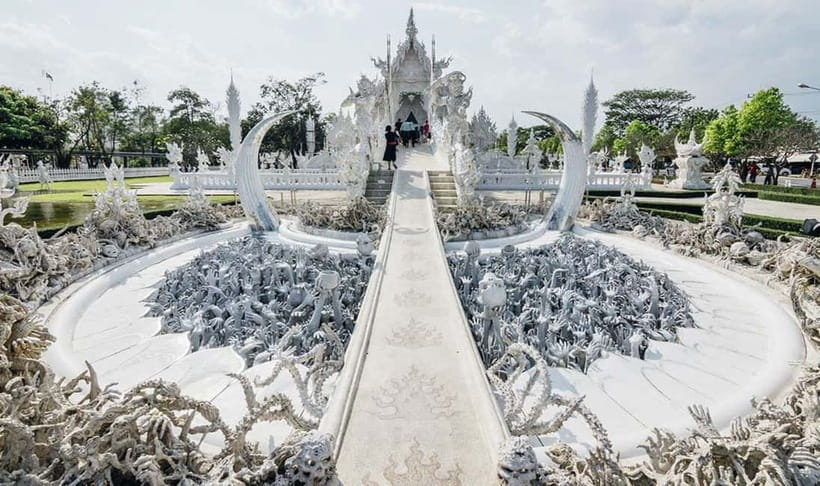
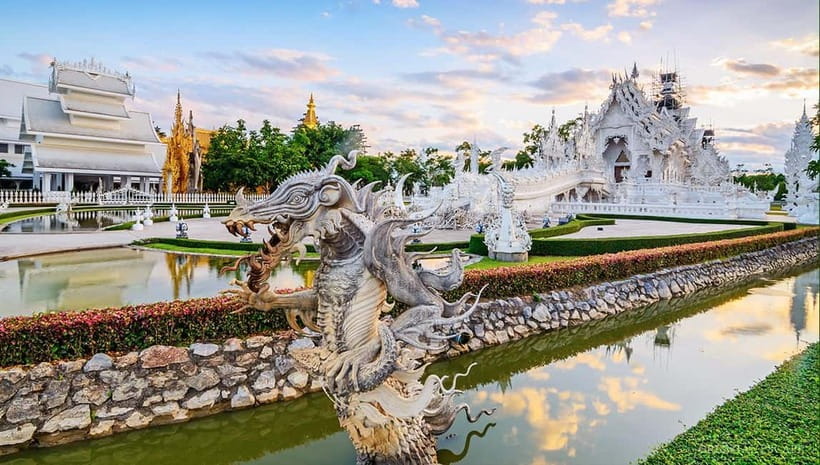
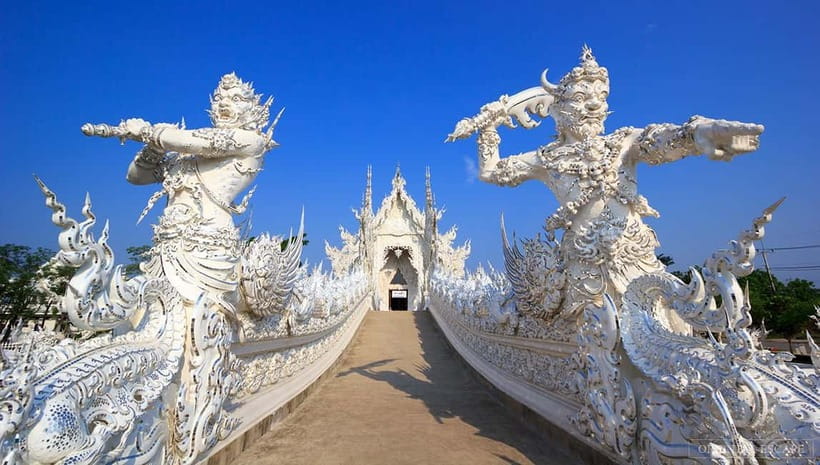
Wat Rong Khun, usually called the White Temple, is not an old temple complex. It is a modern work created by Thai artist Chalermchai Kositpipat, whose vision was to give Chiang Rai a landmark on the scale of the Taj Mahal.
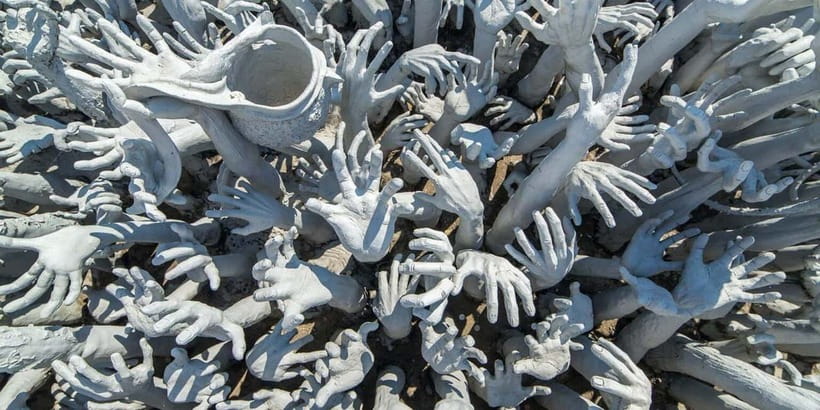
That distinction changes how you should look at it. You are not simply walking through a traditional Buddhist monument. You are entering a carefully designed art project filled with symbolism, sculpture, and theatrical details. The white surfaces and reflective pieces create a bright, almost unreal appearance.
This is likely to be the emotional high point of the day. It is the place where you will want to pause, take photographs, and look closely instead of rushing from one angle to the next. The tour includes a White Temple ticket priced at 200 baht per person, but ticket arrangements depend on the option you select, so check before booking.
The practical issue is crowding and limited time. The tour stops here as part of a longer route, so you may not get as long as you would on a private visit. If your interests lean strongly toward art, ask your guide how much time is available and plan your photographs early.
Blue Temple: modern color with a Buddhist purpose
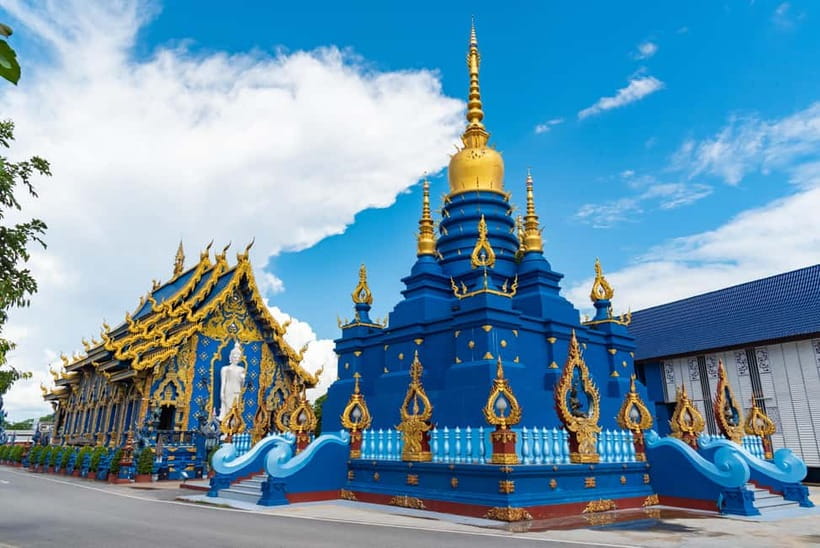
The Blue Temple, or Wat Rong Suea Ten, offers a sharp contrast to the White Temple. Its strong blue color, ornate details, and large interior Buddha image give it a more enclosed and dramatic feel.
The appeal is not just the color. The temple shows how contemporary artists can work with Buddhist forms without producing a copy of an old monument. Your guide can help explain the connection between the decoration, religious imagery, and Chiang Rai’s modern artistic identity.
I would pay attention to the interior as well as the exterior. The outside is easy to photograph, but the painted details inside give the building much of its character. This is one of the stops where a guide adds real value because a quick look does not explain what you are seeing.
The Blue Temple is not a long visit, but it gives the itinerary a useful second chapter. After the bright White Temple, it feels more concentrated and atmospheric. You will notice the difference even if you are not especially interested in architecture.
Black House: an art museum, not a temple
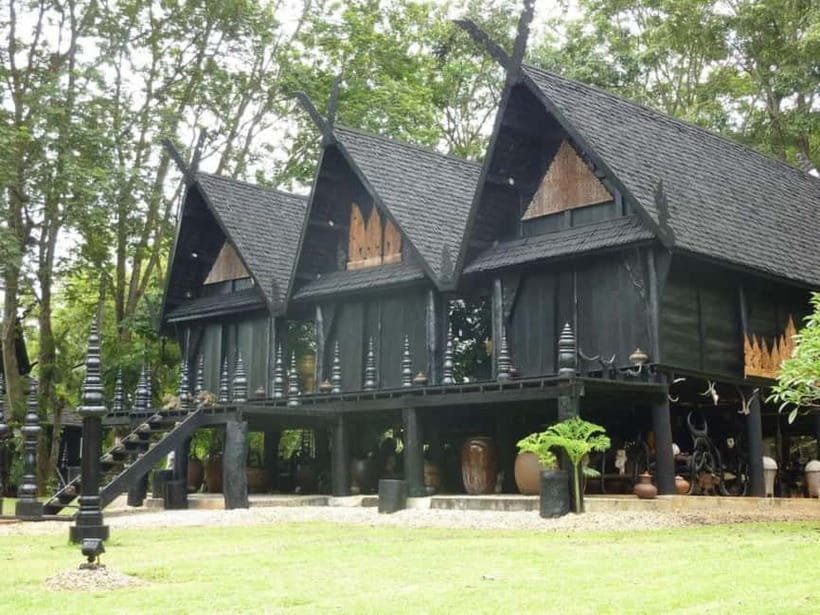
Black House, known as Baan Dam, is often grouped with Chiang Rai’s famous temples, but it is not a temple. It is a museum and art complex associated with Thai artist Thawan Duchanee.
Expect a darker mood here. The buildings, objects, and displays create a setting that can feel unusual or unsettling. This is not a cheerful photo stop in the same way as the White Temple, and it will not suit everyone.
I think that difference is useful. The White and Blue Temples present polished, colorful religious art. Black House is stranger and more personal. It asks you to consider how artists use animal forms, materials, darkness, and space to create a reaction.
Give yourself time to take in the atmosphere rather than trying to understand every object at once. The guide’s explanation can help, particularly if modern Thai art is unfamiliar to you. If you prefer only traditional Buddhist sites, this may be your least favorite stop. If you enjoy art, symbolism, and places with an edge, it may be the most memorable.
A few more tea experiences around the world worth a look
- Kyoto: Tea Ceremony in a Traditional Tea House in Kiyomizu
★ 4.9 · 3,519 reviews - London: Afternoon Tea Cruise on the River Thames
★ 4.4 · 3,274 reviews - Kyoto: Tea Ceremony Ju-An at Jotokuji Temple
★ 4.9 · 3,207 reviews - Afternoon Tea Bus Tour in Dublin
★ 5.0 · 2,791 reviews
The Golden Triangle and the Opium Museum
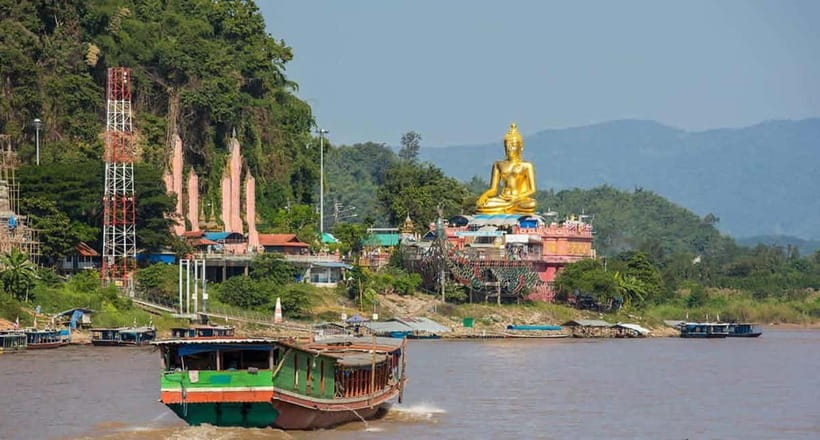
The Golden Triangle is the northern border region where Thailand meets Laos and Myanmar. Its name is closely linked to the historic opium trade, which makes the Opium Museum an important part of this stop rather than an unrelated add-on.
The museum gives the border region more context. Without it, the Golden Triangle can become a quick viewpoint and a photo opportunity. With it, you get a better sense of why this area has such a strong place in modern Southeast Asian history.
This is also the point where a good guide matters most. The route covers a large amount of ground, and the history can be difficult to absorb from signs alone. Guides named Guitar, Ping, Muew, Meo, and Yok received especially warm praise for clear explanations, friendly conversation, and useful information about northern Thailand.
Do not expect the Golden Triangle to be a quiet rural stop. The value here comes from the location and the museum’s subject. If you want a deeper look at border politics or the history of the region, you may need a separate visit with more time. On this tour, the stop gives you a solid introduction within a much larger day.
Chui Fong Tea Plantation: a welcome change of pace
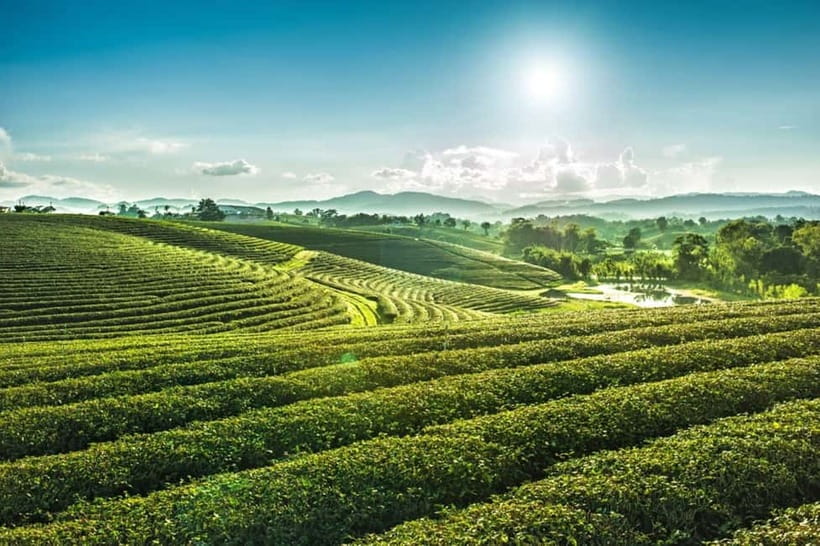
Chui Fong Tea Plantation breaks up the temple and museum visits with open tea-growing grounds and a slower rural setting. The stop adds variety to the route and gives you a chance to see one of the products associated with northern Thailand.
The plantation is also a good place to reset. After several art sites, you may appreciate the simpler pleasure of walking, looking across the tea fields, and taking photographs. The exact time available can depend on the day’s traffic and the pace of the group, so treat it as a scenic stop rather than a full tea-tasting tour unless your guide confirms otherwise.
This is one reason I prefer the complete itinerary to a temple-only outing. The day does not stay inside museums and religious sites. You get art, regional history, food, and rural scenery in one route.
Optional Karen hilltribe village visit
The Karen hilltribe village is listed as an option, so you should clarify at booking whether it is part of your selected plan and how it affects the schedule.
This stop requires sensitivity. A village visit should be approached as a chance to learn about local life, not as a human display. Listen to your guide, ask before photographing people, and buy only what you genuinely want. The tour information does not specify the length of the visit or the exact activities, so do not assume it will be a long cultural program.
If you are mainly interested in the temples and Golden Triangle, the option may make an already full day feel tighter. If you want more cultural variety and the timing works, it can add another perspective to the province.
Lunch, transport, and the small-group advantage
Thai buffet lunch is included, along with drinking water. Vegetarian food can be arranged, and you should tell the guide about allergies or other dietary restrictions before the meal. Jasmin from the United States appreciated the care taken with a limited diet, while Petr from the Czech Republic specifically praised the vegetarian choices.
The minibus is air-conditioned and limited to 10 participants. That is a useful middle ground. You get the efficiency of a shared tour without the feel of a large coach group. Several people praised the comfortable van and smooth driving, including comments about drivers making the long transfers easy.
Pickup is free within 6 kilometers of Chiang Rai city center. The stated pickup window is 8:00 to 8:30 a.m., with the full day ending back in Chiang Rai in the evening. Give the exact hotel name when booking because some city locations can be difficult to find. If you stay outside the city, the operator can provide a meeting point.
Wear light clothing suitable for warm weather, and bring a hat and sunscreen. You will be moving in and out of the minibus throughout the day, with sun exposure at several stops. Pets, alcohol, and drugs are not allowed.
Guides make the difference
The strongest part of this experience is the guide service. Guitar received repeated praise for clear English, humor, and an ability to remember people’s names. Ping was appreciated for answering questions about Thailand, suggesting food and massage options, and paying close attention to dietary needs.
Other highly praised guides included Meo, Muew, Yok, and Phing. The common thread is not a scripted speech. It is the personal touch: explaining legends, sharing local facts, helping with photographs, and keeping the mood relaxed.
That can change the feel of a long day. Seven stops might become tiring if you are only being moved from one entrance to another. A friendly guide who explains what you are seeing turns the journey into a connected story about Chiang Rai’s art, culture, and border region.
Is the price good value?
At a listed price of $72 per group of up to one person, the value depends on the final booking total and the ticket option. You should compare the cost of transportation, a private English-speaking guide, lunch, drinking water, insurance, and entrance fees if you select the included-ticket plan.
The two ticket choices deserve careful attention. Option 1 includes all listed tickets, while Option 2 excludes them. The White Temple ticket is stated separately at 200 baht per person, and other entry costs may apply under the ticket-excluded option. Check the exact inclusions before paying so the lower headline price does not surprise you later.
For one day of private transportation and a small group of no more than 10, the package can be good value, especially if you want to cover the Golden Triangle and several sites that are spread around the province. If you are already renting a car or prefer to spend half a day at one temple, it may be less appealing.
Who should book this tour?
I would choose this tour if you want to see Chiang Rai’s best-known sights in one organized day, prefer having a guide explain the art and history, and value hotel pickup and lunch. It suits first-time visitors, couples, families with older children, and anyone staying in Chiang Rai without their own transport.
I would hesitate if you use a wheelchair, are over 70, dislike long days in a vehicle, or want a slow, highly focused visit to the White Temple. The experience is not listed as suitable for wheelchair users or people over 70, and the schedule leaves limited room for lingering.
Book the ticket-included option if you want fewer decisions during the day. Choose the ticket-excluded option only after checking the total cost and deciding that paying admissions separately suits you better. Also confirm the Karen village choice, dietary needs, and pickup location before the morning of the tour.
Should you book it?
Book this tour if your goal is range. In a single day, you see Chiang Rai’s three signature art sites, reach the Golden Triangle, learn about the opium trade, visit a tea plantation, and have the option of adding a Karen village.
Do not book it expecting a relaxed temple retreat. The day is long and carefully packed, and the White Temple may leave you wishing for more time. For most first visits, though, the mix of memorable sights, strong guide service, comfortable transport, and included lunch makes this a practical way to get to know northern Thailand.
FAQ
How long does the Chiang Rai tour last?
It is a full-day tour, with departure from Chiang Rai in the morning and return in the evening.
What time is hotel pickup?
Pickup takes place during a stated window of 8:00 to 8:30 a.m. You should provide your hotel name so the driver can find you.
Is pickup included?
Yes. Free pickup and drop-off are included within 6 kilometers of Chiang Rai city center. If you stay farther away, you should contact the operator for a meeting point.
Are entrance tickets included?
There are two choices. Option 1 includes all tickets, while Option 2 excludes tickets. The White Temple ticket is listed at 200 baht per person, so check your selected option carefully.
Is lunch included?
Yes. A Thai buffet lunch and drinking water are included. Vegetarian food can be provided if you request it, and you should share allergies or dietary restrictions with the guide.
How many people are in the group?
The tour is described as a small-group experience limited to 10 participants.
Can I cancel the booking?
You can cancel up to 24 hours in advance for a full refund. A reserve-now-and-pay-later option is also available.
Just added around the world
- Yogyakarta: Prambanan Tour, Sukuh Temple & Tea Plantation★ 5.0 · 3 reviews
- Yokohama : Tea Ceremony with Sweets and Souvenir★ 5.0 · 5 reviews
- York: Private Horse-Drawn Carriage Ride and Afternoon Tea★ 5.0 · 3 reviews
- Wadi Rum: 2-Hour Jeep Tour with Bedouin Tea★ 5.0 · 11 reviews
- Walking Tour: Yanaka,Nezu& Sendagi: Tea Ceremony & Old Tokyo★ 5.0 · 3 reviews
- Washington, D.C.: Tea Around Town Bus Tour with Landmarks★ 3.4 · 7 reviews
- Visit local home for music and tea ceremony near Disney★ 4.9 · 13 reviews
- Volcano, Hot Spring, Mud Bath & Tea plantation all included★ 5.0 · 5 reviews
Tea Plantation & Farm Tours, compared.
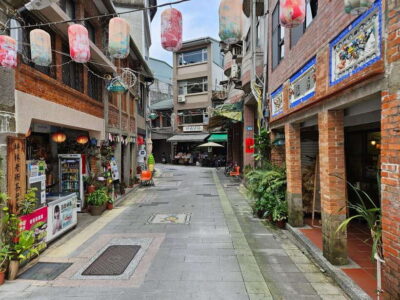
Thousand Island Lake and Pinglin Tea Plantation
Read our review →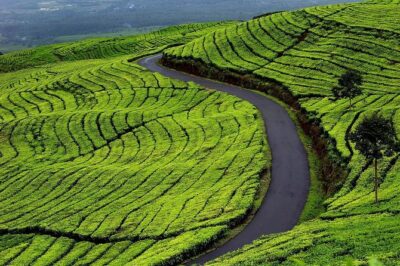
Active Volcano, Rice Field, Hot Spring, Fruit market, Tea Plantation with Lunch
Read our review →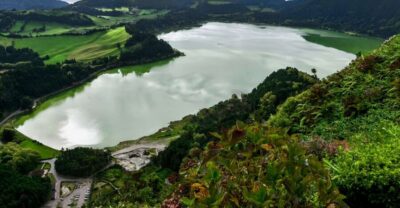
São Miguel: Furnas Volcano & Tea Plantation Tour with Lunch
Read our review →
Furnas Volcano & Tea Plantation With Traditional Lunch, East Tour
Read our review →
Thousand Island Lake and Pinglin Tea Plantation from Taipei
Read our review →
Volcano Wonders, Tea Plantation & Waterfall Tour
Read our review →Browse the lists this tour appears in