
Review · TAIPEI
From Taipei: Thousand Island Lake and Pinglin Tea Plantation
Leave Taipei behind for tea country. This five-hour outing combines Thousand Island Lake views with a close look at Pinglin’s tea traditions, making it a fine choice when you want fresh air, mountain scenery, and more than another city attraction. I especially like the scenic drive into rural Shiding and the chance to taste tea while learning how it is grown, processed, and brewed.
The tour also gets strong marks for its guides. James, Gordon, Grace, David, Tony, Sharon, and several others are praised for clear explanations, friendly service, and help with photographs. The main drawback is the winding mountain road, which may bother anyone prone to motion sickness. The museum is also fairly modest, so the tea tasting and countryside views carry much of the day.
Key points to know before booking
- Thousand Island Lake is a reservoir view, not a boat trip: You stop at scenic viewpoints around Feitsui Reservoir and see the small hilltops rising from the water.
- The tea tasting is the heart of the tour: A local tea instructor explains Taiwanese tea and demonstrates proper brewing before you sample several types.
- Pinglin gives the outing its local character: The district is known for Wenshan Pouchong and other teas grown in the surrounding hills.
- The drive is scenic but twisty: Comfortable air-conditioned vehicles are used, though the road can be difficult for people sensitive to bends.
- Small groups improve the experience: Private and small-group options allow more questions and often make the tea lesson feel personal.
- The $40 price is strong value: Transportation, a guide, tea tasting, insurance, and the major stops are included, but food and bottled water are not.
Leaving Taipei for Shiding’s mountain roads
The meeting point for the shared tour is MRT Zhongxiao Xinsheng Station, at Exit 2. Your guide waits near the exit with an Edison Tours flag. A private pickup option is also available, with hotel pickup and return included.
Once you are aboard, the city gives way to a winding road through New Taipei City’s Shiding District. The drive is part of the experience, not simply a transfer. Your guide may explain the places you pass and set the scene for Taiwan’s tea-growing country.
The route is twisty as it climbs through the hills. I would bring motion-sickness medicine if you usually need it, and choose a light meal before departure. One useful detail from the tour feedback is that drivers tend to take the bends carefully. The vans are air-conditioned, and several people found them clean and comfortable, though one tall passenger found the shared bus seating tight around the knees.
The outing lasts about five hours, with the sequence and stop lengths subject to traffic and weather. That matters in this part of Taiwan, where rain can change the views quickly. You should think of this as a relaxed countryside circuit rather than a hike or a packed sightseeing marathon.
More Tea Plantation Tours in Taipei:
- Thousand Island Lake and Pinglin Tea Plantation from Taipei
★ 4.5 · 172 reviews - Active Volcano, Rice Field, Hot Spring, Fruit market, Tea Plantation with Lunch
★ 5.0 · 513 reviews - Furnas: Tea Plantations, Lake and Volcano Guided Tour
★ 4.8 · 511 reviews
Thousand Island Lake and the famous hilltop view
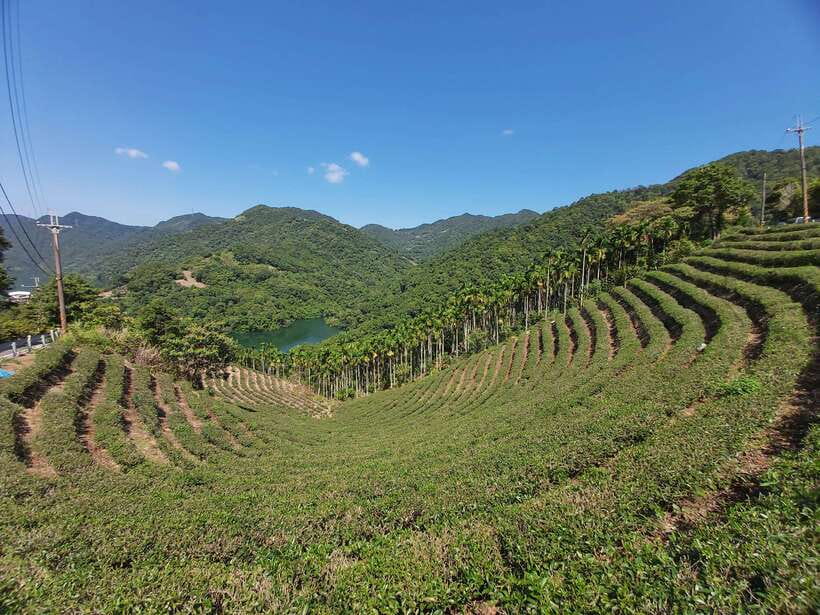
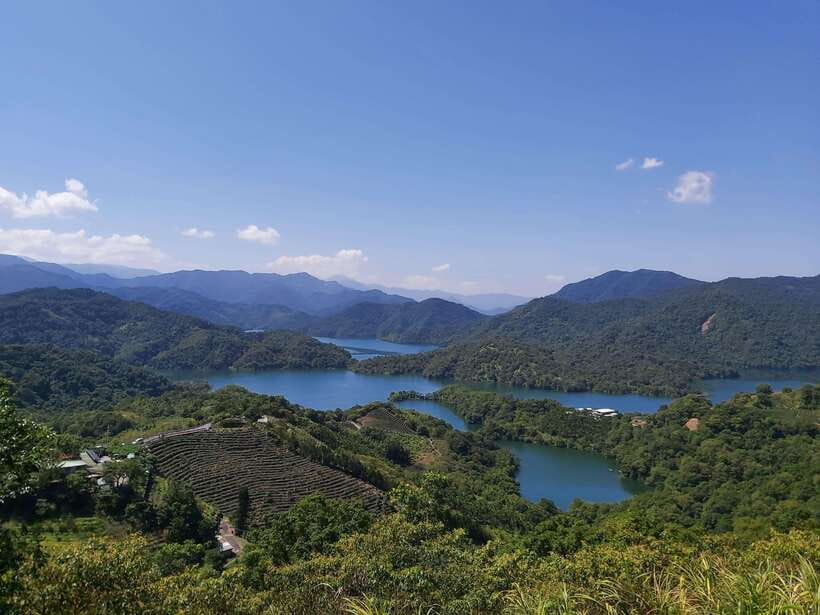
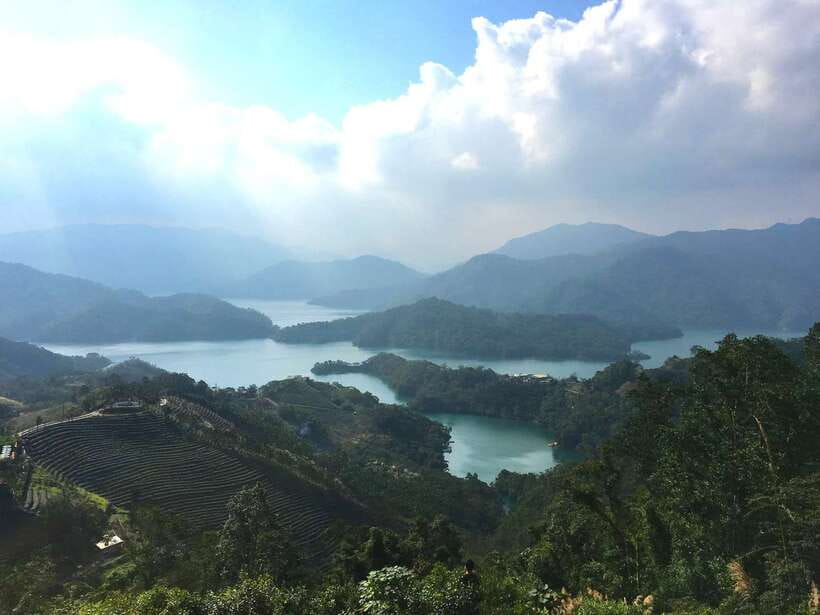
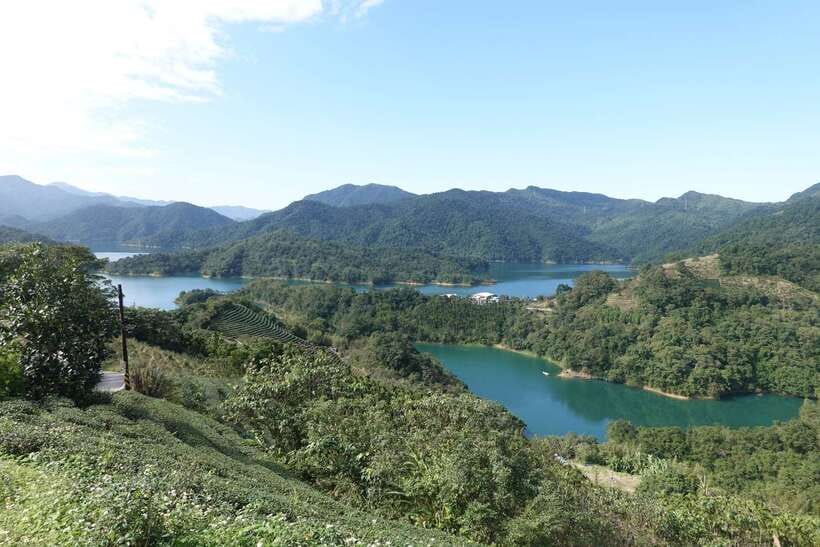
The first major stop is Shiding’s Thousand Island Lake, called Qiandao Lake in Chinese. The name refers to the many small hills and islands that appear across the catchment area of Feitsui Reservoir. It shares its name with the better-known lake in Zhejiang Province, but here the appeal is the quiet mountain setting close to Taipei.
You normally have around 20 minutes for sightseeing and photographs. From the viewpoints, the water winds between wooded hills, creating the pattern that gives the lake its name. It is a short stop, but it gives you the clearest break from the city and helps explain why tea farms thrive here.
This is not a cruise, and you should not expect a long walk beside the water. The value is the elevated view across the reservoir and the way the surrounding tea country fits together. On a clear day, it is one of the most attractive photo stops of the afternoon. In rain or low cloud, the scene can turn misty, which may be atmospheric but less impressive for photography.
Your guide adds context about the reservoir and the area around it. That explanation makes the view more meaningful than a quick roadside photograph. You begin to see how water, hills, weather, and farmland shape the local tea trade.
Bagua Tea Garden and rows shaped like symbols
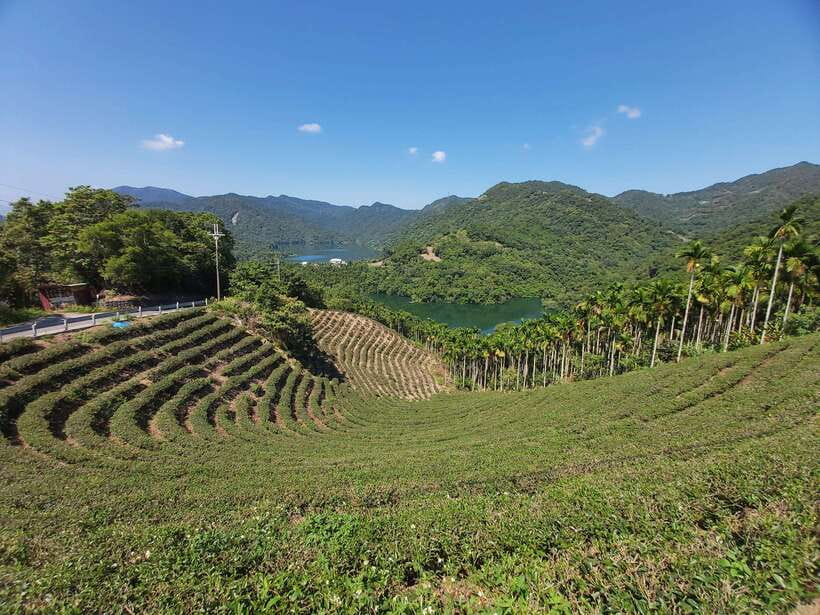
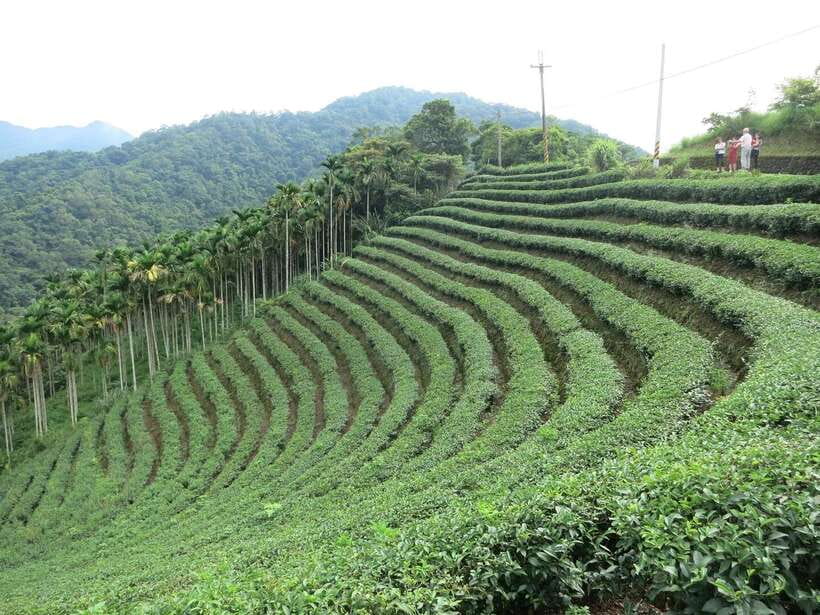
The next stop is the Bagua Tea Garden, known for its neatly planted rows of tea. From above, the rows resemble the symbols of the Eight Trigrams, or bagua, from Chinese philosophy. The design gives this tea farm a visual character that you will not find at an ordinary field.
You have roughly 25 minutes here. The visit is mainly about the view, the planting pattern, and the chance to understand how tea farms occupy the steep hills around the reservoir. The garden is not presented as a long walking tour, so wear comfortable shoes but do not expect a strenuous trail.
This is a good place to take photographs, particularly when the rows are clearly visible from the higher viewpoint. Weather matters a great deal. In wet conditions, the road and viewpoints may be less comfortable, and the guide can adjust the order or length of stops.
The area produces well-known Taiwanese teas, including Wenshan Pouchong and Dong Fang Mei Ren, also called Oriental Beauty Oolong Tea. The tour does not treat the farm as a simple photo stop. Your guide links the planting area to the wider story of how tea became part of daily life and local income in northern Taiwan.
Pinglin Tea Museum in a traditional courtyard
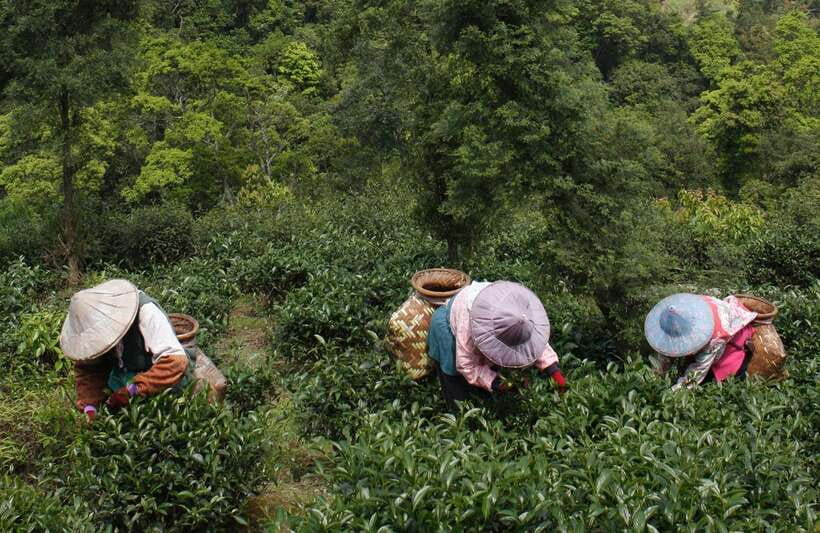
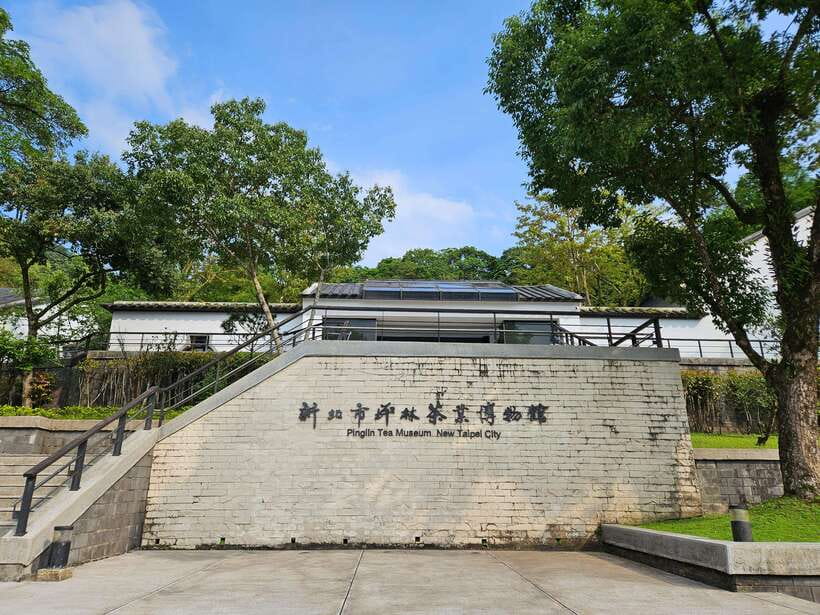
After about a 15-minute drive, you reach Pinglin District, a key center for Wenshan Pouchong tea. The Pinglin Tea Museum occupies a Hokkien-style siheyuan, or quadrangle courtyard house. Its layout gives the visit a strong sense of place before you even begin looking at the displays.
Inside, you can see older tools and equipment used for harvesting and making tea. The exhibits explain how Taiwan’s tea industry developed and how production methods changed over time. This stop is useful if you want more than a tasting. It connects the drink in your cup to the work required in the fields and processing rooms.
Allow about 70 minutes for the Pinglin tea plantation portion of the outing, including the museum and nearby tea-related stops. The museum itself is not huge. One person found it only moderately interesting, while most of the value came from the guide’s explanations and the rest of the tea visit. I would not book this outing solely for the museum.
The museum can also be affected by closures. On one occasion, the visit was replaced with time in the village and its old street, where food shops and local stores provided a useful alternative. That is a sensible adjustment, but it is worth keeping in mind if the museum is your main reason for booking.
A few more tea experiences around Taipei worth a look
- Xiao Long Bao, Beef Noodles & Boba Tea Cooking Class in Taipei
★ 5.0 · 159 reviews - From Taipei: Pinglin Tea Culture and Maokong Guided Day Tour
★ 4.8 · 104 reviews - Xiao Long Bao, Chicken vermicelli with mushroom and sesame oil, Tofu strips salad, Bubble milk tea. Taiwan Traditional Delicacies Experience-A (Taipei Cooking Class)
★ 5.0 · 79 reviews - Tea of Taipei: Small-Group Tour with Taipei City Sightseeing
★ 5.0 · 63 reviews
The tea shop lesson that makes the day worthwhile
The most rewarding part of the tour takes place at a local tea shop in or near Pinglin Old Street. Here, your guide and a tea instructor introduce Taiwanese tea and show you how to brew it properly. You then taste several samples.
The demonstration is more than a quick cup handed across a counter. You learn how Taiwanese tea is prepared and why the brewing method affects the result. The lesson gives you a better sense of the difference between loose-leaf tea and the ordinary tea-bag routine many of us use at home.
The tea tasting lasts around 30 minutes as part of the old-street stop. It may include local styles such as Wenshan Pouchong, and past tastings have also featured honey black tea. The exact samples can vary, so do not arrive expecting one fixed menu.
This is where a good guide makes a real difference. Tony was praised for turning the lesson into a clear, engaging introduction, while Sharon was noted for her care and for taking photographs. James received repeated praise for explaining both tea production and the wider culture surrounding it. The tea-shop owner also helps make the session relaxed and enjoyable.
You are not required to buy tea. Cash is still useful for optional purchases, and several people chose to take tea home as gifts. I like that the buying opportunity follows an educational tasting rather than replacing it. You can decide for yourself what you enjoy before spending anything.
Pinglin Old Street and the local finish
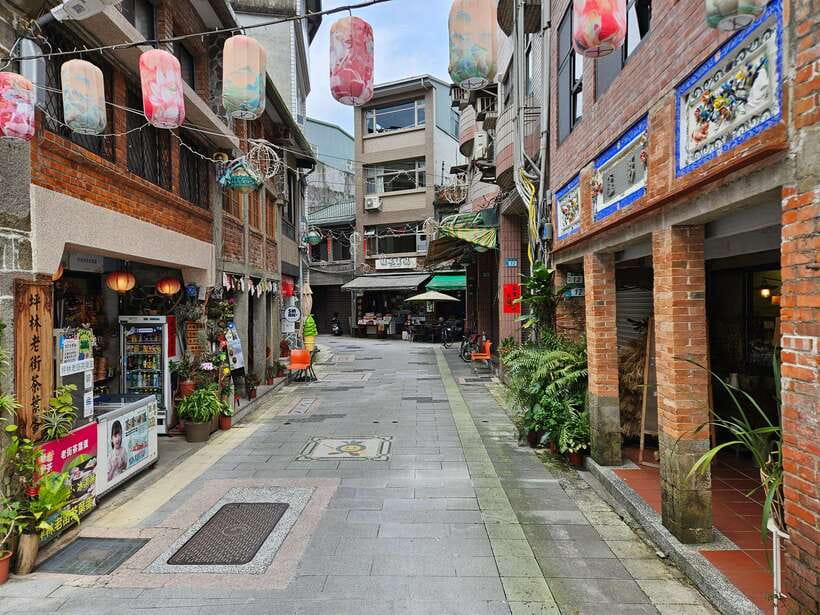
Pinglin Old Street gives the final stop a more lived-in feel. Instead of viewing tea only as an agricultural product, you see it in the setting where local shops, food, and tea culture meet.
The stop lasts about 30 minutes and may include tea ceremony elements, tasting, and time to look around. It is not a major historic district with hours of sightseeing. Think of it as a compact village visit that rounds out the farm and museum stops.
You should bring cash, since food, tea, and other purchases are not included in the $40 price. Bottled water is not supplied either, so carry your own refillable bottle or buy a drink along the way. Oversize luggage and large bags are not allowed, which is another reason to travel light.
After the Pinglin visit, you return by vehicle to one of the stated drop-off points, either the Xinyi Shopping District near Taipei 101 or MRT Zhongxiao Xinsheng Station. The exact timing can shift with traffic and weather, but the return transfer is included.
How much value do you get for $40?
At $40 per person, this is a good-value half-day outing from Taipei. You are paying for transport into an area that is not as simple to reach independently, a live guide, the museum and scenic stops, a tea lesson, tea samples, and local general liability insurance.
The value is strongest for solo visitors and short-stay visitors. A taxi or private car to the reservoir and Pinglin would cost more, while public transport would require extra planning and would not provide the same explanations at each stop. The guaranteed departure with at least one participant also makes the booking useful if you are traveling alone.
The price does not cover food, drinks, or bottled water. It also does not include a long hike, a boat ride, or a full meal. If you want a strenuous outdoor adventure, this is not the right choice. If you want a comfortable introduction to northern Taiwan’s tea country, the cost is quite reasonable.
Private tours are available if you want hotel pickup, more control over the pace, or extra language options. Shared tours include English or Chinese commentary. Private tours may also offer Vietnamese or Indonesian, in addition to English and Chinese, depending on the selected option.
Who will enjoy this half-day outing?
I would recommend it most strongly to people who enjoy tea, local food traditions, mountain scenery, and short cultural visits. You do not need to be a serious tea expert. The brewing lesson works well for beginners because it explains the basics without requiring prior knowledge.
It is also a smart choice for your first full day in Taipei. You get out of the urban center without giving up a comfortable vehicle, and the afternoon has a clear rhythm: reservoir view, tea garden, museum, tasting, and village.
Solo visitors may appreciate the small-group format and the guide’s help with photos. Several guides, including Sharon and James, have been especially good at making solo participants feel included. A small group also gives you more room to ask questions during the tasting.
Families with children can join if children are accompanied by an adult, but the tour is not designed around child-focused activities. Anyone using a wheelchair or dealing with significant mobility limits should choose another outing. The tour is not wheelchair accessible, and the mountain roads, viewpoints, and stops may be difficult for people with mobility impairments.
Weather, comfort, and practical planning
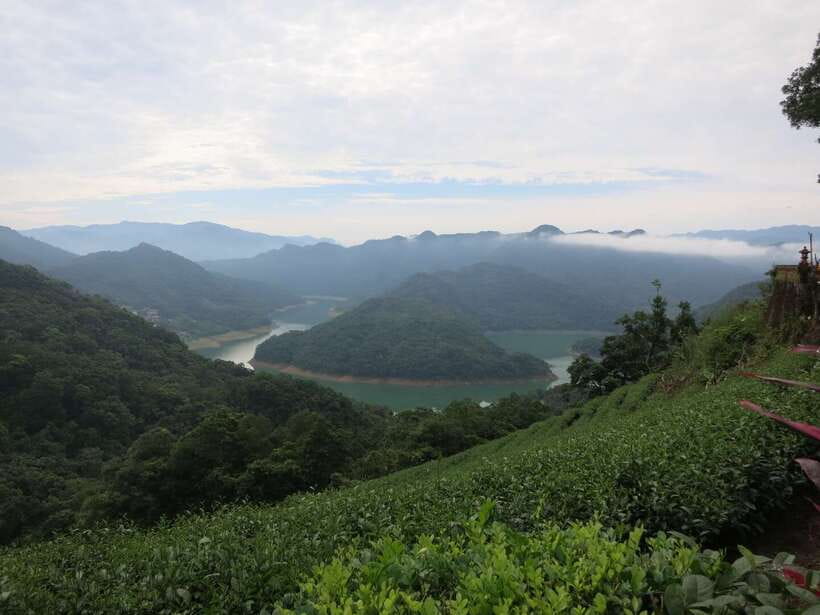
Taiwan’s mountain weather can change the mood of the outing. Rain may obscure the reservoir and make the tea garden less photogenic, though the museum, tea shop, and explanations still provide structure. One person had rain all day but still enjoyed the guide’s explanations and the cultural side of the visit.
Wear comfortable shoes. You will not be taking a major hike, but the setting is hilly and the stops are outdoors. Pack cash, water, and only a small day bag.
The tour is not suitable for unaccompanied minors. Children under 12 must travel with an adult. You should arrive at the MRT meeting point in time to find the guide near Exit 2, or wait in your hotel lobby 10 minutes before a private pickup.
Free cancellation is available up to 24 hours before departure, and you can reserve now and pay later. Those terms are useful when rain or changing Taipei plans might affect your decision.
Should you book Thousand Island Lake and Pinglin?
Book it if you want to understand Taiwan through its tea. The best parts are the reservoir views, the patterned tea rows, and the careful tasting lesson in Pinglin. The guides are a major strength, with people such as James, Gordon, Grace, David, Tony, Sharon, and Kevin repeatedly praised for warmth, clear English, useful local detail, and good humor.
Skip it if you dislike winding roads, want a long outdoor walk, or expect a large museum with many hours of exhibits. The outing is short, and the scenery depends on weather. For most people who have five spare hours in Taipei, though, the $40 price buys a pleasant change of pace and a genuine look at one of northern Taiwan’s most important tea districts.
FAQ
How long does the Thousand Island Lake and Pinglin tour last?
The tour lasts approximately five hours, including transportation between Taipei, Shiding, Pinglin, and the return drop-off.
Where does the shared tour meet?
Meet at MRT Zhongxiao Xinsheng Station, station numbers BL14 and O07, at Exit 2. The guide waits near the exit with an Edison Tours logo flag.
Is hotel pickup included?
Hotel pickup and drop-off are included when you select the private option. For that service, wait in the hotel lobby 10 minutes before pickup, at ground level if the lobby is upstairs.
What languages are available?
Shared tours provide English or Chinese commentary. Private tour language options include English, Chinese, Vietnamese, and Indonesian. Traditional Chinese is also listed among the available languages.
What is included in the $40 price?
The price includes air-conditioned transportation, a tour guide, tea tasting, and local general liability insurance. Hotel pickup and drop-off are included only with the private option.
Is food included?
No. Food, drinks, and bottled water are not included. Bring water and cash for refreshments or optional purchases.
Is the tour suitable for wheelchair users?
No. The tour is not accessible for wheelchair users or people with mobility impairments.
Can children join the tour?
Children under 12 must be accompanied by an adult. Unaccompanied minors are not allowed.
What happens if the weather or traffic changes the schedule?
The order of the stops and the amount of time at each location may change because of traffic or weather. Rain can also reduce visibility at Thousand Island Lake and the tea garden.
Just added around Taipei
- Xiao Long Bao, Chicken vermicelli with mushroom and sesame oil, Tofu strips salad, Bubble milk tea. Taiwan Traditional Delicacies Experience-A (Taipei Cooking Class)★ 5.0 · 8 reviews
- Xiao long bao, Pork thick soup, Bubble milk tea. (Taiwan Cooking Class)-B★ 5.0 · 18 reviews
- Taiwan Traditional Delicacies Experience, Xiao Long Bao, Chicken vermicelli with mushroom and sesame oil, Tofu strips salad, Bubble milk tea.★ 5.0 · 6 reviews
- Xiao Long Bao, Chicken vermicelli with mushroom and sesame oil, Tofu strips salad, Bubble milk tea. Taiwan Traditional Delicacies Experience-A (Taipei Cooking Class)★ 5.0 · 5 reviews
- Street Food Cooking Class in Taipei : Gua Bao/Lu Rou Fan/Boba Tea★ 5.0 · 22 reviews
- Taipei Fresh Market Tour and Colorful Bubble Tea Making★ 5.0 · 6 reviews
- Taiwanese Baking Class with Oolong Tea Tasting in Taipei★ 5.0 · 4 reviews
- Pineapple Pastry with Egg Yolk, Longan Cake, High Mountain Oolong Tea. Taiwan Traditional Dessert Experience-D (Taipei Cooking Class)★ 5.0 · 2 reviews
Tea Plantation & Farm Tours, compared.
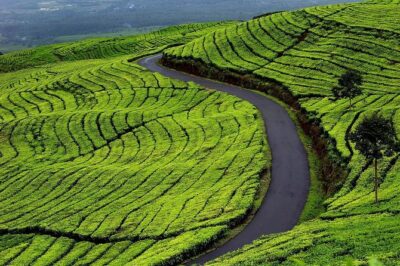
Active Volcano, Rice Field, Hot Spring, Fruit market, Tea Plantation with Lunch
Read our review →
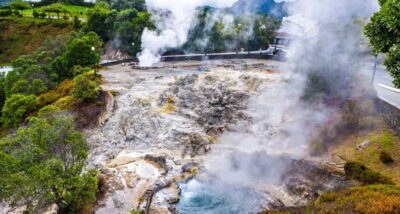
São Miguel: Furnas Volcano & Tea Plantation Tour with Lunch
Read our review →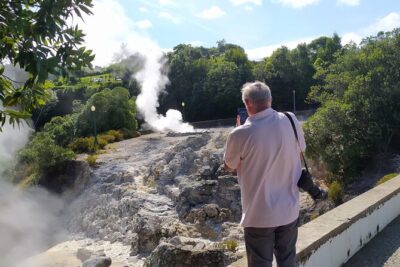
Furnas Volcano & Tea Plantation With Traditional Lunch, East Tour
Read our review →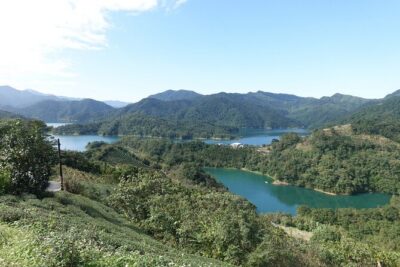
Thousand Island Lake and Pinglin Tea Plantation from Taipei
Read our review →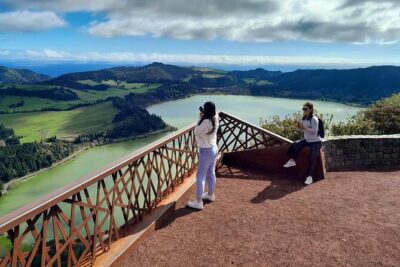
Volcano Wonders, Tea Plantation & Waterfall Tour
Read our review →
Adventure in the Furnas, with volcanoes, lagoons and tea plantations
Read our review →Browse the lists this tour appears in