
Review · ELLA
Tea Plantation Tour in Ella, Sri Lanka
Tea picking is harder than it looks. At Halpewatte Tea Factory near Ella, you learn how Ceylon tea is made, then carry a basket into the fields and try the work yourself. I like the hands-on picking session and the chance to taste several tea grades afterward. I also like the short visit to a small kovil, where you take part in a customary worship of Lord Ganesh before heading into the plantation.
The main drawback is the short format. You get about 40 minutes to an hour, and the factory portion may feel brief or limited, especially if you expect a full working-production tour. The tea tasting can also be uneven, depending on how much explanation your guide provides.
Key points about the Halpewatte tea experience
- You pick tea by hand: You receive a basket and take part in a real picking session beside an experienced tea plucker.
- The tour begins with a local custom: A short worship of Lord Ganesh at a nearby kovil adds cultural context before the field visit.
- The work is more demanding than it looks: Picking tea gives you a better sense of the stamina needed for a full day in the fields.
- Tea tasting covers several grades: You may taste four types and learn about labels such as OP, BOP, and FBOP.
- The Sky Café has dramatic views: It sits about 300 meters above ground and 1,300 meters above sea level.
- The visit is easy to fit into an Ella schedule: It runs daily from 8:00 a.m. to 4:30 p.m. and ends where it begins.
A short visit with plenty to take in
The Uva Halpewatte Tea Factory sits on Badulla Road in Hela Halpe, outside Ella. It is surrounded by tea fields and offers a compact introduction to one of Sri Lanka’s best-known products.
The basic visit takes around 40 minutes to one hour. That is enough time to learn the main steps, pick tea, and taste the finished drink, but not enough for a slow, detailed factory study. If you want a full industrial tour with every stage explained at length, set your expectations carefully.
The operation is open every day from 8:00 a.m. to 4:30 p.m. You can fit it before or after other Ella sights, though the plantation itself is the reason to come. Ella Rock, Nine Arch Bridge, and Ravana Falls are not part of this activity, despite sometimes being associated with Ella tours.
The small group limit is listed as 10 people. That matters here. A picking session works better when you are not lost in a large crowd, and you have a better chance to hear the guide’s explanation in the field.
More Tea Plantation Tours in Sri Lanka
- Tea Fields & Factory Tour
★ 5.0 · 67 reviews - Tuk-Tuk Safari Liptons seat,Tea Fields Hike,TeaFactory Tour
★ 4.8 · 46 reviews - Galle Day Tour and Tea Plantation from Bentota & Other Places
★ 5.0 · 19 reviews
Starting with Lord Ganesh at the plantation kovil
Before picking, the group visits a small kovil near the plantation for customary worship of Lord Ganesh. This is a brief part of the visit, but it gives the activity a local setting rather than making it feel like a simple factory demonstration.
You are then given a basket and a small mottu for the picking session. The supplied information does not explain every detail of the mottu, so you should treat it as part of the traditional picking setup rather than expect a separate souvenir.
You may also choose to wear the customary clothing associated with tea pluckers, such as a wraparound saree or sarong. This is optional, but it can make the field activity more engaging and helps you understand how the work is traditionally done.
The clothing is not just for photographs. Tea picking calls for repeated movement, careful hand work, and steady pace. Several people find the task more tiring than expected, even during a short attempt. That is useful. It turns an abstract lesson about plantation labor into something physical.
Picking tea beside an experienced plucker
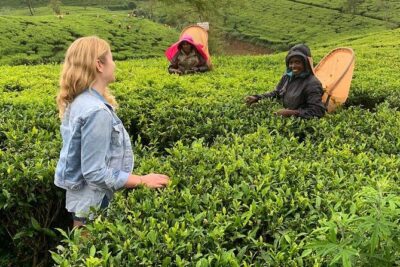
The best part of the activity is usually the field session. You are shown how to pick the suitable leaves, receive your basket, and work among the tea bushes.
An older, highly skilled plucker named Maria has helped make this part especially memorable for some groups. Another name connected with the picking session is Marietta. The exact guide and field worker you meet can vary, but the value comes from seeing the skill of someone who does this work properly, at speed, and for long hours.
You will not become an expert picker in half an hour. That is not the point. Instead, you get a clear look at the rhythm and effort involved. A few leaves in your basket are easy. Keeping up through a full workday would be another matter entirely.
I like this section because it shows the human side of tea production. Factory machines and polished packets can make tea seem effortless. The plantation reminds you that every cup begins with careful hand work.
Bring a little patience if the weather changes. Rain can interrupt the field portion, and the area is known for sudden downpours. The operator may offer a different date or a full refund if poor weather cancels the activity, but rain during your visit can still shorten the outdoor session.
What you learn about Ceylon tea
The educational section explains how tea is grown, harvested, dried, and stored. You also learn that tea comes in several forms, including black, green, and white tea.
The visit introduces common grades such as OP, BOP, and FBOP. These labels can seem like alphabet soup at first, but they help explain why two Ceylon teas can look, smell, and taste different even when they come from the same broad growing region.
You also hear about the origins of tea. One explanation given during the experience points to China as the source of the tea plant. That reminder is useful because Sri Lanka’s tea identity is powerful, but tea itself did not begin there.
Guides named Sallay, Sally, and Nari have received strong praise for making the explanation clear, friendly, and entertaining. Names can vary in spelling, and your guide may be someone else, but a good guide makes a real difference here. Sallay, in particular, is noted for keeping the talk lively while explaining the work and tea grades.
The quality of the explanation is not always consistent. Some groups receive a detailed talk and plenty of answers. Others get a shorter presentation, especially if they arrive while a session is already underway. If tea is a serious interest for you, ask at the start how long the explanation will last and which parts of the factory are included.
Same place, a different pot:
- Uva Halpewatte Tea Factory Tour in Ella Sri Lanka
★ 5.0 · 653 reviews - Nuwara Eliya: Tea Factory and Pickle Waterfalls Tuk Tuk Tour
★ 4.7 · 113 reviews - From Colombo: Kandy, Pinnawala and Tea Factory Full-Day Trip
★ 4.4 · 99 reviews - Ella: Tea Factory, Train, and Nine Arch Day Tour with Pickup
★ 4.8 · 98 reviews
Factory visit and the question of what is included
The activity is connected to Uva Halpewatte Tea Factory, described as one of Sri Lanka’s large Ceylon tea producers. The setting gives you a chance to connect the plantation with the finished product.
Still, be clear about the format. Some people find the actual factory or manufacturing section limited, with more time spent outside in the tea field. One account describes the plantation visit as a useful follow-up to a factory tour, while another says a separate payment may be needed for a fuller factory visit.
That difference is important when you budget. The advertised activity costs about $25 and includes admission to the stated one-hour experience, but you should confirm exactly what the price covers if your main goal is an extended factory tour. The field picking, cultural introduction, and tasting are the safer reasons to book this particular visit.
I would not choose it solely for machinery and production details. I would choose it for the combination of field work, tea education, and views, with the factory as part of the setting rather than the whole show.
Tea tasting, from OP to FBOP
The final tasting lets you try several grades of tea. Four cups may be offered, including examples of different grades and styles.
This is a useful finish because the lesson becomes practical. You can compare the cups instead of simply memorizing abbreviations. The tasting also helps explain why Ceylon tea suits different preferences, from lighter styles to stronger black tea.
The tasting has one weakness: preparation and explanation can vary. In some cases, the teas may already be made and sitting out before the group arrives. That can reduce the freshness and make the tasting feel less polished. You may also be given the names without much explanation of the differences.
Ask questions as you taste. Ask which grade is in each cup, what makes the flavor different, and whether the difference comes from the leaf, processing, or both. A guide such as Sallay may provide a fuller explanation, but you should not assume every session will have the same depth.
There is also a tea shop where you can buy tea. The range and pricing are not specified, so compare prices with other shops if you are making a larger purchase. Buying a small packet can be a pleasant reminder of the visit, but the shop should not be the reason you come.
The Sky Café and the mountain views
The Sky Café is one of the most appealing extras. It sits on a mountain top about 300 meters above ground and 1,300 meters above sea level, with views across tea estates and the surrounding countryside.
This is a good place to slow down after the field session. The endless green rows make more sense after you have worked among them. You are no longer looking at tea as scenery alone. You have seen the bushes up close and tried to harvest the leaves.
The café also gives the visit a stronger visual finish. The tour itself is short, so the café helps you spend more time at the site without needing another formal activity. Weather matters here, too. Cloud and rain can change the view quickly, and the outdoor portion may be affected by the same conditions.
Is $25 good value?
At about $25, I consider this a fair price if you want an active introduction to tea and do not expect a long factory study.
The value comes from several parts working together:
- A guide-led introduction to tea production
- A short visit connected with Lord Ganesh worship at a nearby kovil
- A hands-on picking session with a basket
- A chance to wear traditional tea-picking clothing
- An explanation of tea types and grades
- A tasting of about four teas
- Access to mountain views at the Sky Café
The price is less compelling if you only want to walk through the factory. The manufacturing section may be brief, and some people find the tasting too lightly explained. If the field work interests you, the price is easier to justify. Picking tea yourself is the part that gives this visit its character.
For a small group, the maximum of 10 people is another positive. A quieter group makes it easier to follow the guide and watch the picking demonstration. The experience may feel less personal if you are placed into a session already in progress.
Timing, transport, and physical effort
The meeting point is Uva Halpewatte Tea Factory on Badulla Road, Hela Halpe, Ella. It is near public transportation, and the activity returns to the same point.
The operation runs Monday through Sunday from 8:00 a.m. to 4:30 p.m. The exact departure system should be confirmed when you arrive. One account indicates tours may be arranged about every 30 minutes, while the general schedule allows you to come during opening hours.
Plan for moderate physical fitness. You do not need to be an athlete, but the activity includes walking through a tea field, bending, reaching, and picking leaves. Wet weather can make the outdoor section less comfortable.
Wear clothing you can move in and shoes suitable for uneven ground. The official information does not set a dress code, so this is practical advice rather than a formal requirement. If you want to wear the traditional saree or sarong, ask how the clothing is arranged before you begin.
Confirmation is provided at booking, and the ticket is mobile-friendly. Free cancellation is available up to 24 hours before the start time. Within 24 hours, changes and refunds are not accepted. If bad weather cancels the activity, you should be offered another date or a full refund.
Who will enjoy this tea plantation visit?
I would recommend it to you if you want more than photographs of tea fields. The picking session gives you a physical connection to the crop, and the tea tasting adds a useful lesson at the end.
It also suits:
- First-time visitors who want an easy introduction to Ceylon tea
- Tea drinkers curious about grades and production
- Families with older children who can manage moderate activity
- Couples looking for a short cultural stop near Ella
- Anyone who enjoys views but also wants something hands-on
I would be more cautious if you want a full working-factory tour, a long technical lecture, or a carefully structured professional tasting. The experience is compact and can feel rushed. The reception or ticket staff may also come across as less warm than the field guides.
The strongest part depends on the guide. A good guide can turn a short visit into a memorable lesson. A rushed guide can leave you with only a few minutes of explanation before the basket appears.
Should you book the Halpewatte tea tour?
Book it if you can spare an hour in Ella and want to pick tea yourself. The field session, the local worship, the mountain setting, and the chance to understand the effort behind each cup make it worthwhile for about $25.
Before paying, confirm whether the price includes the factory area you most want to see. Ask how long the current session lasts, whether the tasting includes explanations, and whether weather has changed the plan.
My call is simple: yes for hands-on tea culture and views, with modest expectations about the factory and tasting. It is a good short stop, not an all-day plantation study.
FAQ
How long does the tea plantation tour take?
The activity normally takes about 40 minutes to one hour.
Where does the tour start and finish?
It starts at Uva Halpewatte Tea Factory on Badulla Road in Hela Halpe, Ella, and finishes back at the same meeting point.
What are the opening hours?
The experience operates Monday through Sunday from 8:00 a.m. to 4:30 p.m.
Do I get to pick tea myself?
Yes. Participation in the tea-picking session is required, and you receive a basket for harvesting tea leaves.
What tea types or grades might I learn about?
The experience covers black, green, and white tea, along with grades such as OP, BOP, and FBOP. The tasting may include four different teas.
Can I cancel for a refund?
You can cancel at least 24 hours before the start time for a full refund. Cancellations or changes made within 24 hours are not accepted. If poor weather causes the operator to cancel, you should be offered another date or a full refund.
Just added around Sri Lanka
- Trekking & Picnic in The Tea Plantation From Ella, Haputale & Bandarawela★ 5.0 · 4 reviews
- Tea Experience Tour in Haputale with Lunch at a Village house★ 5.0 · 19 reviews
- Tuk Tuk safari and Picnic in The Tea Plantation from Ella,Haputale & Bandarawela★ 5.0 · 7 reviews
- Nandana Tea Walking Tour in Sri Lanka★ 5.0 · 16 reviews
- Tea Plucking and Tea Factory Visit from Nuwara Eliya.★ 3.5 · 3 reviews
- Explore Nuwara Eliya | Experience the Best Tea in the World★ 4.5 · 3 reviews
- Nuwara Eliya: All Inclusive Horton Plains & Tea Plucking Day Trip★ 4.5 · 10 reviews
- NuwaraEliya Tea Factory,Plantation & Water Falls Hike Tour by Car★ 5.0 · 12 reviews
Tea Plantation Tours in Sri Lanka, compared.
Tuk-Tuk Safari Liptons seat,Tea Fields Hike,TeaFactory Tour
Read our review →
Galle Day Tour and Tea Plantation from Bentota & Other Places
Read our review →
NuwaraEliya Tea Factory,Plantation & Water Falls Hike Tour by Car
Read our review →
Shore Excursion From Colombo port to Ingiriya Tea Plantation & back for 2 People
Read our review →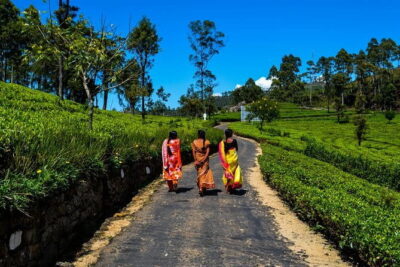
Lipton’s Seat and Tea Factory,Trail Amidst Tea Plantation Day Tour
Read our review →
Galle Day Tour with River Safari, Tea Plantation & Sea Turtle
Read our review →Browse the lists this tour appears in