
Review · INDIA
Tea Pluckers’ Day
Tea is only half the story. This Darjeeling outing takes you beyond the teacup, with a morning pickup, a visit to a working tea estate, forest walking, factory time, tea tasting, lunch, and plenty of scenic hill country. I especially like the chance to see how tea is grown and processed, and the fact that the tour uses private transportation rather than making you piece together remote roads on your own. The main drawback is that your exact tea garden depends on availability, so you cannot choose in advance from the long list of possible estates.
You pay about $85.11 per person for roughly five to six hours. That is a fair price if you want transport, food, multiple tea-related activities, and a private experience in an area where distance and steep roads can make independent visits awkward. I would plan carefully around the weather and the day of the week, since one review noted that Sunday is a rest day for tea pickers.
Key points to know before booking
- Your estate is assigned according to availability: Possible locations include Ging, Makaibari, Tumsong, Chamong, Tukvar, and several smaller tea gardens.
- The day begins at 8:30 a.m.: Pickup is offered, with private transportation taking you away from Darjeeling town.
- It is more than a photo stop: Expect tea garden walking, a factory visit, tea tasting, lunch, bottled water, and unlimited tea.
- The private format suits curious couples and small groups: Only your own group takes part.
- Guides can shape the experience: Sunny received praise for his explanations and flexibility, while Amit was appreciated for making the day an easy cultural exchange.
- Allow for changing conditions: Poor weather can lead to a new date or a full refund, and the walk may feel different during the monsoon.
Why this tea day is different from a quick estate visit
A short stop at a tea garden can give you a pleasant view and a packet of tea. This experience aims to show you the work behind the drink. You begin in the morning and spend the day moving through the stages of tea production, from planted bushes and hand plucking to factory processing and tasting.
That wider view matters. Darjeeling tea depends on careful labor, local knowledge, and the character of high hill estates. You are not simply being shown a scenic plantation. You are being introduced to the people, buildings, paths, and routines that make the finished tea possible.
The activity is private, so you are not tied to a large bus group. That can make a big difference on narrow estate roads and during walks. You can ask more questions, slow down for views, or spend a little longer at a factory station if your guide and the estate staff agree.
The schedule is listed as five to six hours, although the possible stops are each shown with a five-hour duration. Read that as a description of the full experience rather than an instruction to visit every property on the list. You will be taken to one available partner garden, not all thirteen.
A few more tea experiences around India worth a look
- Munnar Tea Trail Tour with Factory Experience ( By Munnar Info)
★ 5.0 · 458 reviews - Village Vibes: Cansaulim Coastal E-Bike & Japanese Tea Tour
★ 5.0 · 292 reviews - Munnar Tea valley Tour ( By Munnar Info)
★ 5.0 · 83 reviews
The morning road from Darjeeling
Pickup begins at 8:30 a.m. from your hotel or agreed meeting point. Private transportation is included, which is useful in Darjeeling, where tea estates are spread across the hills and roads can be slow even when the distance looks short on a map.
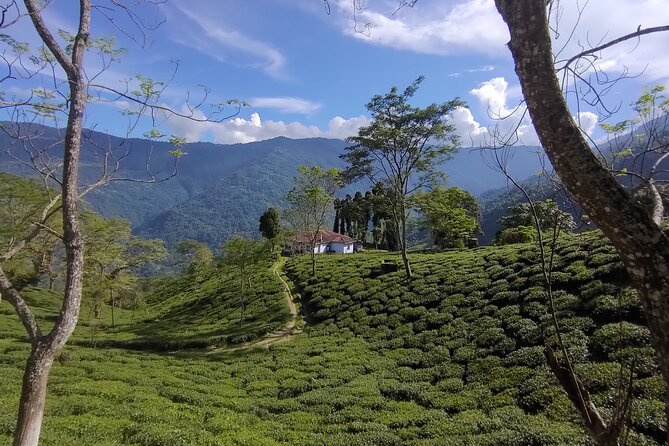
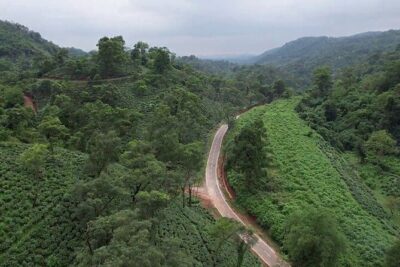
The drive is part of the setting. You leave the town and head toward a tea garden selected for the day. The experience may feel more rural as you go, with views of hills, forest, estate buildings, and planted slopes. Exact scenery depends on the estate assigned.
A packed breakfast is provided with fresh fruit and organic Darjeeling tea. This is a practical touch because the morning starts early, and it lets you begin the day with tea in the place where it is grown. Bottled water is also included.
You should wear shoes suitable for uneven paths and bring clothing that can handle changing hill weather. Walking sticks are available if required. The tour includes a forest hike and estate walking, so this is not the right pick if you want to remain in the vehicle all morning.
Seeing how tea is plucked
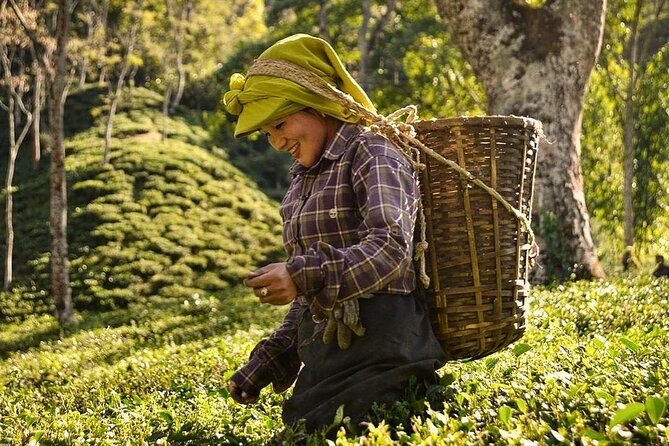
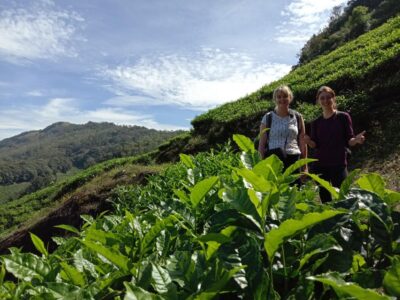
The most personal part of the experience is the garden walk. You see the tea bushes up close and learn about planting and plucking. One account of the day included a gentle walk from a guest house to a tea factory, with a chance to watch tea being picked by hand.
That detail helps set expectations. This is not an athletic trek. It is a working-estate walk, with stops and explanations along the way. The terrain can still be uneven, and wet weather may make paths harder to manage, but the pace appears suited to ordinary sightseeing rather than serious hiking.
The title Tea Pluckers’ Day suggests a full working shift. In practice, you are observing and learning rather than taking on a paid picker’s job. That is still valuable. You get a clearer sense of the handwork behind the product, and you can compare the neat rows of bushes with the more formal stages inside the factory.
At Ging Tea Estate, established in 1864, the route can include more than tea plants. One account described stops at places such as a dispensary and a school before reaching the factory. Those details give the estate a social dimension. You see a place where tea production connects with daily community life.
The possible tea gardens, from Ging to Makaibari
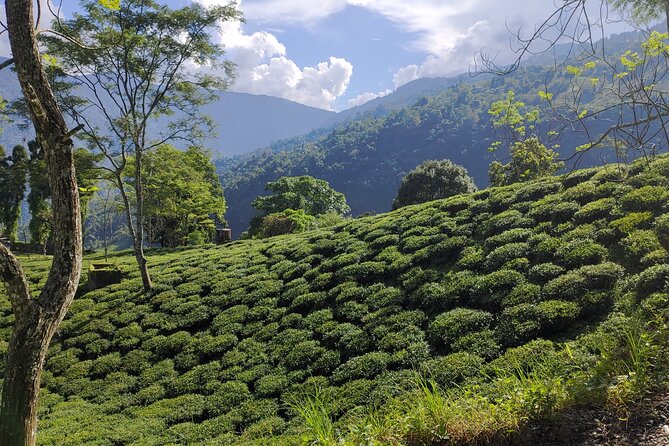
Your destination changes with real-time availability. Each garden has a different character, so it is worth understanding the choices without assuming you will visit a specific one.
Ging Tea Estate dates from 1864 and is one of the major heritage estates in the Lebong hills. It may suit you if you want a classic Darjeeling setting with a longer story and more visible estate facilities, including the dispensary and school mentioned in the experience.
Rangaroong Tea Garden lies between the Senchal West Forest Range and Darjeeling town. It is described as less explored, which may appeal if you prefer a quieter setting and a less familiar route. The tradeoff is that its facilities and exact program may differ from a larger estate.
Poobong Tea Garden dates to the mid-19th century and stretches below the Sukhia Pokhri range. Its Poobong Tea Room is an additional attraction, so ask your guide whether it is operating and part of your visit before counting on it.
Soom Tea Garden is known for calm scenery, cherry blossoms, pine, and rhododendron trees. The name Soom comes from a Lepcha word meaning triangle. This may be a good match if you care as much about plants and quiet views as the factory process.
Mim Tea Estate belongs to Andrew & Yule Company Ltd., a Scottish-established company with centuries-old roots. It is described as one of the beautiful villages in the Darjeeling district. The appeal here is the combination of estate history and village setting.
Chamong Tea Estate is one of the larger and more varied gardens in the area. It produces distinctive organic teas, making it a strong choice for anyone especially interested in organic production and tea variety.
Tumsong Tea Retreat combines estate scenery with a heritage retreat setting. If your day includes Tumsong, the experience may feel more polished and hospitality-focused than a simple working-garden visit.
Ring Tong Tea Garden is associated with careful plucking and a long reputation for export-quality Darjeeling tea. It is a sensible destination if you want to focus closely on the craft of selecting the right leaves.
Phubsering Tea Garden is among the older estates in the hills and is known for organic tea. It may interest you if the age of the property and organic methods are central to your plans.
Turzum and Sungma Tea Factory offer a boutique tea focus. These are described as two small tea villages with a range of Darjeeling teas, which could make the factory and tasting portion especially rewarding.
Tukvar Tea Garden offers broad views toward the lesser Himalayan hills. A hike down toward the river may be possible after the tea experience, but you should confirm the conditions and time available before expecting that extra walk.
Makaibari Tea Garden brings together nature, history, and heritage. It is one of Darjeeling’s oldest organic estates and may be especially appealing if you want the classic combination of old estate character and organic tea production.
The list gives the operator flexibility, but it also creates uncertainty. If a particular estate is the main reason you want to book, ask about availability before paying. Otherwise, treat the changing destination as part of the experience.
Same place, a different pot:
- Tea planation walking In Munnar- (by Munnar Info)
★ 5.0 · 53 reviews - Munnar: Tea trail, Tea Factory, and Tea Tasting Tour
★ 4.9 · 47 reviews - Private Munnar Tea Trek
★ 4.6 · 38 reviews - Amchong Tea Estate + Factory Visit (with Hi-tea only)
★ 5.0 · 30 reviews
Inside the factory, where green leaves become tea
The factory visit is the point where the garden starts to make sense. After seeing leaves on the bushes, you can follow the production side and learn how raw material becomes the tea poured into your cup.
The exact factory route varies by estate. The information provided does not specify every machine or processing stage, so I would not expect a fixed technical demonstration at every property. Instead, use your guide and the estate staff to ask how that garden handles its own leaves.
This is also where a private tour has value. You can ask basic questions without worrying about holding up a busload of people. If you already know tea, you can ask about organic production, plucking standards, or the character of different estates. If you know very little, you can start with the simple question: what changes between the leaf on the bush and the tea in the cup?
The factory may be especially interesting at Ging, Turzum, or Sungma, where the experience specifically includes a factory component. At other estates, the amount of factory access may depend on operating conditions and availability.
Lunch, tea tasting, and the slower middle of the day
Lunch is included, along with unlimited tea, bottled water, and an elaborate tea tasting. One described visit returned to a guest house for a delicious lunch served outdoors. That setting sounds appealing after the morning walk, though the exact place and menu are not specified.
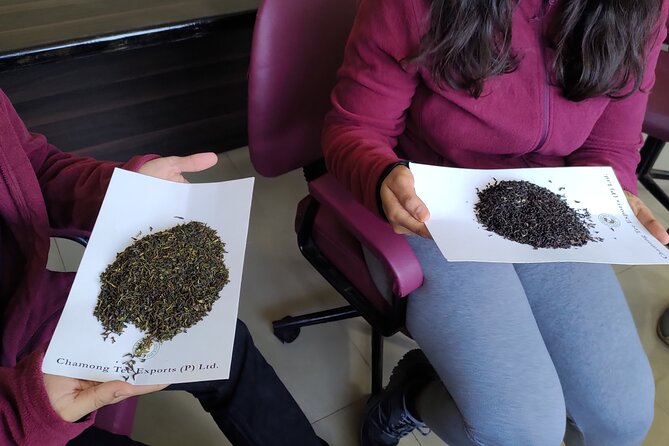
The tasting is not just a free cup at the end. It gives you a chance to compare teas and pay attention to color, aroma, strength, and finish. I would keep notes if you are planning to buy tea later in Darjeeling. Estate names can blur together after a long morning, and the tea you enjoy most may not be the one you expected.
Tea is available throughout the day, which is helpful in cool or wet conditions. Still, unlimited tea does not mean you should ignore water, especially if you are walking. Bottled water is included, but bring a refillable bottle if you use one.
Lunch and tasting also provide a natural pause. The tour is not a nonstop march through gardens and buildings. You get time to sit, talk, and ask about the local customs and the work you have just seen.
The guides can make the difference
The strongest human element comes from the guides. Sunny was praised for being flexible, explaining local customs, and giving clear attention during a visit to Ging Tea Estate. Kewal, the driver on that outing, was also specifically appreciated.
Another guide, Amit, was praised for making the day conversational and open. The discussion ranged from tea and politics to music, with an easy exchange between guide and visitor. That kind of interaction cannot be guaranteed, but it shows why a private format can be rewarding when personalities click.
You should use the guide actively. Ask about the estate you are visiting, the people who work there, and the difference between teas. If you want more walking or less walking, say so early. Flexibility was one of the useful qualities noted in the experience, but your guide can respond only if you explain what you want.
Sunday deserves special attention. One account said it would be better not to schedule the visit on Sunday because tea pickers have a rest day. If watching active plucking is important to you, ask about the working schedule before you choose your date.
What $85.11 gets you
At about $85.11 per person, the cost is not simply an admission ticket. It covers private transportation, tea garden and estate access, lunch, unlimited tea, bottled water, tea tasting, walking sticks when needed, and all fees and taxes.
That is good value if you want a guided day away from town and would otherwise need to arrange transport, estate access, food, and a tasting separately. The private nature adds value for couples, families, and small groups who want conversation rather than a standard group script.
The price feels less worthwhile if you only want a quick photograph among tea bushes. You could be paying for several parts of the experience that you will not use, particularly the factory visit, long walk, and extended tasting.
Group discounts are available, which may improve the cost for a larger party. Anything you buy for yourself is extra, including tea or other purchases from the estate.
Weather, walking, and practical limits
The experience requires good weather. If poor conditions force cancellation, you can receive a different date or a full refund. Darjeeling weather can also change the feel of the day without canceling it. During the monsoon, the walk may be wet, but one account still described the guide as attentive and the day as worthwhile.
Wear practical shoes and expect paths that may not be smooth. Walking sticks are available if required, and most people can participate, but the tour does include a forest hike and estate walking. If you have mobility concerns, ask before booking for a clearer description of the route at the available garden.
Confirmation is provided when you book. The experience is near public transportation, though private pickup is offered. You can cancel for a full refund up to 24 hours before the start time. Changes or cancellations inside that window are not accepted, except when the operator cancels because of weather or an insufficient number of bookings.
Who should book Tea Pluckers’ Day?
I would choose this for someone who wants context, not just a scenic stop. It suits tea drinkers, photographers, curious families, and anyone interested in how a famous regional product is made.
It is also a good fit if you prefer a private outing. You get your own vehicle and group, plus room for questions and conversation. The guide names and feedback suggest that the human side can be as memorable as the garden itself.
I would hesitate if you dislike uneven walking, early starts, changing plans, or weather uncertainty. I would also ask about Sunday scheduling if seeing active tea plucking is your priority.
Should you book it?
Book Tea Pluckers’ Day if you want a full introduction to Darjeeling tea, with transport, food, estate walking, factory time, and tasting in one manageable outing. The flexible estate choice is a weakness if you have your heart set on one property, but it also lets the operator match the day to current conditions.
For the best chance of seeing plucking activity, avoid Sunday if possible and confirm which garden is operating before you go. At $85.11, the experience offers solid value for a private half-day in a remote tea-growing area, especially when Sunny, Amit, or another attentive guide turns the visit into a conversation rather than a simple drive-by.
FAQ
What time does Tea Pluckers’ Day start?
The experience starts at 8:30 a.m. Pickup is offered from your hotel or an agreed meeting point.
How long does the experience last?
The tour lasts approximately five to six hours.
Will I visit every tea garden listed?
No. The operator chooses one partner tea garden or estate based on real-time availability. The possible locations include Ging, Rangaroong, Poobong, Soom, Mim, Chamong, Tumsong, Ring Tong, Phubsering, Turzum and Sungma, Tukvar, and Makaibari.
What is included in the price?
The price includes private transportation, lunch, unlimited tea, bottled water, tea tasting, walking sticks if required, all fees and taxes, and visits to a tea garden and tea estate.
Is this a private experience?
Yes. Only your own group participates.
What happens if bad weather cancels the tour?
You will be offered a different date or a full refund if the experience is canceled because of poor weather. A different date, alternative experience, or full refund is also offered if the minimum number of bookings is not met.
Just added around India
- Varanasi: Sunrise Boat Ride with Masala Tea – Arti Ceremony★ 4.5 · 4 reviews
- Heritage Tour : Private Boat, Havelis, City Walk & High Tea★ 5.0 · 6 reviews
- Tea plantation walk with Visit of Historical ,village & Market★ 5.0 · 5 reviews
- Tea Plantation, Grass Land and Mountain Hiking in Munnar★ 5.0 · 6 reviews
- Tea Farm Tourism★ 5.0 · 8 reviews
- Tea plantation walk and stay in valley view Room (By Munnar Info)★ 4.0 · 2 reviews
- Munnar Tea Plantation Evening walking with Sunset View★ 5.0 · 8 reviews
- Tea Tasting Session at India’s oldest tea boutique : Sancha Tea Boutique★ 5.0 · 13 reviews
India Tea Tours, compared.
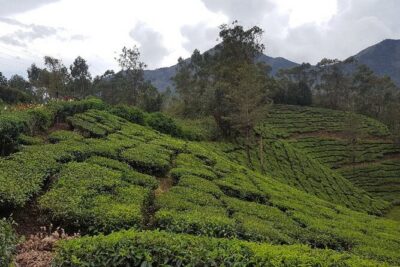
Munnar Tea Trail Tour with Factory Experience ( By Munnar Info)
Read our review →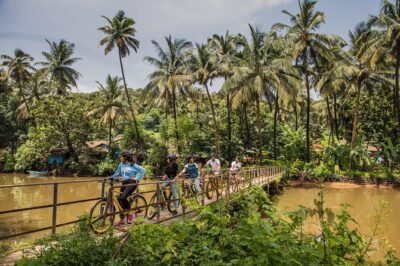
Village Vibes: Cansaulim Coastal E-Bike & Japanese Tea Tour
Read our review →
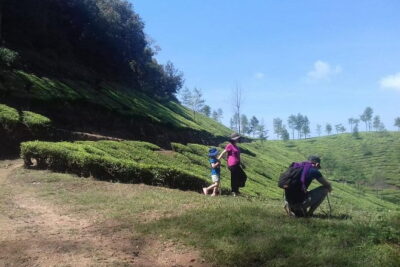
Tea planation walking In Munnar- (by Munnar Info)
Read our review →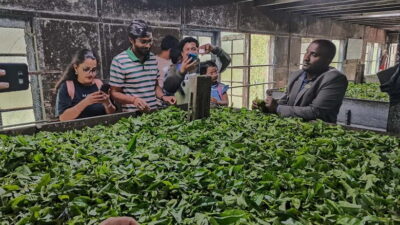
Amchong Tea Estate + Factory Visit (with Hi-tea only)
Read our review →
Browse the lists this tour appears in