
Review · THAILAND
From Chiang Rai: 3 Temples, Golden Triangle Tour, Tea Plantation
Northern Thailand packs a lot into one day. This Chiang Rai outing links the White and Blue Temples with the Golden Triangle, two museums, a hilltribe village, and a tea plantation. I like the hotel pickup and the small-group limit of 12, which make a long day easier. The tradeoff is clear: seven major stops in about 10 hours means you will see a great deal, but rarely linger.
I also like that lunch, transport, water, insurance, entrance fees, and an English-speaking guide are included. Guides such as Ping, M, Fido, Yolk, and others have earned praise for being warm, organized, funny, and helpful. Still, the Black House admission is not included, and the optional boat ride costs another THB 300, so the advertised price is not the final possible spend.
Key points to know before you book
- A full Chiang Rai circuit: You visit the White Temple, Blue Temple, Black House, Golden Triangle, Hall of Opium, Long Neck Karen village, and Chui Fong Tea Plantation in one day.
- Small shared group: The vehicle carries a maximum of 12 people, though one reported group had nine passengers in a minibus.
- Hotel pickup at 8:00 am: The tour starts and ends in Chiang Rai, making it useful if you do not have your own transport.
- Strong guiding is part of the appeal: Ping, Fido, Yolk, M, and other guides are praised for clear explanations, humor, care, and good organization.
- Extra costs to remember: The Black House ticket is not included, and a boat ride at the Golden Triangle costs THB 300 per person.
- Ten hours means a brisk pace: Each scheduled stop is roughly one hour, with additional time spent driving through northern Thailand.
What this Chiang Rai day covers
This is a shared tour, not a private outing. That distinction matters. You get the efficiency of a planned route and the lower cost of a group excursion, but you do not control the pace or the order of every stop.
At $82.61 per person, the price is fair for what is bundled. You receive an air-conditioned vehicle, hotel pickup and return, lunch, drinking water, insurance, an English-speaking guide, and most standard entrance fees. A private car covering this much ground would normally cost more, while arranging every stop independently would take time and require careful planning.
The route also gives you a useful cross-section of Chiang Rai. The temples show the province’s modern artistic style. The museums explain the area’s opium trade and local art. The Golden Triangle gives you a border viewpoint, while the tea plantation shifts the day toward farming and mountain scenery.
The main weakness is the schedule. Each stop is allocated about an hour, but driving between Chiang Rai, the Golden Triangle area, the mountain sites, and the tea plantation takes up a substantial part of the day. The tour description notes that some of the remaining time is spent going up and down the mountain. You should book this as a broad introduction, not as a slow photographic study of every location.
More Tea Plantation Tours in the world:
- From Taipei: Thousand Island Lake and Pinglin Tea Plantation
★ 4.7 · 519 reviews - Active Volcano, Rice Field, Hot Spring, Fruit market, Tea Plantation with Lunch
★ 5.0 · 513 reviews - Furnas: Tea Plantations, Lake and Volcano Guided Tour
★ 4.8 · 511 reviews
The White Temple starts the morning with a jolt
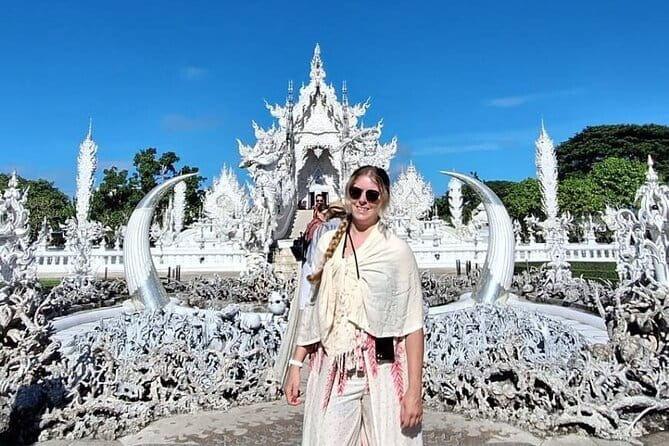
Wat Rong Khun, usually called the White Temple, is the first scheduled stop and receives about an hour. It is one of Chiang Rai’s best-known sights and a very different experience from the older temple compounds you may see elsewhere in Thailand.
The temple is known for its bright white surfaces and detailed decorative work. Even if you have already seen many Thai temples, this stop can reset your expectations. One traveler who thought they had seen enough temples still found the White and Blue Temples especially enjoyable because they felt unlike those in southern Thailand.
Your guide can add useful context here, but you should also allow time simply to look. The details are easy to miss if you rush from one photo point to the next. With only an hour, I would take a few photographs early, then spend the rest of the visit noticing the artwork rather than trying to record every angle.
The White Temple is a popular place, so the scheduled hour is practical rather than generous. It gives you a strong first stop without letting one attraction consume the day.
The Blue Temple brings a darker, cooler mood
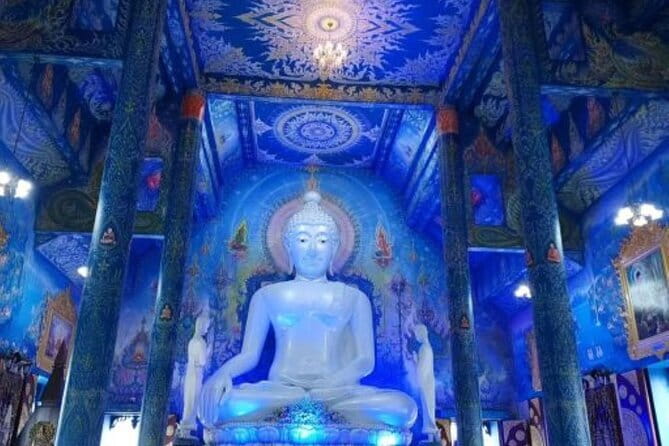
Wat Rong Suea Ten, known as the Blue Temple, is another one-hour stop. It sits in the Rong Suea Ten community and was restored by local artist Phutta Kabkaew, also known as Sala Nok, who studied under White Temple artist Chalermchai Kositpipat.
That connection helps explain why the two temples work well together. The White Temple is bright and intricate, while the Blue Temple uses a much stronger blue color scheme and a more dramatic mood. Visiting both lets you compare two modern works from Chiang Rai’s local art tradition rather than treating them as interchangeable religious buildings.
I would pay attention to the interior as well as the outside. The color continues through the temple, giving the visit a different feel from the first stop. Your guide may help explain the artists and the setting, which is valuable when the visual details are more striking than familiar.
The drawback is that a one-hour visit can feel short if you want quiet time. Still, the contrast with Wat Rong Khun makes this one of the most worthwhile pairings on the route.
Baan Dam offers Chiang Rai’s strangest stop
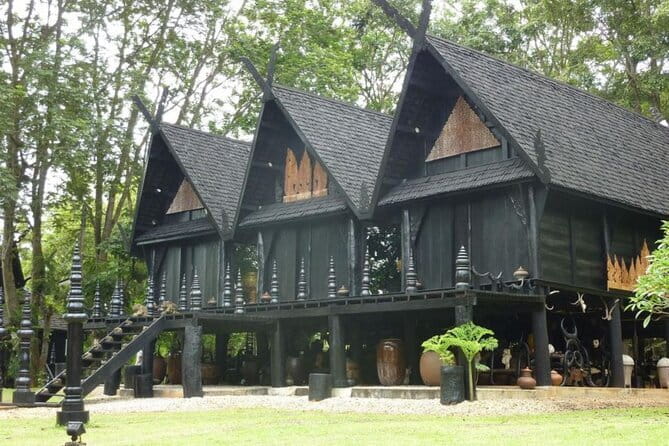
Baan Dam Museum, or the Black House, is a complex of about 40 buildings, many made from dark teak wood, set within gardens. The buildings contain artist Thawan Duchanee’s collection and artwork.
This is not another temple. It is an art installation and museum with a darker, more unusual character. That change of subject is welcome after the morning’s religious sites. One tour account described the Black House as unusual and memorable, which is exactly why it deserves a place on this route.
You have around an hour here. Use it to look beyond the main building and notice the wider complex. The collection is not likely to appeal to everyone in the same way, but it gives the day a stronger sense of contrast.
There is one practical catch. The Black House admission is listed as not included, even though standard fees and tickets are generally part of the package. I would confirm the exact ticket arrangement at booking time and keep a little extra cash available.
A few more tea experiences around the world worth a look
- Kyoto: Tea Ceremony in a Traditional Tea House in Kiyomizu
★ 4.9 · 3,519 reviews - London: Afternoon Tea Cruise on the River Thames
★ 4.4 · 3,274 reviews - Kyoto: Tea Ceremony Ju-An at Jotokuji Temple
★ 4.9 · 3,207 reviews - Afternoon Tea Bus Tour in Dublin
★ 5.0 · 2,791 reviews
The Hall of Opium adds meaning to the border visit
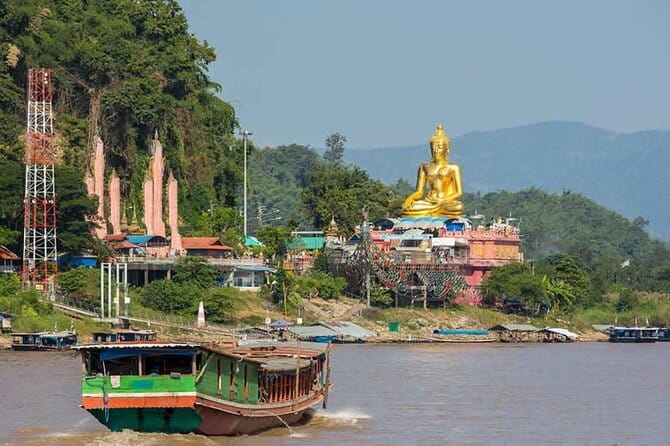
The Hall of Opium at Golden Triangle Park is scheduled for about an hour. It contains multimedia displays and exhibition areas about opium and the forces connected with its production and trade.
This museum is more than a quick photo stop. It gives context to the Golden Triangle, a border region whose name is linked to the historic opium trade. The displays help explain why this area became internationally known, making the later viewpoint more meaningful.
I appreciate the inclusion of this museum because the Golden Triangle can otherwise become a simple stop for a sign and a few photographs. The Hall of Opium gives you something to think about before you reach the riverside viewpoint.
One hour is enough for a useful introduction, though not for reading every display in detail. If museum exhibits are a major reason you are booking, you may wish the visit were longer. On a broad sightseeing day, the timing is sensible.
The Golden Triangle is a border view, not a full country tour
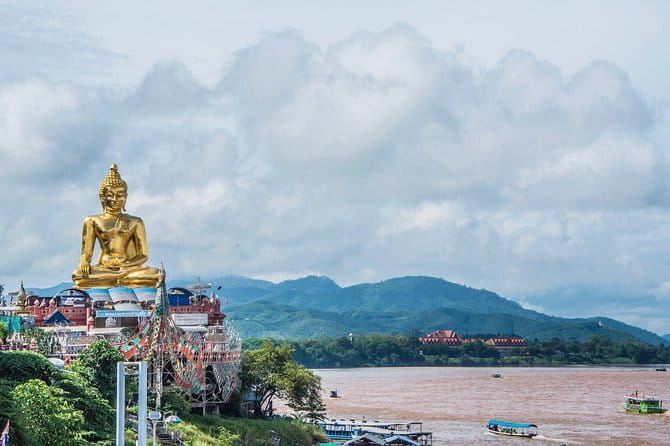
At the Golden Triangle, you look toward the meeting area of Thailand, Myanmar, and Laos. The site lies about nine kilometres north of Chiang Saen along the Mekong riverside road, with Sop Ruak as the main local point.
The appeal is visual and geographic. You can stand in Thailand and see the river borders associated with three countries in one setting. It is an easy place to take memorable photographs, especially if you have not visited a major international border region before.
Do not expect this stop to mean entering all three countries. The included visit is a viewpoint experience in Thailand. A boat ride is available for THB 300 per person, but it is not included in the tour price. If you want that extra activity, bring the additional amount and allow for the possibility that the group schedule limits how long you can spend on the water.
I like the way the museum and viewpoint fit together. First you learn about the region’s past, then you see the river setting that made the area important.
Long Neck Karen village requires a thoughtful approach
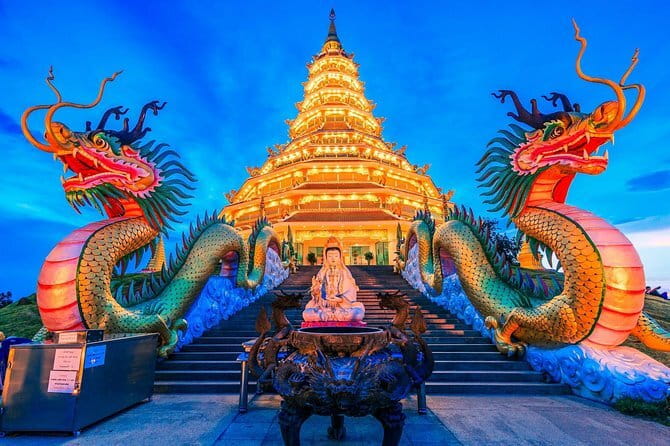
The Long Neck Karen village is another one-hour stop. The community is associated with the Padaung, a Karen group whose origins are described in the tour information as connected to Yunnan in central China before later movement into the region.
This visit may be interesting if you want to learn about one of the area’s ethnic communities, but it deserves a respectful mindset. You are entering a place presented as a cultural attraction, so it is worth listening to the guide, following local instructions, and treating people as residents rather than as scenery for photographs.
The one-hour allocation gives you time for an introduction without making the village the whole focus of the day. If you want extended cultural exchange or detailed community history, this tour may feel too brief. If you want a short, guided look at a community included in the wider Chiang Rai region, it fills that role.
The attraction is sometimes written as Longneck Karen Village in tour information. That wording describes the presentation, but it does not tell you everything about the people or their lives. Keep your expectations measured and your manners good.
Chui Fong Tea Plantation closes the route on a gentler note
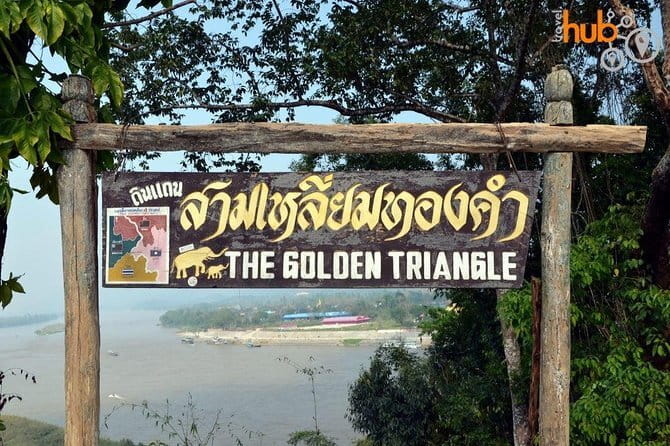
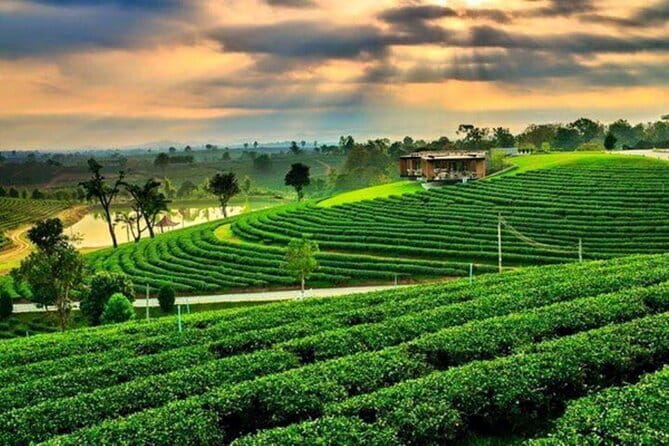
The final major stop is Chui Fong Tea Plantation, one of northern Thailand’s better-known tea attractions. It is especially scenic near the end of the rainy season and at the beginning of winter.
After temples, museums, a village, and a border viewpoint, the plantation gives you a quieter change of pace. You can look across the cultivated tea fields and enjoy mountain scenery before the return to Chiang Rai. It is also a useful stop for anyone who wants photographs with a different setting from the ornate temples.
The schedule allows about an hour. That should be enough to see the plantation and take pictures, though not to explore every corner at a leisurely speed. The tour does not promise a detailed tea workshop or extended tasting, so you should see this as a scenic plantation visit rather than a specialist tea experience.
The location also helps explain the mountain driving noted in the tour details. Some of the day is spent getting up and down the roads, but the change in elevation is part of what makes this final stop feel different from the city temples.
Why the guide can make or break this long day
The strongest part of this experience is not only the route. It is the guide and driver working together. Ping is repeatedly praised for being organized, friendly, informative, and attentive to the group. Fido is described as funny, caring, helpful, and full of positive energy. M and Yolk also receive strong praise, while guides such as Ping and drivers including Mr. A and Tony are noted for being friendly and careful.
That matters because this is a long day with many transitions. A good guide keeps the schedule moving, explains what you are seeing, and helps the group feel comfortable when the timetable gets tight. One guide even supplied information through WhatsApp for people who spoke little English, which shows useful attention to communication.
The driver matters just as much. You spend many hours in the vehicle, and a careful, attentive driver makes the road sections less tiring. The air conditioning is another practical benefit in northern Thailand, particularly on a full-day route.
Because this is a shared tour, the exact guide and driver may vary. The consistently positive comments about the team are encouraging, but you should still book for the route and overall structure rather than assuming one named guide will lead every departure.
Lunch, transport, and the real value of $82.61
Lunch is included as a buffet, and the food has been described as good, with one account noting that it was served in a pleasant place. Drinking water is also included, along with insurance and the standard fees or tickets specified by the operator.
That package makes the price easier to justify. You are not paying only for admission to temples. You are paying for a full day of transport, a guide, a driver, lunch, and the convenience of returning to your Chiang Rai hotel.
The value is strongest if you do not have a car and want to see both the city sights and the Golden Triangle. It is also useful for a first visit, since the route covers the area’s headline attractions in one organized day.
The value is weaker for slow-paced visitors. If you prefer to spend two hours at one temple, stop often for independent meals, or change plans as you go, a private arrangement would suit you better. Remember to budget for the Black House ticket if required and the THB 300 boat ride if you choose it.
Who should book this Chiang Rai tour?
I would recommend this tour to first-time visitors with only a short stay in Chiang Rai. You will get a strong sample of the province’s temples, art, border region, museums, village culture, and tea-growing areas without arranging separate taxis or day trips.
It also suits people who enjoy variety. The day rarely feels repetitive because the subject changes from white temple architecture to blue religious art, dark teak buildings, opium history, river borders, ethnic culture, and tea fields.
Families and mixed-age groups may appreciate the hotel pickup, included lunch, air-conditioned vehicle, and limited group size. Most people can participate, according to the tour information, but you should remember that there is considerable walking and mountain travel across a full day.
I would hesitate to recommend it to anyone who dislikes early starts, shared transport, fixed schedules, or long road sections. The tour begins at 8:00 am and lasts about 10 hours. It is a productive day, not a restful one.
Free cancellation is available up to 24 hours before the start time. Changes or cancellations inside that window are not accepted for a refund, and poor weather may lead to a new date or a full refund.
Should you book it?
Book this tour if you want the most efficient first look at Chiang Rai and value having transport, lunch, tickets, and a guide handled together. The White and Blue Temples are the visual highlights, while the Hall of Opium, Black House, and Golden Triangle give the day more substance than a simple temple run.
Go in knowing that the pace is brisk. Keep money aside for the Black House admission and optional THB 300 boat ride, wear suitable clothing for temple visits, and expect a full day on the road. If that sounds like a fair exchange for seeing seven very different places, this is a strong-value shared tour.
FAQ
Does the tour start and end in Chiang Rai?
Yes. Pickup is offered from your Chiang Rai hotel, and the tour returns to Chiang Rai at the end of the day.
What time does the tour begin?
The stated start time is 8:00 am.
How long does the tour last?
The tour lasts approximately 10 hours, including the time spent driving between stops and returning to Chiang Rai.
Is this a private tour?
No. It is a shared tour with a maximum group size of 12 travelers.
Is lunch included?
Yes. A buffet lunch is included in the tour price.
Are entrance tickets included?
Standard fees or tickets are included, but the Baan Dam Museum, or Black House, is specifically listed as not including admission. You should confirm that cost before departure.
Is the Golden Triangle boat ride included?
No. The optional boat ride costs THB 300 per person.
What happens if the weather is poor?
If the tour is canceled because of poor weather, you will be offered a different date or a full refund.
Just added around the world
- Yogyakarta: Prambanan Tour, Sukuh Temple & Tea Plantation★ 5.0 · 3 reviews
- Yokohama : Tea Ceremony with Sweets and Souvenir★ 5.0 · 5 reviews
- York: Private Horse-Drawn Carriage Ride and Afternoon Tea★ 5.0 · 3 reviews
- Wadi Rum: 2-Hour Jeep Tour with Bedouin Tea★ 5.0 · 11 reviews
- Walking Tour: Yanaka,Nezu& Sendagi: Tea Ceremony & Old Tokyo★ 5.0 · 3 reviews
- Washington, D.C.: Tea Around Town Bus Tour with Landmarks★ 3.4 · 7 reviews
- Visit local home for music and tea ceremony near Disney★ 4.9 · 13 reviews
- Volcano, Hot Spring, Mud Bath & Tea plantation all included★ 5.0 · 5 reviews
Tea Plantation & Farm Tours, compared.
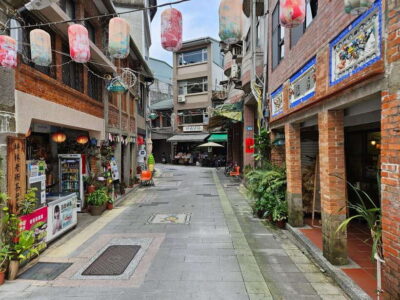
Thousand Island Lake and Pinglin Tea Plantation
Read our review →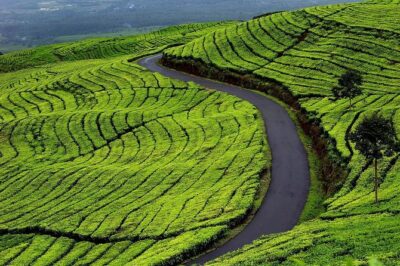
Active Volcano, Rice Field, Hot Spring, Fruit market, Tea Plantation with Lunch
Read our review →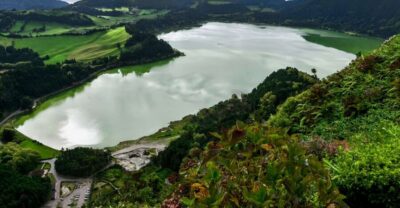
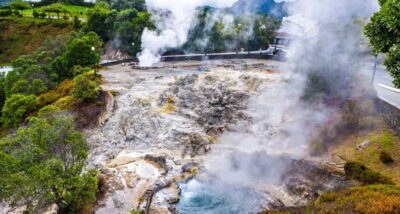
São Miguel: Furnas Volcano & Tea Plantation Tour with Lunch
Read our review →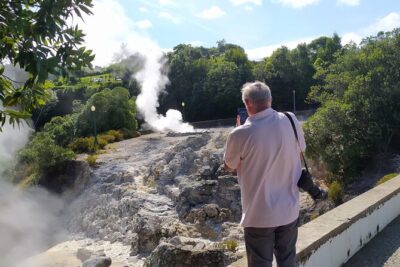
Furnas Volcano & Tea Plantation With Traditional Lunch, East Tour
Read our review →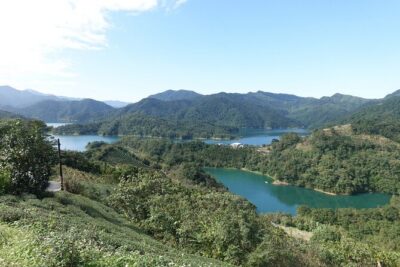
Thousand Island Lake and Pinglin Tea Plantation from Taipei
Read our review →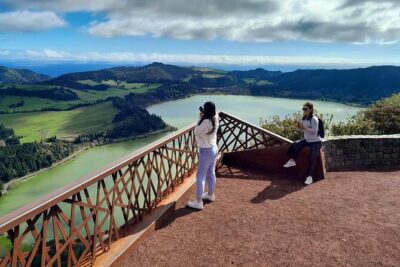
Volcano Wonders, Tea Plantation & Waterfall Tour
Read our review →Browse the lists this tour appears in