
Review · MARRAKESH
Moroccan Hands on traditional pastries & Tea class in Marrakech
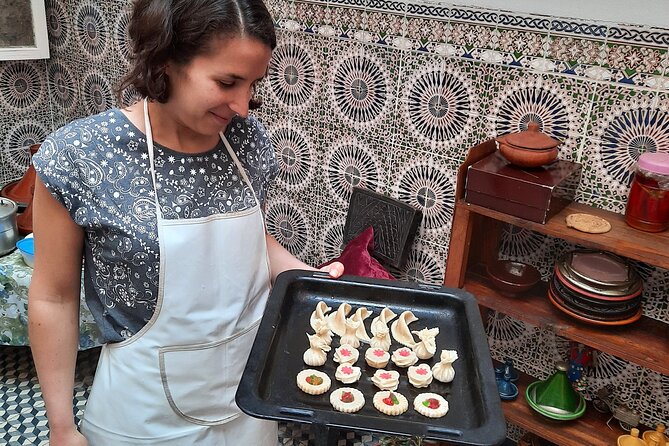
Fresh pastries, warm tea, and a home kitchen. This three-hour Marrakech experience brings you into a local private home, where Chef Khmisa and her family share the pastry traditions tied to Moroccan daily life. I like the home setting and the chance to learn practical techniques using ordinary kitchen tools. I also like that you taste the pastries fresh from the oven, then take a box with you.
The main point to consider is the class level. You may make only two pastries, and some preparation may already be measured out. That suits families and beginners, but it may feel too simple if you want a long, technical pastry course with many recipes.
Key points at a glance
- A private home in the medina: You learn in a personal setting rather than a formal cooking school.
- Two traditional pastries: Classes may include corne de gazelle, ghriba, and other Moroccan sweets, depending on the session.
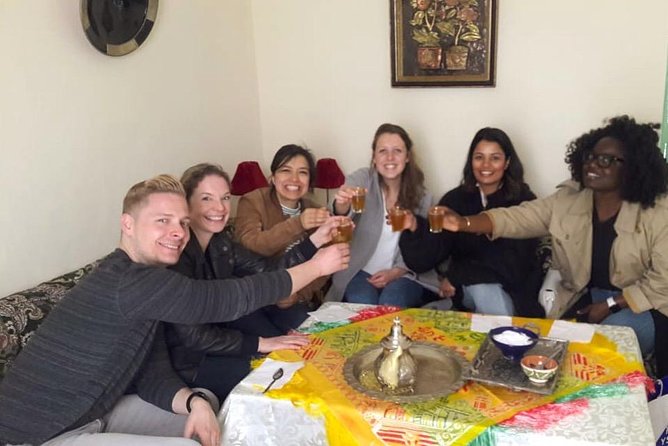
- Mint tea is part of the lesson: You learn how to prepare Morocco’s familiar tea ritual, not just how to bake.
- Fresh tasting at the end: You eat the warm pastries with tea or coffee, then receive a box to take home.
- Small-group format: The class accepts a maximum of 10 people, which keeps the session more personal than a large demonstration.
- Good value at $40.65: The price includes instruction, pastries, tea or coffee, recipes, and take-home sweets.
Entering a Marrakech medina home for pastry class
The meeting point is on Rue Bab Doukkala in Marrakech, near public transportation. From there, the experience takes you into a local private home, where the atmosphere is meant to feel more like a family kitchen than a commercial cooking studio.
That setting matters. Moroccan pastries are not only bakery items. They are linked to visits, celebrations, hospitality, and the daily habit of serving tea or coffee with something sweet. Learning inside a home gives you a better sense of that connection than simply buying a box from a shop.
You should expect a friendly, informal session with Chef Khmisa and her family. English is spoken well, according to the experience details, and French may also be useful based on the host’s replies to customers. The home setting can make the class feel personal, though it also means you should not expect the polished layout or precise timing of a professional culinary school.
The class lasts about three hours. That gives you enough time to prepare pastries, learn the tea method, eat what you made, and talk about your trip to Morocco. It is a useful length for a half-day activity, especially if you want a break from sightseeing without giving up several hours of your day.
A few more tea experiences around Morocco worth a look
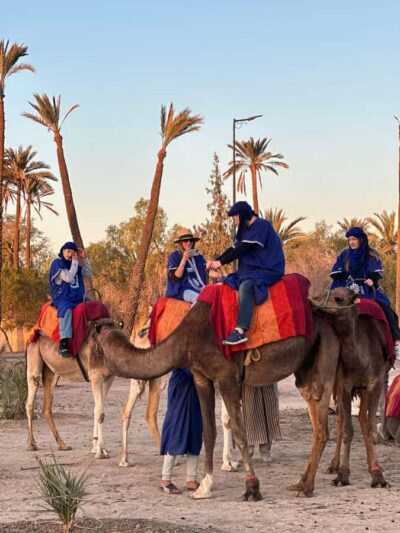
- Around Marrakech: Camel Ride in Palm Groves including Tea
★ 4.4 · 1,245 reviews - Marrakech: Pottery Workshop with Moroccan Tea
★ 4.8 · 756 reviews - Marrakech: Medina by Night Walking Tour with Moroccan Tea
★ 4.6 · 586 reviews
Learning the small tricks behind Moroccan pastries
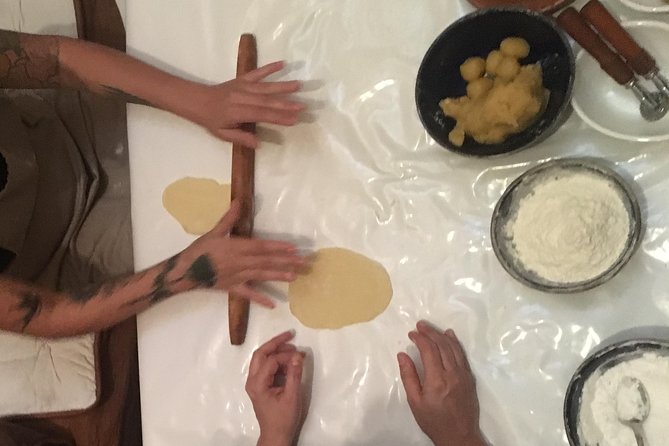
The central part of the class focuses on Moroccan pastry techniques. The host presents recipes that can be made with items found at home, without industrial equipment. This is one of the best features for anyone who wants to repeat the experience after returning home.
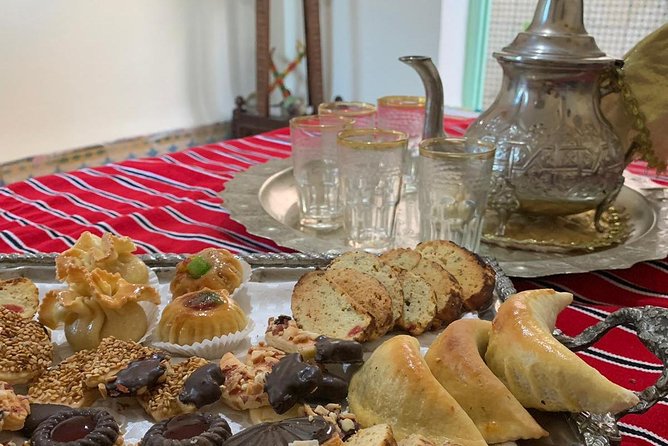
You may work with pastries such as corne de gazelle, a crescent-shaped sweet traditionally filled with almond paste, and ghriba, a crumbly Moroccan cookie. The exact selection can vary, so you should treat those as examples rather than a guaranteed menu for every class.
The appeal is less about producing a large number of dishes and more about learning the basic handling of the dough and fillings. Moroccan pastries often look more intricate than their ingredient lists suggest. Small choices in shaping, sealing, mixing, and baking affect the final texture.
I like the promise of simple equipment here. You do not need a special oven, restaurant-grade mixer, or hard-to-find tool to continue at home. If you enjoy cooking while traveling, that makes the lesson more useful than a demonstration built around equipment you will never own.
The class may feel easy for experienced bakers. One person described making two different pastries and found the work enjoyable, while another felt the recipes were too basic and that the ingredients had already been measured. That difference is important. If you want a relaxed introduction, pre-measured ingredients help you focus on technique. If you want to develop advanced skills, you may find the hands-on work limited.
Two pastries can be enough, or not enough
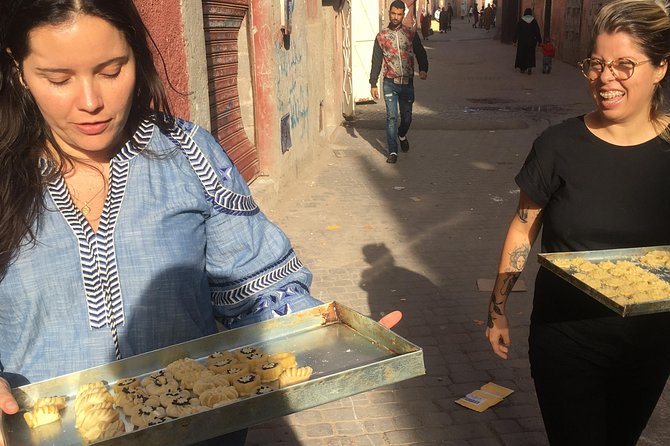
The number of recipes is the main question to settle before booking. The class is described as teaching a variety of Moroccan pastries, but the actual experience may center on two types. That is not necessarily a weakness.
Two recipes allow time to shape the pastries, bake them, discuss the ingredients, and enjoy the result. A class that promises six or eight recipes in three hours might leave you rushing from one mixture to the next. Here, the pace appears more suitable for learning a few familiar sweets properly.
Still, you should adjust your expectations. This is not a full survey of Moroccan pastry making. You will not necessarily leave with a complete guide to every famous sweet sold in Marrakech. If your goal is a broad cooking course, ask about the day’s recipes after your booking is confirmed.
The class works best for people who want a cultural activity with food at its center. Families can join because the steps are approachable. Beginners can take part without feeling lost. Children may enjoy the mixing and shaping, although adults seeking a demanding pastry workshop may find the work straightforward.
The host is also happy to offer culinary advice and recommendations about Morocco. That conversation can be as useful as the recipe itself. You can ask about ingredients, pastry habits, or ways to recreate the sweets at home.
Mint tea is part of the Moroccan ritual
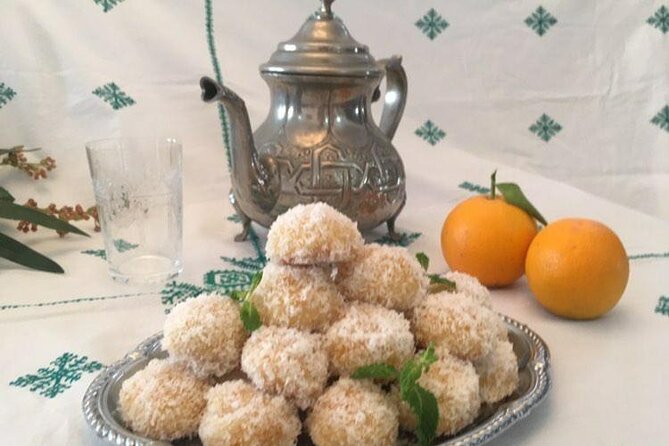
The tea lesson adds an important layer to the experience. You do not simply receive a glass of mint tea with your pastries. You learn how to make Moroccan mint tea, then drink it with the fresh baking.
Tea is closely tied to hospitality in Morocco, and serving it involves more than boiling water. The preparation, pouring, and sharing help create the social rhythm of the visit. Even if you never make the pastries again, knowing how to prepare the tea gives you a small but useful connection to everyday Moroccan life.
Coffee is also available, according to the inclusions. If you prefer coffee to mint tea, you can have that with the pastries, though the tea lesson remains one of the main parts of the class.
The strongest moment should come at the end, when the pastries are warm and ready to taste. Fresh baking has an advantage over a prepared sample: you can connect the smell, texture, and flavor with the steps you just completed. You also get a box of pastries to take home, which makes the class more than a meal eaten and forgotten.
Same place, a different pot:
- Tangier: Sunset, Tea, Sweets, Camel Ride, and Hercules Caves
★ 4.9 · 575 reviews - Marrakech: Agafay Desert Quad Bike Tour with Moroccan Tea
★ 4.6 · 216 reviews - Sunset camel ride in Agadir with transport, tea and cakes.
★ 4.5 · 116 reviews - Marrakech Guided Souks Tour with a Local Insider
★ 4.6 · 109 reviews
Eating your own work at the end
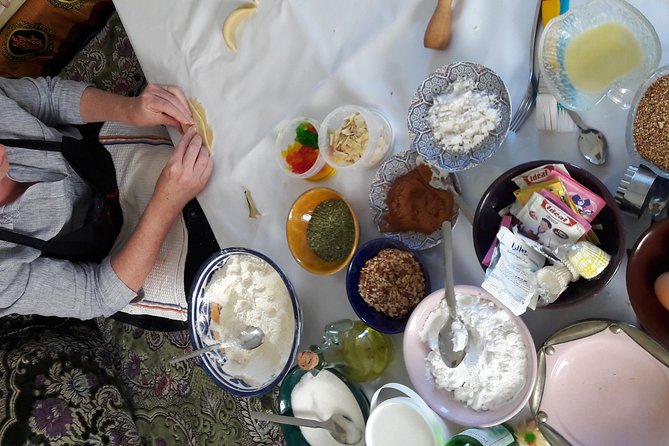
The final tasting is a practical reward. You sit down with tea or coffee and try the Moroccan pastries made during the class. The experience details describe the pastries as fresh from the oven, and a positive account specifically praised the warm bakes with mint tea.
That pairing is part of the reason the activity works. You are not just attending a cooking lesson, and you are not just having afternoon tea. You are learning a recipe, taking part in a social custom, and eating the result in the same place.
You also receive a box of pastries to take away. Keep this in mind when planning the rest of your day. The box may be useful as a small food souvenir or as something to share later, but you will need to carry it with you after the class.
The tasting also gives you time to talk about your visit to Morocco. The host offers culinary suggestions and personal recommendations, which may help if you are still deciding what to eat or see in Marrakech.
Why the small group size matters
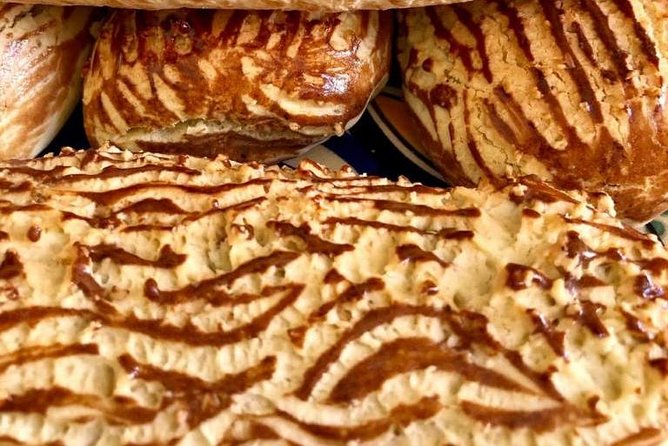
The maximum group size is 10 people. That is not a guarantee of a very small class, but it does place a limit on the number of people sharing the kitchen.
A class of this size can make it easier to follow shaping demonstrations and ask questions. You may also get more direct help than in a large commercial workshop. On the other hand, a private home has a different feel from a purpose-built school, so the available workspace may be more compact.
The personal setting is one of the experience’s strongest qualities, but it also requires flexibility. You are entering someone’s home, not a standardized attraction. The class may feel warm and informal, or less structured than you expected. I would book it for the human contact and local food context, not for a perfectly choreographed lesson.
Price and value at $40.65
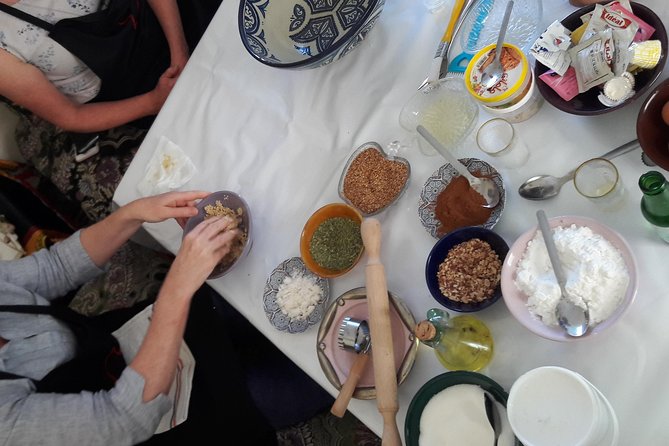
At $40.65 per person, the class offers reasonable value if you want more than a pastry tasting. The price includes the cooking instruction, Moroccan pastries, coffee or tea, recipes, the final tasting, and a box of pastries to take home.
The value is strongest for people who use the recipes later. If you treat the class as a meal, the price may seem high for two pastries and a drink. If you see it as a three-hour cultural activity with instruction and food to carry away, the cost makes more sense.
You are also paying for access to a private home and a local host. That is harder to compare with a bakery purchase. The experience gives you context about how the sweets fit into Moroccan hospitality, which is the part you cannot get from buying a pastry in the medina.
The class has a 4.6 rating from 33 reviews, with 94 percent recommending it. Those figures suggest strong overall satisfaction, but the mixed comments deserve attention. The happiest participants enjoyed the friendly setting, good English, fresh pastries, and proper mint tea. The least satisfied person expected more recipes and more difficult work.
My advice is simple: book it if you value connection, food, and a relaxed pace. Skip it if you want advanced baking instruction or a large collection of recipes.
Timing, meeting point, and practical planning
You choose from different time slots, which helps fit the class around sightseeing in Marrakech. The activity begins on Rue Bab Doukkala and ends at the same meeting point.
Pay close attention to the confirmed local time. One customer missed the class after arriving an hour late because of confusion over the time format. The host’s response said a different date or refund was offered, but the incident shows why you should confirm the time and meeting point before setting out.
The class is near public transportation, and hotel pickup is not included. Plan your route to Rue Bab Doukkala in advance, especially if you are staying elsewhere in Marrakech. You should also allow enough time to find the meeting point without rushing.
Confirmation is sent within 48 hours, subject to availability. Since the activity is usually booked about 11 days ahead, reserving earlier is sensible if your schedule is fixed. It is also wise to wait for confirmation before treating the class as a firm part of your day.
Free cancellation is available up to 24 hours before the start time. Cancellations or changes inside that period are not refunded. The activity can also be canceled if the minimum number of people is not reached or if weather causes a problem, in which case you are offered another date or a full refund.
Who will enjoy this Marrakech cooking class
This experience is a good fit for:
- First-time visitors who want a home-based Moroccan activity
- Families looking for a simple, food-focused class
- Beginner cooks who prefer recipes using ordinary equipment
- People interested in Moroccan tea and hospitality
- Couples or small groups who want a relaxed three-hour activity
- Anyone who likes taking edible souvenirs home
It may not suit you if you want advanced pastry work, detailed measurements from the start, or a broad menu of recipes. You may also prefer a formal cooking school if you need a highly structured lesson.
The class is especially appealing after several days of sightseeing. Marrakech can be intense, and a seated kitchen activity gives you time to slow down. You still learn something useful, but you do not have to spend another morning moving from one sight to the next.
Should you book it?
Book this Moroccan pastry and tea class if you want a personal introduction to Moroccan sweets, a local home setting, and an easygoing afternoon with fresh food. The warm pastries, tea lesson, recipe handout, and take-home box give the experience real value at $40.65.
Go in expecting to make around two pastries rather than mastering an entire Moroccan pastry book. Confirm the time carefully, arrive at Rue Bab Doukkala early, and choose this class for its social setting and practical introduction rather than advanced technique.
FAQ
How long does the Moroccan pastry and tea class last?
The experience lasts approximately three hours.
Where does the class begin?
It begins at Rue Bab Doukkala, Marrakesh 40000, Morocco, and ends back at the meeting point.
What pastries might I learn to make?
The class may include Moroccan pastries such as corne de gazelle, ghriba, and other traditional sweets. The exact selection can vary.
Are tea and coffee included?
Yes. Coffee and/or tea are included, along with Moroccan pastries and the tasting at the end.
How many people can join the class?
The activity accepts a maximum of 10 people.
Can I cancel for a full refund?
Yes, if you cancel at least 24 hours before the experience start time. Cancellations or changes made less than 24 hours in advance are not refunded.
Just added around Morocco
- Desert Sunset Camel Ride With Free Tea in The Desert Camp★ 5.0 · 3 reviews
- Private Quad Biking Safari In The Palm Grove Of Marrakech And Berber Home Tea★ 5.0 · 3 reviews
- Sunset Sandboarding & Mint Tea in Timlaline Dunes★ 5.0 · 5 reviews
- Agadir Quad ATV Adventure Tour with Berber Tea Experience★ 5.0 · 18 reviews
- Marrakech: Agafay Desert Quad Bike, with Pool swim Lunch Tea★ 5.0 · 5 reviews
- Fez Outdoor Adventure: Quad Ride, Camel Photo & Mint Tea★ 5.0 · 2 reviews
- Agadir/Taghazout: Sandboarding & Sunset Tea with Fire Show★ 5.0 · 6 reviews
- Argan Forest, tea time at a Berbers family & Visit of an Argan cooperative.★ 5.0 · 21 reviews
Marrakesh Tea Tours, compared.
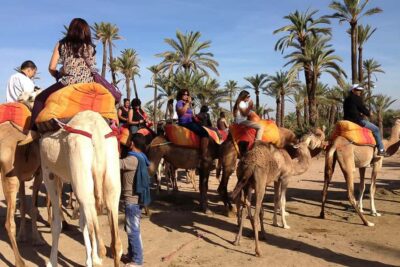
Around Marrakech: Camel Ride in Palm Groves including Tea
Read our review →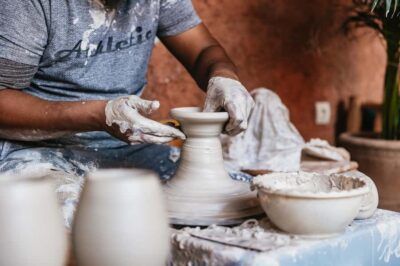
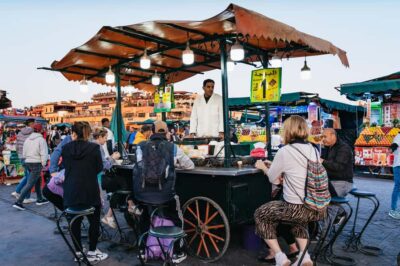

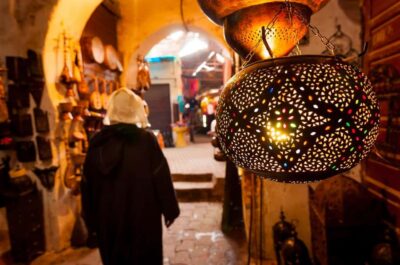
Marrakech Guided Souks Tour with a Local Insider
Read our review →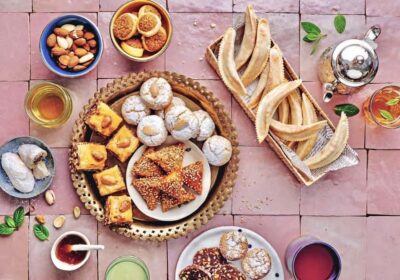
quad excursion at Jbilet desert with Moroccan tea
Read our review →Browse the lists this tour appears in