
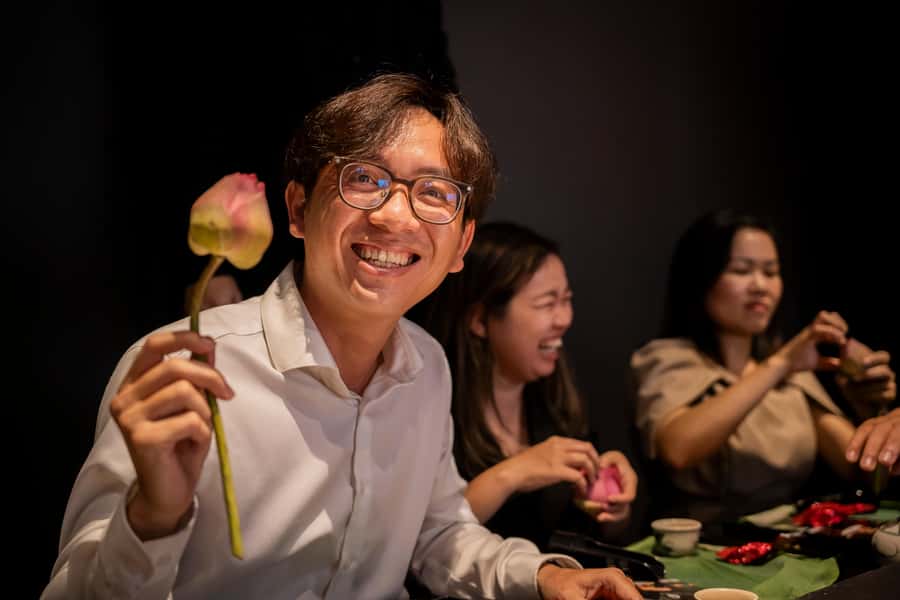
Review · HO CHI MINH CITY
Ho Chi Minh City: Vietnamese Lotus Tea Culture Experience
Tea tells a quieter story of Vietnam. In a central Ho Chi Minh City apartment near Nguyen Hue Walking Street, you learn how lotus flowers, patience, and careful handwork shape one of the country’s most prized teas. I like the mix of cultural background and practical work, and I especially like that you leave with a lotus flower filled with your own tea blend. The main consideration is that this is a focused tea workshop, not a broad city tour, so it suits you best if you want a calm cultural break rather than a packed sightseeing program.
The session costs $15 per person, which is a fair price for a tasting, an artisan presentation, a guidebook, and a take-home craft. The activity is also a good choice for couples, families with older children, and anyone looking for a slower hour in District 1. You should confirm the operating language before booking, since the information describes an English-speaking host and artisan but also lists Armenian as the available language.
Key points to know before booking
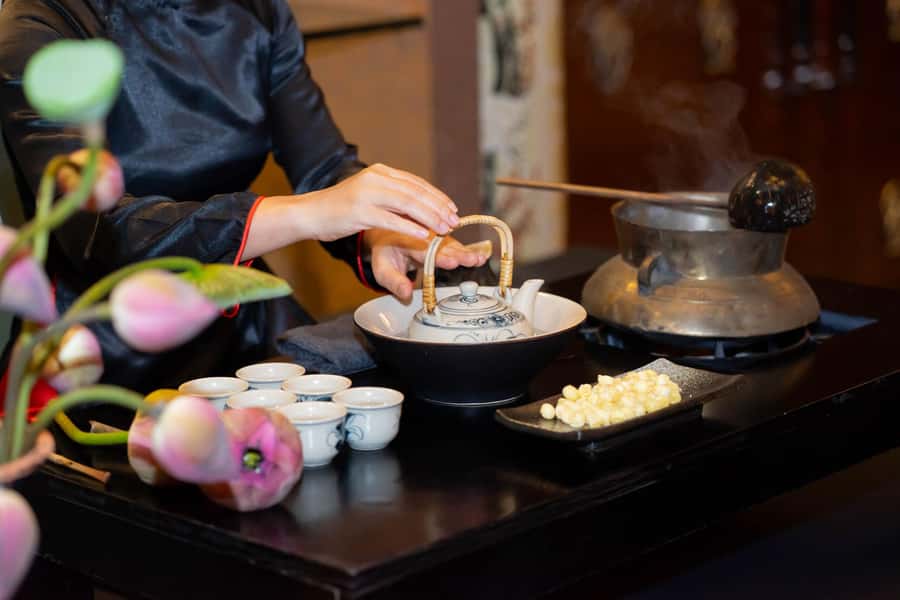
- Lotus tea is the star: You taste Tay Ho Lotus Tea, associated with West Lake in Hanoi, and learn why it is treated as a special Vietnamese tea.
- You watch a rare craft: An artisan demonstrates how tea leaves are placed inside fresh lotus buds, a delicate process that depends on patience and careful handling.
- You make a real souvenir: Each participant receives one lotus flower filled with their own tea blend.
- The location is easy to reach: The showroom sits at 19 Hai Trieu Street, opposite Bitexco Tower and about one minute from Nguyen Hue Walking Street.
- The mood is calm: The tea setting offers a quiet pause from busy central streets, with time to listen, taste, and work by hand.
- The program is not fully accessible: It is not suitable for wheelchair users or children under two.
Finding the tea workshop opposite Bitexco Tower
The meeting point is unusually central. You go to 19 Hai Trieu Street in Ben Nghe Ward, District 1, then head to the second floor of a local apartment building. The showroom is directly opposite Bitexco Tower and roughly a one-minute walk from Nguyen Hue Walking Street.
That location matters. You do not need a long taxi ride to reach the activity, and it is easy to pair with an afternoon or evening around central Ho Chi Minh City. Since transportation is not included, you make your own way there. Allow enough time to locate the entrance and reach the second floor, especially if you are navigating the area for the first time.
The contrast is part of the appeal. Outside, central Ho Chi Minh City can be loud and busy. Inside, the tea setting offers a quieter place to focus on scent, flavor, and small gestures. One particularly warm detail from the experience is the sense of a calm oasis away from the streets. That makes this more than a tasting stop. It gives you a chance to slow your pace without leaving District 1.
The activity ends back at the same meeting point. There is no transport afterward, so you remain free to continue toward Nguyen Hue Walking Street, the Saigon River area, or another nearby stop.
A few more tea experiences around Vietnam worth a look
- Coffee – Wine – Tea Da Lat’s Agricultural Treasures Tour
★ 4.8 · 63 reviews - Huong River Afternoon Tea Cruise Tour Along Hue City
★ 5.0 · 14 reviews - Vietnam Tea Tasting – Giang Egg Coffee & Train Street Visit
★ 5.0 · 10 reviews
Why Vietnamese tea culture matters
The opening part explains the place of tea in Vietnamese daily life and ceremonies. Tea is presented not simply as a drink, but as part of hospitality, family customs, and formal occasions. This background helps you understand why the preparation itself receives so much attention.
You also learn about West Lake Lotus Tea, known locally as Tay Ho Lotus Tea. The name refers to West Lake in Hanoi, an area associated with lotus flowers and this particular style of scented tea. The session connects the tea with a long tradition of careful handcrafting and with stories reaching back to the late nineteenth century, including the way tea connected with royal traditions.
That historical detail gives the tasting more meaning. Without it, lotus tea might seem like a flavored drink with a pretty flower attached. With the explanation, you begin to see the work involved in turning a simple tea leaf into a scented product linked to place, ceremony, and old methods.
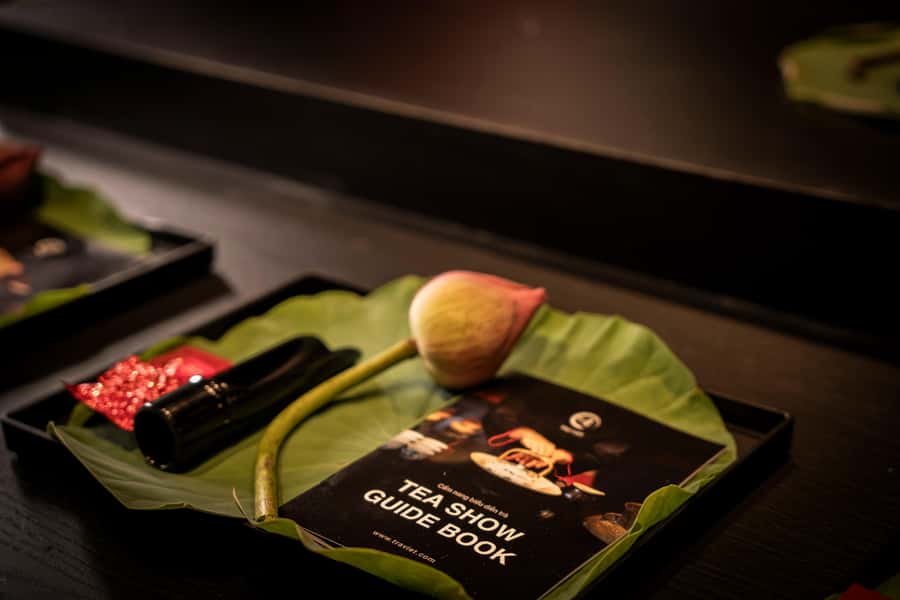
The guidebook in English is a useful inclusion here. You can follow the main ideas during the presentation and keep a written reminder afterward. It is especially helpful if you want to remember the names and stages of the process rather than relying only on photographs.
Watching tea leaves meet a fresh lotus
The live demonstration is the heart of the session. A tea artisan shows how tea leaves are placed inside fresh lotus buds. The technique is small-scale and precise, so the presentation works best when you pay attention to the hands rather than expecting a large performance.
The appeal is in the care required. Lotus flowers are delicate, and the tea leaves must be handled gently. The artisan demonstrates a method passed down through generations, showing how nature and handwork come together in the final cup.
This is also where the activity feels different from an ordinary tea tasting. You are not just handed a cup and told what you are drinking. You see the steps behind it. The demonstration turns the tea from an abstract specialty into something you can understand through sight, scent, and touch.
The performance is described as an almost forgotten art, which gives the demonstration a sense of importance. You are seeing a traditional method that depends on time and skill rather than speed or machinery. The session does not promise a full working tea farm visit, so this demonstration is your main chance to see the craft itself.
If you prefer activities with movement, scenery, or a long route through the city, this may feel modest. The show takes place in the tea setting, and the focus remains on the flower and the leaves. For anyone interested in food traditions and handmade crafts, that close view is the point.
Tasting Tay Ho Lotus Tea
The tasting lets you notice the flavor and scent of Tay Ho Lotus Tea after learning how it is made. The presentation emphasizes delicate aromas rather than heavy or forceful taste. You are encouraged to pay attention to the fragrance and the subtle character of the tea.
I like this order. First you hear the story, then see the technique, and only afterward taste the result. That sequence gives you a better sense of what to look for in the cup. The lotus scent is not treated as a novelty alone. It is part of a careful scenting process.
The tasting is included in the $15 price. You also receive tea during the hands-on activity, but meals and drinks outside the tea tasting are not included. If you want to buy more tea, additional purchases are available on request.
The session can suit both tea beginners and people who already enjoy specialty teas. You do not need prior knowledge to take part. The artisan guides you through the process, and the quiet setting makes it easier to ask questions and concentrate on the differences in aroma.
Do not expect a large meal or a broad selection of refreshments. This is a tasting experience built around one central product. If you want a substantial snack, plan to eat separately before or after the activity.
Same place, a different pot:
- Tea & Coffee Experience
★ 5.0 · 10 reviews - Hue Retreat: Tea and Meditation with Vegetarian Meal
★ 5.0 · 9 reviews - Hanoi Eco Tour: Ba Vi National Park Wonders & Tea Plantation
★ 4.7 · 7 reviews - Tea & Coffee Tour
★ 4.8 · 5 reviews
Trying the scenting process yourself
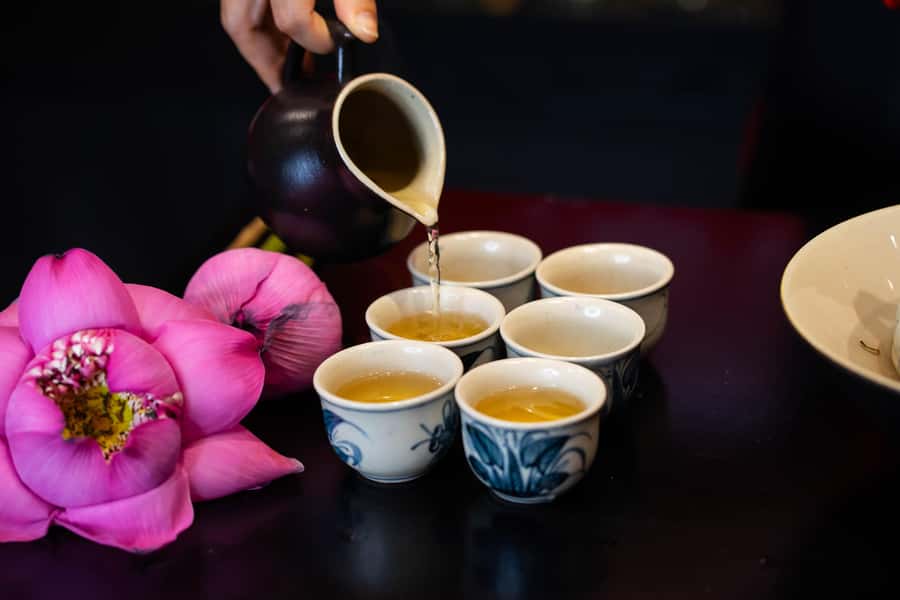
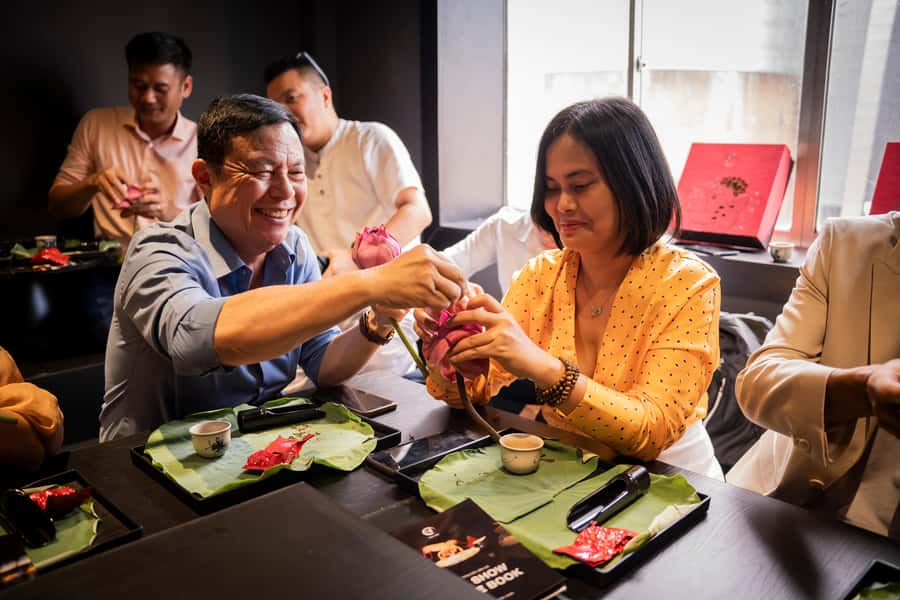
After the demonstration and tasting, you get to handle fresh lotus and tea leaves. The host gives step-by-step guidance on how to place the leaves into the flower. This is a simple activity in theory, but the delicate materials make careful handling important.
You also try infusing tea with fresh lotus petals. That lets you experience the scenting process directly rather than only watching the artisan. The work has a calm, almost meditative rhythm. You handle the flower, arrange the tea, and begin to understand why traditional preparation takes patience.
This hands-on element is one of the strongest reasons to book. A lecture can explain Vietnamese tea culture, but making something gives you a physical memory of it. The activity also works well for parents and older children who enjoy crafts, though children under two are not permitted.
You should handle the lotus flowers with care. The activity specifically involves working with flowers and tea leaves, and the final product depends on following the instructions. It is not designed as a rushed souvenir station where you grab an item and leave.
Taking home your lotus flower
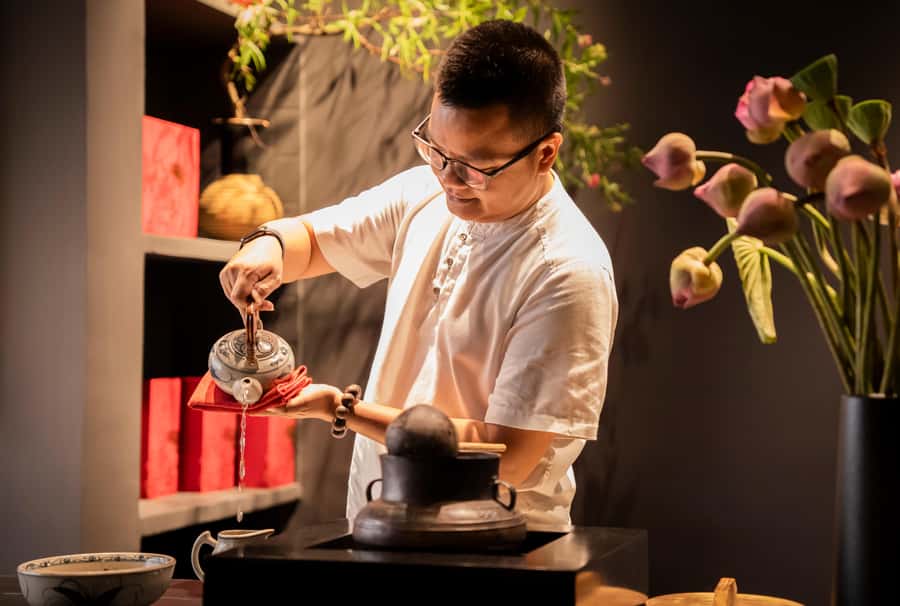
Each participant receives one lotus flower filled with their own tea blend. This is a more personal souvenir than a standard packaged purchase because you take part in creating it.
The flower also helps you remember the steps of the workshop. You have seen the artisan prepare lotus tea, tasted the finished tea, and then made your own version with guidance. That gives the keepsake a clear connection to the experience.
The information does not specify how long the lotus flower remains fresh or how you should store the tea afterward. Ask the host for care advice before leaving. You can also ask about additional tea purchases if you want to continue drinking the tea at home.
Photo opportunities are available in the traditional tea setting. The flower, tea tools, and preparation process should give you natural subjects for photographs, though the main value is the activity itself rather than a staged photo session.
The hosts and language question
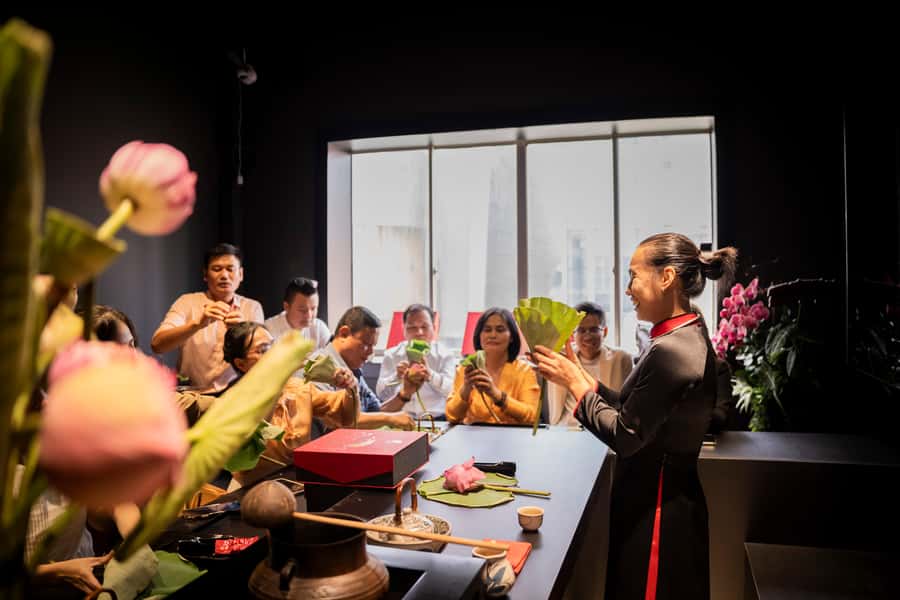
The host and artisan are described as English-speaking, and the experience includes a Tea Show Guidebook in English. The named presenter in the feedback is Ky, who is described as friendly, clear, and well informed about the preparation of lotus tea and its cultural background.
Ky is specifically praised for explaining the story of the tea, including its links to 1883 and royal traditions. That kind of historical explanation is important because it adds context without turning the session into a formal museum talk.
There is one point you should clarify before booking. The additional information lists Armenian as the language, while the activity details say English-speaking host and artisan and include an English guidebook. Since language affects how much you gain from a cultural presentation, confirm the language arrangements when reserving.
Is $15 good value?
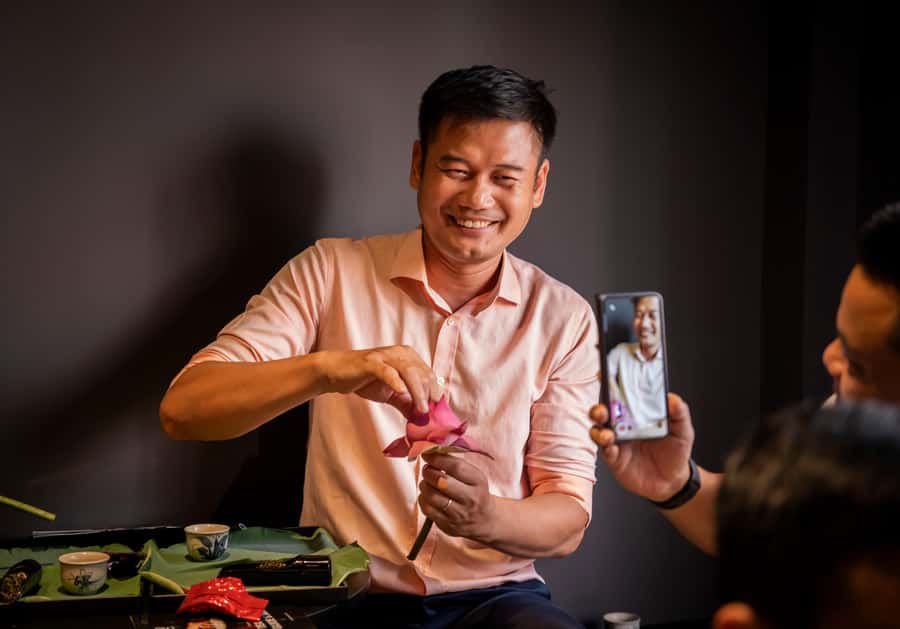
At $15 per person, the experience offers a solid amount for the price. You receive a tea tasting, a live craft presentation, a hands-on scenting activity, one lotus flower with your own tea blend, a guidebook, and access to a traditional tea setting.
The strongest value comes from the combination of explanation and participation. A simple tea tasting might cost less, but it would not give you the same look at the preparation method or the chance to make a keepsake. On the other hand, this is not a full meal, a long city excursion, or a large tea workshop with several activities.
I would call it good value if you are already planning to spend time in District 1 and want a cultural activity with a clear focus. The central location keeps your extra transport costs low, and the session can fit neatly around other sightseeing. You can also reserve now and pay later, which helps if your schedule is still changing.
Who will enjoy this most?
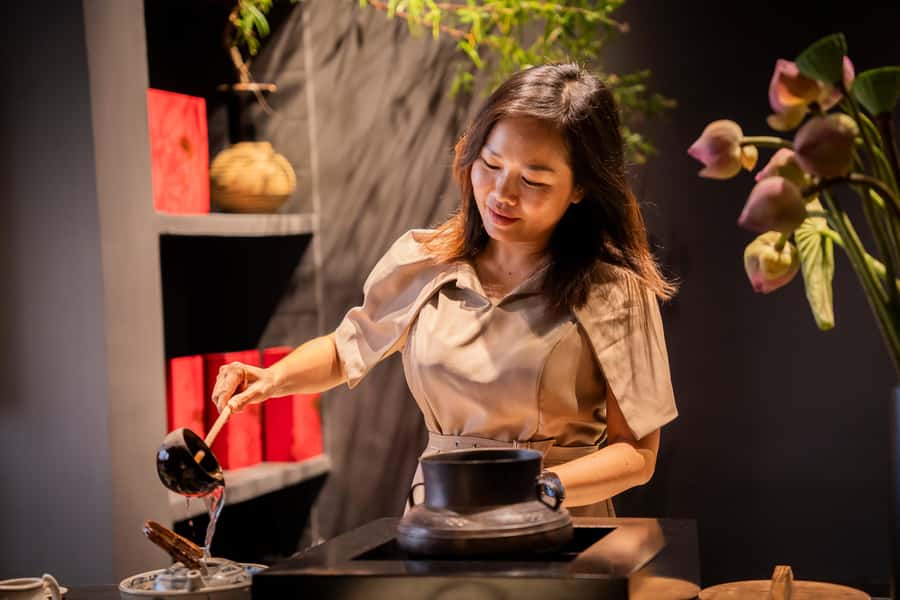
I would recommend this for you if you enjoy food traditions, handmade crafts, and short cultural activities with a clear subject. It is particularly suitable for couples, solo visitors, and parents with older children who can follow careful instructions.
It also suits tea drinkers who want to learn how scenting works rather than simply buying a box of flavored tea. The presentation gives you a better idea of why lotus tea is considered special and why the production method requires patience.
This is less suitable if you need wheelchair access, since the activity is not designed for wheelchair users. It is also not suitable for children under two. You should think twice if you want a fast-moving program, a full meal, or a tour that covers several parts of Ho Chi Minh City.
The activity is also a good rainy-day option because the focus is indoors at the showroom. The provided information does not give a duration or group size, so ask those questions if timing or personal attention matters to you.
Practical details before you reserve
The activity begins and ends at the showroom at 19 Hai Trieu Street, on the second floor of a local apartment building. It does not include transportation, meals, or drinks beyond the tea tasting.
You may cancel up to 24 hours in advance for a full refund. You can also reserve and pay later, keeping your plans flexible. The activity includes handling lotus flowers and tea leaves, so choose clothing and bags that allow you to work comfortably, though no special equipment is listed.
Because the language information is inconsistent, ask whether your chosen session will be conducted in English or Armenian. That one check can make a real difference to your understanding of the historical and cultural explanation.
Should you book the lotus tea experience?
Book it if you want a peaceful, central Ho Chi Minh City activity that gives you more than a drink. The demonstration, tasting, and hands-on flower preparation form a neat little lesson in Vietnamese craft, and the $15 price includes a meaningful souvenir.
I would skip it if your priority is a major sightseeing tour, a full meal, or an activity with lots of movement. For everyone else, especially tea fans and curious first-time visitors, this is an easy cultural addition to a District 1 itinerary. Confirm the language, check the access details, and arrive ready to handle the lotus gently.
FAQ
Where does the Vietnamese lotus tea experience begin?
It begins at the showroom at 19 Hai Trieu Street, Ben Nghe Ward, District 1, Ho Chi Minh City. The showroom is on the second floor of a local apartment building, directly opposite Bitexco Tower.
How close is the showroom to Nguyen Hue Walking Street?
The showroom is about a one-minute walk from Nguyen Hue Walking Street.
Does the experience include transportation?
No. Transportation to and from the venue is not included. The activity ends at the same meeting point.
What tea will I taste?
You will taste Tay Ho Lotus Tea, also known as West Lake Lotus Tea.
Will I make my own lotus tea?
Yes. You receive step-by-step guidance on placing tea leaves into a real lotus flower and receive one lotus flower filled with your own tea blend.
Is a tea guidebook included?
Yes. A Tea Show Guidebook in English is included.
Is the activity suitable for young children?
Children under two are not permitted to take part.
Is the experience wheelchair accessible?
No. The activity is not suitable for wheelchair users.
Just added around Vietnam
- 3 Hour Vietnam Tea & Egg Coffee Tasting With Train Street★ 5.0 · 2 reviews
- Tea Tour and Ha Giang Loop 4D/3N on Motorbikes★ 5.0 · 4 reviews
- 2 days Ancient Tea Tour and Real Homestay West of Ha Giang★ 5.0 · 2 reviews
- Experience Classy Afternoon Tea At Intercontinental Da Nang★ 5.0 · 2 reviews
- Sapa to Waterfall, Green Tea Farm with motorbike driver★ 4.5 · 2 reviews
- Hoi An: Body Therapy and Local Tea Tasting Experience★ 3.6 · 3 reviews
- Hanoi Eco Tour: Ba Vi National Park Wonders & Tea Plantation★ 4.7 · 7 reviews
- Da Lat: Sunrise Panorama, Green Tea Hill and Strawberry Farm★ 4.0 · 3 reviews
Vietnam Tea Tours, compared.

Coffee – Wine – Tea Da Lat’s Agricultural Treasures Tour
Read our review →
Huong River Afternoon Tea Cruise Tour Along Hue City
Read our review →
Vietnam Tea Tasting – Giang Egg Coffee & Train Street Visit
Read our review →

Hue Retreat: Tea and Meditation with Vegetarian Meal
Read our review →
Hanoi Eco Tour: Ba Vi National Park Wonders & Tea Plantation
Read our review →
Browse the lists this tour appears in