

Review · LONDON
London: Royal Hampton Court Guided Tour with Afternoon Tea
History tastes better with tea. This Hampton Court experience pairs a lively, two-hour palace tour with a traditional afternoon tea and a full-day entry ticket, giving you both expert direction and free time to explore. I especially like the route through the Tudor kitchens and the chance to return to the palace after tea. The main consideration is the price: at $206 per person, it offers good value only if you plan to use the full palace and garden access.
The strongest part is the guiding. Tom, Julie, Thomas, Geraint, Suzane, and others have earned warm praise for making the palace easy to understand without rushing. I also like the balance between structure and freedom. You get a clear introduction, then time to see more on your own. Afternoon tea can be excellent, with sandwiches, scones, pastries, and quality tea, though one account found that part underwhelming.
Key points before you book

- A short trip from London: Hampton Court Railway Station is the meeting point, making this a practical half-day or full-day outing beyond central London.
- Tudor and Baroque in one palace: You see Henry VIII’s world, then move into the later palace shaped by William III, Mary II, and Sir Christopher Wren.
- A full-day ticket: The guided portion lasts about two hours, but your entry lets you keep exploring the palace and its 60 acres of gardens.
- Afternoon tea after the tour: Expect finger sandwiches, freshly baked scones, pastries, and a choice of premium teas.
- Guides are the star: The best accounts praise guides such as Tom, Julie, Thomas, Geraint, Suzane, and Brandon for clear explanations and personal attention.
- Good for first-time visitors: The palace is huge, so a guide helps you find important rooms and details you might otherwise miss.
Meeting your guide at Hampton Court Station
Your day begins at the entrance to Hampton Court Railway Station. This is a useful meeting point because it removes the usual confusion of finding a guide somewhere inside a large palace complex.
The station is in South East England, outside central London. The journey is described as roughly 30 minutes from London, making Hampton Court a manageable outing rather than a major expedition. You should still allow enough time to arrive at the stated start time, since the guided portion follows a set route.
The experience lasts about two and a half to three hours as an organized activity. That does not mean you need to leave Hampton Court after three hours. Your palace admission is valid for the rest of the day, so you can continue exploring once the guide and tea are finished.
The group can also be arranged privately. That may suit families or friends who prefer a more personal pace, though the standard experience is already designed to include questions and interaction.
More Afternoon Tea in London
- London: Afternoon Tea Bus Tour – 1960s Routemaster Bus
★ 4.5 · 2,032 reviews - London: Afternoon Tea Bus with a Glass of Prosecco
★ 4.4 · 1,853 reviews - The Kensington Palace Gardens Royal High Tea
★ 4.5 · 934 reviews
Cardinal Wolsey’s palace and Henry VIII’s Tudor court
The tour begins with Cardinal Wolsey, the churchman who created Hampton Court and gave it to Henry VIII in 1528. That opening gives you an important frame for the palace. You are not simply entering a royal building. You are seeing a place built through ambition, generosity, and political calculation.
From there, the guide leads you through courtyards connected with major events at court. This is where a good guide matters. Hampton Court has plenty of grand rooms, but the significance can blur if you only walk from one chamber to the next. The guides praised most often, including Tom, Julie, Thomas, and Geraint, explain the people and decisions behind the rooms.
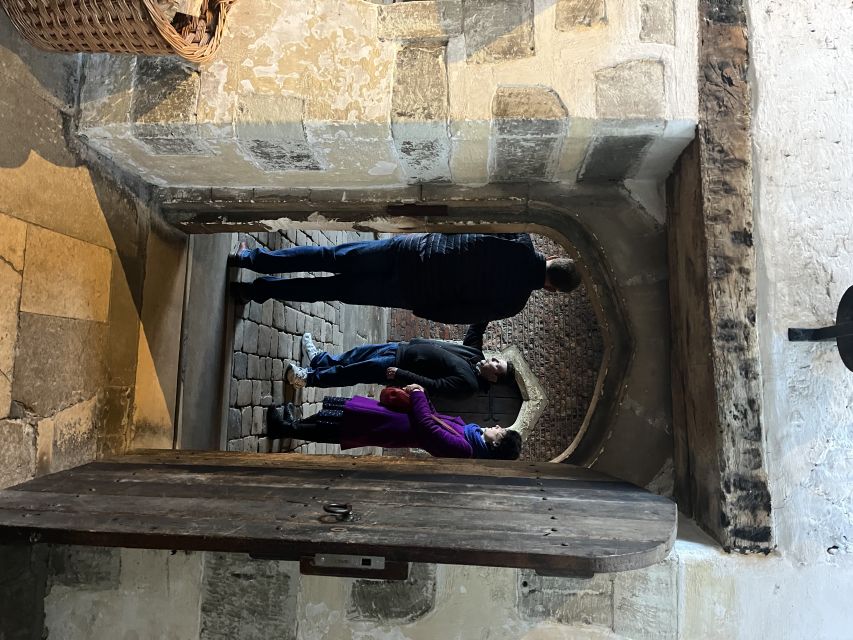
The route passes through Anne Boleyn’s Gatehouse. Anne lived at Hampton Court before her execution, so this is one of the most emotionally charged points in the visit. The palace is full of famous names, but the guide helps keep the stories connected to the actual spaces where people lived and worked.
You may also hear about Henry VIII’s many wives and the workings of his court. The best guiding here seems to combine facts with personality. Several guides are described as friendly, witty, patient, and easy to understand. That is valuable in a place where names, marriages, succession disputes, and religious changes can quickly become confusing.
Fountain Court and the palace after the Tudors
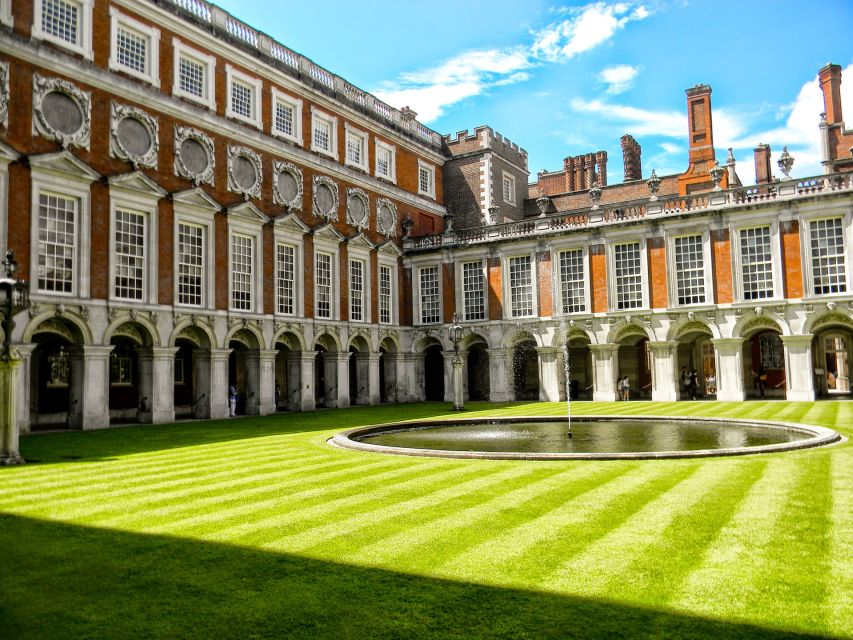
Hampton Court is not only a Tudor palace. One of the pleasures of this tour is seeing how the building changed over time.
The route takes you to Fountain Court, the Baroque section created by Sir Christopher Wren for William III and Mary II. Its style is quite different from the older Tudor areas. Instead of one continuous period piece, Hampton Court becomes a lesson in changing royal taste.
The unusual joint rule of William III and Mary II gives the guide another good story to explain. Their shared monarchy is less familiar to many visitors than Henry VIII’s marriages, but it helps you see how royal power and public image changed after the Tudor period.
This mix of Tudor and Baroque architecture gives the palace variety. You can move from Henry’s world of court ceremony and dynastic drama into a later royal setting shaped by different ideas of power and design. I would pay close attention here, since the contrast is one of the palace’s best features.
The palace can be crowded, especially during busy periods. One guide, Tom, was praised for keeping a small group together and maintaining a clear route despite the crowds. That kind of practical control matters more than fancy presentation. You want to hear the explanation, see the rooms, and keep moving without feeling hurried.
Sunken gardens and the Tudor kitchens
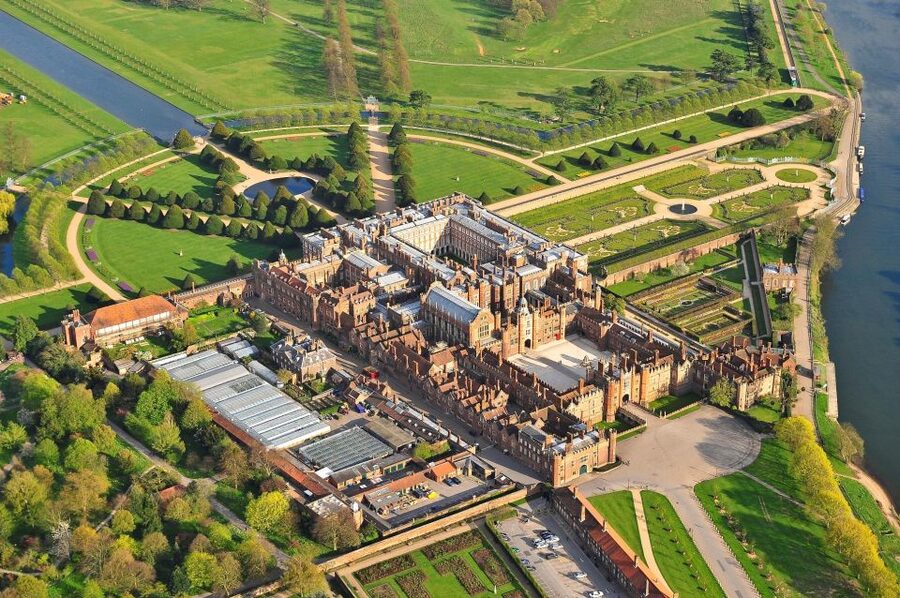
The tour continues through the restored sunken gardens. These gardens provide a change of pace after the indoor rooms and courtyards. They also remind you that Hampton Court is not only about royal interiors. The grounds are part of the visit and deserve time later in the day.
The route then reaches the vast Tudor kitchens created for Henry VIII. This is one of the most useful stops for understanding how the court functioned. Grand rooms show you ceremony. The kitchens show you the enormous practical effort needed to feed a royal household.
I like that the tour includes this working side of palace life. It adds texture to the famous stories. You are not only hearing about kings and queens in formal rooms. You are also seeing the spaces that supported the court behind the scenes.
The palace itself is large, and no two-hour introduction can cover every corner in depth. One particularly positive account wished the guide could have shown the entire royal palace. That is the honest limitation here. The tour gives you a strong foundation, but you should use the remaining ticket time for rooms and areas not included in the guided route.
More Afternoon Tea in the UK
- Afternoon Tea River Cruise on the Thames
★ 4.0 · 884 reviews - London Afternoon Tea Bus with Panoramic Tour
★ 4.0 · 763 reviews - London: Great British Afternoon Tea Bus Tour
★ 4.7 · 616 reviews - Buckingham Palace & Afternoon Tea Sightseeing Tour with PG Tips
★ 4.5 · 540 reviews
Afternoon tea near the Tiltyard
After the palace touring, you move on to afternoon tea. The route connects with the Tiltyard, originally used for jousting, and the tea is associated with The Mitre Hotel. The setting adds a sense of occasion without requiring a formal royal banquet.
The tea includes delicate finger sandwiches, pastries, freshly baked scones, and a selection of premium teas. Several detailed accounts describe generous portions, including multiple sandwich varieties, two scones per person, and several desserts. One person even noted that the hotel supplied boxes when the meal was too much to finish.
The food is meant to be part of the experience, not simply a quick drink between rooms. You can discuss the royal family, the history of tea, and the ceremony of afternoon tea while taking a proper break. That pause is welcome because Hampton Court involves a fair amount of walking and standing.
The tea is not perfectly consistent in the supplied information. Most comments describe it as excellent or enjoyable, and one account praised the savory sandwiches in particular. Another found the tea underwhelming and suggested the provider should be changed. I would treat the meal as a pleasant addition rather than the sole reason to pay for the tour.
The setting can also improve the experience. One account described a table overlooking the river, while another called the hotel casually luxurious and unpretentious. Those details suggest the atmosphere may be as important as the food itself.
Use your ticket after the guide leaves
This is where the experience earns much of its value. You are not simply shown around and then sent back to London. The full-day entry lets you return to the palace and continue exploring after tea.
You can use that time to revisit rooms that went by quickly, enter spaces closed during the guided portion, or walk through the gardens at your own speed. One person specifically appreciated being able to return after tea and see the chapel, which had been closed during the tour for a private service.
The 60 acres of gardens offer plenty of room to slow down. The restored sunken gardens are part of the guided route, but the wider grounds deserve independent time. You might prefer a quiet garden walk after the busy palace rooms, or you may want to return indoors and study details you missed earlier.
This free time is a major strength for first-time visitors. Hampton Court is too large for a short guided circuit to cover completely. The ticket gives you a second chance to make the visit your own.
How the guides shape the experience
The guide is the most important variable in a history tour, and the praise here is unusually consistent.
Tom is repeatedly described as patient, friendly, clear, and well prepared. He was also praised for repeating information when asked and for managing a crowded palace with a small group. Julie received similar praise for her exceptional palace knowledge, personal manner, and willingness to answer questions.
Thomas is described as informative, humorous, and considerate. Geraint is praised for bringing the palace and its characters to life. Suzane and Brandon also received warm comments for making the visit richer and engaging.
You should not expect every guide to use exactly the same stories or pace. That is part of the nature of a live tour. Still, the pattern is clear: the experience depends heavily on a guide who can connect architecture, royal personalities, and everyday life.
English is the live guiding language. An audio guide is also included, with Spanish, Chinese, Dutch, French, German, Japanese, Kannada, Korean, and Russian available. That can help you revisit information or support members of your group who prefer another language.
Is $206 a fair price?
At $206 per person, this is not a budget palace visit. The value comes from combining several elements: palace admission, a live guided introduction, afternoon tea, and the chance to keep using the ticket for the rest of the day.
If you only want to see the palace quickly, the cost may feel high. You are paying for the food and the guide as much as for admission. The price makes more sense if you plan to spend several hours at Hampton Court, want a structured introduction, and appreciate having a traditional tea built into the day.
The full-day access is important. I would not book this as a rushed two-hour stop. Arrive ready to stay, use the gardens, and return to the palace after tea. The people who gained the most from the arrangement treated the tea as a break before continuing to explore.
A private group option may improve the value for a small party that wants a more personal experience. For solo visitors or couples, the standard group is likely the more sensible choice unless privacy is especially important.
Who should book this Hampton Court experience?
I would recommend it to first-time visitors who want help making sense of a large and complicated palace. It is also a strong choice if you enjoy history but do not want to spend the entire day reading wall panels and listening to an audio guide.
Families with older children may like the combination of royal drama, kitchens, gardens, and tea. However, food for children is not included, so check that point before booking for a family group.
This experience also suits people who want an easy day outside London. The rail station meeting point, organized route, and full-day ticket make the visit straightforward. You do not need to build your own palace plan from scratch.
It may not suit you if you dislike fixed schedules, do not care for afternoon tea, or prefer to explore entirely alone. The tour gives you independent time, but the first section follows a group itinerary.
Practical details worth knowing
The meeting point is the entrance to Hampton Court Station, not a general meeting area somewhere in London. You receive skip-the-line entry, which is useful at a major palace where ticket queues can consume valuable time.
The experience is wheelchair accessible. Pets are not allowed, and oversized luggage is not permitted, so travel light.
Free cancellation is available up to 24 hours before the start for a full refund. You can also reserve now and pay later, which helps if your London plans are still changing.
Should you book it?
Book this if you want Hampton Court explained properly, followed by a polished break and plenty of time to explore alone. The guides are the chief reason to choose it, with Tom, Julie, Thomas, Geraint, Suzane, and Brandon all praised for making the palace clear, lively, and human.
I would book it for a full day, not a quick half-day visit. At $206, the price is substantial, but the combination of a live tour, afternoon tea, skip-the-line admission, and continued palace access can justify it. Just keep your expectations realistic about the tea: usually a strong part of the day, but not perfectly consistent.
FAQ
Where does the Hampton Court tour meet?
Your guide meets you at the entrance of Hampton Court Railway Station.
How long does the experience last?
The organized experience lasts about two and a half to three hours. The guided palace portion lasts about two hours.
Is palace admission included?
Yes. A full-day entry ticket to Hampton Court Palace is included, allowing you to continue exploring after the guided tour and afternoon tea.
What does the afternoon tea include?
The tea includes finger sandwiches, pastries, freshly baked scones, and a selection of premium teas.
Is a live guide included?
Yes. The live tour guide speaks English. An audio guide is also included in Spanish, Chinese, Dutch, French, German, Japanese, Kannada, Korean, and Russian.
Is the tour wheelchair accessible?
Yes, the experience is listed as wheelchair accessible.
Can I cancel the booking?
Yes. You can cancel up to 24 hours in advance for a full refund.
Are children’s meals included?
No. Food for children is not included.
Are pets or oversized luggage allowed?
No. Pets and oversized luggage are not allowed.
Just added around London
- Royal Afternoon Tea & Walk at Kensington Palace★ 4.5 · 3 reviews
- Kensington Palace Special Exhibition, Guided Walk & High Tea★ 5.0 · 2 reviews
- Royal London Tour with Afternoon Tea at The Rubens at the Palace★ 4.5 · 5 reviews
- Official National Gallery Highlights Tour and Afternoon Tea★ 3.5 · 10 reviews
- Harry Potter Tour & Magical Afternoon Tea★ 4.5 · 22 reviews
- Overnight Lake District with Cream Tea and Cruise from London★ 4.5 · 7 reviews
- Bubble Tea Making Experience in London★ 4.0 · 2 reviews
- Christmas Delights: Festive Tea & Doughnuts at Borough Market★ 5.0 · 3 reviews
Afternoon Tea in London, compared.

Afternoon Tea Bus Tour – 1960s Routemaster Bus
Read our review →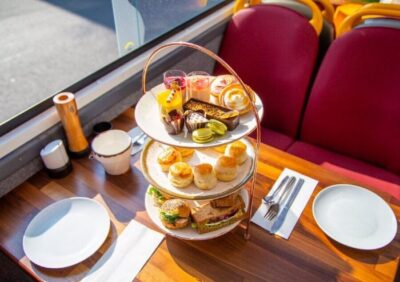
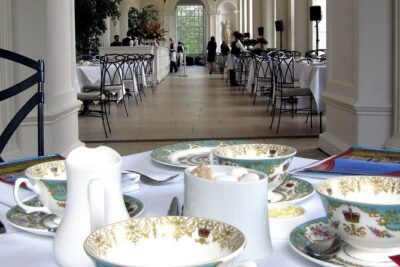

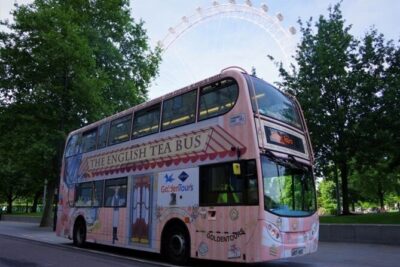

Buckingham Palace & Afternoon Tea Sightseeing Tour with PG Tips
Read our review →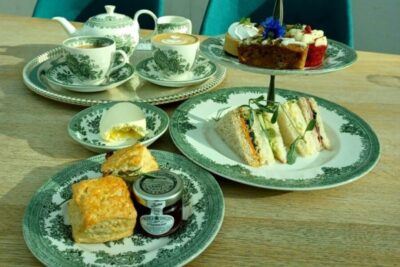
Browse the lists this tour appears in